On a clear night, when you look up at the stars, it is hard not to wonder whether someone else is looking back.
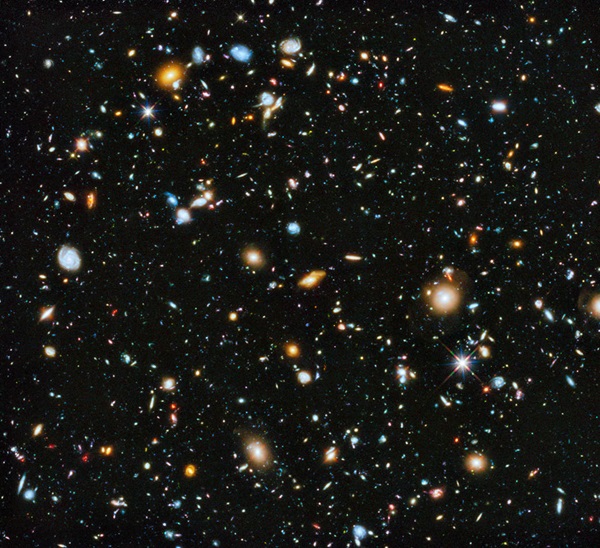
The night sky appears peaceful and silent, but modern astronomy tells us it is anything but empty. Our galaxy alone contains hundreds of billions of stars. Many of those stars host planets. Across the observable universe, there may be trillions upon trillions of worlds. Some are likely rocky planets similar to Earth. Some orbit within regions where liquid water could exist. Some may possess atmospheres, oceans, continents, and perhaps even life.
Given such staggering numbers, a simple idea begins to emerge.
If the universe is so vast and potentially full of habitable worlds, then intelligent life should not be rare. In fact, there should be countless civilizations scattered among the stars.
Yet despite decades of searching, humanity has found no confirmed evidence of alien civilizations.
No radio messages.
No alien spacecraft.
No giant extraterrestrial engineering projects.
No unmistakable signs that anyone else is out there.
This puzzling contradiction lies at the heart of one of the most fascinating questions in science.
It is known as the Fermi Paradox.
The paradox can be summarized in a single sentence:
If intelligent life should be common in the universe, why have we not found any evidence of it?
It is a question that combines astronomy, biology, physics, philosophy, and even the future fate of humanity. More than seventy years after it was first proposed, the Fermi Paradox remains one of the deepest mysteries in modern science.
The Origin of the Fermi Paradox
The Fermi Paradox is named after the Italian-American physicist Enrico Fermi, one of the most brilliant scientific minds of the twentieth century.
In the summer of 1950, Fermi was having lunch with colleagues at the Los Alamos National Laboratory. The conversation turned to extraterrestrial life and reports of flying saucers that were popular at the time.
As the discussion continued, Fermi reportedly asked a simple question:
“Where is everybody?”
The question was deceptively powerful.
Fermi understood the immense age of the universe. He knew that if advanced civilizations existed elsewhere in the Milky Way, some of them could be millions or even billions of years older than humanity.
Even with relatively slow interstellar travel, a civilization with enough time could potentially spread across large portions of the galaxy.
So if intelligent civilizations are common, where are they?
Why don’t we see them?
Why don’t we hear them?
Why don’t we find evidence of their existence?
That simple lunchtime question evolved into one of the most famous scientific puzzles ever posed.
Why the Question Matters
At first glance, the Fermi Paradox may sound like a curiosity about aliens.
In reality, it is much deeper than that.
The paradox forces us to confront profound questions about life itself.
How common is life in the universe?
How often does intelligence evolve?
Can technological civilizations survive for long periods?
What is humanity’s future?
Are we alone?
These questions touch something deeply emotional within us.
Humans have always wondered whether we are unique.
For thousands of years, people looked at the stars and imagined other worlds.
Today we know that planets are incredibly common.
What remains uncertain is whether life is equally common—or extraordinarily rare.
The answer could transform our understanding of our place in the cosmos.
The Vastness of the Universe
To understand why the Fermi Paradox exists, we first need to appreciate the sheer size of the universe.
Earth orbits the Sun, a fairly ordinary star.
The Sun is only one star among roughly 100 to 400 billion stars in the Milky Way.
For much of history, humanity had no idea whether planets existed around other stars.
Today the answer is clear.
Astronomers have discovered thousands of exoplanets, and evidence suggests that planets are extremely common.
Many stars likely host planetary systems.
Some planets are gas giants.
Others are rocky worlds.
Some orbit within their star’s habitable zone, where temperatures could allow liquid water.
If even a small fraction of these worlds support life, the number of living planets could be enormous.
And the Milky Way is only one galaxy.
The observable universe contains hundreds of billions, and perhaps trillions, of galaxies.
The numbers become almost impossible to comprehend.
With so many opportunities for life to emerge, it seems reasonable to expect that intelligent civilizations should exist elsewhere.
Yet the universe remains silent.
The Logic Behind the Paradox
The Fermi Paradox arises because two ideas appear to conflict with each other.
The first idea is that the universe contains vast numbers of stars and planets.
The second idea is that we see no convincing evidence of advanced extraterrestrial civilizations.
If both statements are true, something is missing from our understanding.
Imagine a city with billions of houses.
If every thousandth house contained people throwing loud parties, you would expect to hear noise.
If every millionth house hosted a celebration visible from miles away, signs would be obvious.
Similarly, if advanced civilizations were widespread throughout the galaxy, many scientists argue that evidence should eventually become detectable.
Yet so far, nothing definitive has appeared.
That mismatch creates the paradox.
The Age of the Milky Way
One of the strongest arguments behind the Fermi Paradox involves time.
The Milky Way is approximately 13 billion years old.
Earth formed around 4.5 billion years ago.
That means countless stars and planets are much older than our solar system.
If intelligent life evolved on some of those worlds, certain civilizations could possess a head start of millions or even billions of years.
Think about how dramatically humanity has changed in only a few centuries.
A few hundred years ago, there were no airplanes, computers, satellites, or radio transmissions.
Now humans can send spacecraft beyond the solar system.
Imagine a civilization that has been advancing technologically for a million years.
Or ten million years.
Or one billion years.
Its capabilities might appear almost magical from our perspective.
Given enough time, such civilizations could potentially spread across large regions of the galaxy.
Yet we see no obvious evidence that this has happened.
The Drake Equation
In 1961, astronomer Frank Drake developed a famous formula called the Drake Equation.
The equation attempts to estimate the number of communicative civilizations in the Milky Way.
Rather than providing a single answer, it breaks the problem into several factors.
How many stars form each year?
How many have planets?
How many planets are potentially habitable?
How often does life arise?
How often does intelligence evolve?
How long do technological civilizations survive?
The uncertainty surrounding these factors means the equation can produce dramatically different results.
Some estimates suggest civilizations should be common.
Others imply they may be extremely rare.
The Drake Equation does not solve the Fermi Paradox, but it highlights the key questions scientists must answer.
Perhaps Life Is Extremely Rare
One possible solution is surprisingly simple.
Maybe life itself is extraordinarily rare.
Although Earth demonstrates that life can emerge, we currently possess only a sample size of one.
We know life exists here.
We do not yet know whether it exists anywhere else.
The origin of life remains one of science’s greatest mysteries.
Researchers understand many aspects of biology, but the exact process by which nonliving chemistry became living organisms remains uncertain.
Perhaps the emergence of life requires an astonishingly unlikely chain of events.
If so, Earth could be exceptionally unusual.
The universe might contain countless habitable planets that remain sterile forever.
In that case, the silence would not be surprising.
There would simply be very few civilizations to hear.
Perhaps Simple Life Is Common but Intelligence Is Rare
Another possibility is that life emerges relatively often, but intelligent life rarely develops.
For most of Earth’s history, life existed only in simple forms.
Microorganisms dominated the planet for billions of years.
Complex multicellular organisms appeared much later.
Technological intelligence emerged only very recently.
This suggests intelligence may not be an inevitable outcome of evolution.
Evolution favors survival, not intelligence.
Many highly successful organisms thrive without advanced reasoning abilities.
Dinosaurs ruled Earth for more than 160 million years without developing radio telescopes.
Perhaps countless alien worlds contain life while very few ever produce intelligent civilizations.
The Great Filter
Among the most influential ideas connected to the Fermi Paradox is the concept known as the Great Filter.
The Great Filter proposes that somewhere between the formation of a habitable planet and the emergence of an advanced interstellar civilization lies a major obstacle.
Very few civilizations successfully pass it.
The crucial question is where this filter exists.
Perhaps the filter occurs early.
Maybe the origin of life is incredibly difficult.
Maybe complex cells rarely evolve.
Maybe intelligence almost never appears.
If the filter lies in humanity’s past, that would be encouraging.
It would mean we have already overcome the hardest barriers.
But there is a darker possibility.
Perhaps the filter lies ahead.
Maybe technological civilizations routinely destroy themselves before spreading among the stars.
If that is true, humanity may face challenges that countless civilizations failed to survive.
This possibility gives the Fermi Paradox profound relevance to our future.
Self-Destruction and Civilization Collapse
Many proposed solutions suggest that advanced civilizations destroy themselves.
Technology grants enormous power.
That power can create prosperity and progress.
It can also create catastrophic risks.
Nuclear warfare, environmental collapse, engineered pandemics, uncontrolled artificial intelligence, and other threats could potentially end civilizations before they become interstellar.
Humanity has possessed nuclear weapons for less than a century.
Already, these weapons have demonstrated the capacity for global devastation.
Perhaps many civilizations reach a technological threshold and fail to survive it.
In this scenario, intelligent life may emerge frequently, but advanced civilizations remain short-lived.
The galaxy would contain many silent worlds where civilizations once existed but no longer do.
The Problem of Distance
Another solution may simply involve distance.
Space is unimaginably large.
Even light, the fastest known thing in the universe, requires years to travel between nearby stars.
The nearest star beyond the Sun lies more than four light-years away.
Crossing the galaxy would take tens of thousands of years at light speed.
Real spacecraft travel much slower.
Even advanced civilizations might find interstellar travel difficult, expensive, or impractical.
Perhaps alien civilizations exist but remain isolated by enormous cosmic distances.
They may never reach us because the universe is simply too large.
We Have Barely Started Looking
Sometimes the silence of the universe may be less surprising than it seems.
Humanity has been searching seriously for extraterrestrial signals for only a few decades.
That is an incredibly short time compared to cosmic timescales.
Imagine standing on the shore of an ocean.
You scoop up a single glass of water.
Finding no fish, you conclude the ocean contains none.
The conclusion would obviously be premature.
Similarly, our search of the galaxy remains tiny.
We have examined only a small fraction of stars and frequencies.
The absence of evidence may simply reflect the limited scope of our search.
Perhaps signals are out there, waiting to be found.
The Search for Extraterrestrial Intelligence
Efforts to detect alien civilizations are often grouped under the term SETI, which stands for the Search for Extraterrestrial Intelligence.
SETI researchers use powerful radio telescopes and other instruments to search for artificial signals.
The logic is straightforward.
Technological civilizations may produce electromagnetic emissions.
Radio waves can travel across interstellar distances.
An intentionally transmitted signal might be detectable far from its source.
For decades, scientists have listened for unusual patterns that could indicate intelligence.
So far, no confirmed extraterrestrial signal has been detected.
The silence continues.
Yet many researchers remain optimistic because the search has explored only a tiny portion of the possible cosmic landscape.
Maybe They Communicate Differently
The assumption that alien civilizations use radio communication may itself be flawed.
Human technology changes rapidly.
Radio communication became widespread only in the last century.
Future technologies may rely on entirely different methods.
An advanced civilization might use communication systems beyond our current understanding.
They may employ technologies that leave no detectable radio signatures.
If so, we could be surrounded by signals we simply do not know how to recognize.
The problem may not be the absence of communication.
It may be our inability to perceive it.
The Zoo Hypothesis
One of the most intriguing solutions is known as the Zoo Hypothesis.
According to this idea, advanced civilizations know humanity exists but deliberately avoid contact.
Earth is treated like a protected nature reserve.
Just as humans observe animals without interfering too much in their natural behavior, extraterrestrial civilizations might choose to watch us from a distance.
Direct contact could disrupt cultural or biological development.
Therefore, they remain hidden.
This idea is fascinating but highly speculative.
There is currently no evidence supporting it.
Nevertheless, it remains one of the most imaginative attempts to explain the silence.
They May Be Hiding
Some researchers have proposed that advanced civilizations deliberately conceal themselves.
There may be practical reasons for doing so.
Broadcasting one’s location across the galaxy could attract unwanted attention.
If hostile civilizations exist, remaining hidden might be a survival strategy.
This concept is sometimes called the “dark forest” scenario.
In this view, the galaxy resembles a dark forest filled with unknown hunters.
Every civilization stays quiet because revealing itself could be dangerous.
The idea is unsettling, but it illustrates how little we understand about potential extraterrestrial behavior.
Alien Civilizations May Be Incomprehensible
One challenge in solving the Fermi Paradox is that we naturally imagine aliens behaving somewhat like humans.
But truly alien civilizations may think in ways we cannot anticipate.
Their goals, values, technologies, and motivations could be radically different from ours.
Perhaps they have little interest in expansion.
Perhaps they live primarily in virtual worlds.
Perhaps they focus inward rather than outward.
Perhaps they do not build giant structures or transmit detectable signals.
If alien civilizations operate according to principles unfamiliar to us, our expectations may be completely wrong.
The Possibility of Ancient Civilizations
Some civilizations may have risen and fallen long before humanity appeared.
The universe is old.
Earth itself formed relatively late in cosmic history.
Entire civilizations could have flourished millions or billions of years ago.
Their signals may have faded.
Their structures may have eroded.
Their stars may have died.
By the time humans developed astronomy, they could have vanished without leaving detectable traces.
The silence we observe today does not necessarily mean the galaxy was always silent.
Could We Be First?
Among the most surprising possibilities is that humanity may be among the first intelligent civilizations in the galaxy.
Perhaps conditions necessary for advanced life became favorable only recently.
Maybe earlier generations of stars lacked enough heavy elements to support Earth-like planets.
Perhaps complex life generally requires billions of years to evolve.
If so, intelligent civilizations throughout the galaxy may be emerging around the same cosmic era.
Instead of being late arrivals, we may be early participants in a universe just beginning to awaken.
This possibility transforms the Fermi Paradox from a mystery into an opportunity.
The Emotional Side of the Paradox
The Fermi Paradox is not merely a scientific question.
It is also deeply emotional.
The idea that humanity might be alone can feel lonely.
The thought that intelligent life exists elsewhere can feel hopeful.
Many people find comfort in imagining a populated universe.
Others find wonder in the possibility that Earth may be uniquely precious.
Either answer carries profound implications.
If we are alone, then life on Earth becomes extraordinarily valuable.
If we are not alone, then humanity is part of a much larger cosmic story.
The paradox forces us to confront both possibilities simultaneously.
New Discoveries and Future Searches
Every year, astronomers discover new exoplanets.
New telescopes are becoming capable of analyzing distant planetary atmospheres.
Scientists hope future observations may reveal signs of biological activity beyond Earth.
Certain gases, such as oxygen and methane, could indicate living processes.
Future missions may identify planets that appear genuinely inhabited.
At the same time, SETI projects continue expanding their searches.
Artificial intelligence is helping researchers analyze enormous amounts of data.
New instruments are scanning larger portions of the sky than ever before.
The coming decades may bring discoveries that dramatically reshape the discussion.
What the Fermi Paradox Really Teaches Us
Perhaps the greatest value of the Fermi Paradox lies not in providing answers but in encouraging questions.
It reminds us how little we know.
We do not yet understand how life begins.
We do not know how common intelligence is.
We do not know whether technological civilizations survive for long periods.
We do not know whether humanity is typical or exceptional.
The paradox sits at the intersection of many scientific mysteries.
By exploring it, researchers gain deeper insight into biology, astronomy, evolution, and the future of civilization.
Conclusion
The Fermi Paradox arises from a simple but profound contradiction. The universe appears vast enough to contain countless potentially habitable worlds, yet humanity has found no confirmed evidence of extraterrestrial civilizations. First articulated by Enrico Fermi in 1950, the paradox asks a question that continues to challenge scientists, philosophers, and dreamers alike: If life is everywhere, where is everybody?
Many possible explanations have been proposed. Life itself may be rare. Intelligence may seldom evolve. Civilizations may destroy themselves. Interstellar distances may be too great. Alien societies may communicate in unfamiliar ways or deliberately remain hidden. Perhaps we have simply not searched long enough. Or perhaps humanity is among the first intelligent civilizations to emerge.
At present, no solution has been confirmed. The silence remains.
Yet that silence is not empty. It is filled with possibility. Every star in the night sky represents another chance for life, another world with its own story, and another opportunity to answer one of humanity’s oldest questions. Until evidence finally arrives—or fails to arrive—the Fermi Paradox will remain one of the most fascinating mysteries in science, inviting us to keep looking upward and wondering whether, somewhere in the vast darkness between the stars, someone else is asking the very same question.