Humanity has always looked up at the night sky and wondered whether we are alone. Across thousands of years, people have imagined distant worlds inhabited by intelligent beings, civilizations more advanced than our own, and technologies so powerful they might seem like magic. As telescopes improved and our understanding of the universe expanded, these questions became more than philosophical curiosity. Scientists began asking a practical question: if advanced civilizations exist somewhere among the stars, how would we recognize them?
The challenge is not simple. Alien civilizations, if they exist, could be vastly different from humanity. Their biology might be unfamiliar. Their cultures could be impossible to imagine. Their technologies might operate on principles we have not yet discovered. Yet there is one thing every technological civilization would likely have in common: the need for energy.
No matter where intelligent life emerges, building cities, running machines, communicating across distances, and shaping the environment all require power. The more advanced a civilization becomes, the more energy it is likely to control.
This idea inspired one of the most fascinating concepts in modern astronomy and futurism: the Kardashev Scale.
The Kardashev Scale is a method for classifying civilizations according to the amount of energy they can harness and use. Although originally created as a scientific tool for thinking about extraterrestrial intelligence, it has become a powerful framework for imagining humanity’s future. It offers a way to think about where we are today, where we might go tomorrow, and what kinds of civilizations could exist elsewhere in the cosmos.
More than half a century after its creation, the Kardashev Scale remains one of the most influential ideas in discussions about advanced technology, space exploration, and the future of intelligent life.
The Origins of the Kardashev Scale
The Kardashev Scale was proposed in 1964 by Soviet astrophysicist Nikolai Kardashev.
At the time, scientists were becoming increasingly interested in the search for extraterrestrial intelligence. Radio telescopes had opened new possibilities for detecting signals from distant civilizations. Researchers wanted practical ways to estimate what advanced alien societies might look like.
Kardashev approached the problem from an engineering perspective.
Rather than focusing on culture, language, biology, or social organization, he concentrated on something measurable: energy consumption.
His reasoning was straightforward. As civilizations grow, they generally require more energy. A society capable of controlling enormous amounts of energy would likely leave detectable signatures visible across vast distances.
By measuring energy use, scientists might estimate the technological sophistication of a civilization—even if they knew nothing else about it.
Kardashev proposed three broad categories representing different levels of technological development.
Although simple, the idea was revolutionary.
It transformed conversations about extraterrestrial intelligence from speculation into something that could be discussed scientifically.
Why Energy Matters
To understand the Kardashev Scale, it is important to appreciate why energy plays such a central role in civilization.
Every major step in human history has been linked to new ways of accessing and controlling energy.
Early humans relied on their own muscles and the energy stored in food.
The discovery of fire dramatically expanded what people could accomplish.
Agriculture allowed societies to capture solar energy through crops.
The use of animals provided additional power.
The Industrial Revolution introduced machines fueled by coal.
Oil and natural gas transformed transportation and manufacturing.
Electricity reshaped modern civilization.
Nuclear energy unlocked the power hidden within atoms.
Each advancement increased humanity’s ability to perform work and reshape the environment.
From this perspective, civilization can be viewed partly as a story of energy mastery.
The Kardashev Scale extends this idea into the future.
The Basic Structure of the Scale
The original Kardashev Scale contained three categories.
A Type I civilization harnesses the energy available on its home planet.
A Type II civilization controls the energy output of its star.
A Type III civilization commands the energy resources of an entire galaxy.
The differences between these levels are almost unimaginable.
Each step represents a massive increase in power and technological capability.
The scale is logarithmic in nature, meaning the energy differences between levels are enormous.
Moving from one type to the next is not like upgrading from a bicycle to a car.
It is more like progressing from a candle to a star.
Understanding Type I Civilizations
A Type I civilization can access and utilize all the energy available on its home planet.
This does not simply mean generating electricity.
It implies controlling planetary-scale energy systems.
Such a civilization would effectively manage solar power, wind, geothermal energy, ocean currents, atmospheric processes, and other natural energy sources.
Weather prediction might become extraordinarily precise.
Natural disasters could potentially be mitigated or controlled.
Global energy shortages would likely disappear.
The civilization would operate as a truly planetary society rather than a collection of competing regions.
In many ways, a Type I civilization represents a mature planetary species.
It has learned to manage its world’s resources efficiently and sustainably.
Importantly, humanity has not yet reached this stage.
Where Humanity Stands Today
According to most estimates, modern humanity is currently around Type 0.7 to Type 0.75 on the Kardashev Scale.
This means we have not yet achieved full planetary energy control.
While human civilization is technologically advanced in many respects, we still use only a fraction of the energy available on Earth.
Energy access remains uneven.
Many resources are wasted.
Environmental challenges continue to limit development.
Political divisions often prevent coordinated planetary action.
Nevertheless, humanity has made remarkable progress.
Over the past few centuries, our energy consumption has increased dramatically.
If this trend continues over the long term, future generations could eventually approach Type I status.
Some estimates suggest this might occur within the next few centuries, though predicting technological progress is notoriously difficult.
What a Type I Civilization Might Look Like
Imagining a Type I civilization is easier than imagining the higher levels because it remains relatively close to our current experience.
Such a society might possess global renewable energy networks capable of meeting all human needs.
Fusion power could provide virtually unlimited clean energy.
Space-based solar collectors might transmit power to Earth.
Artificial intelligence could optimize resource distribution on a planetary scale.
Transportation systems might become highly efficient and environmentally friendly.
Large-scale environmental restoration projects could reverse centuries of ecological damage.
Poverty driven by energy scarcity might largely disappear.
Although challenges would certainly remain, a Type I civilization would possess tools far beyond those available today.
It would represent a major milestone in humanity’s development.
The Leap to Type II
If Type I civilizations seem advanced, Type II civilizations belong to an entirely different realm.
A Type II civilization controls the energy output of its parent star.
For humanity, that would mean harnessing the enormous power generated by the Sun.
The Sun produces vastly more energy every second than humanity has used throughout its entire history.
Capturing even a small fraction of this energy would transform civilization beyond recognition.
Such a society would likely have expanded throughout its solar system.
Planets, moons, asteroids, and artificial habitats could support immense populations.
Energy limitations would become largely irrelevant.
Technological projects that seem impossible today could become routine.
Type II civilizations would possess capabilities approaching what earlier generations might have considered divine.
The Concept of a Dyson Sphere
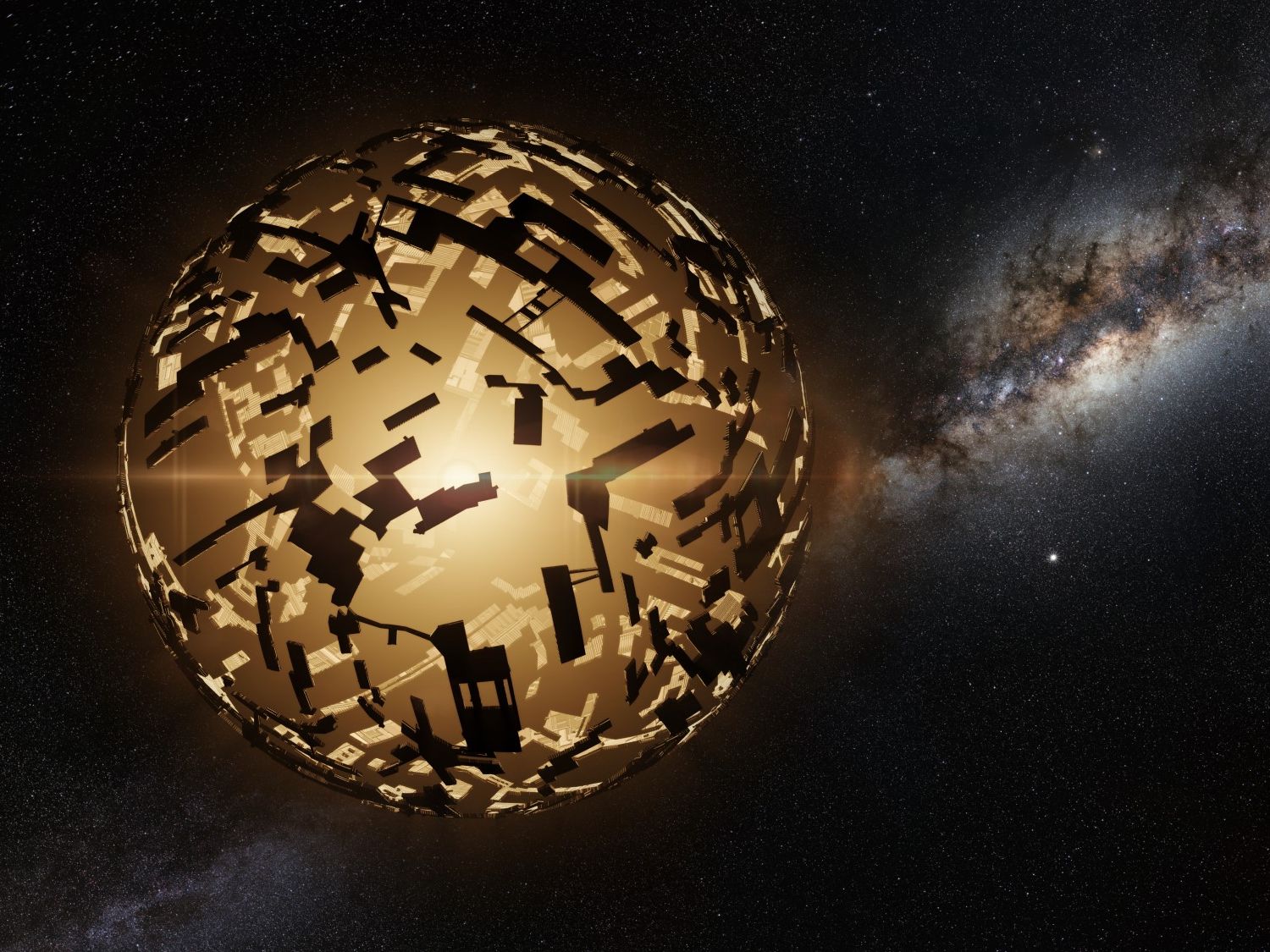
One of the most famous ideas associated with Type II civilizations is the Dyson Sphere.
The concept was popularized by physicist Freeman Dyson in 1960.
Contrary to popular depictions, Dyson did not originally envision a solid shell surrounding a star.
Instead, he proposed a vast swarm of energy-collecting structures orbiting around a star.
Together, these structures would capture a significant portion of stellar energy.
Such a system is often called a Dyson swarm.
The engineering challenges involved are extraordinary.
Building trillions of solar collectors across an entire solar system would require technological capabilities far beyond humanity’s current abilities.
Yet the idea remains scientifically plausible according to known physics.
Because a Dyson-like structure would alter the appearance of a star, astronomers have searched for possible evidence of such megastructures.
So far, no confirmed examples have been found.
Life in a Type II Civilization
Trying to imagine daily life in a Type II civilization stretches the limits of human imagination.
Energy abundance would eliminate many constraints that shape modern society.
Massive habitats could exist throughout the solar system.
Advanced automation might perform most labor.
Medical technologies could dramatically extend lifespans.
Artificial environments could be constructed on scales comparable to planets.
Computing power might exceed anything currently conceivable.
The civilization could manipulate matter and energy with extraordinary precision.
It might even alter the architecture of entire planetary systems.
From our perspective, such achievements would appear almost magical.
Yet they could emerge naturally from continued technological progress over thousands or millions of years.
Type III Civilizations and Galactic Power
The final category in Kardashev’s original framework is the Type III civilization.
Such a civilization harnesses the energy resources of an entire galaxy.
To appreciate the scale involved, consider that the Milky Way contains hundreds of billions of stars.
A Type III civilization would somehow access the energy output of a substantial portion of them.
This level of power is nearly impossible to visualize.
A civilization capable of operating on galactic scales would possess resources far beyond anything humanity has ever encountered.
Its influence might extend across tens of thousands of light-years.
It could potentially engineer stars, reshape planetary systems, and coordinate activities across enormous cosmic distances.
To a Type III civilization, individual planets might seem as insignificant as individual houses appear to modern nations.
The Challenge of Galactic Distances
One major obstacle to becoming a Type III civilization is distance.
The Milky Way spans roughly 100,000 light-years.
Even traveling at speeds approaching light, crossing the galaxy would require immense amounts of time.
Communication would face similar challenges.
Messages might take centuries or millennia to travel between regions.
Because of these limitations, some scientists question whether a unified Type III civilization is realistic.
Perhaps galactic civilizations would function more like networks of semi-independent societies rather than centralized governments.
Alternatively, advanced technologies unknown to us today might overcome some of these barriers.
The truth remains uncertain.
Could There Be Civilizations Beyond Type III?
After Kardashev introduced his original scale, later thinkers proposed extensions.
Some suggested a Type IV civilization capable of harnessing the energy of an entire universe.
Others imagined Type V civilizations controlling multiple universes.
These extensions move increasingly into the realm of speculation.
Unlike Types I through III, which remain grounded in known astrophysical structures, higher levels involve concepts that may never be achievable.
Still, they provide fascinating thought experiments.
They encourage us to think about technological possibilities on truly cosmic scales.
The Kardashev Scale and the Search for Aliens
One reason the Kardashev Scale remains influential is its usefulness in the search for extraterrestrial intelligence.
If advanced civilizations exist, they may leave observable signatures.
Large-scale energy use often produces waste heat.
Megastructures around stars could alter starlight.
Galactic engineering projects might create unusual astronomical patterns.
Astronomers can search for these effects.
Instead of waiting for radio messages, scientists can look for evidence of large-scale technological activity.
This approach is sometimes called “technosignature” research.
The Kardashev Scale helps guide these investigations by suggesting what kinds of signatures advanced civilizations might produce.
The Fermi Paradox
The Kardashev Scale naturally leads to one of astronomy’s most famous mysteries: the Fermi Paradox.
The paradox is often summarized with a simple question posed by physicist Enrico Fermi:
Where is everybody?
The universe is unimaginably vast.
There are billions of stars and likely trillions of planets.
If intelligent life is common, some civilizations should have had millions of years to advance.
Many might have reached Type II or Type III status.
Yet we see no clear evidence of them.
No confirmed alien signals.
No obvious Dyson spheres.
No unmistakable galactic engineering projects.
This apparent contradiction forms the heart of the Fermi Paradox.
The Kardashev Scale sharpens the mystery because highly advanced civilizations should, in theory, be difficult to hide.
Possible Solutions to the Fermi Paradox
Scientists have proposed many explanations.
Perhaps intelligent life is extremely rare.
Maybe civilizations often destroy themselves before reaching advanced stages.
Technological societies might lose interest in expansion.
Advanced civilizations could be difficult for us to recognize.
Some may use technologies that produce few detectable signatures.
Others might exist so far away that their effects remain beyond our observational capabilities.
The true answer remains unknown.
The Kardashev Scale does not solve the paradox, but it provides a useful framework for discussing it.
Criticisms of the Kardashev Scale
Although influential, the Kardashev Scale has limitations.
One criticism is its heavy focus on energy consumption.
Technological advancement may not always require increasing energy use.
Future civilizations might become more efficient rather than more power-hungry.
Advanced societies could prioritize sustainability, miniaturization, or virtual realities instead of massive energy expansion.
Another concern involves cultural assumptions.
The scale reflects human ideas about progress and growth.
Alien civilizations might follow very different paths.
Some researchers argue that intelligence cannot be reduced to energy consumption alone.
Creativity, knowledge, social organization, and adaptability may be equally important.
Despite these criticisms, the Kardashev Scale remains valuable because it offers a simple, measurable framework for discussing civilizations.
Humanity’s Journey Toward the Future
Whether humanity ultimately reaches Type I status remains uncertain.
The future depends on choices made today.
Climate change, resource management, technological innovation, and international cooperation will all play important roles.
Progress is not guaranteed.
History shows that civilizations can rise and fall.
Yet human beings possess remarkable creativity and resilience.
Over just a few thousand years, we have progressed from stone tools to space exploration.
The pace of change has been astonishing.
If humanity survives long enough, future generations may look back on the twenty-first century as merely the beginning of a much larger story.
The Emotional Power of the Kardashev Scale
Part of the Kardashev Scale’s enduring appeal comes from its emotional impact.
It invites us to imagine futures far beyond our immediate concerns.
Most people spend their lives focused on daily responsibilities, personal goals, and local communities.
The Kardashev Scale encourages a much broader perspective.
It asks us to think in terms of planets, stars, and galaxies.
It stretches the imagination across millions of years.
Few scientific ideas so effectively combine astronomy, technology, philosophy, and hope.
The scale transforms the future into a grand narrative of possibility.
Technology and Responsibility
The Kardashev Scale is not merely about power.
It is also about responsibility.
The ability to harness enormous amounts of energy brings enormous consequences.
Humanity already possesses technologies capable of altering entire ecosystems.
Future civilizations may wield influence on planetary or even stellar scales.
Wisdom must grow alongside capability.
Without ethical development, technological power can become destructive.
A civilization’s survival may depend not only on how much energy it controls but also on how wisely it uses that energy.
This lesson may be one of the most important implications of the Kardashev Scale.
Why the Scale Still Matters
More than sixty years after its creation, the Kardashev Scale remains relevant because it offers a bridge between present reality and distant possibilities.
It provides a language for discussing futures that might otherwise seem unimaginable.
Scientists use it to think about extraterrestrial intelligence.
Futurists use it to explore long-term human development.
Writers use it to imagine advanced civilizations.
Students encounter it as a gateway into cosmic thinking.
Its simplicity is one of its greatest strengths.
Three basic categories open the door to profound questions about intelligence, technology, and the destiny of life in the universe.
Looking Beyond Earth
Perhaps the most important lesson of the Kardashev Scale is that humanity’s story may be far from complete.
Our species has existed for only a tiny fraction of Earth’s history.
Modern technological civilization is younger still.
Compared to cosmic timescales, we are at the very beginning.
The Kardashev Scale reminds us that future civilizations could become vastly more capable than we are today.
What seems impossible now may become routine for distant descendants.
The stars that appear unreachable might one day become stepping stones.
Entire solar systems could become homes.
Galaxies might eventually become arenas of exploration and discovery.
Whether these futures will ever come to pass remains unknown.
But the possibility itself expands our sense of what intelligent life might achieve.
Conclusion
The Kardashev Scale is a framework for ranking civilizations according to the amount of energy they can harness and use. Proposed by Soviet astrophysicist Nikolai Kardashev in 1964, it divides civilizations into categories ranging from planetary societies that control the energy resources of their home world to hypothetical galactic civilizations commanding the power of billions of stars.
Although simple in concept, the scale has become one of the most influential ideas in discussions about extraterrestrial intelligence, technological progress, and humanity’s future. It provides a way to think about civilization not in terms of culture or politics, but in terms of energy, capability, and cosmic reach.
Humanity currently occupies a position below Type I, still learning how to manage the resources of a single planet. Yet the scale invites us to imagine futures extending far beyond Earth, beyond the Solar System, and even beyond the galaxy itself. Whether such futures are achievable remains uncertain, but the Kardashev Scale offers a powerful reminder that the story of intelligent life may be only beginning. In the vast darkness of the cosmos, it challenges us to consider not only where we are today, but what we might someday become.