The universe is often described as a place governed by elegant laws. Galaxies orbit within clusters, planets circle stars, and gravity shapes the grand architecture of the cosmos. Although many mysteries remain unsolved, astronomers generally understand the large-scale motions of celestial objects. At least, they thought they did.
Then a strange possibility emerged.
What if enormous clusters of galaxies—some of the largest structures in existence—were drifting together in a particular direction for reasons no one could fully explain?
What if this motion extended across billions of light-years?
And what if the cause of this movement lay beyond the observable universe itself?
These questions are at the heart of one of the most intriguing and controversial ideas in modern cosmology: dark flow.
Dark flow is a proposed large-scale motion of galaxy clusters that appears difficult to explain using the standard picture of the universe. If real, it could suggest that unseen structures beyond the observable cosmos are exerting a gravitational influence on regions we can observe. Such a discovery would challenge some of our most fundamental assumptions about the universe and perhaps offer a glimpse of realms forever hidden from view.
Although dark flow remains highly debated, the idea continues to captivate astronomers and the public alike because it touches one of humanity’s deepest questions: Is the observable universe all there is, or is something even larger waiting beyond the cosmic horizon?
Understanding Motion in the Universe
To appreciate why dark flow attracted so much attention, it is important to understand how astronomers expect galaxies and galaxy clusters to move.
The universe is expanding.
This remarkable discovery emerged during the early twentieth century when astronomers observed that distant galaxies are generally moving away from us. The farther a galaxy lies, the faster it tends to recede.
This expansion does not mean galaxies are flying through space away from a central point. Instead, space itself is stretching.
A useful analogy is dots drawn on the surface of an inflating balloon. As the balloon expands, every dot moves away from every other dot. No dot occupies the center of the expansion. The surface itself grows.
The universe behaves similarly on large scales.
As space expands, galaxies become increasingly separated over time.
Yet this cosmic expansion is not the only motion occurring in the universe.
Peculiar Velocities: When Objects Ignore the Average
Although galaxies generally follow the expansion of space, they also possess additional motions caused by gravity.
A galaxy near a massive cluster may be pulled toward it.
A cluster of galaxies may drift toward an even larger concentration of matter.
These local deviations from the overall expansion are known as peculiar velocities.
Imagine leaves floating down a river.
The river’s flow represents the expansion of the universe.
But individual leaves can swirl in eddies, move sideways, or temporarily travel faster or slower than the average current.
Similarly, galaxies do not merely ride the expansion of space. They respond to nearby gravitational influences.
Astronomers have long studied these peculiar motions because they reveal the distribution of matter throughout the cosmos.
Normally, these motions are expected to become less significant when examining extremely large regions of the universe.
On sufficiently vast scales, matter should appear roughly uniform.
Dark flow challenged this expectation.
The Cosmic Web
The universe is not arranged randomly.
Galaxies gather into groups.
Groups combine into clusters.
Clusters connect through enormous filaments of matter.
Together they form a gigantic structure known as the cosmic web.
Between these filaments lie vast empty regions called voids.
Gravity gradually shaped this structure over billions of years.
Tiny density fluctuations present shortly after the Big Bang grew larger over time. Regions containing slightly more matter attracted additional material, eventually forming galaxies and clusters.
This process explains much of the large-scale organization observed today.
Because the cosmic web developed through gravity acting within the observable universe, astronomers expect the motions of galaxy clusters to reflect the distribution of matter they can see—or at least infer through observations.
Dark flow suggested something different.
Galaxy Clusters: Giants of the Cosmos
To understand dark flow, we must first appreciate galaxy clusters themselves.
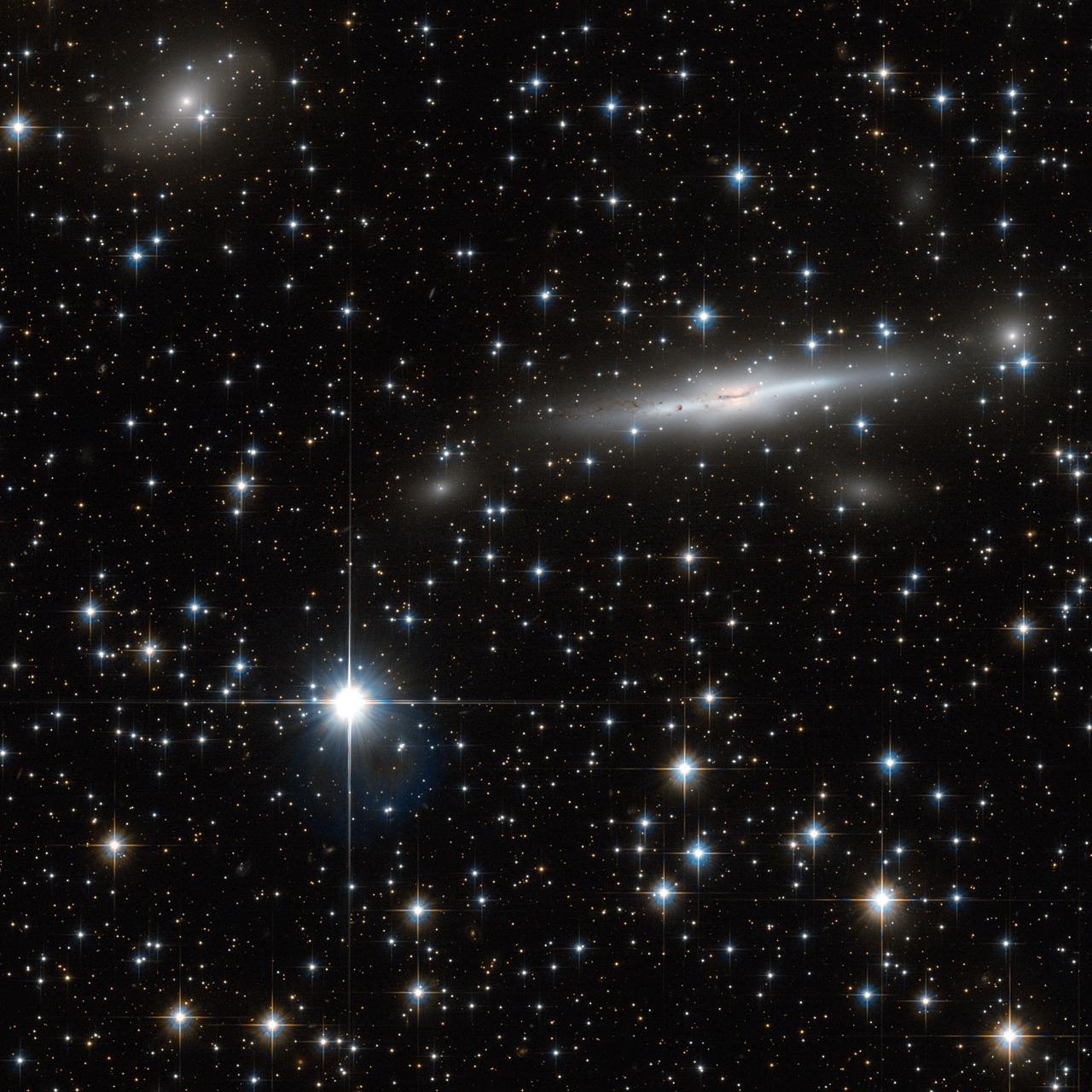
Galaxy clusters rank among the largest gravitationally bound structures in existence.
A single cluster may contain hundreds or even thousands of galaxies.
These galaxies are immersed within enormous clouds of hot gas and surrounded by vast halos of dark matter.
The mass of a large cluster can equal millions of billions of Suns.
Because they are so massive, galaxy clusters serve as excellent probes of cosmic motion.
If clusters across enormous distances appear to move together in the same direction, astronomers pay attention.
Such coordinated motion could reveal something profound about the structure of the universe.
The Cosmic Microwave Background
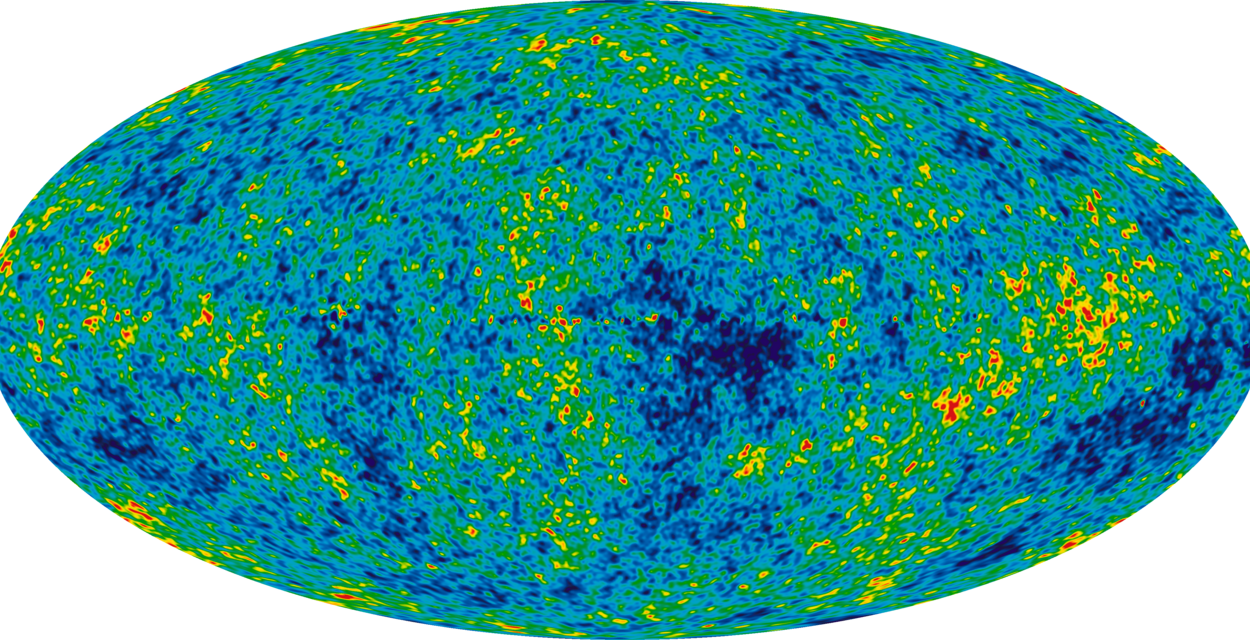
One of the most important tools for studying cosmic motion is the cosmic microwave background.
This faint radiation fills the universe.
It is often described as the afterglow of the Big Bang.
About 380,000 years after the universe began, temperatures dropped enough for light to travel freely through space. That ancient light still exists today, stretched into microwave wavelengths by cosmic expansion.
The cosmic microwave background provides a snapshot of the infant universe.
Because it permeates all of space, it also serves as a cosmic reference frame.
Astronomers can compare the motion of galaxies and clusters relative to this ancient radiation.
This comparison became central to the dark flow story.
The First Hints of Something Strange
In the early 2000s, researchers began analyzing galaxy cluster motions using data from microwave observations.
One group of scientists focused on a subtle phenomenon known as the kinematic Sunyaev–Zel’dovich effect.
When cosmic microwave background photons pass through hot gas within a moving galaxy cluster, their properties can change slightly.
These changes can provide clues about the cluster’s motion.
Detecting this effect is extremely challenging because the signal is tiny.
Nevertheless, researchers believed it offered a way to measure the motions of distant galaxy clusters.
As they analyzed data, something unexpected appeared.
Many clusters seemed to be moving in roughly the same direction.
Not just nearby clusters.
Not just clusters within a particular region.
Clusters spread across enormous distances appeared to share a common motion.
This apparent movement became known as dark flow.
What Exactly Is Dark Flow?
Dark flow refers to a proposed large-scale bulk motion of galaxy clusters across a significant portion of the observable universe.
According to the original findings, clusters appeared to drift together at speeds of hundreds of kilometers per second.
Even more surprising was the scale involved.
The motion seemed coherent across distances extending billions of light-years.
Instead of moving randomly in response to local gravitational influences, these clusters appeared to participate in a giant cosmic current.
If true, this would be difficult to explain using known structures within the observable universe.
Something much larger might be influencing them.
That possibility immediately generated excitement and controversy.
Why Dark Flow Was So Surprising
Standard cosmology predicts that matter should become increasingly uniform when viewed across sufficiently large scales.
Local variations certainly exist.
Clusters, superclusters, filaments, and voids all create gravitational influences.
However, these influences should average out over enormous distances.
A coherent motion spanning much of the observable universe was unexpected.
Imagine looking at leaves floating on an enormous lake.
Small groups may drift together because of local currents.
But if leaves separated by thousands of kilometers all moved in the same direction at the same speed, you would suspect something larger was affecting the entire system.
Dark flow seemed to imply exactly that kind of large-scale influence.
Looking Beyond the Observable Universe
One reason dark flow captured public imagination is that it hinted at something beyond the observable universe.
The observable universe includes everything whose light has had time to reach us since the Big Bang.
This region extends roughly 46 billion light-years in every direction.
Yet cosmologists have long recognized that the observable universe may represent only a small part of a much larger cosmos.
There is no known reason why existence should stop at the observable horizon.
Beyond it may lie regions forever hidden from direct observation.
If dark flow is real, some scientists suggested that massive structures beyond the observable universe could be exerting gravitational influence on visible matter.
In effect, unseen regions might be tugging galaxy clusters toward them.
The idea was both thrilling and unsettling.
Gravity Across Immense Distances
Gravity operates across all distances.
Every object with mass exerts gravitational attraction.
Although gravity weakens with distance, extremely massive structures can influence regions far away.
If unimaginably large concentrations of matter existed beyond our observable horizon, they could potentially affect motions within the visible universe.
This possibility offered one explanation for dark flow.
Perhaps galaxy clusters were responding to gravitational forces originating from regions we can never directly observe.
Such a scenario would transform dark flow into evidence that the observable universe is part of something vastly larger.
For many people, this was the most fascinating implication of all.
The Multiverse Connection
Dark flow soon became linked in popular discussions to the concept of a multiverse.
A multiverse refers to a hypothetical collection of multiple universes existing beyond our own.
Various theories in cosmology and physics allow for such possibilities.
Some researchers speculated that dark flow might reflect interactions between our universe and neighboring regions of a larger cosmic structure.
Perhaps our observable universe was influenced by matter existing outside our cosmic bubble.
It is important to emphasize that these ideas remain highly speculative.
Dark flow does not provide evidence for a multiverse.
However, because it seemed difficult to explain within conventional cosmology, it inspired discussions about possibilities lying beyond standard models.
The connection between dark flow and the multiverse captured widespread attention despite the lack of definitive evidence.
Measuring the Unmeasurable
One reason dark flow remains controversial is that measuring it is extraordinarily difficult.
The signals involved are incredibly weak.
Researchers rely on subtle distortions within microwave background radiation.
Tiny errors can significantly affect results.
Distinguishing genuine motion from observational noise presents a major challenge.
The universe itself complicates matters further.
Galaxy clusters possess complex internal structures.
Hot gas behaves in complicated ways.
Instrumental limitations introduce additional uncertainties.
Because the measurements are so delicate, different research teams sometimes reach different conclusions using similar datasets.
This difficulty lies at the center of the ongoing debate.
Initial Evidence and Excitement
When the first dark flow studies appeared, they attracted significant attention within astronomy.
The results suggested a coherent motion extending across vast cosmic distances.
Some analyses indicated that clusters might be moving toward a particular region of the sky.
The apparent scale of the effect was remarkable.
If confirmed, dark flow could require modifications to existing cosmological models.
Scientific journals, news organizations, and the public quickly became interested.
The possibility that invisible structures beyond the observable universe were influencing cosmic motion seemed almost science fiction-like.
Yet it emerged from genuine astronomical observations.
For a time, dark flow became one of the most talked-about mysteries in cosmology.
The Role of the Wilkinson Microwave Anisotropy Probe
Much of the original dark flow research relied on data collected by the Wilkinson Microwave Anisotropy Probe, often called WMAP.
Launched by NASA in 2001, WMAP mapped tiny temperature variations in the cosmic microwave background with unprecedented precision.
These observations transformed cosmology.
Researchers used WMAP data to investigate countless questions about the universe.
Dark flow studies represented one of the more controversial applications.
Because the proposed effect depended on extremely subtle measurements, the quality of WMAP data was crucial.
However, even high-quality observations can be difficult to interpret when signals are weak.
Enter the Planck Mission
Later, the European Space Agency launched a more advanced mission called Planck.
Planck measured the cosmic microwave background with greater sensitivity and resolution than previous missions.
Many astronomers hoped Planck data would settle the dark flow debate.
If the phenomenon were real, improved observations should strengthen the evidence.
If it resulted from statistical fluctuations or measurement errors, the effect might disappear.
The outcome proved complicated.
Some analyses using Planck data failed to find convincing evidence for dark flow.
This intensified scientific disagreement.
Skepticism Emerges
As more researchers examined the evidence, skepticism grew.
Several studies argued that the observed motion could result from statistical noise.
Others suggested that uncertainties in data processing might create an apparent flow where none actually existed.
Some teams repeated analyses using different methods and found much weaker signals.
Others reported no significant evidence at all.
In science, extraordinary claims require extraordinary evidence.
Because dark flow implied profound consequences for cosmology, researchers demanded extremely strong proof.
The growing disagreement highlighted the challenges of extracting reliable conclusions from subtle measurements.
The Current Scientific View
Today, dark flow remains an unresolved and controversial topic.
Most cosmologists do not consider it an established phenomenon.
The original claims generated considerable interest, but subsequent analyses have produced mixed results.
Some researchers continue exploring the possibility.
Others argue that current evidence does not support the existence of a large-scale coherent flow.
Importantly, dark flow has not become part of the standard cosmological model.
The scientific community generally regards it as a hypothesis requiring further confirmation.
This does not mean the idea has been disproven.
Rather, the available evidence remains inconclusive.
Why Scientific Debate Is Healthy
The dark flow story provides an excellent example of how science works.
New observations sometimes challenge accepted ideas.
Researchers investigate unusual findings.
Independent teams attempt verification.
Alternative explanations are tested.
Evidence is scrutinized repeatedly.
Sometimes revolutionary discoveries survive this process.
Sometimes they do not.
Either outcome advances knowledge.
If dark flow eventually proves real, scientists will gain extraordinary insight into the universe.
If it proves illusory, researchers will still learn valuable lessons about measurement techniques and cosmic observations.
Science progresses through precisely this kind of careful questioning.
The Emotional Appeal of Dark Flow
Part of dark flow’s enduring fascination comes from its emotional power.
Humans naturally wonder what lies beyond the horizon.
Ancient explorers wondered what existed beyond distant oceans.
Modern astronomers wonder what lies beyond the observable universe.
Dark flow touches this timeless curiosity.
It hints that our visible cosmos may not be the whole story.
Perhaps unseen structures influence everything we observe.
Perhaps regions forever beyond our reach still leave detectable fingerprints on our universe.
These possibilities resonate because they combine scientific investigation with profound philosophical questions.
The Limits of Observation
One lesson from the dark flow debate is that the universe possesses fundamental observational limits.
Light travels at a finite speed.
The observable universe is bounded by what light has had time to reach us.
Beyond that horizon lies uncertainty.
We can build larger telescopes.
We can develop more sensitive instruments.
Yet some regions may remain permanently inaccessible.
Dark flow, if real, would represent a rare example of indirect evidence from beyond this boundary.
Even if the phenomenon ultimately disappears under scrutiny, the discussion highlights the remarkable challenge of studying a universe larger than what we can directly observe.
Dark Flow and the Future of Cosmology
Future observations may eventually resolve the dark flow question.
New surveys continue mapping galaxy motions with increasing precision.
Improved measurements of galaxy clusters may reveal subtle patterns hidden within existing data.
Advances in computational modeling allow researchers to test increasingly sophisticated cosmological scenarios.
Future microwave background missions could provide even more sensitive observations.
As technology improves, scientists may finally determine whether dark flow represents a genuine cosmic phenomenon or a statistical illusion.
Either answer would be significant.
The search itself drives progress in understanding the universe.
What If Dark Flow Is Real?
Suppose future evidence confirms dark flow beyond reasonable doubt.
What would that mean?
The implications could be profound.
Astronomers would need to identify the source of the motion.
Known structures within the observable universe might prove insufficient.
Researchers could be forced to consider influences originating beyond the cosmic horizon.
Theories of large-scale cosmic structure might require revision.
Our understanding of the observable universe’s relationship to the larger cosmos could change dramatically.
Such a discovery would rank among the most important developments in modern cosmology.
What If Dark Flow Is Not Real?
Equally important is the possibility that dark flow does not exist.
In that case, the story remains valuable.
Science often advances by investigating anomalies.
Many apparent mysteries eventually receive conventional explanations.
The process strengthens confidence in established theories and improves observational techniques.
If dark flow proves to be an artifact of measurement or statistical fluctuations, cosmologists will still have learned important lessons about interpreting delicate signals in complex datasets.
Negative results are not failures.
They are part of the scientific journey.
The Universe Still Holds Many Secrets
Whether dark flow exists or not, one fact remains clear: the universe still contains countless mysteries.
Dark matter remains unidentified.
Dark energy continues to puzzle researchers.
The nature of cosmic inflation is uncertain.
Questions about black holes, quantum gravity, and the origins of the cosmos remain unresolved.
Dark flow belongs to a long tradition of scientific puzzles that challenge our understanding and inspire further exploration.
Some mysteries disappear.
Others open entirely new chapters in science.
No one yet knows which category dark flow will ultimately occupy.
Conclusion
Dark flow is a proposed large-scale motion of galaxy clusters that appears difficult to explain using standard cosmological models. First suggested through analyses of galaxy cluster movements relative to the cosmic microwave background, it seemed to indicate that enormous regions of the observable universe were drifting together in a common direction. Such behavior raised the extraordinary possibility that unseen structures beyond the observable universe might be exerting gravitational influence on visible matter.
The idea generated tremendous excitement because it touched fundamental questions about the nature of reality, the limits of observation, and the possibility of regions beyond our cosmic horizon. Yet dark flow remains controversial. While some studies have reported evidence supporting the phenomenon, others have found little or no indication that it exists. As a result, dark flow is not currently accepted as an established feature of the universe.
Whether future observations confirm or refute it, dark flow represents one of the most fascinating scientific mysteries of the modern era. It reminds us that the cosmos is still full of unanswered questions and that even on the largest scales imaginable, nature can surprise us. In the search for understanding, every mystery—real or apparent—brings us one step closer to uncovering the true story of the universe.