On a clear night, far away from city lights, the sky becomes a river of stars. Stretching across the darkness is a faint glowing band that has fascinated humanity for thousands of years. Ancient cultures saw it as a celestial pathway, a heavenly river, or a bridge connecting worlds. Today, we know that this luminous band is our home galaxy—the Milky Way.
Yet what most people do not realize is that the Milky Way is not just a random collection of stars. It belongs to one of the most spectacular classes of galaxies in the universe: the spiral galaxy.
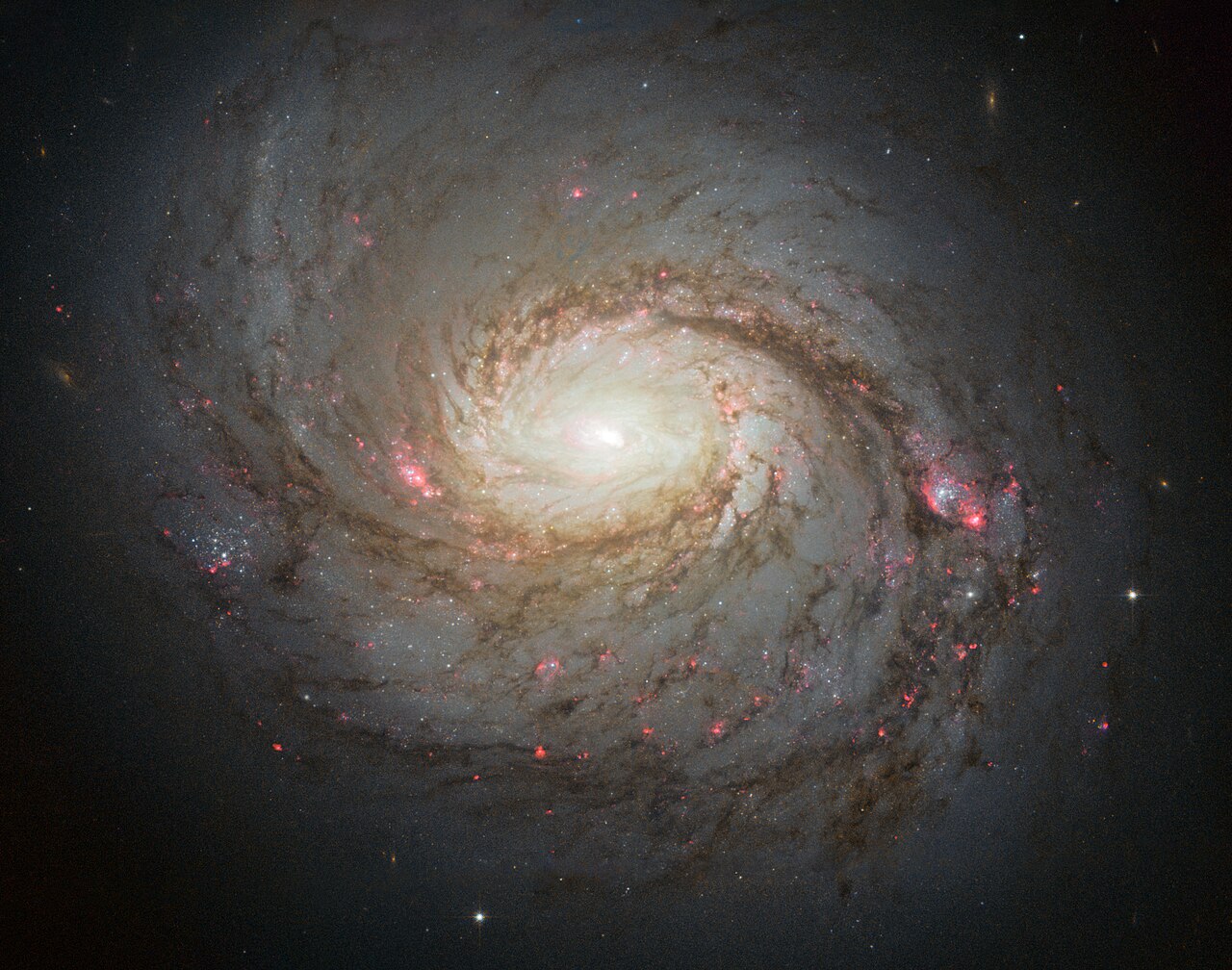
Spiral galaxies are among the most beautiful structures known to science. Their graceful arms wind outward like cosmic whirlpools, glowing with billions of stars, vast clouds of gas, and brilliant stellar nurseries. Seen from afar, they resemble giant pinwheels spinning through the darkness of space.
But their beauty is only part of the story.
Spiral galaxies are dynamic systems where stars are born, planets form, and entire solar systems evolve. They are among the most active and fascinating environments in the cosmos. Understanding spiral galaxies helps us understand not only the universe but also our own origins, because every atom in our bodies was shaped by processes that occurred within galaxies like the Milky Way.
The story of spiral galaxies is ultimately the story of how order emerges from cosmic chaos and how gravity creates some of the most breathtaking structures in existence.
Understanding What a Galaxy Is
Before exploring spiral galaxies specifically, it is important to understand what astronomers mean when they use the word “galaxy.”
A galaxy is an enormous collection of stars, gas, dust, planets, stellar remnants, dark matter, and other cosmic material held together by gravity.
Galaxies are among the largest structures in the universe.
Some contain only a few million stars, while others hold trillions.
The Milky Way alone contains hundreds of billions of stars, each potentially surrounded by planets and other celestial objects.
Galaxies are not scattered randomly through space. They exist within a vast cosmic web stretching across the universe. Many gather into groups and clusters connected through gravity.
Each galaxy is essentially a giant ecosystem where stars are born, evolve, and eventually die.
Within these immense stellar cities, gravity acts as the master architect, shaping structures over billions of years.
What Is a Spiral Galaxy?
A spiral galaxy is a type of galaxy characterized by a central bulge surrounded by a flattened rotating disk that contains spiral arms extending outward.
These spiral arms give the galaxy its distinctive appearance.
When viewed from above, a spiral galaxy resembles a cosmic pinwheel or whirlpool. The arms curve gracefully around the center, creating one of nature’s most elegant patterns.
Spiral galaxies are not static objects frozen in place.
They rotate.
Stars, gas, and dust move around the galactic center in enormous orbits.
This rotation, combined with gravitational forces, helps maintain the spiral structure.
Spiral galaxies are among the most common large galaxies in the universe and include some of the best-known galaxies ever discovered.
Our Milky Way is one of them.
The Discovery of Spiral Galaxies
For much of human history, galaxies were mysterious.
Before powerful telescopes existed, astronomers could only see faint patches of light in the sky. Their true nature remained unknown.
During the nineteenth century, improvements in telescopes revealed that some of these fuzzy objects possessed spiral structures.
Observers began sketching intricate spiral patterns visible in distant “nebulae.”
At the time, scientists debated whether these objects were part of the Milky Way or entirely separate systems.
The answer emerged during the early twentieth century.
Observations by astronomers such as Edwin Hubble demonstrated that many spiral nebulae were actually galaxies located far beyond the Milky Way.
This discovery dramatically expanded humanity’s view of the universe.
The cosmos suddenly became much larger than anyone had imagined.
What appeared to be faint smudges of light were revealed to be gigantic star systems containing billions of stars.
The Basic Structure of a Spiral Galaxy
Although spiral galaxies vary in size and appearance, most share a similar overall structure.
At their center lies a dense region known as the galactic bulge.
Surrounding the bulge is a flattened rotating disk filled with stars, gas, and dust.
Extending through the disk are the spiral arms that make these galaxies famous.
Beyond the visible galaxy lies a much larger halo containing old stars, globular clusters, and vast amounts of dark matter.
Together, these components create a complex and beautiful cosmic system.
Each part plays an important role in the galaxy’s evolution and behavior.
The Galactic Bulge
The central bulge forms the heart of a spiral galaxy.
This region contains a dense concentration of stars packed closely together.
Many of these stars are old, having formed billions of years ago during the galaxy’s early history.
Viewed from afar, the bulge often appears bright because so many stars occupy a relatively small volume of space.
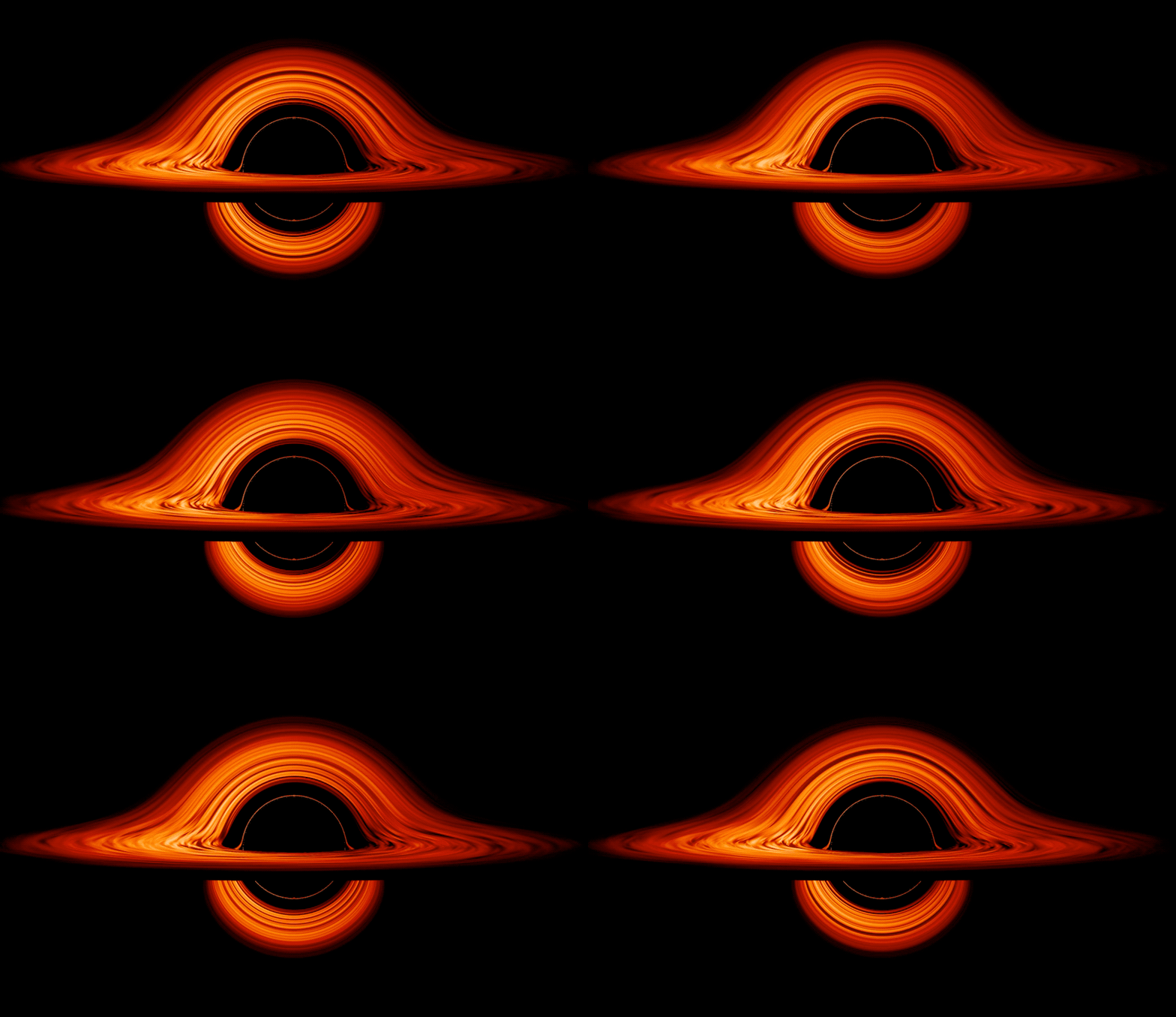
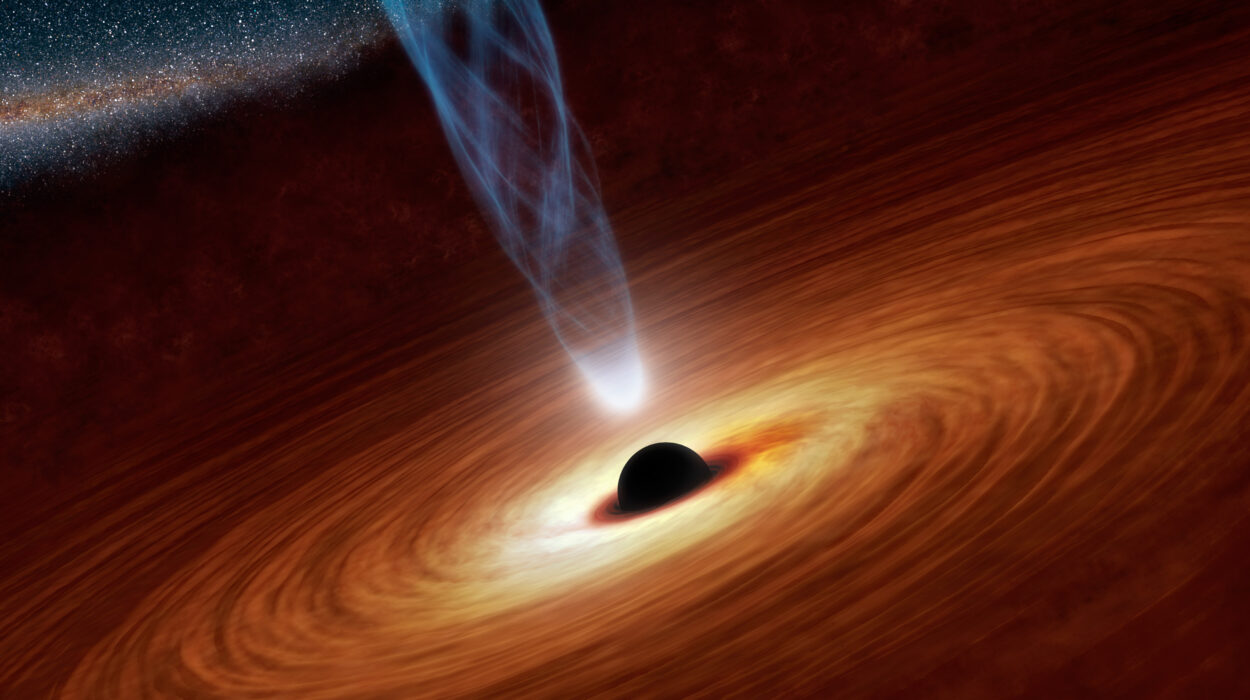
In many spiral galaxies, including the Milky Way, the bulge contains a supermassive black hole.
These black holes can possess masses millions or even billions of times greater than the Sun.
Although they dominate the very center of the galaxy, they occupy only a tiny fraction of its total volume.
Their influence, however, can extend across enormous distances.
The Rotating Galactic Disk
Surrounding the bulge is the galactic disk.
This flattened structure contains most of the galaxy’s visible material.
Stars orbit the center within this disk, along with immense clouds of gas and dust.
The disk is where much of the galaxy’s activity occurs.
New stars continue forming here.
Planetary systems emerge around young stars.
Supernova explosions enrich the surrounding environment with heavier elements.
The disk is not a quiet place.
It is a constantly changing region shaped by gravity, star formation, and stellar evolution.
The Spiral Arms
The spiral arms are undoubtedly the most recognizable feature of spiral galaxies.
These sweeping structures curve outward from the central region, wrapping around the galaxy like enormous cosmic ribbons.
Contrary to what many people imagine, spiral arms are not rigid structures.
They are not permanent collections of specific stars.
Instead, they are regions where stars and gas become temporarily concentrated.
A useful comparison is a traffic jam on a highway.
Cars enter and leave the traffic jam, but the traffic pattern itself persists.
Similarly, stars move through spiral arms while the overall spiral structure remains.
Within these arms, gas clouds become compressed, triggering the formation of new stars.
As a result, spiral arms often appear bright and blue because they contain many young, massive stars.
Why Are Spiral Arms So Beautiful?
The beauty of spiral arms comes from a combination of structure and activity.
Young stars illuminate the arms with brilliant light.
Glowing nebulae mark regions where stars are actively forming.
Dark lanes of dust weave through the luminous patterns, creating striking contrasts.
From a distance, these features blend into graceful spiral designs.
The result is one of the most visually stunning sights in the universe.
Yet beneath this beauty lies a story of gravity, motion, and physics operating over billions of years.
The arms are not decorative features.
They are dynamic regions where galaxies continue building new generations of stars.
The Mystery of Spiral Patterns
One of astronomy’s most fascinating puzzles involved understanding how spiral arms form and survive.
If all stars orbited the galaxy at the same speed, the arms might remain stable.
But galaxies rotate differentially.
Stars closer to the center orbit faster than stars farther away.
If spiral arms were fixed structures, they would eventually wind up so tightly that they would disappear.
Yet spiral galaxies continue displaying well-defined arms.
Astronomers solved this mystery through the theory of density waves.
According to this idea, spiral arms are not fixed collections of stars but regions of enhanced density moving through the galactic disk.
As gas enters these regions, it becomes compressed, leading to bursts of star formation.
This process helps maintain the spiral appearance over long periods.
Star Formation Inside Spiral Arms
Spiral arms are among the universe’s most productive stellar nurseries.
Within these regions, enormous clouds of hydrogen gas and dust collapse under gravity.
As material falls inward, temperatures and pressures rise.
Eventually, nuclear fusion begins.
A star is born.
Many of the brightest stars visible in spiral galaxies formed within spiral arms.
Because massive stars live relatively short lives, their presence indicates recent star formation.
These stars flood their surroundings with ultraviolet radiation, making the arms glow brightly.
In a sense, spiral arms are cosmic construction zones where new stars are continually being built.
The Life of Stars in Spiral Galaxies
The stars within a spiral galaxy are not all the same age.
Some formed billions of years ago.
Others are only a few million years old.
This diversity creates a rich and dynamic environment.
Young stars often appear blue and extremely bright.
Older stars tend to be cooler and redder.
As stars age, they undergo dramatic transformations.
Some expand into red giants.
Others explode as supernovae.
The most massive stars may leave behind neutron stars or black holes.
These stellar life cycles continuously reshape the galaxy.
Each generation of stars enriches the surrounding gas with heavier elements that future stars and planets can inherit.
The Role of Gas and Dust
Although stars dominate the visible appearance of galaxies, gas and dust play equally important roles.
Without them, star formation would cease.
Hydrogen gas serves as the primary fuel for creating new stars.
Dust grains, though tiny, help cool gas clouds and facilitate collapse.
Spiral galaxies often contain abundant reservoirs of both gas and dust.
These materials concentrate within spiral arms, fueling ongoing star formation.
Dark dust lanes frequently trace the inner edges of spiral arms, producing some of the most striking images in astronomy.
Far from being empty space, galaxies are filled with the raw ingredients of future stars and worlds.
The Milky Way as a Spiral Galaxy
For centuries, humanity viewed the Milky Way from within.
This made it difficult to determine its true shape.
Imagine trying to understand the architecture of a forest while standing among the trees.
Only gradually did astronomers piece together the Milky Way’s structure.
Today, evidence indicates that the Milky Way is a barred spiral galaxy.
This means it possesses a central bar-shaped structure extending through its bulge.
Spiral arms emerge from the ends of this bar.
Our Solar System resides within one of the galaxy’s smaller spiral features, located roughly 27,000 light-years from the center.
Every star visible in the night sky belongs to this vast spiral system.
Living Inside a Spiral Galaxy
It is easy to forget that Earth is not merely near a galaxy.
Earth exists within one.
The Sun orbits the Milky Way’s center at a speed of approximately 220 kilometers per second.
Despite this tremendous velocity, completing a single orbit takes about 230 million years.
The last time Earth occupied its current position in the galaxy, dinosaurs had not yet appeared.
Since then, continents have shifted, species have evolved, and civilizations have risen and fallen.
Yet the Solar System continues its long journey around the galactic center.
We are passengers aboard a rotating spiral galaxy traveling through the universe.
Barred Spiral Galaxies
Many spiral galaxies possess a central bar.
These systems are called barred spiral galaxies.
The Milky Way belongs to this category.
The bar consists of stars extending across the galaxy’s center.
Astronomers believe bars help channel gas toward central regions, influencing star formation and galactic evolution.
Barred spiral galaxies are surprisingly common.
In fact, observations suggest that a majority of large spiral galaxies contain bars.
Understanding these structures helps scientists reconstruct the evolutionary histories of galaxies.
Famous Spiral Galaxies in the Universe
The universe contains countless magnificent spiral galaxies.
Among the most famous is the Andromeda Galaxy, the closest large galaxy to the Milky Way.
Visible to the naked eye under dark skies, Andromeda contains roughly a trillion stars and spans over 200,000 light-years.
Another famous example is the Whirlpool Galaxy, known for its spectacular and nearly perfect spiral structure.
The Pinwheel Galaxy and the Sombrero Galaxy are also among the most photographed galaxies in astronomy.
These systems reveal the incredible diversity and beauty found within the spiral galaxy family.
Spiral Galaxies and Dark Matter
One of the greatest discoveries in modern astronomy emerged from studying how spiral galaxies rotate.
Scientists expected stars farther from the center to move more slowly than those near the center.
Instead, observations revealed something surprising.
Outer stars moved much faster than expected.
Visible matter alone could not explain these motions.
The solution appeared to involve dark matter.
Dark matter forms an invisible halo surrounding galaxies.
Although it cannot be seen directly, its gravitational influence affects the motion of stars and gas.
Without dark matter, many spiral galaxies would not remain stable.
Their observed behavior strongly suggests that invisible mass dominates much of the universe.
Spiral Galaxies Through Cosmic Time
Spiral galaxies have not always existed in their current forms.
The early universe looked very different.
Young galaxies were often smaller, clumpier, and more chaotic.
Over billions of years, gravity gradually organized matter into larger structures.
Collisions and mergers reshaped galaxies.
Gas settled into rotating disks.
Spiral patterns emerged.
The elegant galaxies seen today represent the outcome of a long evolutionary process.
Every spiral galaxy carries a history stretching back billions of years to the dawn of cosmic structure formation.
Galaxy Collisions and the Future of the Milky Way
Although spiral galaxies appear stable, they are not immune to change.
Galaxies frequently interact with one another.
Sometimes these encounters lead to mergers.
The Milky Way itself is destined for such an event.
In approximately four to five billion years, the Milky Way and Andromeda Galaxy are expected to collide.
This collision will not resemble a car crash.
Instead, gravity will gradually reshape both galaxies over millions of years.
Stars will rarely collide directly.
However, the overall structures of both galaxies will be transformed.
The resulting system may become a large elliptical galaxy.
Thus, even magnificent spiral galaxies are temporary stages in cosmic evolution.
Why Spiral Galaxies Fascinate Humanity
There is something deeply captivating about spiral galaxies.
Perhaps it is their balance between order and motion.
Their shapes appear organized, yet they remain dynamic.
Their structures seem delicate, yet they survive for billions of years.
They embody both beauty and complexity.
When people first see detailed images of spiral galaxies, many experience a sense of wonder.
These immense structures contain hundreds of billions of stars, countless planets, and unimaginable possibilities.
Yet they also feel strangely familiar.
The spiral pattern appears throughout nature—in hurricanes, seashells, flower petals, and whirlpools.
Seeing the same geometry repeated on a galactic scale creates a powerful emotional connection between humanity and the cosmos.
What Spiral Galaxies Teach Us About Our Origins
Every atom heavier than hydrogen and helium was forged inside stars.
The carbon in our bodies, the oxygen we breathe, and the calcium in our bones originated through stellar processes.
Spiral galaxies serve as vast factories where stars continually form and evolve.
Through countless generations of stars, galaxies enrich themselves with heavier elements.
Eventually, some of those elements become part of planets and living organisms.
In this sense, studying spiral galaxies is also studying ourselves.
The history of the Milky Way is inseparable from the history of Earth and humanity.
We are products of galactic evolution.
The Future of Spiral Galaxy Research
Modern astronomy is entering an exciting era.
Powerful observatories are providing unprecedented views of spiral galaxies.
Space telescopes can peer through dust clouds and observe star-forming regions in extraordinary detail.
Radio telescopes map vast reservoirs of hydrogen gas.
Computer simulations recreate billions of years of galactic evolution.
Scientists continue investigating how spiral arms form, how dark matter shapes galaxies, and how galactic environments influence star formation.
Each new discovery reveals greater complexity and deeper beauty.
Despite decades of research, many mysteries remain unsolved.
The story of spiral galaxies is still being written.
Conclusion
Spiral galaxies are among the most magnificent structures in the universe. Defined by their rotating disks, luminous spiral arms, and dense central bulges, they represent a remarkable combination of beauty, motion, and cosmic architecture. Within their sweeping arms, stars are born, planets form, and the materials necessary for life are created and distributed throughout space.
Our own Milky Way is a barred spiral galaxy, making the study of spiral galaxies deeply personal. Every star we see in the night sky belongs to this vast rotating system, and every human being exists within its enormous structure. From the formation of stars to the influence of dark matter, spiral galaxies reveal some of the most important processes shaping the universe.
More than simply collections of stars, spiral galaxies are living records of cosmic history. They tell stories of gravity, evolution, creation, and transformation that span billions of years. Their graceful arms remind us that even on the largest scales imaginable, the universe can produce patterns of astonishing elegance.
When we gaze into the night sky and look toward the Milky Way, we are not merely observing a distant object. We are looking at our cosmic home—a beautiful spiral galaxy whose story is also our own.