For over half a century, the people of Central Africa have whispered stories of a creature that defies the very nature of its kind. They spoke of a tiny fish that could leave the water behind, clinging to the slick, vertical faces of thundering cascades to move toward the sky. To many, it sounded like a myth—a tall tale of the river. But between 2018 and 2020, a team of researchers led by Pacifique Kiwele Mutambala from the University of Lubumbashi stepped into the splash zones of the upper Congo Basin to find the truth. What they discovered was the shellear fish, known scientifically as Parakneria thysi, a species that turns a 50-foot wall of falling water into a migratory highway.
A Vertical Odyssey Against the Current
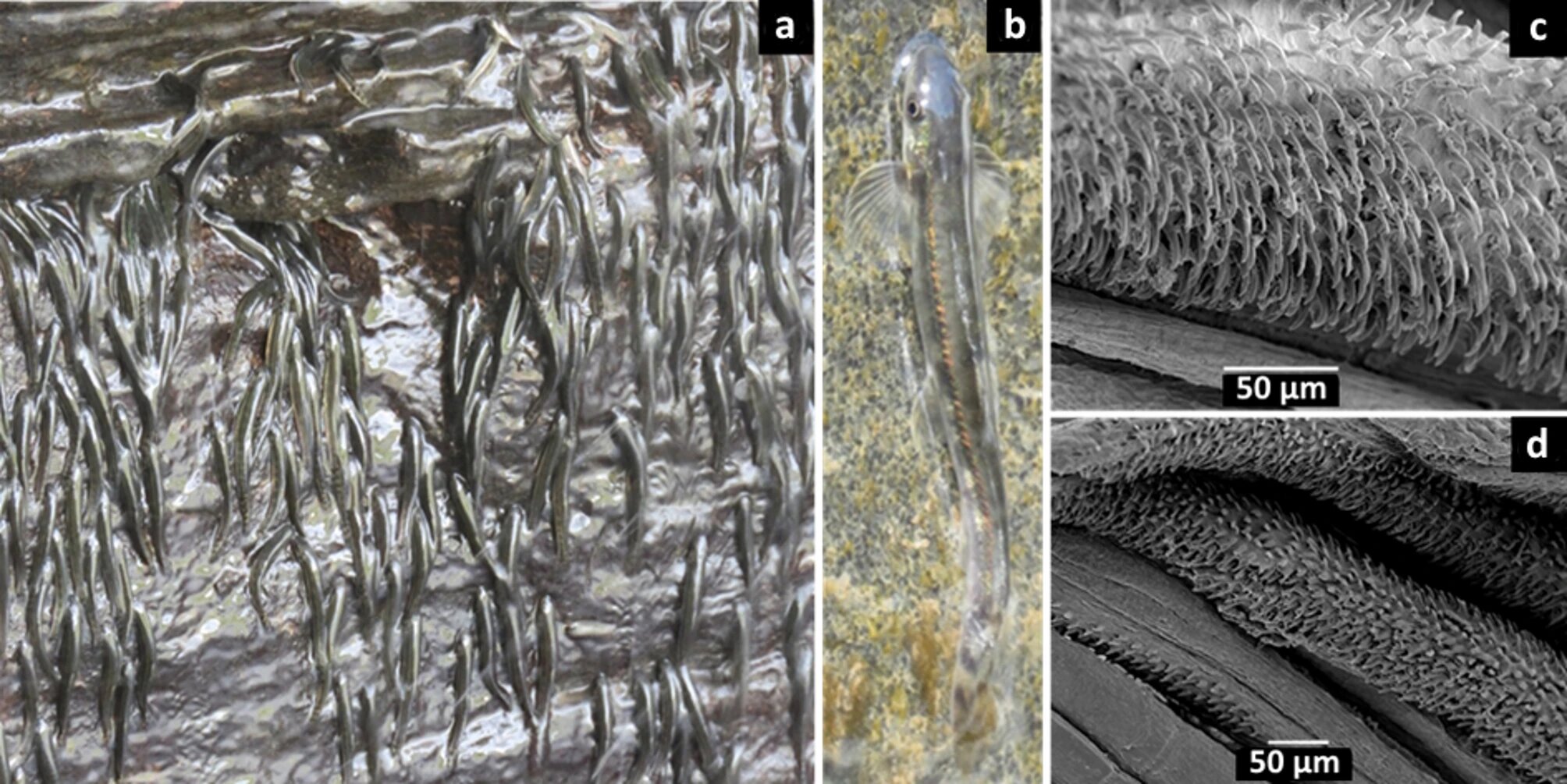
The stage for this dramatic journey is the Luvilombo Falls on the Luvilombo River. To a human, 50 feet (15 meters) might seem like a modest height, but for a fish that measures only between 37 and 48 mm in length, it is a staggering mountain of wet rock and high-pressure jets. The researchers watched in awe as thousands of these tiny pioneers began their ascent. They do not swim up the waterfall in the traditional sense; instead, they migrate by crawling through the splash zone, where the rock is perpetually slick and the air is thick with mist.
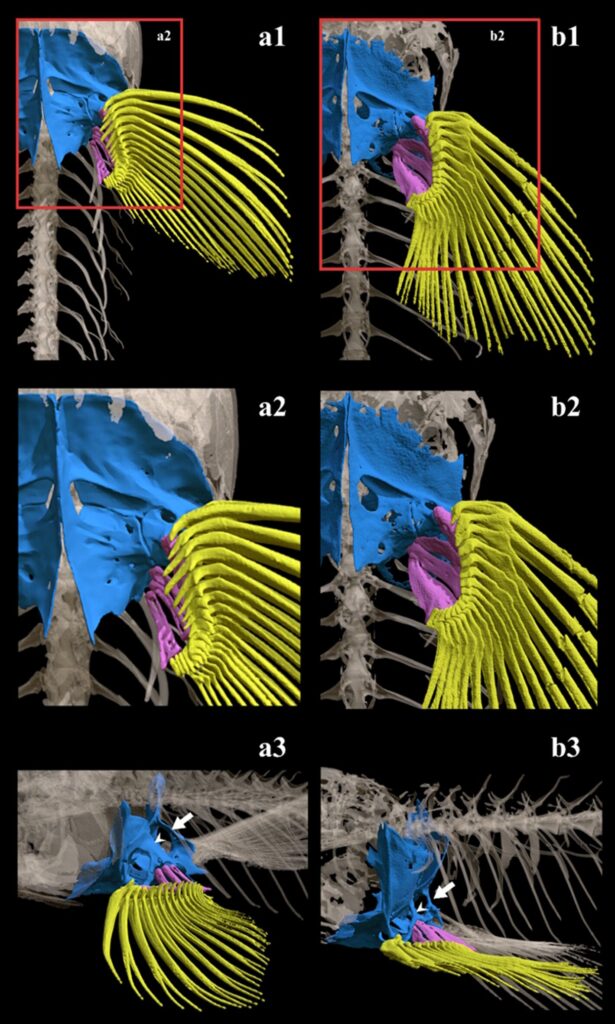
The physics of their survival is a marvel of biological engineering. To stay anchored against the crushing weight of the river, the shellear possesses specialized pads on its pectoral and pelvic fins. These pads are covered in tiny, hook-like projections that act like a climber’s crampons, gripping the microscopic irregularities of the stone. Supporting these grips are hypertrophied muscles, unusually large and powerful for a fish of this size, which provide the raw strength needed to haul their body weight upward against gravity.
The grueling Ten Hour Climb
Nature, however, imposes a strict weight limit on this feat. The study revealed that once a shellear grows past a certain point—usually around 48 mm—it loses the ability to scale the heights. While some individuals can reach a total size of 96 mm, these larger fish appear too heavy to be supported by their specialized muscles and fins. Climbing is a young fish’s game, a window of opportunity that closes as they mature and gain mass.
Even for the nimble youngsters, the journey is an exercise in extreme endurance. It is not a continuous sprint but a tactical siege. Scientists estimate that a single fish takes nearly 10 hours to reach the summit of Luvilombo Falls. Interestingly, only about 15 minutes of that entire window is spent in actual upward motion. The fish moves at a creeping pace of 1.5 to 3.0 cm per second, struggling for 30 to 60 seconds before it is forced to stop.
The rest of the time is spent in a state of desperate recovery. The fish utilize nine main horizontal ledges along the cliff face, where they may rest for an hour at a time to regain their strength. Between these major breaks, they take dozens of shorter pauses, lying flat against the vertical cliff to keep from being swept away. The danger is constant; some fish were observed losing their grip and plummeting back into the depths, particularly when attempting to navigate overhanging cliff sections where they had to travel upside-down.
Escaping the Shadows of the Deep
Why would a creature endure such a punishing, life-threatening ordeal? The researchers have developed several compelling theories. The migrations typically occur during the flooding periods at the end of the rainy season in April and May. It is possible that the shellear are simply trying to go home. During heavy rains, many fish are washed downstream, away from their preferred riffle and rapid habitats. The climb is a homecoming, a way for both displaced adults and the year’s new juveniles to (re)occupy the safer waters above the falls.
Survival, however, is likely the primary driver. The world at the base of the waterfall is a dangerous place. Data suggests that predators are far more common downstream, and the competition for food availability is fierce. By scaling the falls, the shellear reach a sanctuary where the waters are thinner, the food is more plentiful, and the larger hunters that stalk the lower river cannot follow.
The Fragile Future of the Waterfall Climbers
Despite their incredible ability to conquer vertical cliffs, the shellear are finding it increasingly difficult to overcome the obstacles placed in their way by humans. The very behavior that ensures their survival—congregating in massive numbers at the base of the falls to prepare for the ascent—makes them vulnerable. Illegal fishing is a major threat, as local fishermen use mosquito net seining to scoop up thousands of fish at once. This practice is strictly forbidden, as the tiny mesh sizes catch everything in the water, yet it persists despite local laws.
Even more devastating is the seasonal disappearance of the river itself. At the beginning of the dry season, just after the migration ends, the river is diverted upstream at Sangala Village for irrigation. This water is funneled away to grow beans and peanuts, often leaving the downstream sections of the river to dry out completely. If the water vanishes, the “climbing” fish have nowhere to go and no way to survive the transition into the next season.
Understanding the shellear fish is about more than just confirming a fifty-year-old legend. This research provides a vital blueprint for river management and regional conservation. By documenting these unique behaviors, scientists hope to promote eco-tourism as a sustainable alternative to destructive fishing and irrigation practices. Protecting the Parakneria thysi means protecting the integrity of the Congo Basin’s waterways, ensuring that these tiny, determined climbers can continue their ten-hour journey toward the sun for generations to come.
Study Details
Pacifique Kiwele Mutambala et al, Fish climbing in the upper Congo Basin (Central Africa), first report for the shellear Parakneria thysi on the Luvilombo Falls, Scientific Reports (2026). DOI: 10.1038/s41598-026-42534-8