Astronomers using the James Webb Space Telescope have successfully characterized the surface of LHS 3844 b, a rocky “super-Earth” located 48.5 light-years away. The study reveals a dark, airless world devoid of an atmosphere, with a surface likely composed of basaltic rock or weathered regolith similar to the Moon or Mercury. These findings suggest the planet lacks Earth-like plate tectonics and provides a rare glimpse into the geological diversity of planets orbiting distant red dwarf stars.
For decades, the study of exoplanets was limited to the gases surrounding them, leaving the actual ground beneath those atmospheres a mystery. That changed when an international team of researchers pointed the James Webb Space Telescope (JWST) toward a nearby star system to perform what is effectively interstellar geology. By capturing the infrared glow of a world nearly 50 light-years away, scientists have stripped back the veil of the unknown to describe the scorched, barren landscape of a planet where a year lasts less than half an Earth day.
A Scorched World in Perpetual Daylight
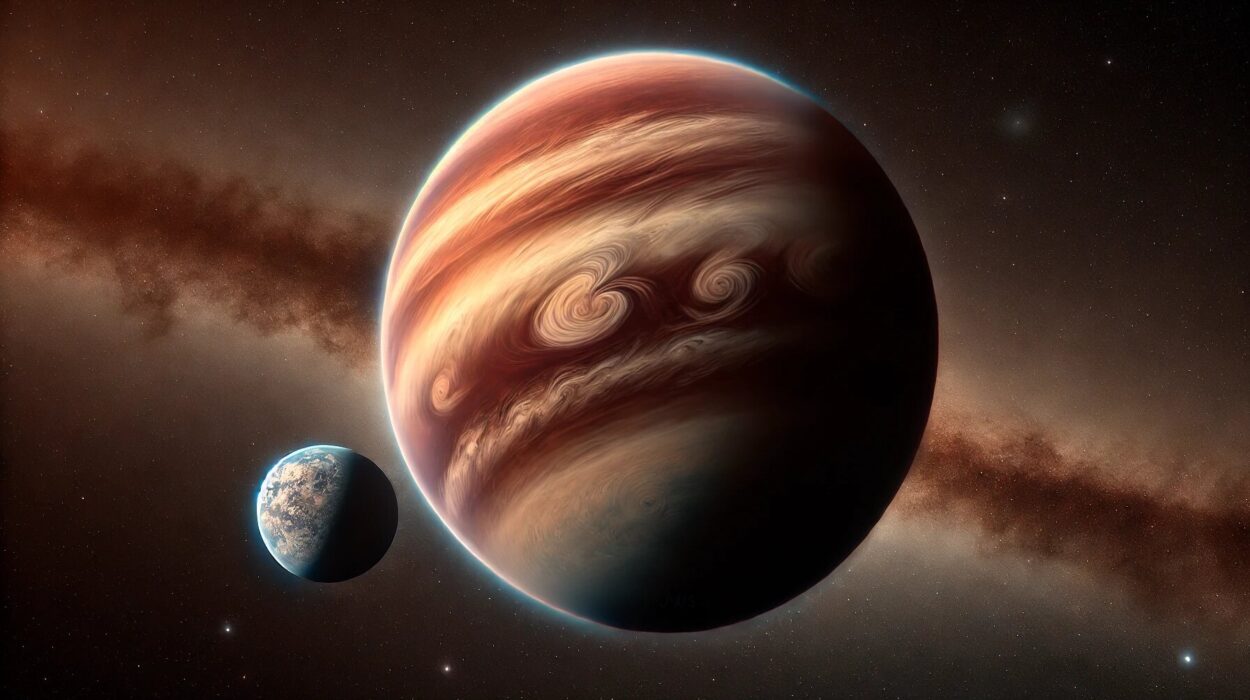
The subject of this study, LHS 3844 b, is a rocky world roughly 30% larger than Earth. It belongs to a class of planets known as “super-Earths,” but any similarity to our home ends with its density. The planet orbits a cool red dwarf star at an incredibly close distance, completing a full revolution in just 11 hours. Because it sits only three stellar diameters away from its host, the planet is tidally locked. One side is trapped in a permanent, blistering day, while the other remains in eternal night.
On this permanent dayside, temperatures soar to an average of 1000 Kelvin, which is approximately 1340 degrees Fahrenheit. Data from the telescope’s Mid-Infrared Instrument (MIRI) confirmed that the planet is a dark, hot, and barren rock. Most significantly, the observations show that LHS 3844 b is completely devoid of an atmosphere. Without a protective layer of gas to circulate heat or shield the surface, the planet sits exposed to the full force of its star’s radiation.
Decoding Geology Through Infrared Light
To understand what the surface is made of, the research team, led by Sebastian Zieba and Laura Kreidberg, utilized a technique called spectroscopy. The MIRI instrument broke down the infrared light coming from the planet into a spectrum ranging from 5 to 12 micrometers. By analyzing this “rainbow” of infrared signatures and combining it with older data from the Spitzer Space Telescope, the team created a chemical fingerprint of the planet’s crust.
The researchers compared these findings against a library of known minerals and rocks found on Earth, the Moon, and Mars. The data confidently ruled out a silicate-rich crust like the one found on Earth. On our planet, silicate-rich minerals like granite are formed through complex tectonic processes and the presence of water, which acts as a lubricant for moving plates. The absence of these minerals on LHS 3844 b suggests that Earth-like plate tectonics are either ineffective or non-existent on this world, likely due to a severe lack of water.
Volcanic Activity versus Space Weathering
The dark appearance of the surface points toward a composition of basalt or magmatic rock, rich in magnesium and iron. However, the specific state of that rock remains a subject of investigation. Scientists have developed two primary scenarios that explain the data. In the first scenario, the surface is composed of relatively “fresh” solid rock. For the rock to remain dark and visible in this state, it would require recent and widespread volcanic activity to constantly resurface the planet with new lava flows.
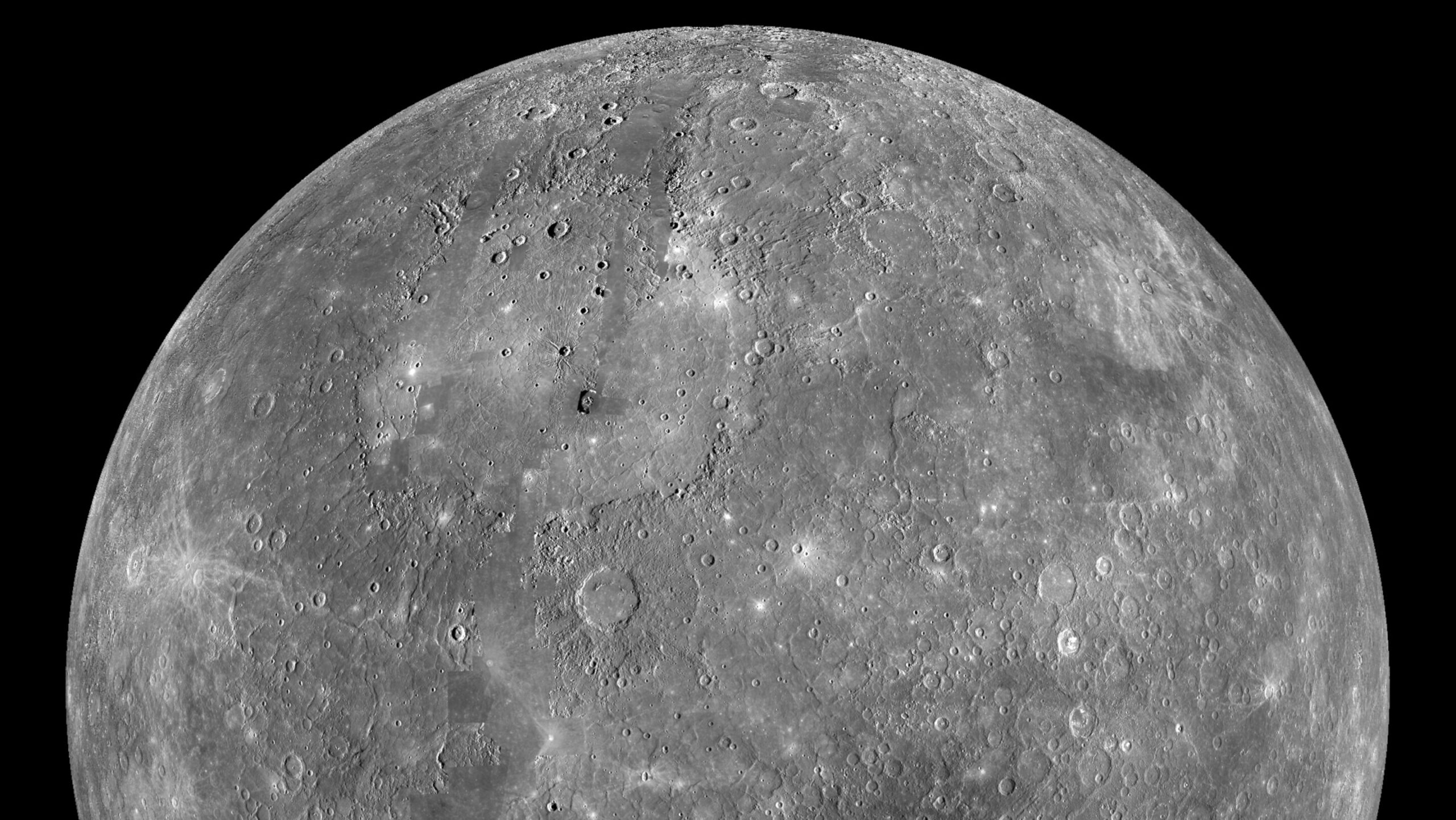
The second, and currently favored, scenario suggests a much older and more stagnant surface. In this version, the planet is covered in a layer of regolith—a fine powder of crushed minerals created by billions of years of space weathering. On airless bodies, constant bombardment by meteorites and high-energy radiation eventually breaks solid rock into dust. These processes also darken the material by adding iron and carbon to the mix. This would make the planet look remarkably similar to Mercury or the Moon, complete with a thick layer of fine, dark grains.
The Search for Volcanic Gases
To determine which scenario is more likely, the team looked for chemical markers of active volcanism. On Earth, volcanoes release significant amounts of sulfur dioxide (SO2). If LHS 3844 b were currently experiencing the widespread volcanic resurfacing required by the “fresh rock” theory, JWST should have detected traces of this gas. However, the search for sulfur dioxide yielded no results.
The absence of volcanic outgassing suggests that the planet has been geologically quiet for a long period. This lack of activity supports the idea of a heavily weathered, dust-covered surface rather than one of fresh volcanic basalt. To confirm this, the researchers are already analyzing new observations that look at how the surface reflects light at different angles. Because solid slabs and fine powders reflect radiation differently based on their roughness, this method—traditionally used to study asteroids in our own solar system—could provide final proof of the planet’s physical state.
Why This Matters
This study represents a fundamental shift in how we explore the universe. For the first time, astronomers are moving beyond identifying what is in an exoplanet’s air to identifying what is on its ground. Understanding the crust of LHS 3844 b provides critical data points for how rocky planets evolve near red dwarf stars, which are the most common type of star in the galaxy.
By proving that we can detect the geological makeup of a world nearly 50 light-years away, the James Webb Space Telescope has opened a new era of “exogeology.” This allows scientists to compare the unique tectonic history of Earth to a diverse range of alien landscapes, ultimately helping us understand why some rocky worlds remain barren dustballs while others develop the complex crusts necessary to support life.
Study Details
The dark and featureless surface of rocky exoplanet LHS 3844 b from JWST mid-infrared spectroscopy, Nature Astronomy (2026). DOI: 10.1038/s41550-026-02860-3