A new study suggests the most massive black holes detected through gravitational waves were not born directly from collapsing stars, but instead grew through repeated, violent mergers in dense star clusters. By analyzing 153 confident events from the GWTC-4 catalog, researchers identified two distinct black hole populations and found strong evidence for a long-predicted mass gap beginning around 45 solar masses. The findings, published in Nature Astronomy, offer new insight into black hole growth, star cluster dynamics, and even nuclear reactions inside massive stars.
The biggest black holes ever detected don’t just appear out of nowhere—and they may not be the straightforward end products of dying stars. Instead, according to new research, the universe’s heaviest black holes seem to be shaped by a brutal cosmic process: black holes colliding again and again, growing larger each time in crowded stellar environments where chaos is common and encounters are unavoidable.
A team led by Cardiff University argues that the most massive black holes observed through gravitational waves are likely “second-generation” objects—formed when earlier black holes merged, survived, and then merged again.
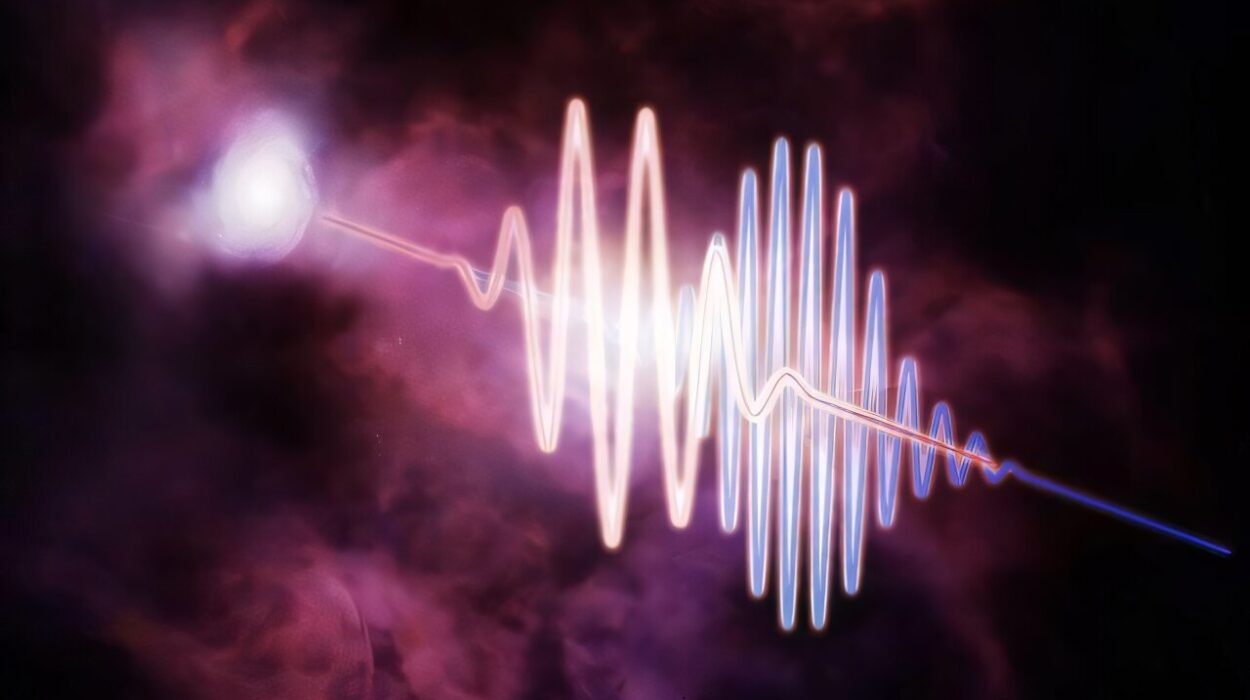
Using Gravitational Waves to Trace Black Hole Origins
The study focused on version 4.0 of the LIGO–Virgo–KAGRA Gravitational-Wave Transient Catalog (GWTC-4), which contains 153 black hole merger detections considered sufficiently confident.
Rather than simply treating the catalog as a growing list of mergers, the researchers used it as a tool to test competing ideas about how black holes form. Their central question was direct: do the heaviest black holes come from stars collapsing normally, or are they built through repeated mergers in dense star clusters?
The team examined whether the gravitational-wave signals contained patterns that could reveal black hole “family history”—especially for the largest objects in the catalog.
As lead author Dr. Fabio Antonini of Cardiff University explained, gravitational-wave astronomy is now moving beyond counting mergers. It is beginning to reveal how black holes grow, where they grow, and what those growth patterns reveal about stellar evolution.
The Role of Dense Star Clusters in Building Giant Black Holes
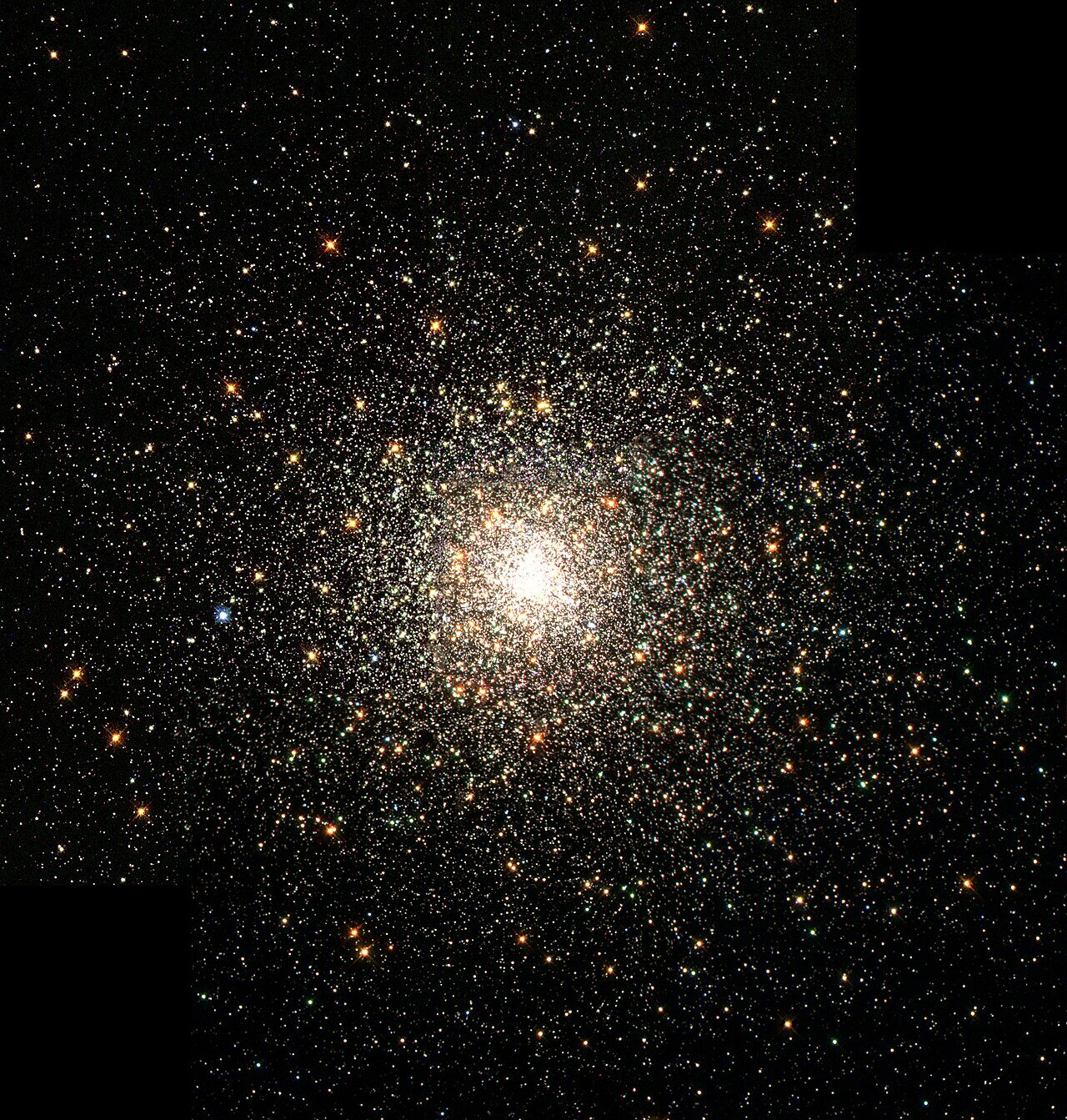
The researchers focused on environments where repeated mergers would be most likely: the dense cores of star clusters.
In these regions, stars can be packed up to a million times more tightly than in the Sun’s neighborhood. Under such extreme conditions, black holes are more likely to interact, form binary pairs, and eventually collide.
The study argues that these crowded cluster environments create the ideal setting for hierarchical black hole formation, where a black hole forms from one merger and later becomes part of another. Over time, that chain of collisions could build black holes far more massive than typical stellar collapse would allow.
This matters because it provides a natural pathway for explaining black holes that appear too heavy to have formed directly from a single star.
Two Distinct Populations Emerge From the Data
One of the strongest outcomes of the analysis was the discovery of two clearly distinct black hole populations within the gravitational-wave data.
The first group is a lower-mass population that matches what scientists would expect from ordinary stellar collapse. These black holes appear consistent with standard models where a massive star dies and collapses into a black hole.
The second group stands out: a higher-mass population whose properties align with hierarchical merger origins in dense star clusters.
According to the researchers, the key difference is not only mass, but also spin.
Spins Reveal a Violent Merger History
Spin can serve as a kind of fingerprint in gravitational-wave astronomy. The way black holes spin—and how those spins are oriented—can hint at how the black holes formed.
The study found that the lower-mass black holes were generally slowly spinning, a pattern consistent with typical stellar binary systems.
But the higher-mass black holes were different. Their spins were consistent with being more rapid, and the orientations appeared seemingly random.
Co-author Dr. Isobel Romero-Shaw, an Ernest Rutherford Fellow at Cardiff University, said the clearest surprise was how sharply the high-mass black holes separated into their own category.
Unlike the lower-mass systems, the higher-mass black holes showed exactly the signature expected if black holes were repeatedly merging in dense clusters. Their spin directions did not show the kind of alignment often expected in black holes born together as a normal binary pair.
For the researchers, this made the cluster-merger explanation far more convincing than it had been in earlier gravitational-wave catalogs.
Strong Evidence for a Long-Predicted Black Hole “Mass Gap”
Beyond identifying two black hole populations, the study also reports the strongest evidence yet for a long-predicted mass gap.
This “mass gap” is tied to a theory in stellar evolution predicting that extremely massive stars do not always collapse into black holes. Instead, they can explode catastrophically in a way that disrupts the star entirely, leaving nothing behind.
The result is a forbidden range of black hole masses—an interval where black holes should not exist if they form directly from single stars.
The researchers pinpoint this gap as beginning around 45 times the mass of the Sun, describing a population of stellar-origin black holes 45 solar masses and above as a key transition zone.
Dr. Antonini explained that gravitational-wave detectors have now found black holes that appear to sit in or near this predicted gap. That raises a critical scientific question: are these objects exposing flaws in stellar evolution models, or are they being produced by another process entirely?
The team’s conclusion leans strongly toward the second option for the largest black holes.
A Major Transition Around 45 Solar Masses
One of the most important findings is that the data suggests a shift in behavior above 45 solar masses.
According to the study, above this mass threshold the spin distribution changes in a way that is difficult to explain using normal stellar binaries alone. Instead, the pattern fits naturally if these black holes have already undergone earlier mergers.
This means that around 45 solar masses, the gravitational-wave data may be marking a transition point: below it, black holes are mostly shaped by standard stellar collapse, while above it, black holes increasingly reflect the dynamics of dense clusters and repeated collisions.
The largest black holes in the current catalog, the researchers argue, seem to be telling a story not just about dying stars, but about how chaotic star clusters can repeatedly build heavier and heavier black holes over time.
Gravitational-Wave Data May Reveal Nuclear Physics Inside Stars
The implications extend beyond black holes and star clusters. The study also suggests that gravitational-wave astronomy could help scientists probe what happens inside the cores of massive stars.
The team used the mass transition and the evidence for the mass gap to connect gravitational-wave observations with a nuclear reaction involved in helium burning.
Co-author Dr. Fani Dosopoulou, a research associate at Cardiff University, noted that the mass limit set by pair instability depends on the nuclear reactions taking place in the cores of massive stars.
As gravitational-wave catalogs expand, future detections could help researchers better understand the nuclear physics that shapes how stars live and die.
Why This Matters
This study shows that gravitational-wave astronomy is becoming a tool not just for detecting black holes, but for uncovering their origins. By identifying two distinct black hole populations, the researchers provide strong evidence that the most massive black holes detected so far are likely built through repeated mergers in dense clusters, not direct stellar collapse.
The finding of a likely mass gap beginning around 45 solar masses also strengthens long-standing theories about how extremely massive stars behave—and why some black holes should not exist through ordinary formation pathways.
Most importantly, the results suggest that black hole mergers can act as natural experiments, revealing information about stellar evolution, cluster dynamics, and even the nuclear processes powering helium burning deep inside massive stars. As gravitational-wave catalogs grow, they may offer one of the clearest ways yet to test how the universe creates its most extreme objects.
Study Details
Gravitational-wave constraints on the pair-instability mass gap and nuclear burning in massive stars, Nature Astronomy (2026). DOI: 10.1038/s41550-026-02847-0