A recent multidisciplinary study has uncovered 13 lithic artifacts at the Revilleja de Valparaíso site in Burgos, Spain, dating back approximately 700,000 years. This discovery reveals that hominin groups possessing advanced Acheulean tool-making traditions were present in the Iberian Peninsula 200,000 years earlier than previously recorded. The findings suggest a direct cultural link to North African populations, reshaping our understanding of how early humans migrated and settled in Western Europe during the Middle Pleistocene.
For decades, the story of human evolution in Europe followed a relatively predictable timeline. Archeologists generally agreed that the sophisticated stone tool traditions known as the Acheulean—famous for their symmetrical handaxes and complex manufacturing—did not firmly establish themselves in the Iberian Peninsula until roughly 450,000 years ago. However, a collection of stones recovered from an ancient river valley in northern Spain has just shattered that timeline, revealing that the “classic” Acheulean was already thriving in the region nearly 700,000 years ago.
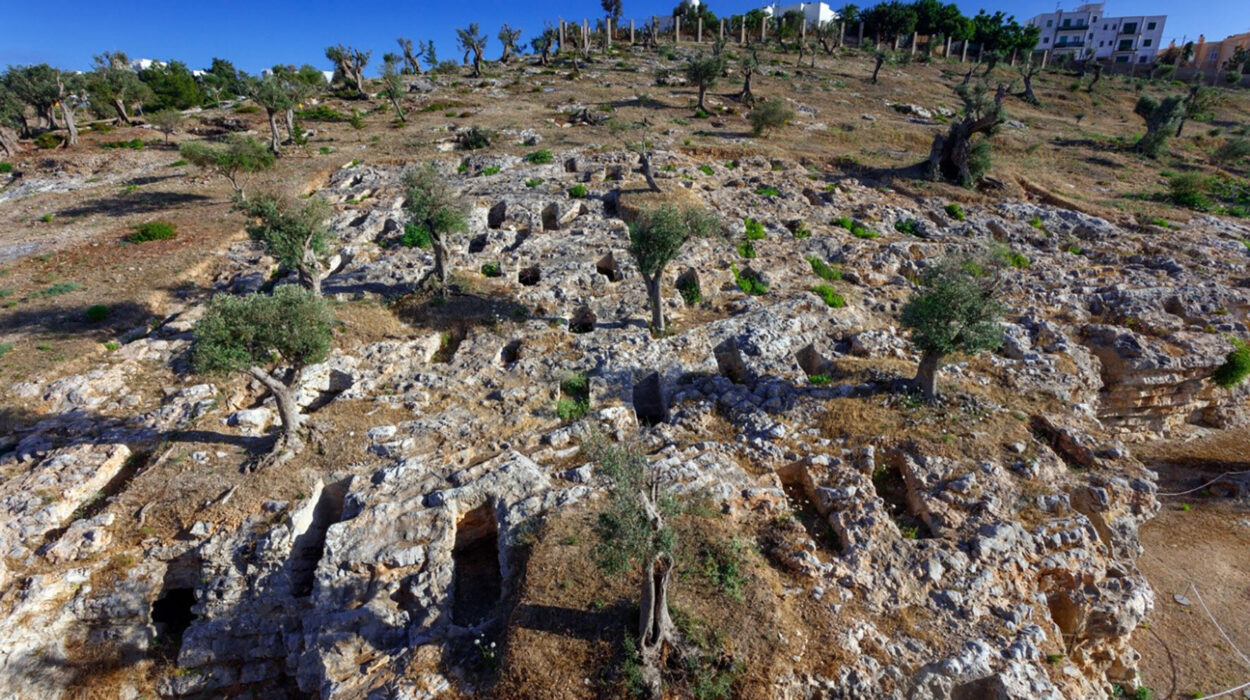
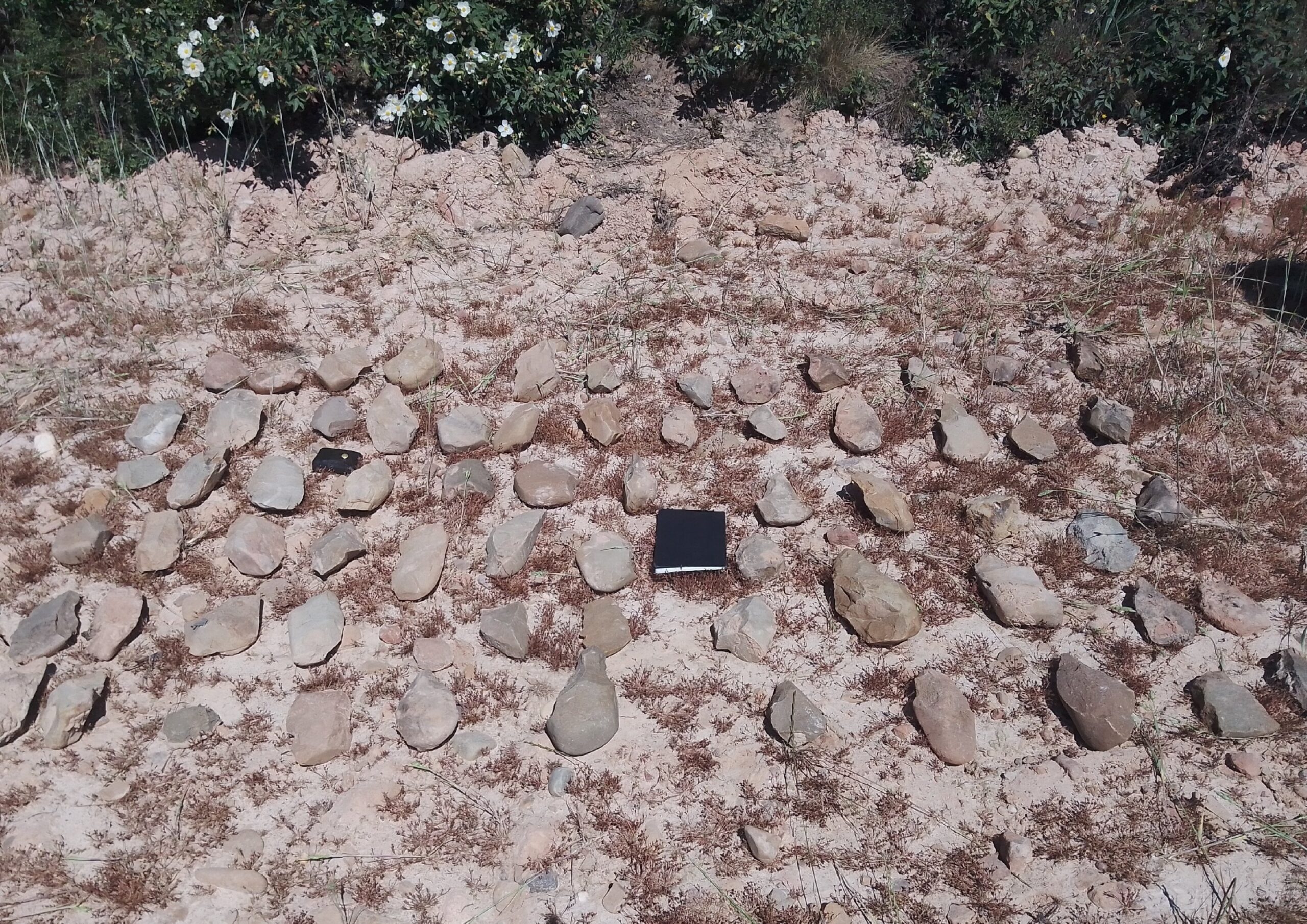
The breakthrough comes from the site of Revilleja de Valparaíso, located in Hortigüela, within the province of Burgos. A multidisciplinary team of researchers from the Atapuerca Research Team, including experts from IPHES, CENIEH, and several international universities, analyzed a series of 13 lithic artifacts that challenge the established models of European prehistory. These tools represent a fully developed technological tradition, appearing in the record far earlier than the famous sites of Sima de los Huesos or Gruta da Aroeira.
Tracking the Large Flake Acheulean in Iberia
The artifacts recovered from Revilleja de Valparaíso belong to a specific category known as the Large Flake Acheulean. This tradition is defined by the production of Large Cutting Tools (LCTs), which include recognizable implements such as handaxes, cleavers, and picks. Unlike simpler tool kits used by earlier hominins, these items were typically manufactured on large flakes and often displayed symmetrical morphologies, indicating a high degree of planning and technical skill by the toolmaker.
These specific tools show a remarkable similarity to Acheulean traditions found in North Africa. The presence of cleavers and the systematic use of large flakes are hallmarks of a technological signature that distinguishes the Iberian record from other parts of Europe. This connection provides strong archaeological support for the hypothesis that cultural influences, and perhaps the hominin groups themselves, moved into the Iberian Peninsula from North Africa via the Strait of Gibraltar.
The location of the find was not accidental. Geologists identified the site as an ancient fluvial channel of the Arlanza River. During the Middle Pleistocene, this valley functioned as a paleotopographic corridor, a natural highway that allowed ancient human populations to move between the Arlanzón River valley, the Sierra de Atapuerca, and the Tierra de Lara region. This network of valleys likely facilitated the spread of technology and the movement of groups across the landscape.
New Dating Techniques Confirm a Robust Chronology
The most critical aspect of the study was establishing a definitive age for the artifacts. To do this, the research team utilized a combination of Electron Spin Resonance (ESR) and cosmogenic nuclide dating. These methods allow scientists to determine how long minerals have been buried by measuring the accumulation of trapped electrons or the presence of specific isotopes.
According to geochronologist Davinia Moreno, the results were exceptionally clear. In the ESR dating process, the ages obtained from different paramagnetic centers converged around the 700,000-year mark. Such convergence is rare in geochronology and provides a high level of confidence in the site’s antiquity. This robust data confirms that the Acheulean tradition in Iberia is significantly older than the previously accepted dates for classic sites like Galería in Atapuerca.
The discovery was made possible by excavations conducted in 2021 and 2022, supported by the Fundación Atapuerca. Interestingly, the scientific investigation was initially sparked by the work of a local resident, Gerardo López, whose private collection of materials first drew the attention of the research community to the potential of the Revilleja site.
A Cultural Crossroads in Western Europe
This new evidence forces a significant shift in how researchers interpret the early settlement of Europe. For a long time, models of the European Acheulean were built primarily on data from sites in France and Italy. While those regions show comparable chronologies, the Iberian record now stands out as having a distinct technological identity.
The study suggests that 700,000 years ago, Western Europe was far from a monolithic cultural landscape. Instead, it was a region of significant cultural diversity. While populations in the Iberian Peninsula maintained strong technological affinities with North African assemblages, groups living north of the Pyrenees were influenced by traditions linked to Eastern European contexts.
This variety of tool-making traditions suggests that different hominin groups were developing localized solutions to the challenges of their environments. Such technological diversity may have been a key factor in the long-term success of human settlement across the continent, as it allowed various populations to maintain stable cultural identities while adapting to diverse ecological niches.
Why This Matters
The discovery at Revilleja de Valparaíso fundamentally rewrites the timeline of human innovation in Europe. By pushing back the arrival of the Acheulean tradition by 200,000 years, it proves that the ancestors of modern humans were capable of sophisticated planning and symmetrical tool design much earlier than we thought.
Furthermore, by linking the Iberian artifacts to North African styles, the study clarifies the routes of human migration. It positions the Iberian Peninsula not as a dead-end, but as a vital gateway for cultural exchange. Understanding when and how these technologies emerged is essential for piecing together the broader puzzle of human evolution, showing that our ancestors were highly mobile and technically capable long before the dawn of modern history.
Study Details
Francisco-Javier García-Vadillo et al, The first Large Flake Acheulean in Europe at Revilleja de Valparaíso site, Hortigüela, Spain, Quaternary Science Reviews (2026). DOI: 10.1016/j.quascirev.2026.109977