For years, the windswept Javakheti Plateau in the South Caucasus was largely a blank spot on the archaeological map. Situated in the rugged highlands of the southern Republic of Georgia, the region’s harsh environment led many to assume it was once a remote frontier, isolated from the pulse of civilization. However, a massive eight-year investigation has turned that narrative on its head, revealing a landscape that was not a desolate wasteland, but a bustling hub of human activity for thousands of years.
Since 2017, an international team of researchers from the Samtskhe-Javakheti Project (SJP) has been scouring this high-altitude terrain, uncovering the remains of a complex society that thrived where others might have struggled to survive. Their findings, recently detailed in the journal Antiquity, paint a picture of a resilient culture that built massive stone fortifications, established sophisticated settlements, and maintained deep-rooted symbolic traditions from the Bronze Age through the medieval period.
Mapping the Footprints of an Ancient Highland Society
The challenge of exploring such a vast and difficult landscape required more than just shovels and brushes. Before the team began physical excavations, they utilized remote sensing technology to peer beneath the earth’s surface. This method allowed them to identify the ghostly outlines of buried structures, ancient walls, and enclosures without disturbing the soil. By combining these scans with digital mapping, the researchers were able to visualize how settlements were distributed across the plateau.
This bird’s-eye view revealed a surprising density of occupation. The team identified approximately 168 archaeological sites, ranging from small homesteads to sprawling burial grounds. This mapping was critical for understanding how these ancient people moved across the land and adapted to the environmental pressures of the highlands. Far from being a series of disconnected outposts, the settlements appeared to be part of a coordinated network, strategically positioned to manage resources and maintain security.
The Hill of Ashes and the Fortress of Meghreki
After the initial mapping phase, the SJP team focused their efforts on the most prominent locations. One of the most significant sites is Baraleti Natsargora, a massive mound colloquially known as the Hill of Ashes. Excavations here revealed a literal timeline of human persistence. Researchers uncovered multiple layers of ash and stone stacked on top of one another, a clear sign that people returned to this specific spot repeatedly over millennia. Each layer likely represents a new chapter of life—periods where homes were rebuilt, defenses were bolstered, and the community was renewed.
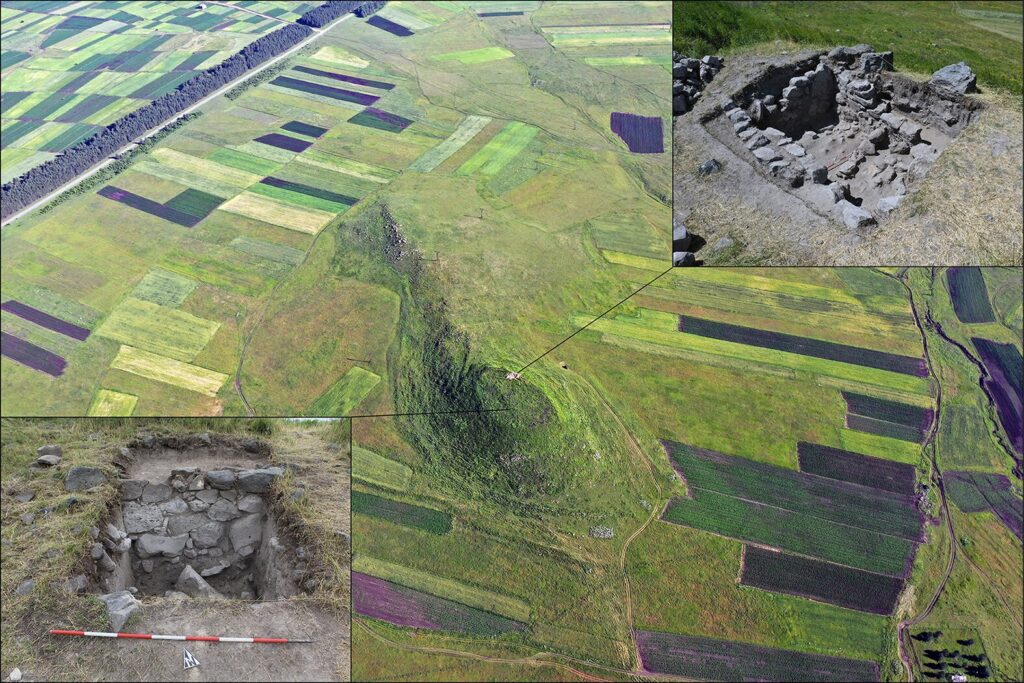
Another focal point of the study was the Meghreki Fortress. This site offered a glimpse into the defensive capabilities and social structures of the plateau’s inhabitants. The discovery of massive perimeter walls suggests that protection was a primary concern, while the interior of the settlement provided clues about daily life. The team recorded every artifact with meticulous detail, from large architectural features down to the smallest fragmented piece of pottery, ensuring that no piece of the historical puzzle was overlooked.
Solar Disks and Status Symbols
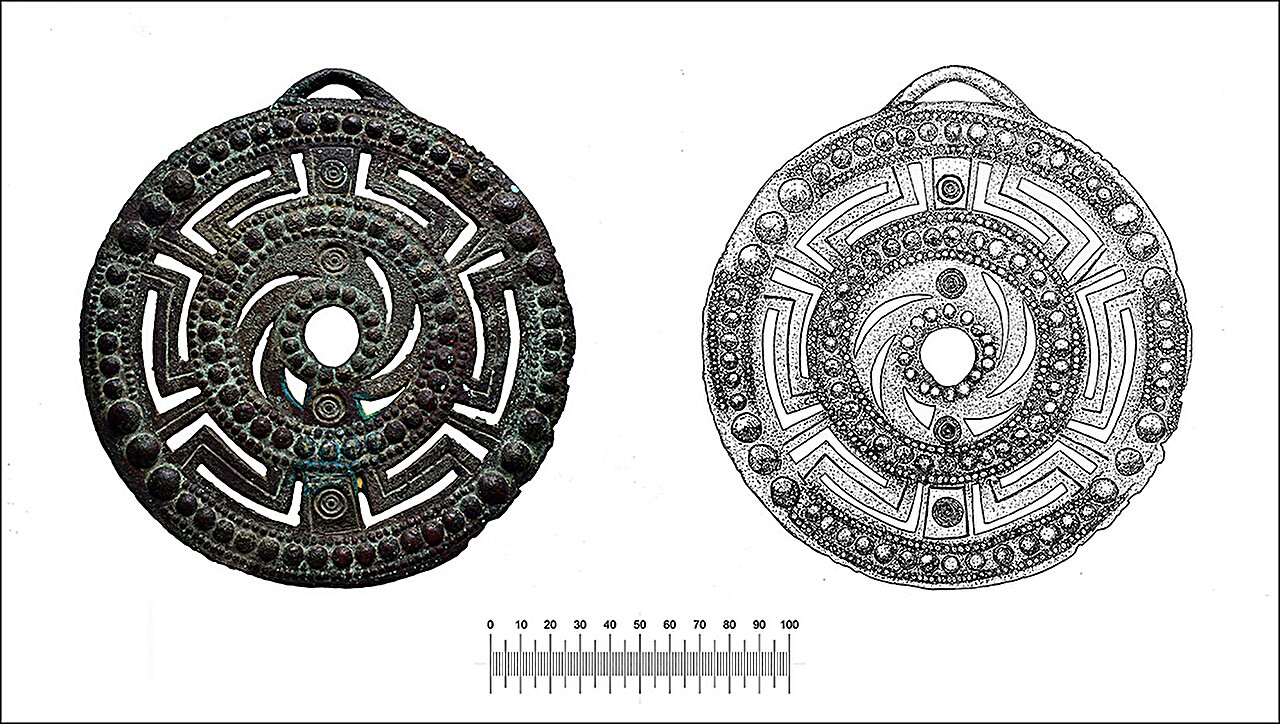
The artifacts recovered from these sites are helping archaeologists move beyond the “how” of survival to the “who” of the culture. At Baraleti, the team unearthed a bronze disk adorned with intricate sun-like patterns. This discovery is particularly significant because similar objects found in other parts of southern Georgia are frequently associated with burials, specifically those of women. These solar disks hint at a shared cultural language and a spiritual connection to celestial themes that spanned across the South Caucasus.
Inside the homes of Meghreki Fortress, the researchers found a different kind of treasure: colorful clay plaques. These were not merely functional items; researchers believe they served a symbolic purpose. They may have been used in local rituals or displayed prominently within the household to signal a family’s high social status. These artifacts act as identity markers, providing a rare window into the belief systems and social hierarchies that governed life on the plateau.
A Crossroads of Mobility and Negotiation
The sheer scale of the stone-built fortifications and the sophisticated storage areas found throughout the region suggests that the Javakheti Plateau was a “hub of activity” rather than a lonely outpost. The SJP researchers argue that the landscape was structured by recurrent patterns of settlement and resource exploitation. It was an arena defined by mobility and negotiation, where different groups likely interacted, traded, and navigated the complexities of highland life together.
The presence of large burial grounds and fortified settlements indicates a society that was deeply invested in the land. They weren’t just passing through; they were carving out a permanent existence in a challenging climate. The project has successfully demonstrated that the South Caucasus highlands were a vital part of the broader regional history, serving as a corridor for movement and a stronghold for cultural development.
Why This Matters
The discovery of nearly 170 sites in a previously under-explored region completely reshapes our understanding of human geography in the South Caucasus. It proves that ancient communities were far more capable of thriving in extreme, high-altitude environments than previously thought. By moving away from the idea of “isolation,” this research highlights how ancient people used architecture and symbolism to create a sense of place and permanence in a changing world.
As the Samtskhe-Javakheti Project moves into its next phase, the team plans to use radiocarbon dating to establish a precise chronological timeline for the different layers of occupation. This will allow scientists to pin down exactly when these fortresses were built and how the culture evolved over the centuries. For now, the “Hill of Ashes” and the “Fortress of Meghreki” stand as monuments to human resilience, proving that even the most rugged landscapes hold stories of sophisticated and interconnected civilizations waiting to be told.
Study Details
Roberto Dan et al, Layers of stone and ash: new perspectives from the Samtskhe-Javakheti archaeological project, Antiquity (2026). DOI: 10.15184/aqy.2026.10331