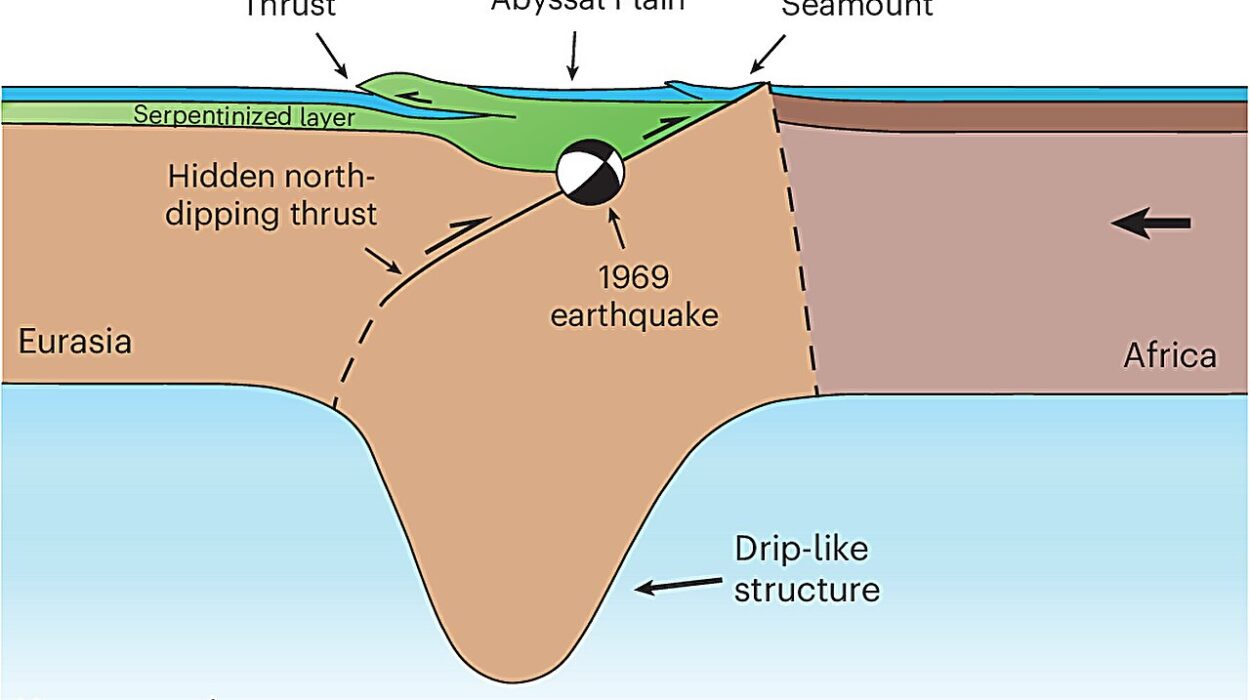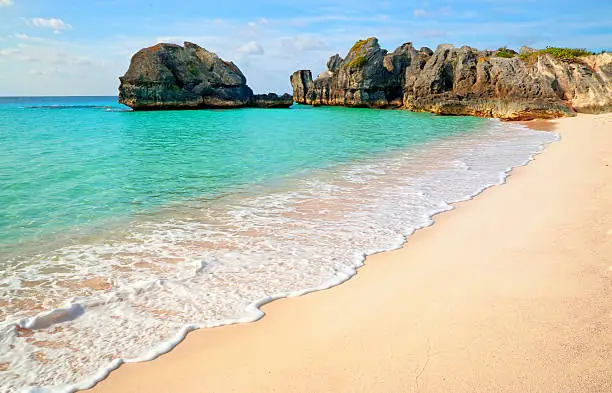
Bermuda has long occupied a peculiar place in the human imagination. Stories of vanished ships and lost aircraft have woven an aura of mystery around this small Atlantic island. Yet for scientists, a far quieter and more persistent puzzle has demanded attention for decades, one that has nothing to do with navigation or myth. Bermuda appears to float higher than it should above the surrounding ocean floor, perched atop a broad swell of seafloor that refuses to sink. For years, researchers have asked a deceptively simple question: why does Bermuda stay aloft?
A new study published in the journal Geophysical Research Letters offers an answer that lies deep beneath the island, far below its beaches and limestone cliffs. By listening carefully to echoes from distant earthquakes, scientists have uncovered a massive, hidden layer of rock beneath Bermuda, one that may finally explain how the island is supported from below.
An Island That Defies the Usual Rules
At first glance, Bermuda resembles other volcanic islands scattered across the oceans. It sits atop a huge, elevated bulge of the seafloor known as a bathymetric swell, a broad rise that lifts the island above the surrounding depths. In the standard model of volcanic island formation, such swells are created when heat from deep within the Earth pushes upward. A column of hot rock, called a mantle plume, rises through the mantle and heats the tectonic plate above it, causing the plate to bulge and, in many cases, to erupt volcanoes at the surface.
This explanation works well for many volcanic islands. But Bermuda has never quite fit the pattern. Scientists have searched for evidence of a hot mantle plume beneath the island today and found none. Volcanic activity here ended more than 30 million years ago, leaving no active vents or molten reservoirs behind. Even more puzzling, the bathymetric swell itself should have subsided long ago once the heat that formed it dissipated. Instead, it remains stubbornly elevated.
This contradiction has lingered for decades. Without heat, without active volcanism, and without a visible plume, something else must be holding Bermuda up.
Listening to Earth’s Distant Murmurs
To probe this mystery, the researchers turned to a subtle but powerful method: seismic listening. Bermuda hosts a single seismic station that continuously records vibrations passing through the Earth. Most of the time, these vibrations come from earthquakes occurring thousands of kilometers away. Though distant, these seismic waves carry invaluable information.
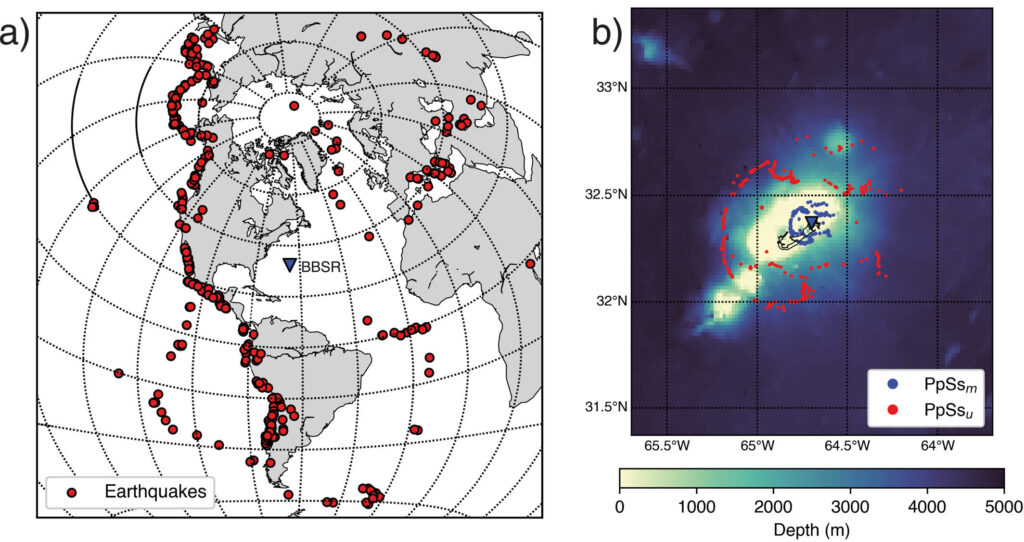
As earthquake waves travel through the planet, they move at different speeds depending on the type of rock they encounter. When they cross boundaries between layers, such as from crust to mantle, part of the energy reflects back upward, creating faint echoes. By measuring how long these echoes take to arrive at the seismic station, scientists can reconstruct a detailed picture of the structures hidden far below the surface.
Using this approach, the researchers analyzed recordings of distant earthquakes to map the deep architecture beneath Bermuda. What they expected to find were the familiar layers: the island’s base, the oceanic crust beneath it, and the boundary between the crust and the mantle, known as the moho. All of these appeared exactly where theory predicted.
Then something unexpected emerged from the data.
The Discovery Beneath the Crust
Below the oceanic crust, the seismic echoes revealed a thick, previously unreported layer of rock. This layer sits between the crust and the mantle and measures about 12.4 miles, or 20 kilometers, in thickness. That makes it two to three times thicker than comparable layers observed beneath most other ocean islands.
For decades, this layer had remained invisible, hidden too deep to be detected by surface observations alone. Yet its presence changes the story entirely. The researchers identified it as a form of underplating, a geological process in which magma rises from the mantle but stalls before reaching the surface. Instead of erupting as lava, the magma spreads out beneath the crust and cools, solidifying into rock.
The significance of this layer lies not only in its size, but also in its physical properties. The cooled magma forms a rock that is slightly less dense than the surrounding mantle material. That small difference, multiplied across a layer 20 kilometers thick, is enough to create substantial buoyancy.
A New Way to Hold Up an Island
The researchers propose that this massive underplated layer is what keeps Bermuda’s bathymetric swell afloat. Rather than being propped up by heat or active volcanism, the island is supported by the buoyant strength of this thick slab of cooled magma.
“We identify features associated with a ~20 km thick layer of rock below the oceanic crust that has not yet been reported. This thick layer beneath the crust likely was emplaced when Bermuda was volcanically active 30–35 million years ago and could support the bathymetric swell,” the researchers explain.
In this view, Bermuda’s volcanic past still shapes its present, not through fiery eruptions, but through a solid foundation laid millions of years ago. When the island was volcanically active, magma rose from below and accumulated beneath the crust instead of escaping to the surface. Over time, this magma cooled and became part of the island’s deep structure. Long after volcanic activity ceased, the underplated layer remained, quietly holding the island aloft.
Rewriting the Story of Ocean Swells
This discovery offers a fresh perspective on how bathymetric swells can form and persist. Traditionally, such swells have been linked closely to heat from mantle plumes. As the plume cools and drifts away, the swell is expected to subside. Bermuda challenges that assumption.
Here, the swell appears to be maintained not by ongoing heat, but by composition. The underplated rock is just buoyant enough to counteract the weight of the overlying crust and water. This suggests that some oceanic swells may owe their longevity to hidden structural features rather than active geological processes.
The finding also underscores the value of seismic data, even from a single station. By carefully analyzing faint echoes from distant earthquakes, scientists were able to detect a structure tens of kilometers thick, buried far beneath the ocean floor. What once seemed like an unsolvable puzzle now has a tangible, measurable explanation.
Why This Hidden Layer Matters
The implications of this research extend far beyond Bermuda itself. Understanding what supports oceanic islands helps scientists refine models of Earth’s interior and the forces that shape its surface. If underplating can sustain a bathymetric swell for tens of millions of years, similar hidden layers may exist beneath other islands or seafloor rises that defy easy explanation.
This work also highlights how Earth’s past continues to influence its present. Bermuda’s buoyancy is a legacy of volcanic activity that ended millions of years ago, preserved in a thick layer of rock that has quietly carried the island ever since. It is a reminder that the planet’s history is written not only in dramatic eruptions and shifting plates, but also in slow, subtle processes that leave enduring marks.
Most of all, the study transforms a long-standing mystery into a story of deep time and hidden structure. Beneath Bermuda’s calm waters and tranquil shores lies a massive foundation, unseen but essential, supporting the island against gravity and expectation alike. In revealing this hidden layer, scientists have shown that even familiar places can still hold profound secrets, waiting patiently for the right tools and questions to bring them to light.
More information: William D. Frazer et al, Thick Underplating and Buoyancy of the Bermuda Swell, Geophysical Research Letters (2025). DOI: 10.1029/2025gl118279