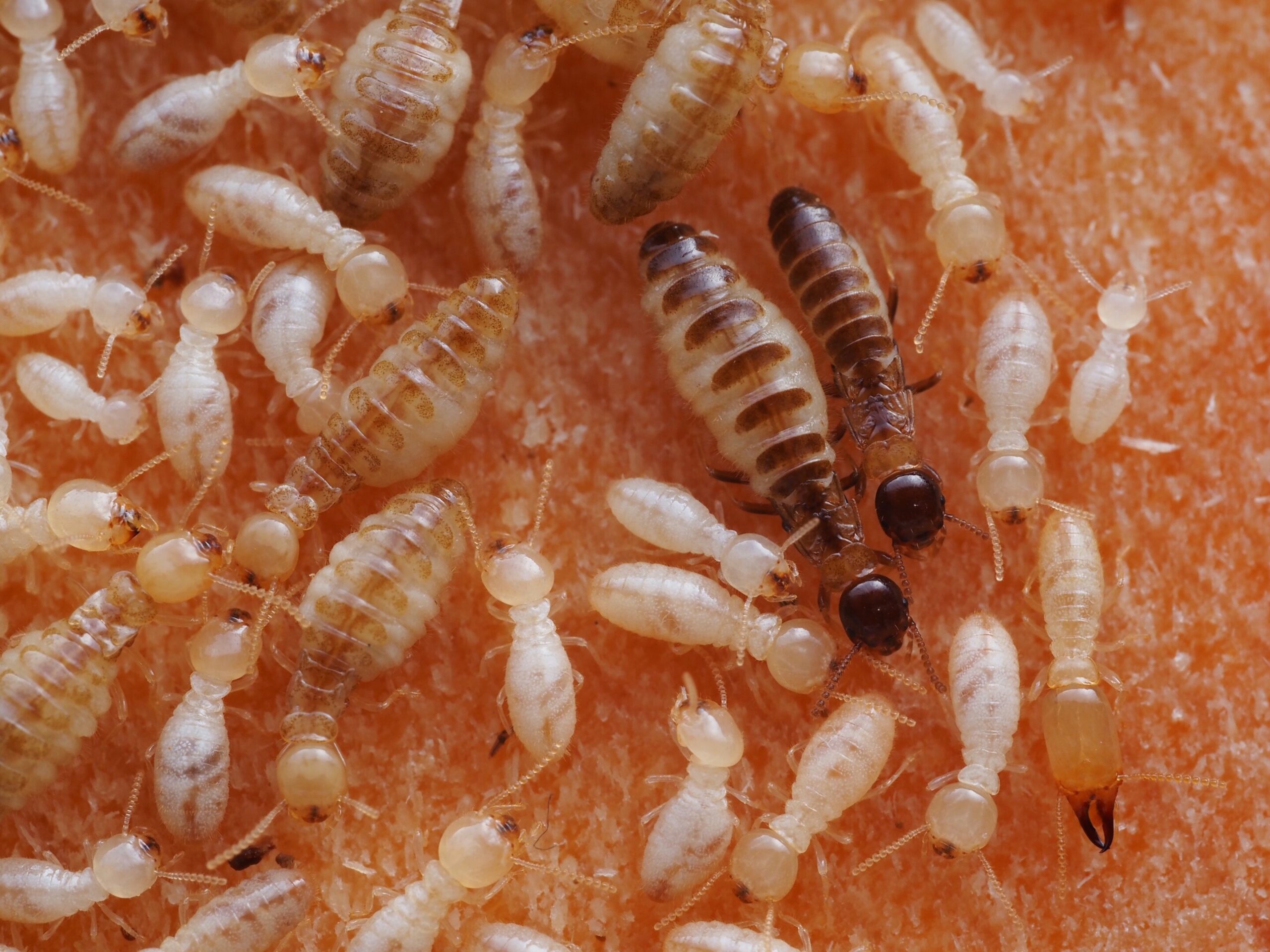
In the hidden, damp corridors beneath the soil of Japan, a silent drama unfolds within the empires of the Japanese subterranean termite, known scientifically as Reticulitermes speratus. These insects do not live as isolated wanderers; instead, they exist as a single, breathing entity—a social insect colony. Within these high-stakes societies, every individual has a job. Some maintain the architecture of the nest, others venture out to gather food, and a select few provide care for the young. At the heart of it all sit the queen and the king, the primary architects of the colony’s future, responsible for producing nearly every inhabitant of their dark, wooden world.
For years, entomologists have marveled at the rigid structure of these colonies, yet they have been haunted by a recurring mystery. Despite their legendary organization and cooperative strength, these miniature civilizations can suddenly and inexplicably vanish. A thriving city of thousands can transform into a ghost town almost overnight. Scientists have long struggled to pinpoint the exact catalyst for such a rapid collapse. Now, a team of researchers at Kyoto University, led by Takao Konishi, has uncovered a hidden chemical trigger—a metabolic “poison” of sorts—that begins not with an external enemy, but with a breakdown in the colony’s internal chemistry.
The Cracks in a Royal Foundation
The life of a termite colony is built on the stability of its hierarchy. In a healthy state, the queen and king reign supreme, ensuring the steady growth of the population. however, nature is rarely permanent. If the royal pair becomes gravely injured, grows too weak to fulfill their reproductive duties, or dies, the colony faces a power vacuum. To survive, the society must pivot, replacing the lost leaders with new reproductive individuals.
It was during this delicate transition—the replacement of the queen or king—that the researchers began to notice a troubling physiological shift. By conducting detailed fieldwork on the Japanese subterranean termite, Konishi and his colleagues discovered that the structural changes in the colony’s leadership were mirrored by a change in the bodies of the workers. These workers, the backbone of the colony’s labor force, began to exhibit an unusual build-up of a specific substance: uric acid.
Normally, uric acid is simply a waste product, the result of the body breaking down proteins and other nitrogen-containing substances during metabolism. In a balanced system, it is managed and expelled. But in these struggling colonies, the uric acid began to accumulate in the workers’ bodies like a rising tide. This chemical signature appeared consistently in colonies that were on the brink of total failure, suggesting that the “health” of a termite society is inextricably linked to the nitrogen metabolism of its humblest members.
A Double-Edged Sword in the Bloodstream
To understand why this waste product was so lethal, the Kyoto University team moved from the field to the laboratory. They developed experimental systems where they could artificially increase the uric acid levels within worker termites to see exactly how it affected their survival. What they found was a biological paradox.
Uric acid is known for its antioxidant activity, which generally sounds like a benefit to a living organism. However, in the delicate internal ecosystem of a termite, this antioxidant power proved to be a Trojan horse. By flooding the insect’s system, the excess uric acid significantly reduced the levels of reactive oxygen species (ROS).
In many plants and animals, maintaining appropriate ROS levels is a critical component of a functional immune defense. These molecules act as a frontline response against invaders. When the uric acid drove these levels too low, the termites’ immune responses were effectively disarmed. The very chemistry meant to protect the body ended up leaving the gates wide open for disaster.
The Silent Invasion of the Opportunists
With their internal defenses weakened by the loss of ROS, the worker termites became tragically vulnerable. The researchers observed that colonies with high uric acid accumulation were far more likely to die off following an infection by pathogens. This included opportunistic bacteria—microbes that might normally be harmless or easily managed by a healthy termite but become lethal when the host’s immune system is compromised.
As the workers—the food gatherers and caretakers—began to fall ill and die, the colony entered a terminal decline. Because social insects rely so heavily on cooperation, the loss of the labor force creates a feedback loop of failure. There are fewer individuals to gather nutrients and fewer to care for the remaining population, leading to the “sudden collapse” that has puzzled scientists for decades. The study suggests that the stability of these great insect empires is held together by a delicate internal chemistry, and when that chemistry shifts, the entire social structure can dissolve from the inside out.
Why This Subterranean Secret Matters
This research offers a profound shift in how we view the life and death of social organisms. It reveals that the “end” of a colony is not always caused by a lack of food or a predator’s attack, but can be triggered by a physiological breakdown linked to the colony’s social structure. By identifying uric acid as a key factor in infectious disease risk, the study provides a roadmap for understanding the molecular triggers of societal collapse.
Beyond the realm of pure discovery, these findings have significant practical implications. Termites are among the most economically important pests on the planet, causing massive structural damage to buildings and infrastructure worldwide. Understanding the specific chemical vulnerabilities that lead to their decline could open new doors in applied entomology, potentially leading to more effective ways to manage termite populations by targeting their internal immune responses.
Furthermore, this discovery may be just the tip of the iceberg. The researchers hope to expand their gaze to other highly organized societies, such as ants and honeybees, to see if similar metabolic failures threaten their survival. In a world where many social insect populations are under stress, uncovering the hidden chemical threads that hold their societies together is more critical than ever. It reminds us that even the most complex empires can be brought down by a tiny change in the balance of their own biology.
Study Details
Takao Konishi et al, What kills a society: accumulation of uric acid increases infectious disease risk in termites, Proceedings of the Royal Society B: Biological Sciences (2026). DOI: 10.1098/rspb.2025.2438.