Four unusually damaged goose skulls discovered in a 17th-century German waste pit have revealed the earliest known archaeological evidence of crested geese in Europe. The findings suggest that aristocratic owners may have prized these striking birds for their appearance despite genetic traits that likely carried significant health risks.
Strange holes scattered across centuries-old goose skulls initially looked like a mystery. Found among discarded kitchen waste in a former toilet shaft in Brandenburg, Germany, the skulls seemed damaged in ways that did not match butchery, disease, or animal activity. But a closer investigation uncovered something far more surprising: these birds likely wore distinctive feathered crests on their heads, making them the first crested geese ever identified in the archaeological record.
The discovery, published in the International Journal of Paleopathology, offers a rare glimpse into how people in Northern Europe may have selectively bred animals for appearance centuries ago.
Unusual Skulls Found in a Historic German Site
The four goose skulls were uncovered during excavations conducted between 2021 and 2023 at Flecken Zechlin, a site located about 100 kilometers (62 miles) from Berlin. Dating to the 17th century, the location has long-standing connections to bishops and aristocratic households.
The skulls were recovered alongside chicken and duck bones in what had once been a toilet shaft. Although they ultimately ended up discarded with other food waste, the birds may have enjoyed a very different status during their lives.
According to study author Maaike Groot, an archaeozoologist at Freie Universität Berlin, the geese may have been kept as animals of display and prestige.
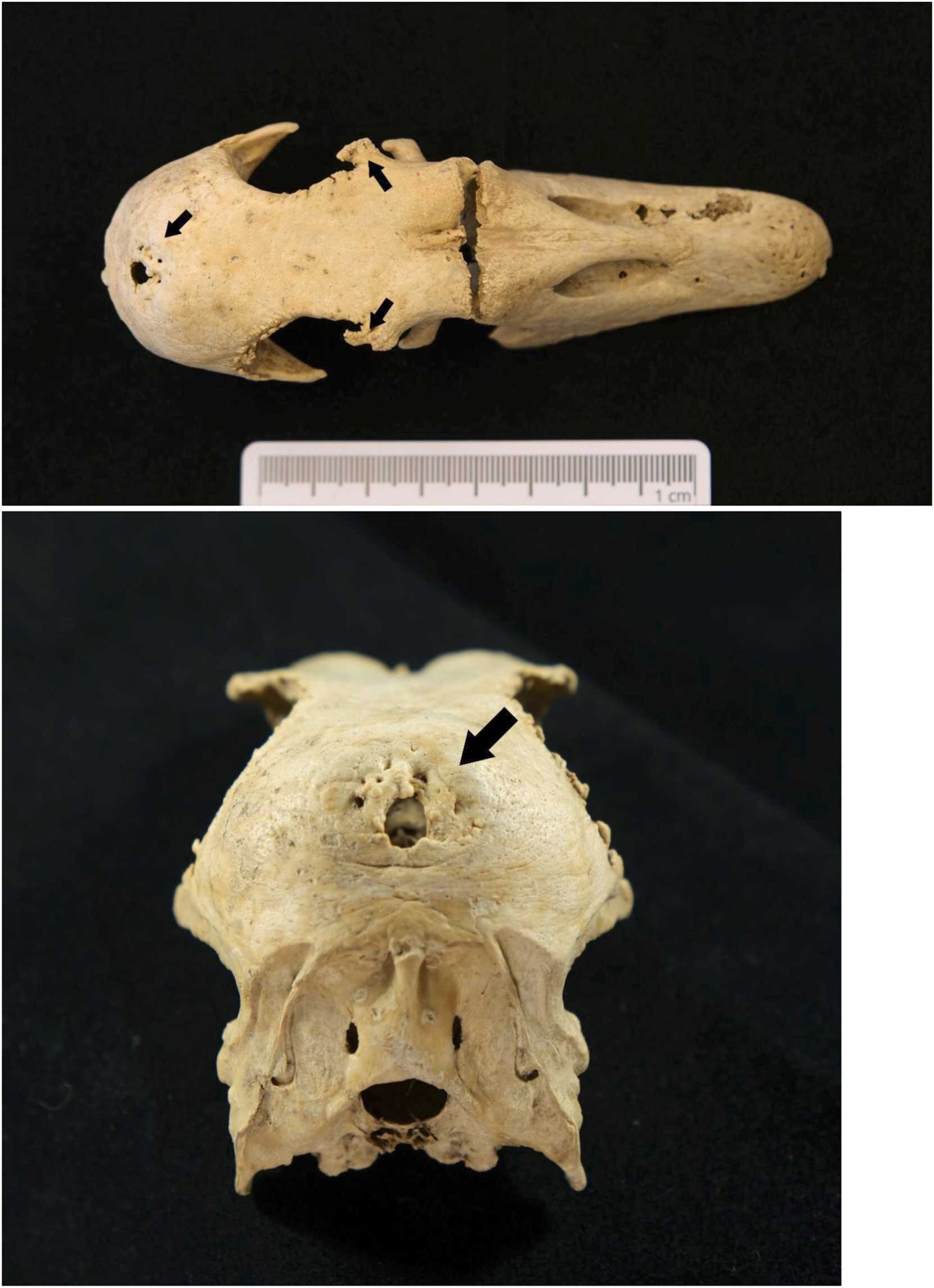
What immediately caught researchers’ attention were the unusual openings scattered across the skulls. One specimen contained a hole measuring approximately 15 millimeters, leaving part of the skull missing entirely.
Ruling Out Other Explanations
Because the skulls were exceptionally well preserved, researchers were able to carefully evaluate a range of possible causes.
The holes did not appear to be the result of butchering practices. They also showed no signs consistent with gnawing by animals after death. Other explanations, including infection, parasites, and nutritional deficiencies, failed to match the pattern observed across the specimens.
The breakthrough came when researchers compared the skulls with known examples from crested ducks.
The similarities were striking. According to the study, the location and appearance of the holes closely matched defects associated with crested ducks, with the correspondence described as “remarkable.”
This comparison led researchers to conclude that the geese likely carried feathered crests similar to those seen in certain ornamental bird breeds today.
Art Helps Confirm the Discovery
The identification of the crest trait also connected the archaeological evidence with historical artwork.
Groot noted that the skulls reminded her of crested chickens and, after recognizing similarities with crested ducks, she recalled paintings created by Dutch artist Melchior d’Hondecoeter. These paintings, produced around the same period, depict crested geese among other domestic birds.
The timing is significant. As far as Groot is aware, both the paintings and the newly identified skulls represent the earliest known evidence of crested geese in Europe.
Together, the artistic and archaeological records suggest that these unusual birds were present in at least parts of Northern Europe during the 17th century.
The Hidden Cost of an Attractive Trait
While the feathered crest may have made the birds visually appealing, the feature likely came with biological consequences.
In crested ducks, the crest results from a genetic defect that produces a fatty cushion on top of the skull. During development, the skull bone beneath this cushion often fails to close completely, leaving openings in the cranium.
Research on crested ducks has linked the condition to a variety of health problems. These can include high mortality rates before and after hatching, poor coordination, and in some cases loss of sight or hearing.
However, the effects are not always predictable.
Groot emphasized that the presence or size of a crest does not reliably indicate how severely an individual bird will be affected. Some animals with skull openings appear to live normal lives, while others experience serious complications.
No comparable studies have examined crested geese in such detail. Still, because ducks and geese are closely related, researchers believe similar health challenges may have occurred in these birds as well.
A Wider History Still Waiting to Be Discovered
The newly identified geese demonstrate that crested varieties existed in at least two regions of Northern Europe during the 17th century. Yet researchers suspect the history of crested geese could stretch much further back.
The possibility is supported by evidence from other domestic birds. Crested chickens, for example, are known from periods as early as the Roman era.
For now, the German skulls provide the clearest archaeological evidence that crested geese were present in early modern Europe. The discovery also highlights how easily such evidence can be overlooked. Bird skulls are fragile, and subtle anatomical features may escape notice if specimens are not examined closely.
Researchers hope the study encourages archaeologists to pay greater attention to bird remains recovered from excavations. Doing so could reveal additional examples of crested birds and help clarify when these traits first emerged.
Why This Matters
This discovery is about more than four unusual goose skulls. It sheds light on the long history of human preferences shaping animal breeding, sometimes favoring appearance over health. The findings suggest that people in 17th-century Europe may have valued distinctive-looking birds enough to maintain traits that carried potential biological costs.
By identifying the earliest known archaeological evidence of crested geese, researchers have opened a new window into the relationship between humans and domesticated animals. The study also demonstrates how careful analysis of overlooked remains can transform mysterious fragments of bone into evidence of centuries-old breeding practices, social status, and human choices that still resonate today.