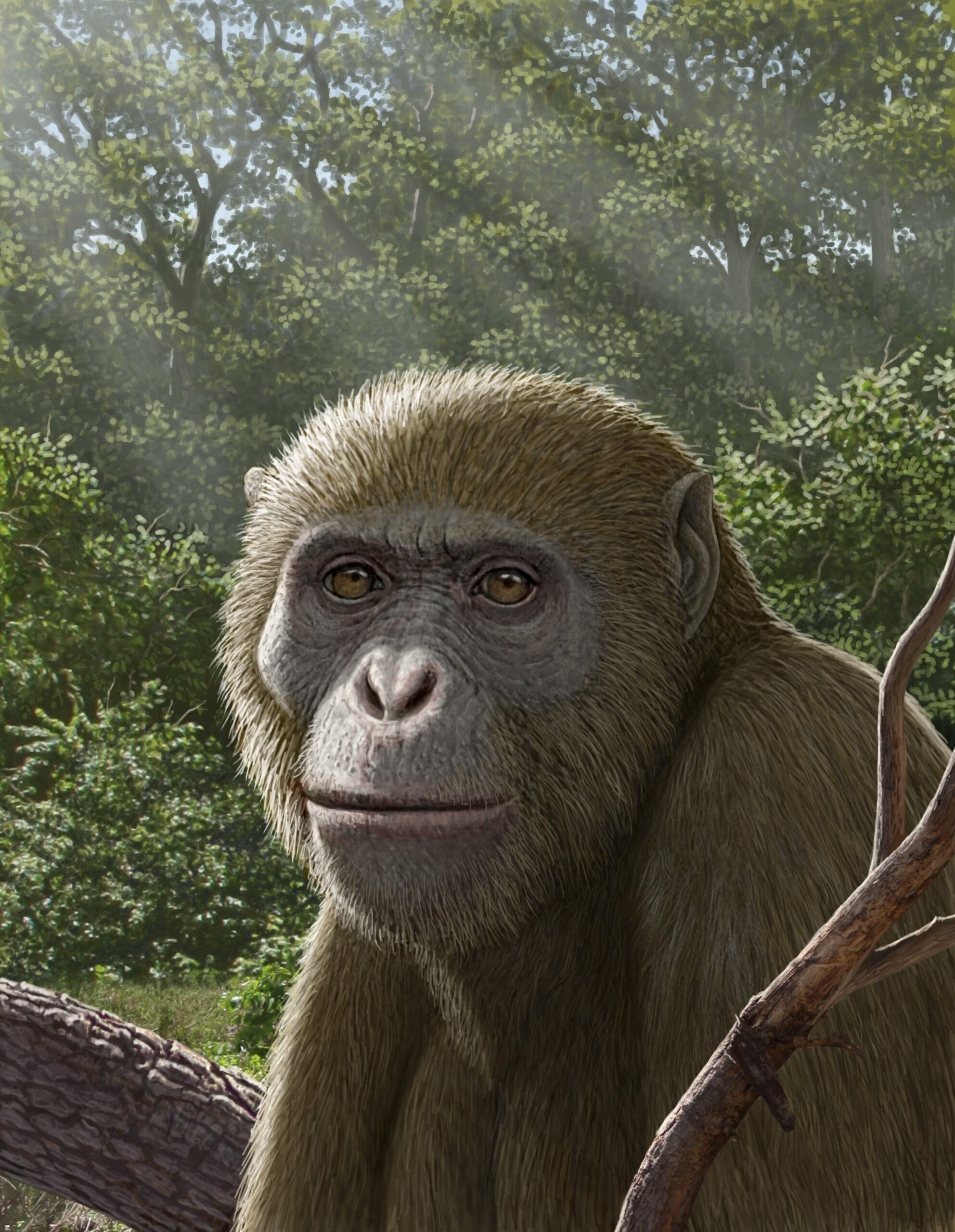
The golden sands of northern Egypt have long been a repository for the secrets of ancient civilizations, but a recent discovery by an international team of scientists has reached much further back into the past—well before the first stone of the pyramids was laid. In the sun-drenched expanse of the Wadi Moghra fossil site, researchers from Mansoura University and the University of Southern California have unearthed a biological treasure that rewrites the opening chapters of the story of apes and, by extension, the history of our own evolutionary lineage.
The Ghost in the Family Tree
For decades, paleontologists tracing the origins of crown Hominoidea—the exclusive group that includes living gorillas, chimpanzees, orangutans, gibbons, and humans—faced a frustrating geographical gap. While the Early Miocene epoch, roughly 17 to 18 million years ago, had yielded plenty of monkey fossils across North Africa, the elusive ancestors of modern apes seemed to be missing from the region. The prevailing scientific wisdom suggested that these early apes were largely confined to the lush environments of East Africa, far to the south.
However, Hesham Sallam, a paleontologist at Mansoura University and the senior author of the study published in Science, felt that the map of evolution was incomplete. He and his team spent five years scouring the desert, driven by the conviction that North Africa held a “missing piece” of the early ape family tree. The unevenness of the fossil record had previously obscured the true origins of the group, leaving a trail that jumped from Africa to Asia and Europe without a clear starting point. The discovery of Masripithecus moghraensis finally fills that void, proving that apes were not just present in the north, but were thriving there.
A Survivor Carved in Stone
The creature’s name is a tribute to its homeland; Masripithecus blends “Masr,” the Arabic word for Egypt, with the Greek “píthēkos,” meaning ape. Recovered during intense fieldwork in 2023 and 2024, the fossil remains consist of a robust lower jaw, a small but incredibly detailed piece of biological architecture that tells a story of adaptation and survival.
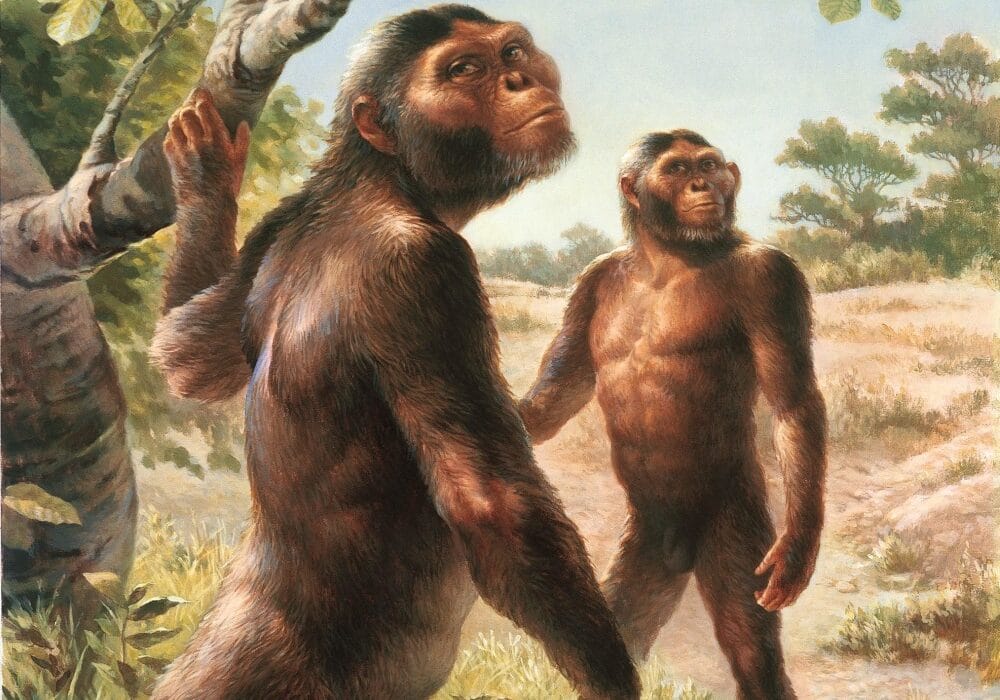
Unlike the apes living in East Africa at the time, Masripithecus possessed a unique set of physical traits. Its lower jaw was notably thick and powerful, supporting exceptionally large canine and premolar teeth. Even more revealing were the molar teeth, which featured rounded and heavily textured chewing surfaces. These were not the teeth of a specialist, but the tools of a generalist designed for a world in flux.
Shorouq Al-Ashqar, a researcher at the Mansoura University Vertebrate Paleontology Center, explains that this anatomy suggests a remarkably versatile diet. While Masripithecus likely preferred a fruit-based diet, its heavy-duty teeth allowed it to process much tougher fare, such as nuts or seeds, when its preferred food was scarce. This flexibility was a vital survival strategy. During the Early Miocene, the climate in northern Africa and Arabia was shifting, bringing more pronounced seasonality. Being able to switch from soft fruits to hard seeds allowed this ancient ape to endure through the lean months of the year.
The Crossroads of Evolution
To understand how this Egyptian ape fits into the broader history of life, the team employed Bayesian methods, a sophisticated form of statistical analysis. They integrated anatomical data from both extinct and living apes, DNA sequences from modern species, and the geological ages of the fossils. The results were startling: Masripithecus is more closely related to the living apes of today than any other species known from the same era in East Africa.
This finding suggests that the common ancestor of all living apes likely called northern Africa or the Middle East home. During this period, the African and Arabian plates were in the final stages of a slow-motion collision with Asia. This geological upheaval caused sea levels to fluctuate, periodically lowering the water and creating a natural corridor for animal dispersal.
Masripithecus represents the crucial intermediate link that connects the previously separate fossil records of Africa and Eurasia. It shows that apes were already diversifying in this northern region, standing at the threshold of a new world. As soon as stable land connections were established, these ancient pioneers were positioned to expand their territory, eventually migrating into Europe and Asia.
Why the Sands of Egypt Matter
This discovery does more than just add a new name to the list of extinct species; it fundamentally shifts our perspective on where we come from. For Erik Seiffert, a co-author from the University of Southern California, the find was a career-altering moment. Having long assumed that the roots of modern apes lay in East Africa, he now acknowledges that the evidence points north. The likelihood of this new evolutionary scenario is bolstered by the existence of Masripithecus, which fits perfectly into a revised map of primate history.
The research matters because it highlights how much of our history remains hidden in plain sight. By exploring regions that were previously overlooked or deemed less likely to hold the answers, scientists are finding that the “cradle” of certain lineages may be much wider than once thought. Masripithecus moghraensis serves as a reminder that the story of life is often written in the gaps between known sites. As exploration continues in the desert reaches of the Middle East and North Africa, more fossils are expected to emerge, further illuminating the mysterious origins and early diversification of the lineage that eventually led to us.
Study Details
Shorouq F. Al-Ashqar, An Early Miocene ape from the biogeographic crossroads of African and Eurasian Hominoidea, Science (2026). DOI: 10.1126/science.adz4102. www.science.org/doi/10.1126/science.adz4102
David M. Alba et al, The dawn of modern apes, Science (2026). DOI: 10.1126/science.aeg3100 , www.science.org/doi/10.1126/science.aeg3100