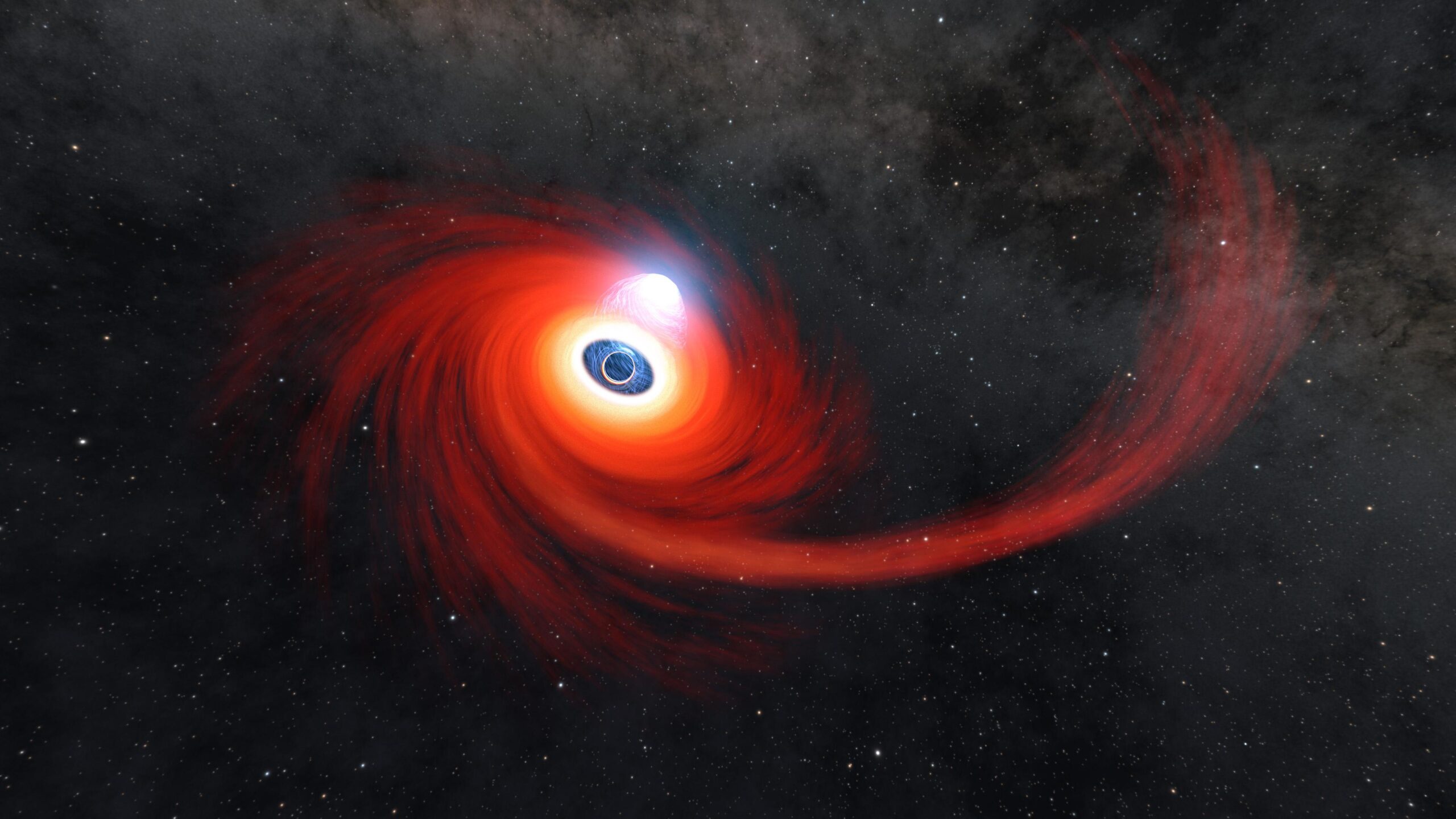
Black holes have a reputation for silence. They are often imagined as cosmic voids—dark, invisible monsters swallowing everything that comes too close. In movies, they are shown as swirling portals into nothingness, surrounded by eerie emptiness. The assumption feels natural: if black holes trap light, surely they trap sound too. Surely they exist in a realm where no noise can escape.
But the universe is rarely that simple.
In reality, black holes can be associated with some of the most dramatic “sound-like” phenomena in all of astrophysics. They can trigger ripples through space itself. They can cause enormous pressure waves in hot cosmic gas. And under certain conditions, scientists can even translate black hole activity into audible frequencies, turning deep-space events into something we can literally hear.
So the strange question becomes meaningful: do black holes make sound?
The scientifically accurate answer is both yes and no, depending on what you mean by sound. And the deeper you go into the physics, the weirder the truth becomes.
What Sound Actually Is
To understand whether black holes can make sound, we need to strip away the mystery and start with the basic physics of sound itself.
Sound is not a thing that exists on its own. Sound is a vibration traveling through a medium. On Earth, that medium is usually air. When you speak, your vocal cords vibrate and push nearby air molecules. Those molecules bump into other molecules, and the vibration travels outward as a pressure wave. When the wave reaches your ear, it causes your eardrum to vibrate, and your brain interprets that vibration as sound.
Sound is essentially organized motion of matter.
This is why sound cannot travel through a vacuum. In empty space there are not enough particles to carry pressure waves. If you explode a bomb in deep space, the light from the explosion would travel outward, but the “bang” would not. There would be no air to transmit it. No medium, no sound.
That simple fact is one of the most important rules of acoustics and one of the biggest reasons people assume black holes must be silent.
Space is mostly vacuum. Black holes exist in space. Therefore, no sound.
But the universe has more nuance than that.
Space Isn’t Truly Empty
Although space is often called a vacuum, it is not completely empty. Even the vast interstellar void contains particles: hydrogen atoms, dust grains, cosmic rays, and faint plasma. In regions around galaxies and clusters of galaxies, space can be filled with hot, thin gas. This gas is extremely diffuse compared to Earth’s atmosphere, but it is still a medium.
And if there is a medium, vibrations can travel.
This matters because many black holes are not isolated. They sit in environments where gas is present, sometimes in enormous quantities. Supermassive black holes in the centers of galaxies are often surrounded by swirling disks of hot plasma. Galaxy clusters contain vast oceans of thin gas stretching for millions of light-years. In those environments, black holes can disturb the surrounding material in ways that create real pressure waves.
Those pressure waves are, in a physical sense, sound.
The question is not whether sound exists near black holes, but whether that sound is meaningful and detectable.
The Black Hole Itself vs. Its Surroundings
It’s crucial to separate two different ideas.
One is the black hole itself, the region of spacetime where gravity is so intense that nothing can escape once it crosses the event horizon. The other is the environment around the black hole: the accretion disk, the jets, the orbiting gas clouds, and the surrounding interstellar medium.
A black hole is not like a star with a surface that can vibrate and emit waves of pressure into space. It is a gravitational object defined by geometry, not by a physical surface. The event horizon is not a solid boundary. It is simply the point of no return.
So if you imagine sound coming from the black hole’s “body,” like noise coming from a drum, that picture is wrong. There is no material surface to generate ordinary sound waves.
But black holes can violently influence their surroundings. They can tear apart stars, accelerate plasma, and launch jets of particles at near light speed. These actions can absolutely create vibrations in nearby gas.
In other words, black holes don’t “make sound” the way a bell rings, but they can create sound-like waves in the cosmic material around them.
Accretion Disks: The Roaring Engines Around Black Holes
Many black holes are surrounded by accretion disks—vast rotating disks of gas and dust spiraling inward. As matter falls toward the black hole, it speeds up and heats up due to friction, turbulence, and gravitational energy being converted into heat.
This disk can reach temperatures of millions of degrees. It emits intense X-rays and radiation. In some cases, it becomes brighter than the entire galaxy surrounding it. This is how quasars form: supermassive black holes actively feeding on matter, creating blinding beacons visible across the universe.
Accretion disks are not quiet. They are chaotic, turbulent systems filled with shockwaves, magnetic fields, and rapidly moving plasma. Inside these disks, pressure waves can propagate. The disk can oscillate. It can vibrate in different modes, somewhat like a fluid version of a musical instrument.
These vibrations are not sound in the human sense because they occur in plasma, not air, and they often happen at frequencies far outside human hearing. But physically, they are the same kind of phenomenon: waves of compression and rarefaction traveling through a medium.
If you could somehow place an ear in the accretion disk without being vaporized instantly, you would be immersed in an environment of violent pressure disturbances. It would not be silence. It would be a roar beyond imagination.
Black Hole Jets: Cosmic Shockwaves Across Space
Some black holes produce jets—narrow beams of particles blasted outward from the region near the black hole at relativistic speeds. These jets are driven by magnetic fields interacting with the spinning black hole and the accretion disk. They can extend for thousands or even millions of light-years.
Jets are not made of sound, but they create disturbances in surrounding gas. As a jet plows into interstellar or intergalactic material, it can generate shockwaves similar to sonic booms.
On Earth, when a supersonic jet exceeds the speed of sound in air, it creates a pressure wave that we hear as a sonic boom. In space, the black hole jet may not be moving faster than the speed of light, but it can move faster than the speed of sound in the surrounding plasma.
This produces shock fronts—regions where gas is suddenly compressed, heated, and disturbed. These are, in a sense, sound-related phenomena. They represent the same physical idea: an object moving through a medium faster than pressure waves can travel.
So while the jet itself isn’t “sound,” it can produce sound waves in the medium it interacts with.
The universe is full of invisible vibrations caused by these massive cosmic engines.
The Famous “Black Hole Sound” Discovery in Perseus
The most famous example of black holes producing sound-like waves comes from a galaxy cluster called the Perseus Cluster, about 250 million light-years away.
At the center of this cluster is a supermassive black hole in the galaxy NGC 1275. This black hole is actively feeding and launching jets. The jets inflate enormous bubbles in the surrounding hot gas of the cluster. As these bubbles expand, they push outward, creating ripples—pressure waves traveling through the cluster’s gas.
These ripples were detected by NASA’s Chandra X-ray Observatory, which observes X-ray radiation from extremely hot gas. The ripples appear as variations in the brightness of X-ray emission, indicating changes in gas density and pressure.
Scientists realized these ripples behave like sound waves propagating through the cluster medium. The cluster gas is thin, but it is not empty. It can carry vibrations.
The remarkable part is that these waves have an extremely low frequency. The “note” associated with this black hole is far below the range of human hearing—so low that it would take millions of years for a single wave cycle.
It is essentially the deepest possible bass note, a cosmic vibration stretching across vast distances.
In terms of real physics, this is genuine sound: a pressure wave traveling through a medium. But it is not something a human could hear directly without scaling it up into audible frequencies.
What Does It Mean to “Hear” a Black Hole?
When scientists say they have “heard” a black hole, they usually mean they have converted detected data into sound. This is called sonification.
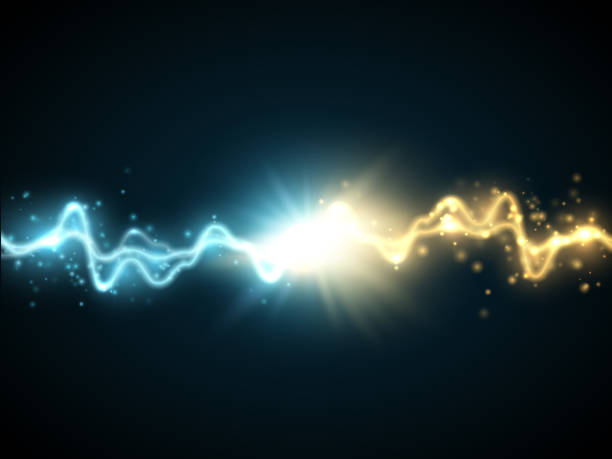
Sonification is not fake, but it is a translation. Scientists take signals that are normally outside the range of human senses—like X-ray brightness variations or gravitational wave frequencies—and map them into the audible spectrum.
This process is similar to how astronomers convert radio waves into images or how microscopes translate tiny structures into something visible. The universe produces information in many forms, and we often have to translate that information into something our senses can interpret.
So when you listen to a “black hole sound,” you are not hearing sound waves traveling through space into your ears. You are hearing a scientifically based audio representation of physical patterns detected by instruments.
It is a bridge between the human brain and the mathematics of the cosmos.
In that sense, black holes can be “heard,” but not in the everyday meaning of the word.
Gravitational Waves: The Sound of Spacetime Itself
If sound is a vibration traveling through a medium, then gravitational waves are something even stranger: vibrations in spacetime itself.
Einstein’s theory of general relativity predicts that when massive objects accelerate—especially when they orbit each other—they can create ripples that propagate through spacetime at the speed of light. These ripples stretch and compress space itself.
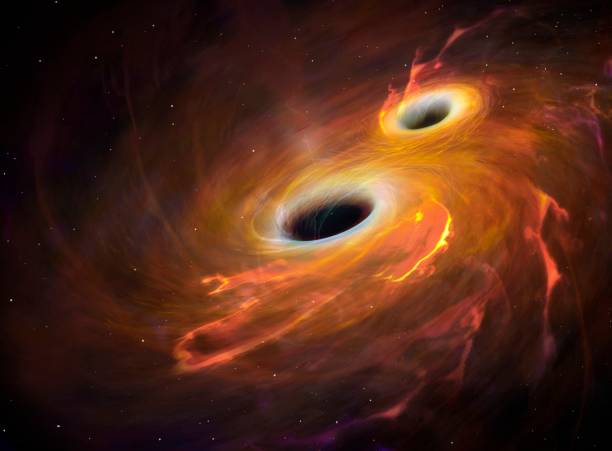
For decades, gravitational waves were only theoretical. They were too weak to detect with older technology. But in 2015, the LIGO observatory detected them directly for the first time. The signal came from two black holes spiraling together and merging over a billion light-years away.
The detection was historic. It proved a major prediction of relativity and opened a new way of observing the universe. Instead of looking at light, astronomers could now “listen” to spacetime.
The signal detected by LIGO is often described as a “chirp.” As the black holes spiraled inward, their orbital speed increased, and the frequency of the gravitational wave increased. The final merger produced a burst of energy, followed by a “ringdown” as the newly formed black hole settled into a stable state.
When this gravitational wave signal is converted into audio, it becomes a short rising tone ending with a sudden drop—almost like a cosmic bird call.
This is not sound in air. It is not sound in gas. It is something more fundamental: a vibration of the fabric of reality.
In a poetic sense, it is the closest thing to the universe making noise without needing matter.
The Ringdown: Black Holes as Cosmic Bells
One of the weirdest discoveries in black hole physics is that black holes have characteristic vibration patterns after a merger. When two black holes collide, the final black hole is not instantly calm. It oscillates.
Physicists describe this process as ringdown. The black hole emits gravitational waves in specific frequencies as it settles into equilibrium. These frequencies depend only on the black hole’s mass and spin.
This is astonishing because it means black holes have something like “tones.” They behave, in a mathematical sense, like resonating objects.
A bell rings because it vibrates in characteristic patterns determined by its shape and material. A black hole “rings” because spacetime around it vibrates according to the geometry of the event horizon.
This is not metaphorical. The equations of general relativity predict it, and gravitational wave observations confirm it.
In that sense, black holes do not just swallow sound—they have their own cosmic signature, their own gravitational voice.
Why We Can’t Hear Black Holes Directly
Even though black holes can be associated with sound-like phenomena, humans cannot directly hear them for several reasons.
First, most of space is too empty for ordinary sound waves to travel effectively. Even in galaxy clusters, the gas density is incredibly low. The pressure waves exist, but they would not carry enough energy to vibrate a human eardrum.
Second, the frequencies of these waves are often far below human hearing. Human ears detect sound roughly between 20 hertz and 20,000 hertz. Many cosmic “sound waves” have frequencies that might take thousands or millions of years per cycle.
Third, even if there were audible vibrations, space is hostile. You cannot survive long enough near a black hole to place a microphone in its environment. The radiation from accretion disks, jets, and high-energy particles would destroy any unprotected equipment quickly.
So black holes may generate vibrations, but they are not something you can simply hear by floating nearby.
What we can do is detect signals with instruments, then translate them into sound for human interpretation.
Would a Black Hole Sound Be Loud?
The idea of “loudness” depends on energy and medium. On Earth, loud sounds are created when pressure waves in air are strong enough to move large numbers of molecules with significant amplitude.
In a thin cosmic gas, even a powerful wave may involve only a tiny number of particles per cubic meter. That means the physical pressure variations could be extremely subtle compared to sound waves in Earth’s atmosphere.
However, the total energy involved can still be enormous. The sound waves in the Perseus Cluster carry enough energy to help heat the gas and counteract cooling, influencing the evolution of the cluster itself. That is not a quiet effect in cosmic terms.
So if you could somehow translate that energy into an Earth-like atmosphere, it might correspond to something unimaginably loud.
But in its real environment, it is a gentle ripple traveling through a near-vacuum.
The universe teaches us a strange lesson here: the most powerful events can also be silent, not because they lack energy, but because the medium is too thin to carry familiar sound.
Hawking Radiation and the Myth of Black Hole “Whispers”
Some people wonder if Hawking radiation means black holes emit some kind of sound. Hawking radiation is a theoretical process predicted by Stephen Hawking, where black holes can slowly lose mass over time due to quantum effects near the event horizon.
This radiation is not sound. It is a form of particle emission, extremely weak for large black holes. For stellar-mass or supermassive black holes, Hawking radiation is negligible compared to other forms of energy in their environment.
In fact, Hawking radiation is so faint that it has not yet been directly detected. It would only become significant for very small black holes, which may not even exist naturally.
So if black holes “whisper” through Hawking radiation, it is not in any way audible. It is a quantum process, not a mechanical vibration.
Hawking radiation does, however, reinforce an important point: black holes are not completely isolated. They interact with the universe. Even their emptiness has physics.
The Cosmic Symphony: Vibrations Everywhere
One of the most beautiful truths in modern astrophysics is that the universe is full of waves.
Stars vibrate. Their interiors oscillate, creating starquakes that reveal their inner structure through a field called asteroseismology. Planets vibrate too, as earthquakes and atmospheric waves move through them. Even the Sun produces pressure waves that can be studied through helioseismology.
Galaxies collide and send shockwaves through intergalactic gas. Supernovae blast outward, creating expanding shells of compressed material. Neutron stars orbit each other and send gravitational waves into the universe. Black holes merge and make spacetime ring like a drum.
When you look at the cosmos, you are not looking at stillness. You are looking at motion. The universe is dynamic at every scale.
The reason it feels silent is because our senses evolved on Earth, where sound travels through air. We interpret silence as absence of motion. But in space, silence is simply the absence of a medium that our ears can use.
The universe does not lack vibration. It lacks air.
Can Black Holes Be Used to Study the Physics of Sound?
In a surprising way, black holes have become laboratories for studying wave physics. The pressure waves in galaxy clusters help scientists understand how energy moves through intergalactic gas. This is important because galaxy clusters contain huge reservoirs of matter, and their temperature and evolution depend on heating and cooling processes.
Without some heating mechanism, the gas in clusters should cool rapidly and collapse into stars. But observations show that much of the gas remains hot. One of the leading explanations is that supermassive black holes inject energy into the cluster through jets and bubbles, generating turbulence and sound waves that distribute heat.
In other words, black holes may prevent galaxy clusters from cooling by sending sound-like vibrations through the gas.
This is one of the strangest roles a black hole can play: not as a destroyer, but as a stabilizer, regulating the environment of an entire galaxy cluster through pressure waves.
Sound, in this context, becomes a cosmic thermostat.
The Strange Connection Between Black Holes and Music
It is tempting to romanticize the idea of black holes producing music, and in a way, it is not entirely wrong. Black holes produce patterns, frequencies, oscillations, and resonances. Their mergers create gravitational wave signals with rising pitch. Their environments produce shockwaves and pressure waves. Their influence can be described in harmonics and waveforms.
Physics and music share a deep connection. Both are built on waves and frequencies. Both can be described mathematically. Both can reveal hidden structure through vibration.
When scientists sonify black hole data, they are not inventing a fantasy. They are revealing the wave nature of reality. They are turning the mathematics of spacetime into something the human mind can experience directly.
A black hole is not a musical instrument in the ordinary sense, but the universe itself is full of rhythms, pulses, and oscillations. Black holes are among the most dramatic contributors to that cosmic symphony.
So, Do Black Holes Make Sound?
The answer depends on what you mean by sound.
If you mean ordinary sound waves traveling through air, then no. Space is mostly vacuum, and black holes do not produce sound that could travel directly to human ears. The black hole itself has no solid surface to vibrate like a speaker.
But if you mean vibrations traveling through a medium, then yes. Black holes can generate pressure waves in surrounding gas, especially in environments like galaxy clusters. These waves are real physical sound waves, even if their frequency is far below human hearing.
And if you mean vibrations in spacetime itself, then black holes absolutely “make sound” in the form of gravitational waves. When black holes collide, they send ripples through the universe that can be detected and translated into audible signals. These waves are not sound in the classical sense, but they are vibrations carrying information, traveling across cosmic distances.
In the deepest sense, black holes are not silent. They are among the loudest events in the universe—just not in a way our ears evolved to understand.
The Final Strange Truth
The most unsettling thing about black hole sound is what it implies about reality.
We think of space as empty and quiet. But physics reveals that space is not just emptiness. Space is a fabric, capable of stretching, vibrating, rippling. It is not merely a backdrop for the universe. It is part of the universe’s machinery.
When black holes merge, they shake spacetime. When they feed, they disturb gas on scales larger than galaxies. When they launch jets, they create shock fronts that ripple through cosmic plasma.
The universe is alive with vibration, even in places where no human could survive. The silence of space is not the absence of events. It is the absence of the medium our bodies depend on to hear.
So the next time you imagine a black hole, do not imagine it as a mute monster drifting through quiet darkness. Imagine it as a cosmic engine, bending reality, shaping galaxies, and sending waves—through gas, through plasma, through the very fabric of spacetime itself.
Black holes may not roar in air.
But the universe still hears them.