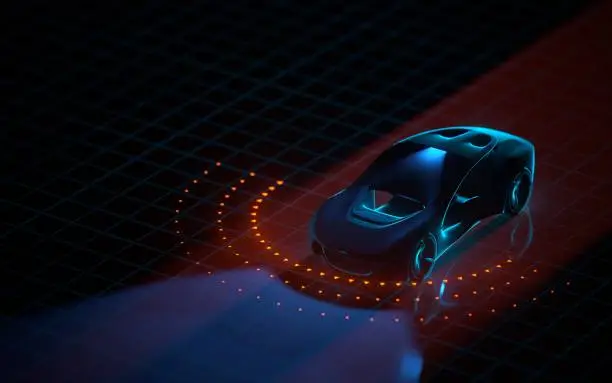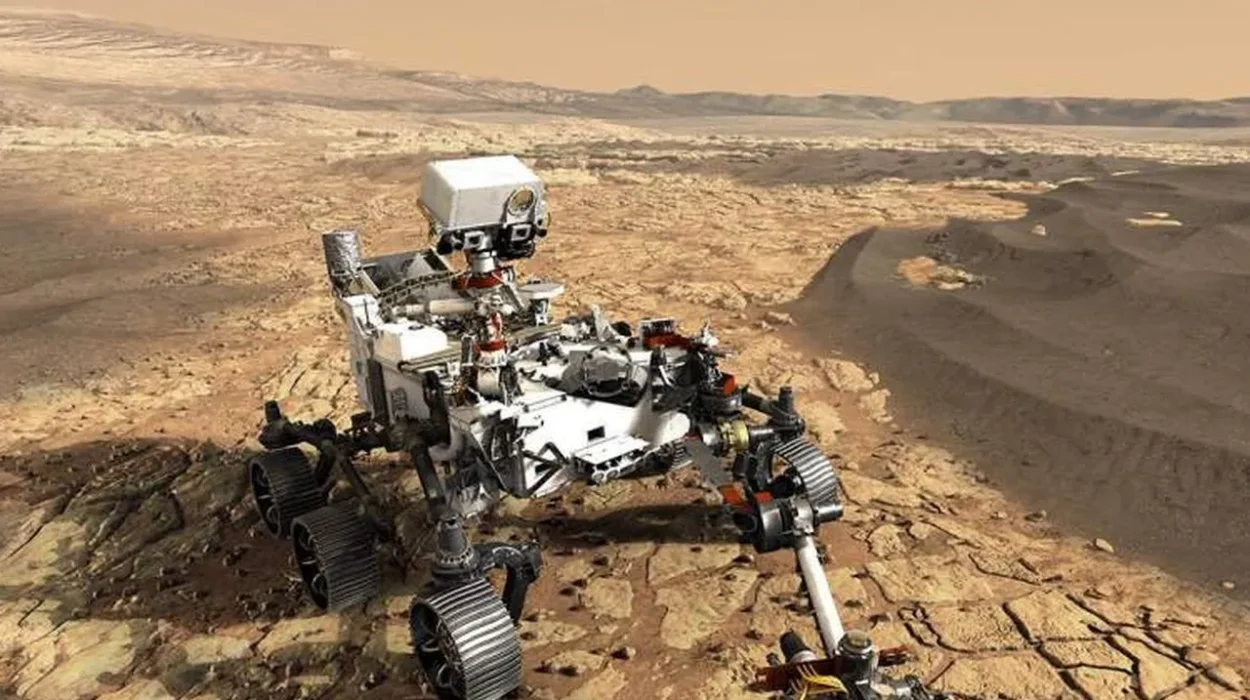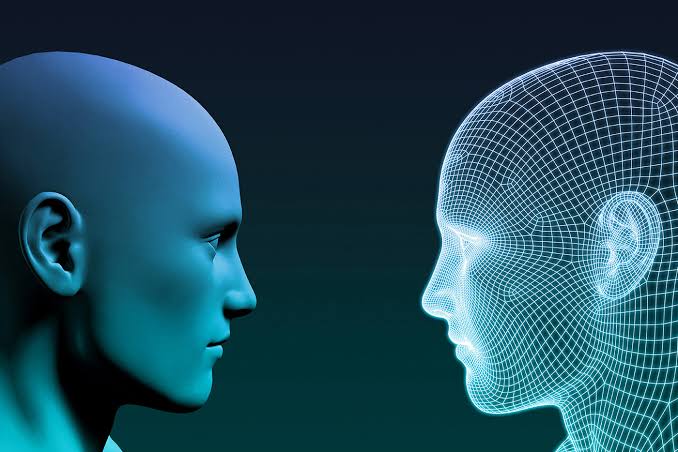
There is a quiet tension in the modern world, a feeling that something monumental is unfolding around us. Machines can now write essays, compose music, diagnose diseases, drive cars, and defeat world champions in complex strategy games. Artificial intelligence systems analyze enormous datasets in seconds, recognize patterns invisible to the human eye, and operate tirelessly without sleep or distraction. It is natural to ask: Are we being surpassed? Is human intelligence slowly giving way to something more powerful, more efficient, more precise?
The comparison between artificial intelligence and human intelligence is one of the defining conversations of our time. But to understand where machines excel and where humans still hold the edge, we must first understand what intelligence truly is.
Human intelligence is not merely the ability to compute quickly or store vast amounts of data. It is a complex integration of reasoning, emotion, perception, creativity, memory, bodily awareness, social understanding, and moral judgment. It emerges from approximately 86 billion neurons in the human brain, interconnected in dynamic, adaptive networks shaped by genetics, experience, culture, and personal history.
Artificial intelligence, by contrast, is a technological achievement built upon algorithms, statistical models, and computational power. Modern AI systems—particularly those based on deep learning—learn patterns from massive datasets. They identify correlations and generate outputs based on probability distributions. They do not possess consciousness, subjective experience, or intrinsic understanding. They process inputs and generate outputs according to mathematical optimization.
The distinction is subtle yet profound. AI is extraordinarily capable in narrow domains. Humans are remarkably flexible across domains. Machines calculate. Humans comprehend. Machines simulate. Humans experience.
Despite the breathtaking progress of AI, there remain areas where human intelligence retains a decisive advantage. These are not sentimental claims; they are grounded in cognitive science, neuroscience, psychology, and philosophy of mind. In the sections that follow, we explore six critical domains where human intelligence still holds the edge.
1. Consciousness and Subjective Experience
Perhaps the most fundamental difference between AI and humans lies in consciousness. Human intelligence is inseparable from subjective experience. When you see a sunset, you do not merely process wavelengths of light. You feel something. There is an internal experience—a sense of color, warmth, beauty, memory, meaning.
This inner life is known in philosophy as qualia: the subjective, first-person qualities of experience. Neuroscience continues to investigate how consciousness arises from neural processes, but one fact is clear: human cognition is accompanied by awareness.
AI systems, no matter how sophisticated, do not possess consciousness. They do not have feelings, desires, fears, or self-awareness. When an AI generates a sentence about love, it does not experience love. When it describes grief, it does not feel loss. It processes symbols and patterns without any internal experiential dimension.
The difference matters because consciousness shapes human reasoning. Our emotions influence our decisions. Our awareness allows reflection. We can examine our own thoughts, doubt ourselves, revise beliefs, and form intentions. This capacity for metacognition—thinking about thinking—is central to human intelligence.
While researchers explore artificial consciousness and theories of machine awareness, no existing AI system demonstrates genuine subjective experience. The human edge here is not simply technical; it is existential. We are not just information processors. We are experiencers of reality.
2. Emotional Intelligence and Empathy
Human intelligence is deeply emotional. Emotions are not obstacles to rational thought; they are integral to it. Neuroscientific research shows that individuals with damage to emotional centers of the brain struggle to make even simple decisions. Emotions provide value signals. They help us prioritize, evaluate risks, and navigate social relationships.
Emotional intelligence includes the ability to recognize one’s own emotions, understand the emotions of others, regulate emotional responses, and respond with empathy. This skill is central to leadership, parenting, friendship, therapy, and diplomacy.
AI systems can detect patterns in facial expressions, vocal tone, and text to infer emotional states. They can simulate empathetic responses. However, they do not genuinely feel empathy. They do not possess lived emotional histories. Their “understanding” of emotion is statistical rather than experiential.
Humans, by contrast, draw upon embodied experience. When someone expresses grief, we recall our own losses. When a child is afraid, we remember fear. Empathy is rooted in shared vulnerability. It is not merely pattern recognition but resonance.
Moreover, emotional nuance in human interaction often depends on context, culture, history, and subtle cues that extend beyond explicit data. Humans navigate sarcasm, irony, moral tension, and conflicting emotions with a flexibility that remains difficult for AI systems.
In domains requiring deep emotional trust—counseling, conflict resolution, caregiving—human intelligence retains a critical advantage because it is grounded in authentic emotional life.
3. Moral Reasoning and Ethical Judgment
AI systems can be programmed with ethical guidelines and trained on datasets reflecting human values. They can follow rules, avoid harmful outputs, and apply policy constraints. Yet moral reasoning in humans involves far more than rule-following.
Human ethical judgment is shaped by empathy, cultural norms, philosophical reflection, and lived experience. We weigh competing values. We grapple with dilemmas where no option is perfect. We consider intentions, consequences, fairness, rights, and compassion.
Moral philosophy identifies multiple frameworks—utilitarianism, deontology, virtue ethics—each offering different criteria for right action. Humans can reflect on these frameworks, critique them, and revise their moral commitments over time.
AI, however, does not possess intrinsic moral agency. It does not bear responsibility. It does not experience guilt, pride, or remorse. When an AI system makes a harmful decision, accountability ultimately rests with human designers, operators, and institutions.
Furthermore, ethical reasoning often requires contextual judgment beyond fixed rules. A medical decision may depend on personal values, cultural beliefs, family dynamics, and individual circumstances. Humans can engage in dialogue, negotiate meaning, and revise positions dynamically.
Until machines possess genuine moral agency and accountability—if that is even possible—human intelligence remains central in ethical decision-making.
4. General Intelligence and Adaptability
Modern AI systems are extraordinarily powerful in narrow domains. A chess engine can defeat grandmasters. A medical imaging system can detect certain pathologies with impressive accuracy. A language model can generate coherent essays.
However, these systems typically excel within defined boundaries. When conditions shift significantly outside their training distribution, performance can degrade. They lack robust, generalized understanding of the world.
Human intelligence, by contrast, is highly adaptable. A child can learn language, mathematics, social norms, physical coordination, and moral rules in overlapping ways. Humans transfer knowledge across domains. We use analogy, abstraction, and imagination to apply prior experience to new challenges.
Cognitive scientists often refer to this as general intelligence—the ability to learn and reason flexibly across a wide range of tasks. While artificial general intelligence remains a research goal, no current AI system matches the breadth of human adaptability.
Humans also demonstrate common-sense reasoning grounded in embodied experience. We understand gravity not only through equations but through lived interaction with physical space. We know objects fall, liquids spill, and fragile items break because we have physically encountered these events.
This embodied cognition gives humans intuitive models of the world that are difficult to replicate in purely data-driven systems.
5. Creativity and Original Insight
AI can generate art, music, poetry, and design. It can recombine patterns from vast datasets in novel ways. In some cases, the outputs are strikingly original in appearance. But there is an important distinction between recombination and intention.
Human creativity often emerges from lived experience, emotional depth, cultural context, and personal struggle. A composer writes music shaped by memory and longing. A scientist develops a theory inspired by years of curiosity and frustration. A novelist crafts characters drawn from human complexity.
Creativity involves not only producing something new but doing so with meaning. Humans create with purpose. They express values, challenge norms, and explore identity. Their work is embedded in biography and intention.
AI-generated content lacks intrinsic purpose. It does not seek self-expression. It does not aspire to change the world. Its novelty arises from algorithmic variation within learned distributions.
Moreover, transformative scientific insights often require conceptual leaps—rethinking foundational assumptions, questioning prevailing paradigms, and pursuing unconventional ideas despite uncertainty. While AI can assist in data analysis and hypothesis generation, the bold reframing of problems has historically been a deeply human endeavor.
Creativity is not just output. It is the manifestation of conscious agency interacting with culture and history.
6. Meaning, Purpose, and Existential Understanding
Perhaps the most profound domain where humans retain the edge is in the creation of meaning. Humans ask questions that transcend utility. Why are we here? What is a good life? What should we value? What gives suffering significance?
AI systems do not experience existential uncertainty. They do not confront mortality. They do not wonder about purpose. Their operations are goal-directed only insofar as humans define objectives and optimization criteria.
Human intelligence is intertwined with narrative. We construct stories about our lives. We seek coherence between past, present, and future. We interpret events symbolically and emotionally. Meaning-making shapes motivation, resilience, and identity.
Psychological research shows that a sense of purpose correlates with well-being, perseverance, and social contribution. Humans orient themselves toward long-term aspirations, moral commitments, and collective ideals.
AI may assist in analyzing texts about philosophy or religion, but it does not inhabit those questions from within. It does not care. And caring—investing emotionally in outcomes—is central to human intelligence.
Meaning cannot be reduced to data processing alone. It arises from consciousness, emotion, culture, and mortality. In this domain, the human advantage is deeply rooted in the nature of existence itself.
A Future of Collaboration, Not Replacement
Recognizing these six areas does not diminish the extraordinary capabilities of artificial intelligence. On the contrary, AI’s strengths in pattern recognition, speed, scalability, and data integration are transforming medicine, science, engineering, and communication.
The more productive framing is not AI versus humans as adversaries, but AI alongside humans as collaborators. Machines can augment human intelligence by handling repetitive tasks, analyzing massive datasets, and offering decision support. Humans can provide ethical oversight, emotional insight, creativity, and meaning.
The future will likely involve increasingly sophisticated partnerships. Doctors working with diagnostic algorithms. Scientists using AI to explore complex models. Artists incorporating generative tools into their creative process.
Yet even as technology advances, the uniquely human dimensions of consciousness, empathy, morality, adaptability, creativity, and meaning remain central.
The Enduring Edge
Artificial intelligence represents one of humanity’s most remarkable achievements. It reflects our capacity to model aspects of cognition in silicon and code. But it is still a creation—a tool shaped by human intention.
Human intelligence is not merely computational. It is embodied, emotional, moral, and conscious. It is capable of love and doubt, courage and regret, imagination and sacrifice.
In the unfolding story of intelligence on Earth, machines may become increasingly powerful. They may surpass us in calculation, memory, and pattern detection. But the deeper layers of intelligence—the ones rooted in experience, value, and meaning—remain distinctly human.
The question is not whether machines will replace us. It is whether we will use them wisely, guided by the very qualities that make us human.