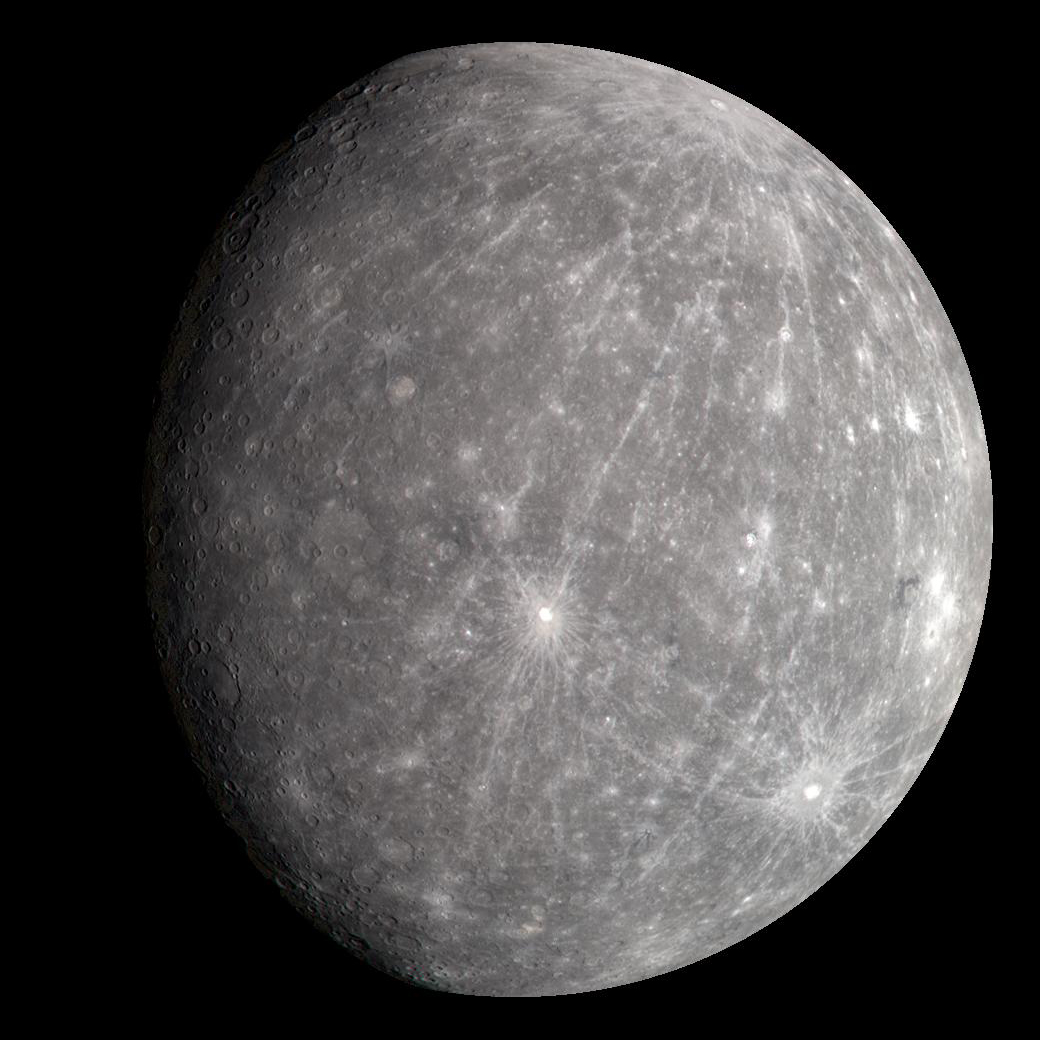
The idea of humans living on another world has long captured the imagination. Mars often takes center stage in these conversations, with its dusty plains and frozen water hinting at distant possibilities. Yet closer to the Sun lies a far more extreme and mysterious world—Mercury. Small, scorched, and seemingly lifeless, it appears at first glance to be one of the least hospitable places in the Solar System. But the question lingers with a certain stubborn curiosity: could humans ever live on Mercury?
To answer this, one must move beyond the initial impression of a hostile wasteland and explore the planet in detail. Mercury is not simply a hotter version of Earth’s deserts. It is a world shaped by extremes—of temperature, radiation, gravity, and time itself. Understanding whether humans could live there means confronting these extremes, one by one, and imagining how technology, ingenuity, and adaptation might respond.
The Nature of Mercury
Mercury is the smallest planet in the Solar System and the closest to the Sun. Its proximity defines nearly everything about it. The Sun appears more than three times larger in Mercury’s sky than it does from Earth, and its light is over six times more intense. This alone hints at the challenges any human presence would face.
Unlike Earth, Mercury has almost no atmosphere. What little exists is a tenuous exosphere composed of atoms blasted off its surface by solar radiation and micrometeorite impacts. There is no breathable air, no weather in the familiar sense, and no protection from the harsh environment of space. The sky above Mercury is permanently black, even during the day, because there is no atmosphere to scatter sunlight.
The planet’s surface is heavily cratered, resembling the Moon. Vast plains of ancient lava stretch between impact basins, telling a story of violent formation and long geological quiet. Mercury is a world that has changed little for billions of years, preserving a record of the early Solar System.
A World of Extreme Temperatures
Perhaps the most famous feature of Mercury is its temperature. The side facing the Sun can reach scorching highs of around 430 degrees Celsius. This is hot enough to melt lead. Yet on the night side, temperatures plunge to around minus 180 degrees Celsius, colder than the coldest places on Earth.
This dramatic contrast exists because Mercury lacks an atmosphere to distribute heat. On Earth, air and oceans circulate energy, smoothing out temperature differences. On Mercury, each region is left to face the Sun or the darkness alone.
For humans, such extremes are immediately dangerous. Any habitat on Mercury would need to provide complete thermal protection, shielding occupants from both intense heat and deep cold. This is not entirely beyond technological reach. Spacecraft already use insulation and reflective materials to manage temperature. However, the scale required for human habitation would be far greater.
One intriguing possibility arises from Mercury’s poles. In deep craters near the poles, sunlight never reaches the surface. These permanently shadowed regions remain extremely cold, but they also offer something unexpected: evidence suggests that water ice exists there, preserved for billions of years. This discovery changes the conversation. Water is essential for life, not only for drinking but also for producing oxygen and fuel. The presence of ice hints at a resource that could support human activity.
The Challenge of Solar Radiation
Living on Mercury would mean living under constant bombardment from solar radiation. Without an atmosphere or a strong magnetic field, the planet offers little natural protection from the Sun’s energetic particles and radiation.
On Earth, the magnetic field and atmosphere act as shields, deflecting and absorbing harmful radiation. Mercury’s magnetic field exists, but it is much weaker and provides limited protection. As a result, the surface is exposed to intense radiation levels that would be dangerous for humans over prolonged periods.
Any human settlement would need to address this challenge directly. Habitats would likely need to be buried beneath the surface or shielded by thick layers of material. Regolith, the loose soil covering Mercury, could serve as a natural barrier. By placing habitats underground or covering them with several meters of regolith, radiation exposure could be significantly reduced.
This approach is similar to concepts proposed for the Moon and Mars. It demonstrates that while Mercury’s radiation environment is harsh, it is not necessarily an insurmountable obstacle.
Gravity and the Human Body
Mercury’s gravity is about 38 percent that of Earth, similar to Mars. This lower gravity would have noticeable effects on the human body. Astronauts in microgravity experience muscle loss, bone density reduction, and changes in cardiovascular function. While Mercury’s gravity is stronger than that of space stations, it is still much weaker than what humans are adapted to.
Long-term habitation would likely require countermeasures. Exercise regimens, specialized equipment, and possibly rotating habitats that create artificial gravity could help mitigate these effects. The challenge is significant, but it is not unique to Mercury. Any off-world colony would need to address similar issues.
The Peculiar Rhythm of Day and Night
Time behaves strangely on Mercury. The planet rotates very slowly, taking about 59 Earth days to complete one rotation. However, its orbital motion around the Sun creates an even more unusual effect: a single day-night cycle, from one sunrise to the next, lasts about 176 Earth days.
This means that the Sun rises and sets very slowly, lingering near the horizon for extended periods. In some regions, the Sun can even appear to reverse its motion briefly due to the interplay between rotation and orbit.
For human settlers, this unusual cycle presents both challenges and opportunities. Long periods of daylight would bring extended exposure to intense heat, while equally long nights would bring extreme cold. However, it also suggests a potential strategy.
Near the boundary between day and night—the terminator—conditions could be more moderate. By moving habitats slowly along this line, it might be possible to remain in a region of relatively stable temperatures. This concept, sometimes called “terminator living,” could reduce the need for extreme thermal protection.
Implementing such a strategy would be complex. It would require mobile infrastructure capable of traveling across Mercury’s surface over long periods. Yet it illustrates how the planet’s unique characteristics might be turned to advantage.
Resources and Sustainability
For humans to live on Mercury, even temporarily, access to resources would be essential. Transporting everything from Earth would be impractical for long-term habitation.
The discovery of water ice at the poles is one of the most promising aspects of Mercury. Water can be split into hydrogen and oxygen, providing both breathable air and rocket fuel. This makes it a valuable resource for sustaining life and supporting further exploration.
Mercury’s surface is also rich in minerals and metals. Its high density suggests a large metallic core, and its crust contains elements that could be useful for construction and manufacturing. Solar energy, abundant due to the planet’s proximity to the Sun, could provide a powerful and continuous source of power.
Harnessing these resources would require advanced technology and infrastructure. Mining, processing, and manufacturing systems would need to operate in extreme conditions. Yet the potential rewards are significant. A self-sustaining outpost on Mercury could serve as a hub for scientific research and even as a stepping stone for missions deeper into the Solar System.
Engineering a Habitat
Designing a habitat for Mercury would involve solving multiple challenges simultaneously. Protection from heat, cold, and radiation would be paramount. Structures would need to be robust, insulated, and possibly partially or fully underground.
Materials would play a crucial role. Reflective surfaces could deflect solar radiation, while insulating layers could maintain stable internal temperatures. Active cooling systems might be necessary to dissipate excess heat.
Energy systems would likely rely heavily on solar power. Mercury’s proximity to the Sun makes solar panels highly effective, but they would also need to withstand intense radiation and heat. Energy storage systems would be essential to provide power during long nights or periods of reduced sunlight.
Life support systems would need to recycle air and water efficiently, minimizing the need for external supplies. Advances in closed-loop systems, already being developed for space missions, would be critical.
Transportation on Mercury would present its own challenges. The rough, cratered terrain and extreme temperatures would require specialized vehicles capable of operating in harsh conditions.
Psychological and Social Factors
Living on Mercury would not only be a physical challenge but also a psychological one. The environment is isolated, hostile, and devoid of natural life. The sky remains black, the landscape barren, and the Sun a constant, overpowering presence.
Human beings are deeply connected to their surroundings. The absence of familiar elements—blue skies, flowing water, vegetation—could have profound effects on mental well-being. Long durations in such an environment would require careful attention to psychological health.
Habitat design could help mitigate these effects. Artificial lighting, simulated natural environments, and opportunities for social interaction would be important. Communication with Earth, though delayed, would provide a connection to home.
These considerations highlight that living on another planet is not just a technical problem but a human one. Success would depend as much on understanding human needs as on engineering solutions.
Scientific Value of a Mercury Outpost
Beyond the question of survival lies the question of purpose. Why would humans want to live on Mercury in the first place?
Mercury offers unique opportunities for scientific research. Its proximity to the Sun makes it an ideal location for studying solar activity and its effects. Observations from Mercury could provide insights into solar flares, solar wind, and the behavior of the Sun’s outer layers.
The planet itself holds clues to the early Solar System. Its composition, structure, and geological history can help scientists understand how planets form and evolve. A human presence could enable more detailed exploration than robotic missions alone.
Additionally, Mercury’s environment could serve as a testing ground for technologies needed for future exploration. Developing systems that can operate under such extreme conditions would prepare humanity for even more challenging destinations.
Comparing Mercury to Other Worlds
When considering human habitation, Mercury is often compared to other planets and moons. Mars, with its more moderate temperatures and thin atmosphere, is generally seen as a more accessible target. The Moon, closer to Earth, offers a testing ground for technologies and strategies.
In comparison, Mercury presents greater challenges in terms of temperature and radiation. However, it also offers advantages, such as abundant solar energy and potential water resources at its poles.
Each world presents a different set of trade-offs. The choice of where to establish human presence depends on priorities, technology, and long-term goals. Mercury may not be the first destination for colonization, but it remains a compelling possibility for exploration and specialized missions.
The Limits of Possibility
Could humans live on Mercury? The answer depends on how the question is framed. If it asks whether humans could live on Mercury without technology, the answer is clearly no. The environment is far too extreme.
If the question asks whether humans could survive there with advanced technology, the answer becomes more nuanced. In principle, many of the challenges—temperature, radiation, lack of atmosphere—can be addressed through engineering solutions. None of them are fundamentally impossible to overcome.
However, practicality must also be considered. The cost, complexity, and risk of establishing a human presence on Mercury would be enormous. It would require sustained effort, significant resources, and technological advancements beyond current capabilities.
This does not mean it will never happen. Human exploration has a history of pushing boundaries once thought unreachable. What seems impractical today may become feasible in the future.
A Glimpse into the Future
Imagining humans on Mercury is an exercise in both science and imagination. It invites us to consider how far we can extend our presence beyond Earth and what it would take to survive in the most extreme environments.
A future Mercury outpost might consist of underground habitats near the poles, powered by solar energy and sustained by local resources. It might host scientists studying the Sun and the planet’s history. It might serve as a waypoint for missions deeper into space.
Such a vision is distant, but not beyond the realm of possibility. It reflects the broader trajectory of human exploration—a gradual expansion outward, driven by curiosity and capability.
Conclusion
Mercury is a world of extremes, a place where the Sun dominates the sky and the environment tests the limits of survival. At first glance, it seems utterly inhospitable, a planet that resists the idea of human presence.
Yet a deeper examination reveals that while the challenges are immense, they are not necessarily insurmountable. With advanced technology, careful planning, and a willingness to adapt, humans could, in theory, live on Mercury.
The question is not only whether it is possible, but whether it is worth pursuing. The answer to that lies in the value we place on exploration, knowledge, and the desire to push beyond our current boundaries.
In contemplating life on Mercury, we are ultimately reflecting on our own nature as a species—restless, curious, and driven to explore even the most unlikely places in the universe.