Mercury, the smallest planet in our solar system and the one closest to the Sun, has long been a world of extremes, mysteries, and quiet contradictions. For centuries, it remained elusive—too close to the Sun’s blinding glare to be easily observed, too small to reveal its secrets from afar. Yet as our understanding of the cosmos deepened, Mercury emerged not as a simple, lifeless rock, but as a planet filled with astonishing phenomena, especially on what is often referred to as its “dark side.”
This phrase does not mean a permanent darkness like the far side of the Moon. Instead, it evokes a deeper mystery—a landscape of shadowed craters, hidden ice, violent temperature swings, and a history etched into ancient scars. The dark side of Mercury is not merely a region of absence of light; it is a realm where some of the most surprising secrets of the inner solar system are preserved.
A Planet Once Thought to Be Tidally Locked
For a long time, scientists believed that Mercury always showed the same face to the Sun, much like the Moon does to Earth. This assumption led to the idea that one half of the planet would be in eternal daylight, scorched and unchanging, while the other half would remain frozen in perpetual darkness.
This belief shaped early imaginings of Mercury’s dark side as a cold, lifeless hemisphere, untouched by sunlight. However, this view was later proven incorrect. Mercury is not tidally locked in a simple one-to-one rotation. Instead, it exhibits a fascinating orbital behavior known as a 3:2 spin-orbit resonance. This means that Mercury rotates three times on its axis for every two orbits around the Sun.
As a result, no part of Mercury remains permanently dark or permanently lit. Instead, the planet experiences long days and long nights, each lasting about 176 Earth days. This revelation transformed our understanding of Mercury, showing that its “dark side” is not fixed, but shifting—a dynamic interplay of light and shadow.
The Long Nights of Mercury
While Mercury does not have a permanent dark side, its nights are incredibly long and intense. When a region of Mercury turns away from the Sun, it plunges into darkness for months at a time. During these extended nights, the surface rapidly loses heat, as there is virtually no atmosphere to trap warmth.
Temperatures on Mercury can drop to around minus 180 degrees Celsius in these shadowed regions. This dramatic cooling creates one of the most extreme temperature variations in the solar system. A single location on Mercury can swing from scorching heat during the day to deep freezing cold at night.
These long nights are not just a curiosity; they shape the planet’s geology and surface properties. The repeated cycles of extreme heating and cooling cause rocks to expand and contract, gradually breaking apart over time. This process contributes to the formation of Mercury’s dusty, fragmented surface.
Permanently Shadowed Craters
Perhaps the most intriguing aspect of Mercury’s dark side lies in its polar regions. Near the north and south poles, there are craters whose floors never see sunlight. Because Mercury’s axis is only slightly tilted, the Sun always remains low on the horizon at the poles. As a result, the interiors of some deep craters remain in permanent shadow.
These shadowed craters are among the coldest places in the solar system, despite being so close to the Sun. Temperatures there can remain extremely low, cold enough to trap volatile substances that would otherwise evaporate under solar heat.
The existence of these permanently shadowed regions has profound implications. It suggests that Mercury, a planet once thought to be completely dry, may harbor hidden reservoirs of material preserved in darkness.
Ice in the Shadows
One of the most surprising discoveries about Mercury is the presence of water ice in its permanently shadowed craters. This finding challenged long-held assumptions about the inner solar system.
Water ice on Mercury survives because it is protected from direct sunlight. In these shadowed regions, the temperature remains low enough to prevent the ice from sublimating into vapor. Radar observations and spacecraft missions have confirmed that these icy deposits exist, often covered by a thin layer of dark, organic-rich material.
The origin of this ice is still a subject of study. It is believed that comets and asteroids, rich in water and other volatiles, delivered these materials to Mercury over billions of years. Once deposited in shadowed craters, the ice became trapped, preserved in the planet’s darkest corners.
This discovery reveals a paradox: the closest planet to the Sun, a place of extreme heat, also contains frozen water hidden in eternal darkness.
The Role of Spacecraft Exploration
Our understanding of Mercury’s dark side has been revolutionized by spacecraft missions. For centuries, observations from Earth provided only limited information. Mercury’s proximity to the Sun made it difficult to study in detail.
The first close-up views came from early flyby missions, which revealed a heavily cratered surface resembling the Moon. Later missions provided more comprehensive data, mapping the planet’s surface, analyzing its composition, and uncovering its magnetic field.
These missions showed that Mercury is far more complex than previously thought. Its surface is marked by vast plains, towering cliffs, and deep impact craters. Many of these features are best understood by studying regions that spend long periods in darkness, where conditions differ dramatically from sunlit areas.
The exploration of Mercury continues, with modern missions aiming to uncover even more about its hidden regions. Each new discovery adds depth to our understanding of this enigmatic world.
A Landscape Shaped by Impacts
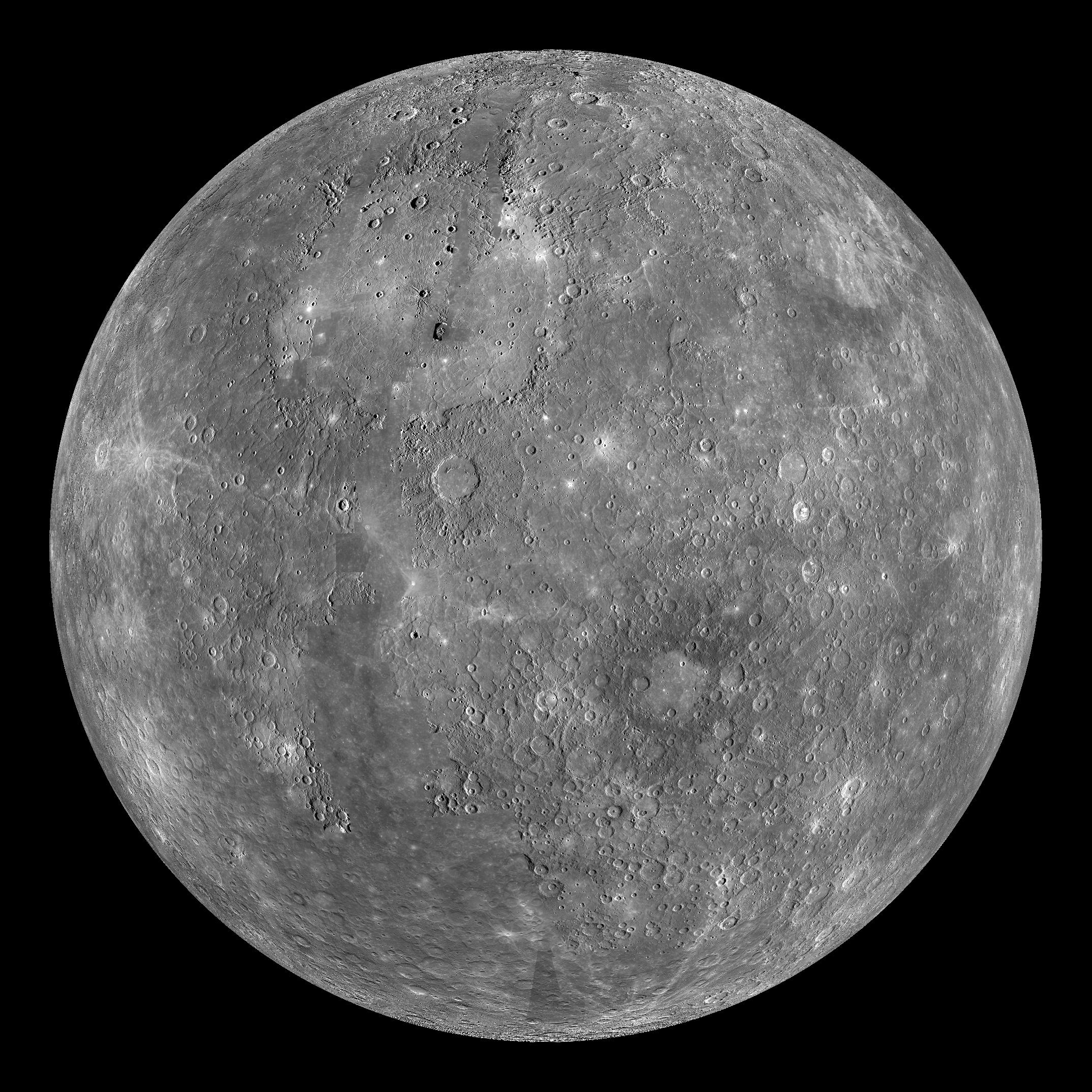
Mercury’s surface is dominated by impact craters, many of which are ancient and well-preserved. Because the planet lacks a thick atmosphere, meteoroids can strike its surface without burning up, leaving behind scars that remain for billions of years.
In the darkened regions of Mercury, these craters take on a special significance. Without sunlight, their interiors remain largely unchanged, preserving clues about the planet’s history. These shadowed areas act like time capsules, offering a glimpse into the early solar system.
Some craters are surrounded by bright rays of ejected material, while others have smooth floors formed by ancient volcanic activity. The interplay between impacts and geological processes has created a complex and varied landscape, much of which is best studied in regions that experience prolonged darkness.
The Mystery of Mercury’s Magnetic Field
Another surprising feature of Mercury is its magnetic field. Despite its small size and slow rotation, Mercury generates a magnetic field that interacts with the solar wind. This field is weaker than Earth’s but still significant.
The presence of a magnetic field suggests that Mercury has a partially molten core. This is unexpected for such a small planet, as it was once thought that its interior would have cooled and solidified long ago.
In the dark regions of Mercury, the interaction between the magnetic field and charged particles from the Sun can create subtle effects. These interactions contribute to the formation of a thin exosphere, a tenuous layer of atoms that surrounds the planet.
The study of Mercury’s magnetic field provides insights into its internal structure and thermal history, revealing that even its hidden regions are influenced by processes deep within the planet.
The Thin Exosphere and Surface Interactions
Mercury does not have a substantial atmosphere. Instead, it possesses an exosphere composed of atoms blasted off its surface by solar radiation and micrometeoroid impacts. This exosphere is extremely thin, with particles constantly being lost to space and replenished by surface processes.
In regions that spend long periods in darkness, the behavior of this exosphere can differ from that in sunlit areas. The absence of sunlight affects the movement and distribution of particles, creating subtle variations in the planet’s environment.
These interactions between the surface and the exosphere are part of a complex system that shapes Mercury’s outer layer. Even in darkness, the planet is not static; it is constantly evolving under the influence of external forces.
Extreme Temperature Contrasts
The contrast between light and dark on Mercury is one of the most dramatic in the solar system. During the day, surface temperatures can soar to around 430 degrees Celsius. At night, they can plummet to extremely low levels.
This extreme variation is a direct result of Mercury’s lack of a significant atmosphere. Without air to distribute heat, each region of the planet experiences temperature changes independently.
In the dark regions, the absence of sunlight creates conditions that are both harsh and unique. Materials behave differently under such extreme cold, and chemical processes that would be impossible in warmer environments can occur.
These temperature contrasts are not just a curiosity; they are a defining feature of Mercury’s environment, influencing everything from its surface composition to its geological evolution.
The Geological Story Hidden in Darkness
Mercury’s dark regions hold clues to its geological past. The planet’s surface shows evidence of ancient volcanic activity, tectonic movements, and massive impacts.
In some areas, large cliffs known as scarps stretch across the surface, formed as the planet cooled and contracted over time. These features reveal that Mercury has undergone significant changes since its formation.
The darkened regions, particularly those that remain shadowed for long periods, preserve these features in remarkable detail. Without the constant heating of sunlight, they experience less thermal alteration, allowing scientists to study them as they were formed.
This preservation makes Mercury’s dark side a valuable resource for understanding the history of the planet and the processes that shaped it.
A World of Contradictions
Mercury is a planet of contradictions. It is the closest planet to the Sun, yet it contains ice. It experiences intense heat, yet also extreme cold. It appears simple from a distance, yet reveals complexity upon closer inspection.
The dark side of Mercury embodies these contradictions. It is a place where extremes coexist, where hidden secrets challenge our assumptions, and where the boundaries of our understanding are continually pushed.
This duality is part of what makes Mercury so fascinating. It reminds us that even the most familiar objects in our solar system can hold surprises, waiting to be uncovered.
The Future of Exploration
As technology advances, the exploration of Mercury continues to evolve. Future missions aim to study the planet in greater detail, focusing on its surface, interior, and environment.
Particular attention is being given to the polar regions and permanently shadowed craters. These areas hold the key to understanding the distribution of water ice and other volatile materials.
New instruments and techniques will allow scientists to probe these dark regions more effectively, revealing their composition, structure, and history. Each new discovery brings us closer to a complete picture of Mercury.
The exploration of Mercury is not just about understanding one planet; it is about gaining insight into the processes that shape rocky worlds throughout the universe.
Conclusion
The dark side of Mercury is not a single place, but a shifting tapestry of shadow, cold, and hidden wonder. It is a realm where sunlight fades, where temperatures plunge, and where ancient secrets lie preserved beneath layers of dust and ice.
Through careful observation and exploration, we have begun to uncover these secrets, revealing a planet far more complex and intriguing than once imagined. Mercury’s dark regions challenge our assumptions, expand our knowledge, and inspire a deeper appreciation for the diversity of the solar system.
In the silent darkness of its shadowed craters and long nights, Mercury tells a story—a story of extremes, resilience, and the enduring mystery of the cosmos.