Burials dating to the early 1400s, the oldest known stone buildings in central Angola, and the country’s only documented archaeological cremation have been uncovered at Caculo Cabaça during a rescue excavation ahead of a hydroelectric dam project. The discoveries provide rare evidence of a thriving pre-Portuguese community while preserving information from a site that will soon lie beneath a reservoir.
As floodwaters from a new hydroelectric reservoir prepare to cover the archaeological site of Caculo Cabaça, researchers have documented one of the most significant discoveries yet for Angola’s early history. Their work revealed the oldest dated burials known from the country, the earliest stone architecture identified in central Angola, and an unprecedented cremation burial unlike any previously found in Angolan archaeology.
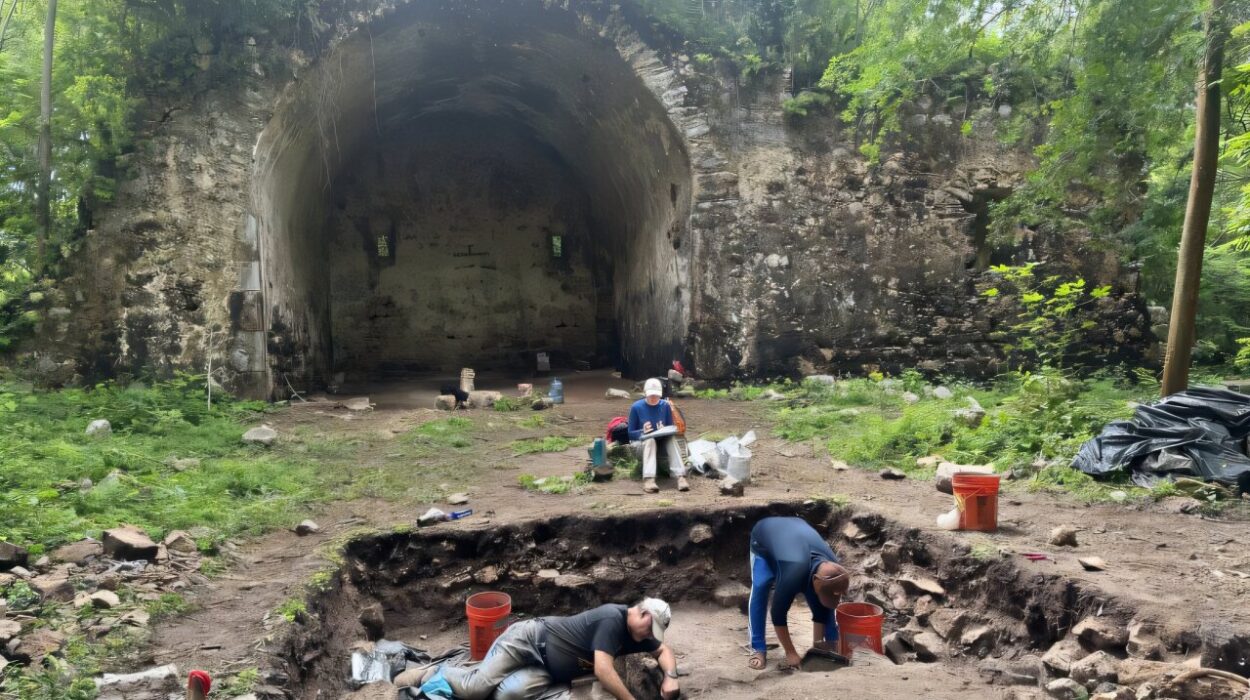
The findings, published in the Journal of Field Archaeology, emerged from an emergency excavation carried out under intense time pressure. Much of the settlement is expected to disappear beneath the reservoir, forcing archaeologists to prioritize areas that would soon be permanently lost.
“We gave priority to the places that we knew would soon disappear,” said doctoral candidate Sofia Mateus Simplício D’Oliveira of the Muséum national d’Histoire naturelle in Paris.
A race against the rising water
The excavation began only after several major obstacles had been overcome. Construction workers first identified the stone structures in 2023, prompting archaeologists to investigate. Before any digging could begin, however, the site had to be surveyed for landmines left from Angola’s civil war.
The excavation also required the approval of local community leaders. Elders known as Sobas performed a traditional ceremony that included offerings of eggs, bread, wine, and juice shared with the ancestors, followed by the sacrifice of a goat to seek ancestral permission and protection for the archaeological work.
Only then could researchers begin documenting what proved to be a remarkably extensive settlement.
A landscape filled with stone monuments
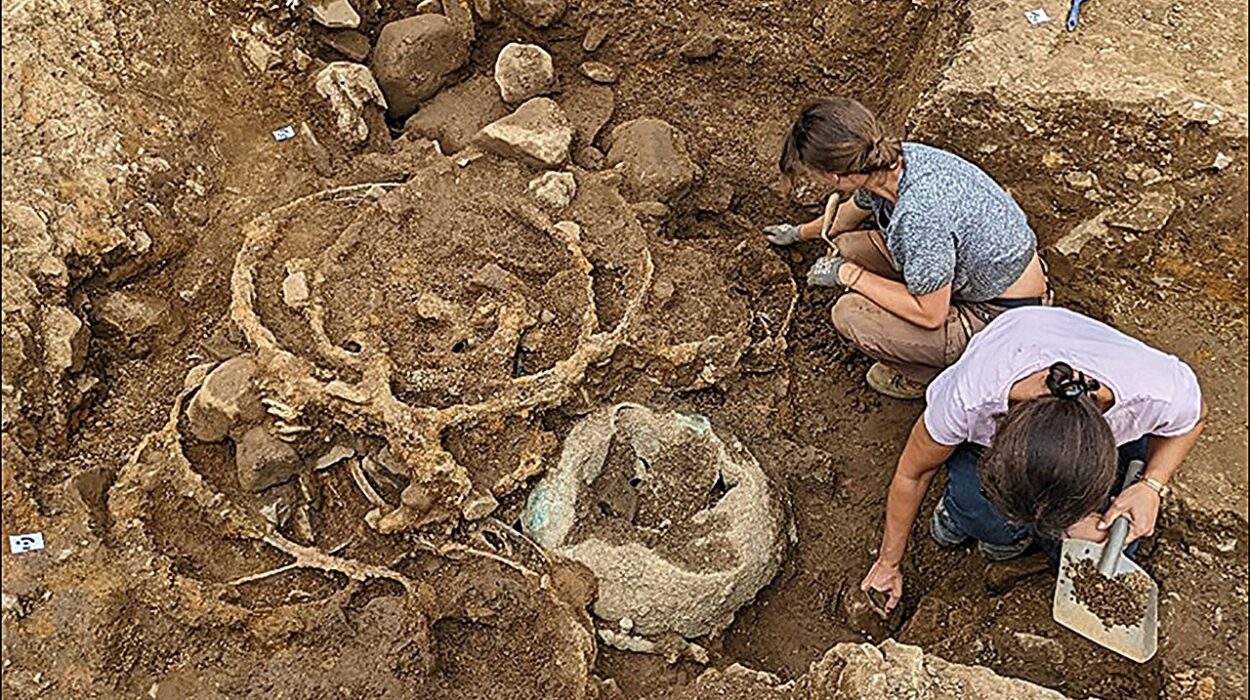
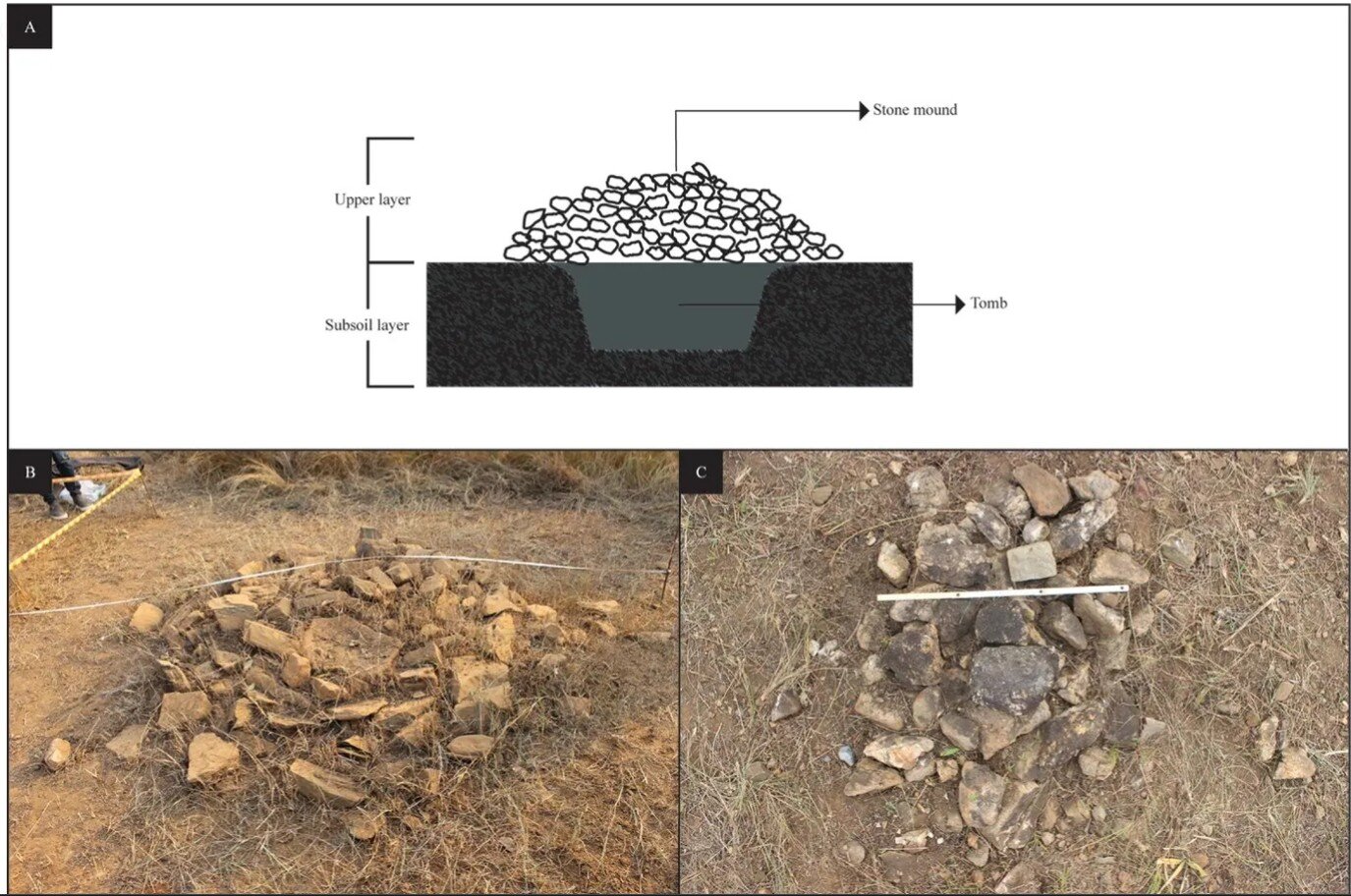
The team recorded 117 clusters of stone structures and excavated 65 individual structures, including several stone tumuli—mounds built over graves.
Stone-built sites are scattered across Angola, but until now none had been securely dated before the 16th century. That uncertainty had left historians debating whether the region’s stone-building traditions developed independently or reflected outside influences, particularly because early European descriptions of the area focused mainly on wooden buildings that have long since disappeared.
Radiocarbon dating changed that picture.
The analysis showed that people were being buried at the site during the early 1400s, several decades before Portuguese arrival in the region. The dates demonstrate that substantial stone construction and formal burial practices were already established before European contact.
Burials reveal a complex community
Six of the excavated tumuli contained human remains, transforming what initially appeared to be isolated stone features into evidence of a much larger cultural landscape.
“It was very exciting, but also quite overwhelming,” D’Oliveira said. “We were no longer looking only at isolated stone structures … we were looking at a complex human landscape.”
The burials displayed notable variation. Some individuals were laid on their sides, while others had been buried sitting upright with their knees drawn toward their chests—a position traditionally associated in Angola with chiefs and members of the elite.
Yet the accompanying objects complicated that interpretation.
Rather than containing elaborate prestige goods, these seated burials included everyday materials such as grinding stones, ceramic vessels, and iron slag.
According to D’Oliveira, the grinding tools are particularly intriguing because ethnographic evidence often connects them with domestic activities and women’s work.
Their presence raises broader questions about what these objects represented. Instead of serving simply as indicators of wealth, they may have expressed identity, sex, social position, or symbolic meaning. D’Oliveira said the artifacts support “a more complex interpretation of status, possibly including women in positions of social or ritual importance.”
An archaeological first for Angola
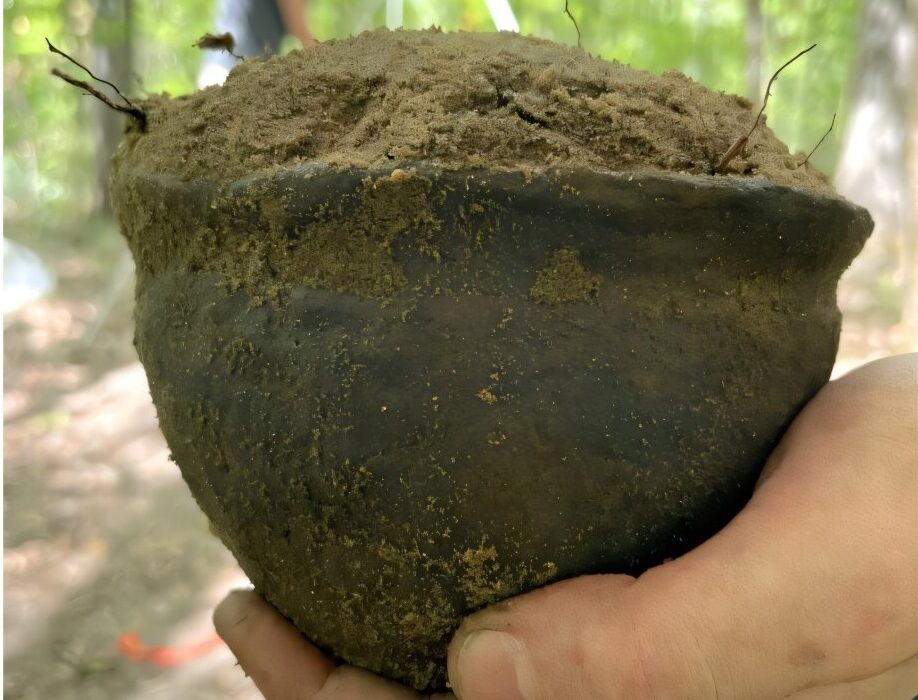
Perhaps the most remarkable discovery came from a simple pottery urn unlike anything previously documented in the country’s archaeological record.
The broken, burned vessel contained cremated fragments of a human skull and teeth, making it the only known cremation identified so far in Angolan archaeology.
D’Oliveira described the urn as the site’s most “unique” discovery. While no direct archaeological parallels exist, researchers noted that illustrations produced in the 1680s by Capuchin missionary Antonio Cavazzi frequently depict pottery playing central roles in ceremonies involving loyalty oaths, sacrifices, and other rituals in the region.
Even so, the researchers remain cautious about drawing conclusions.
“For now, we prefer to present the urn as an exceptional finding,” D’Oliveira said, expressing hope that future discoveries will eventually clarify its significance.
Preserving a history that will soon disappear
Although much of Caculo Cabaça will soon vanish beneath the reservoir, the discoveries have already reshaped understanding of Angola’s past.
The settlement strengthens historians’ long-held suspicions that a densely occupied community flourished in the Cuanza Basin well before European contact. The site’s combination of stone architecture, formal cemeteries, and varied burial practices provides rare evidence for a sophisticated and previously underdocumented chapter of the region’s history.
Not everything will be lost to the rising water. Researchers have already identified additional stone structures outside the future flood zone, offering opportunities to continue investigating the settlement after the reservoir is filled.
For D’Oliveira and her colleagues, those surviving areas represent an important chance to build on the discoveries made during the rescue excavation.
“Continued excavation and research in the surviving areas remains both possible and important,” she said.
Reflecting on the broader significance of the work, D’Oliveira emphasized that the discoveries reach beyond individual graves or architectural remains.
“This discovery is not simply about old burials or stone structures. It reveals a deeper and still largely undocumented history of Angola,” she said.