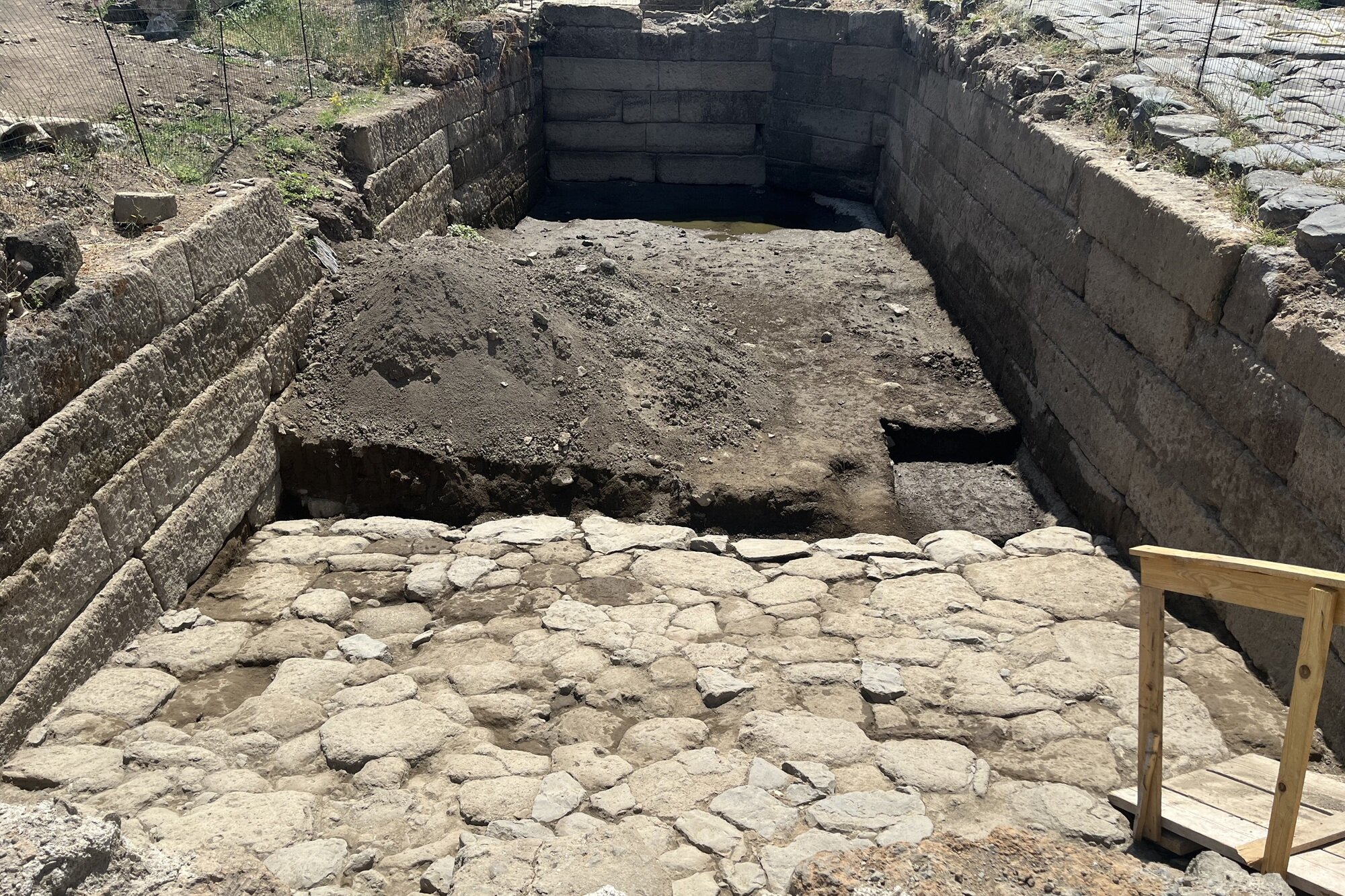
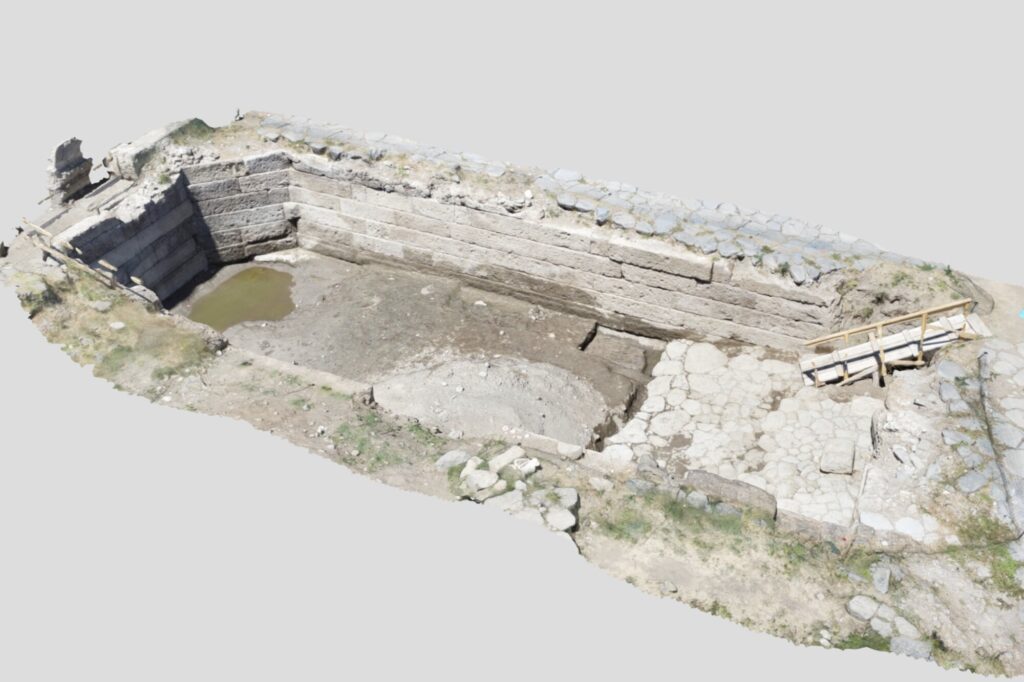
Just eleven miles east of Rome, where the rolling Italian hills cradle the ruins of forgotten empires, archaeologists have uncovered a story buried for more than two millennia. In the ancient city of Gabii, a team led by University of Missouri professor Marcello Mogetta has unearthed a massive stone-lined basin—an architectural marvel carved partly into the bedrock around 250 B.C., and possibly older still.
The discovery is more than just an impressive artifact; it is a window into the earliest ambitions of Rome itself. Long before the grandeur of the Colosseum or the sweeping forums of the Imperial City, builders in Gabii were experimenting with monumental architecture—structures designed not only to serve practical needs but to express identity, power, and political imagination.
The Monument That Spoke of Power
Mogetta, chair of the Department of Classics, Archaeology, and Religion at the University of Missouri, describes the find as a key to understanding early Roman urban design. Monumental architecture, he explains, was never merely about construction—it was a form of communication, a declaration of civic pride and influence.
“This discovery gives us a rare look at how the early Romans experimented with city planning,” Mogetta said. “Its location—at the center of the city near the main crossroads—suggests it may have been a monumental pool that was part of the city’s forum, or the heart of public life in Roman towns.”
In that bustling civic heart, surrounded by merchants, magistrates, and citizens, the basin might have reflected more than the sky—it may have mirrored the aspirations of a rising civilization learning to shape space as a tool of governance and belief.
The Forgotten Rival of Rome
Long before the Roman Republic rose to dominance, Gabii was a formidable city-state in its own right. Settled in the Early Iron Age, it stood as one of Rome’s powerful neighbors—and occasional rivals. Unlike Rome, however, Gabii did not evolve continuously through centuries of construction. By around 50 B.C., it was largely abandoned, its once-vibrant streets and forums left to crumble under volcanic dust and silence.
This abandonment, though tragic for its people, proved a blessing for archaeologists. While the earliest layers of Rome lie buried beneath the foundations of modern life, Gabii remained relatively untouched. Its streets, buildings, and sacred spaces were frozen in time, offering an unparalleled look at early Roman urban life—a city caught between Etruscan tradition and Roman ambition.
The Echo of Greece in Roman Stone
The newly discovered basin joins a growing list of extraordinary finds from the Gabii Project, including the so-called “Area F Building,” a terraced complex carved into the slope of an ancient volcanic crater. Together, these structures reveal how the early Romans drew inspiration from Greek precedents.
From the majestic Parthenon in Athens to the bustling Agora, Greek architects built spaces that symbolized democracy, faith, and civic pride. Roman builders adopted these ideas but made them their own—transforming them into expressions of imperial power and community identity. Gabii’s stone-lined pool, likely surrounded by colonnades and paving, may well have been an early experiment in this synthesis of form and ideology.
A City Preserved by Time
Recognizing Gabii’s unique place in history, Italy’s Ministry of Culture has designated it an archaeological park, managed under the Musei e Parchi Archeologici di Praeneste e Gabii. The site is now home to an international research initiative known as the Gabii Project, with Mogetta serving as its new director.
Unlike many ancient ruins scattered across Italy, Gabii is not just an open-air museum—it is an active laboratory. Every trench, every fragment of pottery, every carved stone tells a story about how the Romans thought, worshiped, and governed. The meticulous work of excavation allows researchers to reconstruct the living rhythms of a city that once pulsed with trade, politics, and ritual.
The Secrets Beneath the Basin
The basin itself has become the centerpiece of the ongoing excavation. Next summer, archaeologists plan to continue digging through the layers of sediment that have filled it over the centuries. Already, intriguing artifacts have been recovered from what Mogetta calls the “abandonment levels” of the structure—intact vessels, oil lamps, perfume containers, and cups inscribed with mysterious markings.
These items may not have been lost by accident. Some were likely offerings, deliberately placed in connection with a ritual “closing” of the pool around 50 C.E. Such practices underscore the importance of water in ancient civic and spiritual life. To the Romans, water was both a practical necessity and a sacred element, symbolizing purity, renewal, and divine favor.
The team also plans to investigate a nearby “anomaly” detected by thermal imaging. Hidden beneath the earth, it could be the remains of a temple or another large public building. If confirmed, it might illuminate the relationship between Gabii’s religious and civic centers—helping scholars determine whether early Roman towns were shaped first by faith or by politics.
Between Worship and Politics
This question—did temples precede forums, or forums precede temples?—cuts to the heart of Roman civilization. The Romans were a deeply religious people, yet their public life was equally political. In cities like Gabii, these spheres often overlapped: ceremonies took place in civic spaces, and political authority was sanctified by divine rituals.
The basin, whether it served as a pool, shrine, or both, may have symbolized this intersection. It was not simply a work of engineering but a stage where community, faith, and identity converged. The offerings found within its depths may represent a moment when the citizens of Gabii bid farewell to their city’s lifeblood, closing a sacred chapter in their history.
A Living Laboratory of Roman Origins
Every layer of soil in Gabii tells a part of Rome’s story—the experimentation, adaptation, and transformation that would one day give rise to the Roman Empire. By piecing together these fragments, Mogetta and his team are not only reconstructing Gabii’s forgotten glory but also tracing the birth of Roman urbanism itself.
These discoveries remind us that cities are living organisms. They grow, evolve, and sometimes die—but even in their ruins, they continue to speak. The stones of Gabii whisper of ambition and artistry, of people who sought to shape their world with order and meaning.
Why Gabii Matters Today
The excavation of Gabii is more than a historical pursuit—it is a reflection on human creativity and continuity. The principles the Romans explored here still resonate in modern architecture and city planning. Our plazas, courtyards, and public squares are distant descendants of those early forums and civic spaces.
Gabii also challenges us to think about preservation and memory. As the pace of urbanization threatens archaeological sites across the globe, the careful stewardship of places like Gabii becomes a moral duty. To uncover the past is to honor the people who built the foundations of our shared civilization.
The Promise of the Future
The work at Gabii is far from over. Each excavation season reveals new surprises—a mosaic, a wall fragment, a tool left behind by an ancient craftsman. For archaeologists, the thrill lies not only in discovery but in connection: touching the physical traces of people who lived, worked, and dreamed more than two thousand years ago.
As Mogetta and his team continue their work, they are rewriting the story of early Rome. Their findings remind us that the grandeur of the Roman Empire did not spring up overnight—it was built stone by stone, pool by pool, forum by forum, by communities like Gabii that dared to imagine something greater than themselves.
A City That Refuses to Be Forgotten
Gabii may have vanished from the maps of the living, but through the patience and dedication of modern archaeologists, it is breathing again. Its stones gleam once more in the sunlight, its stories echo across time. And in that rebirth, we glimpse our own fascination with origins—the timeless human desire to understand where we come from, and what traces we will one day leave behind.
The ancient basin of Gabii, carved deep into the earth, now stands as a testament to that continuity. It is more than an archaeological find—it is a reflection of humanity’s enduring quest to build, remember, and belong.