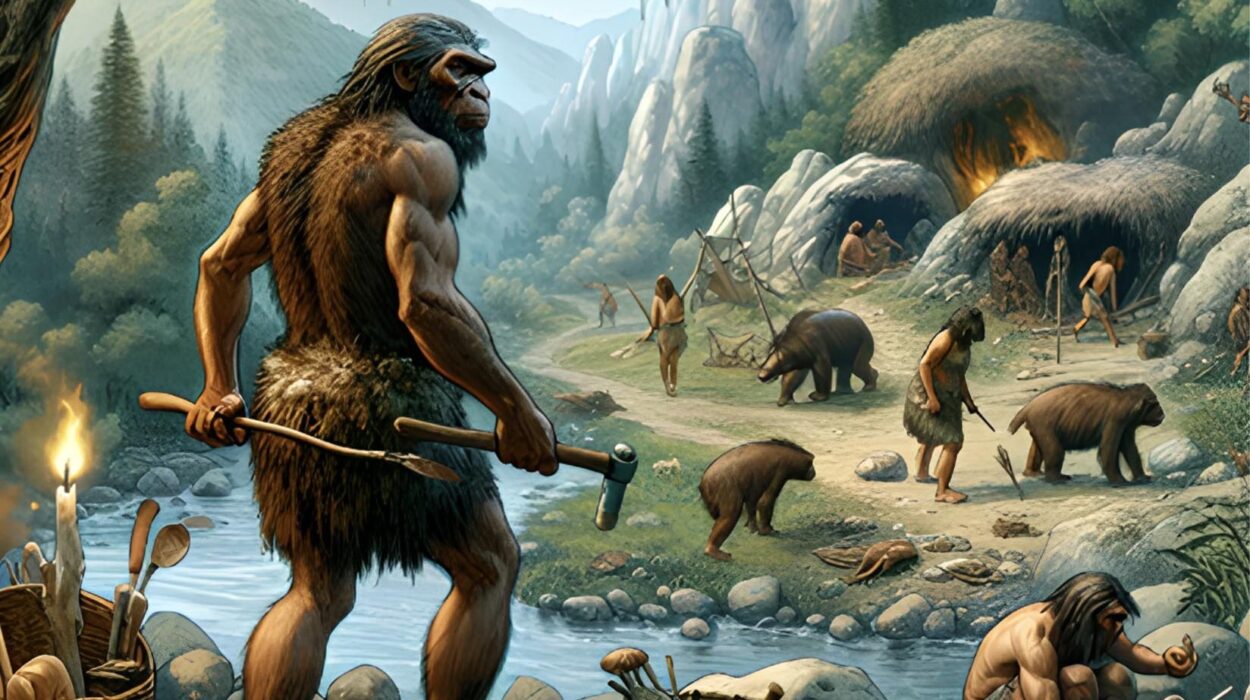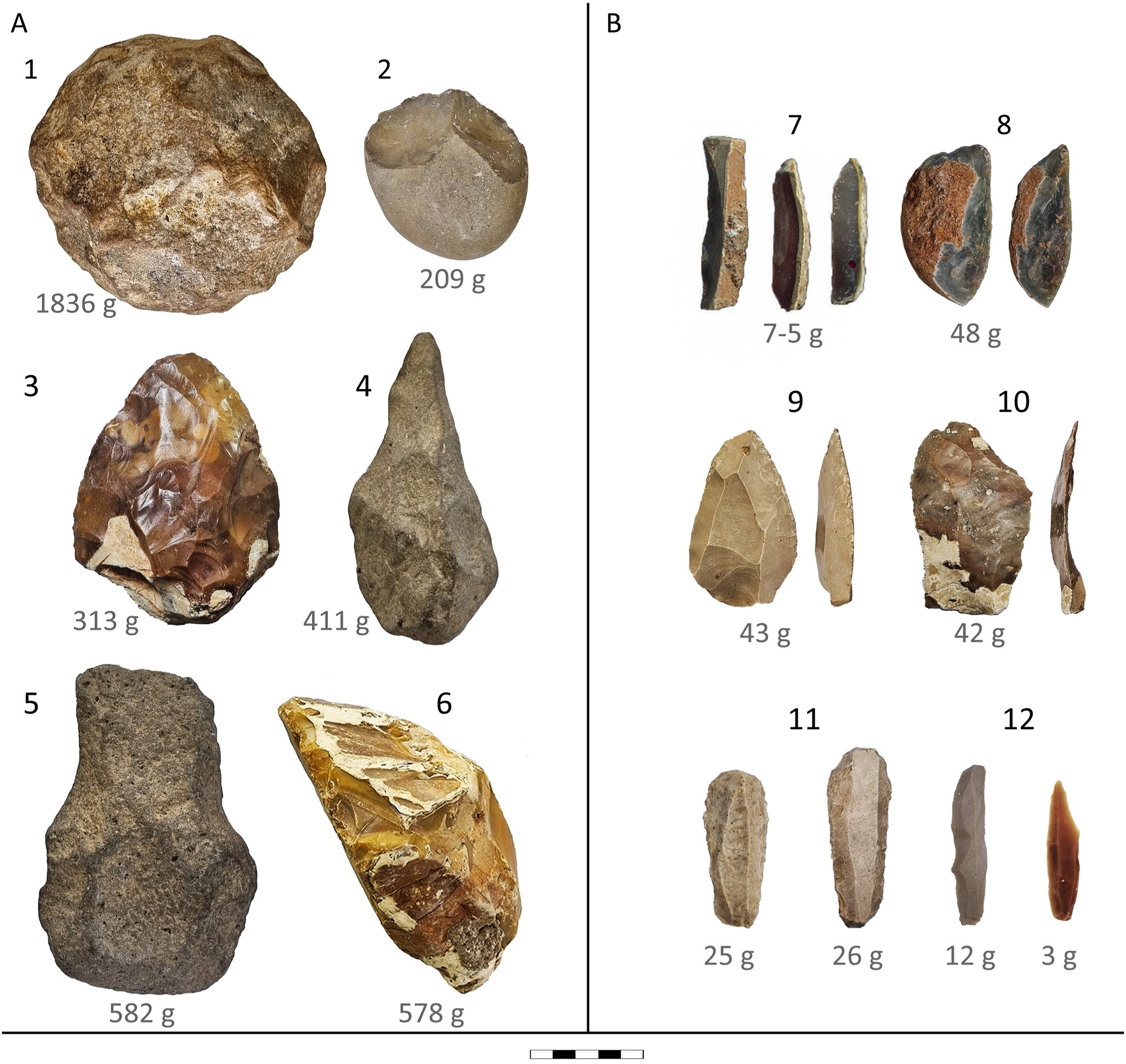
The sun rose over the Levant for more than a million years on a world that would be unrecognizable to us today. In this narrow corridor of the eastern Mediterranean, the landscape groaned under the weight of megaherbivores—creatures so massive they topped 1,000 kilograms. To survive alongside these giants, early humans lived a life defined by heavy lifting. Their world was one of massive handaxes and heavy stone balls, tools designed not for delicacy, but for the brutal necessity of breaking open the thick bones and processing the gargantuan carcasses of the era’s largest inhabitants. For an incredibly long stretch of human history, this was the status quo: big animals required big tools, and the archaeological record shows a deep, unwavering commitment to these heavy-duty technologies.
When the Earth Stopped Shaking
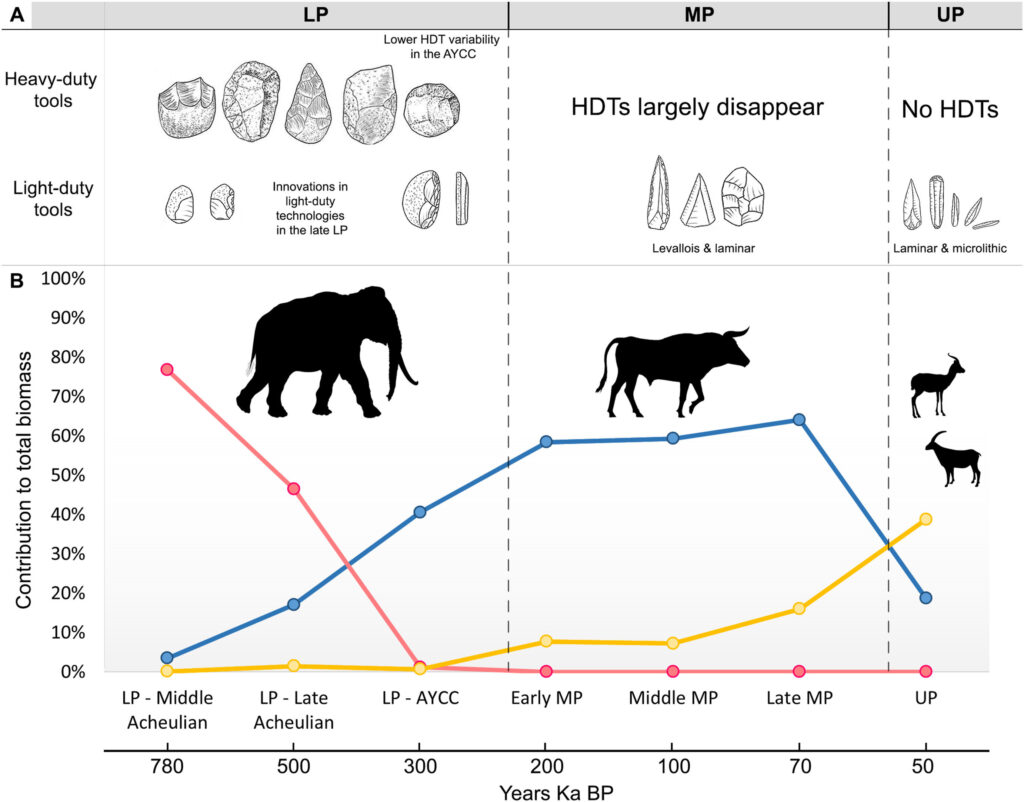
But around 200,000 years ago, a silent shift began to ripple through the fossil record. The heavy tools that had been the hallmark of human existence for an eternity began to vanish. It wasn’t a slow fade so much as a categorical disappearance. In their place, a new kit emerged—something lighter, sharper, and far more portable. Archaeologists began finding increasing numbers of blades, flakes, and specialized scrapers. For years, conventional wisdom suggested that this transition happened because humans simply got smarter, deciding on their own to pursue different, perhaps faster, game. However, a new study from researchers at Tel Aviv University suggests the truth is much more grounded in the harsh reality of survival. The humans didn’t necessarily choose to change; the world changed around them.
The researchers analyzed 47 archaeological sites across the Levant, meticulously cataloging the Paleolithic period from its earliest days to its end. What they found was a striking correlation: the moment the heavy-duty tools vanished was exactly the same moment the megaherbivores dropped in relative abundance. The giants were leaving the stage, and as their contribution to the total biomass of the region withered, the heavy tools they necessitated became obsolete. There was no longer a need to carry a stone ball that could crack an elephant’s femur if there were no more elephants to be found. The disappearance of the big game essentially forced a technological revolution.
The Shrinking Scale of Survival
This was a pivot from power to precision. As the researchers noted in their paper published in Quaternary Science Reviews, the shift in subsistence—the way these people stayed alive—was centered on a growing reliance on smaller prey. Imagine the physical difference in processing a creature the size of a modern cow versus one the size of a small house. The massive handaxes used for skinning a giant’s hide were replaced by sharp flakes and blades better suited for the finer work of butchering smaller, faster animals. This research suggests that our ancestors were highly reactive to their environment. Rather than being the masters of their domain who dictated what they would hunt, they were survivors who had to reinvent their entire toolkit just to keep up with a shrinking food supply.
To test this theory, the team looked beyond the Mediterranean, searching for a control group in the deep history of China. What they found supported their hypothesis perfectly. In parts of Asia, the heavy tools didn’t disappear nearly as early; they stayed in use for a much longer period. The reason was simple: in those regions, the large prey remained available long after they had vanished from the Levant. This geographical contrast proves that human “intelligence” or “innovation” wasn’t just a linear march toward smaller things. Instead, the size of the tool was tied directly to the size of the animal. As long as there were giants to hunt, humans kept the heavy tools. It was only when the environment hit a tipping point that the technology followed suit.
Why the Small Things Matter
This research matters because it flips the script on how we view human progress. It suggests that the curated light-duty toolkits that define later human history weren’t just a sign of a “smarter” brain, but a desperate and brilliant response to a new environment. It shows us that human technology has always been an echo of the natural world. By linking the disappearance of heavy-duty technologies to the loss of megaherbivores, we gain a clearer picture of how fragile and interconnected our ancestors’ lives were.
Understanding this link helps us appreciate the incredible adaptability of the human species. When the giants died out, our ancestors didn’t follow them into extinction. Instead, they downsized. They traded brute force for finesse, heavy stones for light blades, and in doing so, they survived a landscape that had become significantly smaller. This study reminds us that our greatest inventions are often born not from a desire to innovate, but from the absolute necessity of responding to a changing earth.
Study Details
Vlad Litov et al, The heavy connection: Decline in heavy-duty tools correlates with megaherbivore disappearance in the Paleolithic Levant, Quaternary Science Reviews (2026). DOI: 10.1016/j.quascirev.2026.109872