For as long as humans have looked toward the night sky, Mars has glowed like an ember—red, distant, and filled with possibility. Unlike the crushing clouds of Venus or the gas giant depths of Jupiter, Mars is solid, tangible, reachable. Robotic explorers have rolled across its plains. Orbiters have mapped its canyons. We know its mountains rise higher than any on Earth and its valleys stretch for thousands of kilometers. We know that rivers once carved its surface. We know that long ago, liquid water flowed there.
But today Mars is a frozen desert. Its atmosphere is thin—less than one percent of Earth’s surface pressure. Temperatures often plunge below minus 60 degrees Celsius. Radiation bombards the surface because the planet lacks a global magnetic field. If a human stepped outside without protection, they would suffocate within minutes.
Yet scientists and engineers have asked an audacious question: could we change that?
Terraforming Mars—the process of deliberately altering its environment to make it more Earth-like—is one of the boldest ideas ever seriously discussed in planetary science. It is not magic. It is not fantasy. It is a hypothetical, long-term engineering challenge rooted in physics, chemistry, and atmospheric science.
The task would be monumental. It would likely take centuries, perhaps millennia. It may prove impossible with current technology. But within the boundaries of known science, there are conceivable pathways—strategies grounded in real mechanisms—that could gradually transform Mars from a frozen wasteland into a world more welcoming to life.
Here are seven scientifically plausible ways humanity could attempt to terraform Mars.
1. Releasing Greenhouse Gases to Warm the Planet
The first and most fundamental challenge of Mars is temperature. The planet is cold because its atmosphere is thin and contains little greenhouse gas. Without a thick blanket to trap heat, solar energy escapes back into space.
Terraforming would begin with warming.
Mars’ atmosphere is composed mostly of carbon dioxide. Large quantities of carbon dioxide are also locked in its polar ice caps and possibly bound within minerals in the soil. If enough of this carbon dioxide could be released into the atmosphere, surface pressure and temperature would rise through the greenhouse effect.
The greenhouse effect is well understood. Certain gases, such as carbon dioxide and methane, absorb infrared radiation emitted from a planet’s surface and re-radiate it, trapping heat. On Earth, this effect makes our planet habitable. On Mars, increasing it could raise temperatures above the freezing point of water.
One approach would involve sublimating the carbon dioxide ice stored in the southern polar cap. By covering parts of the ice with dark dust or materials to reduce reflectivity, more sunlight would be absorbed, causing additional CO₂ to vaporize. As atmospheric pressure increased, temperatures would rise further, triggering a positive feedback loop.
Another approach would involve manufacturing powerful synthetic greenhouse gases, such as perfluorocarbons. These compounds are extremely effective at trapping heat and could be produced using industrial processes powered by nuclear or solar energy. Even small concentrations could significantly increase warming.
The challenge is scale. Current estimates suggest that the total accessible carbon dioxide on Mars may not be sufficient to raise atmospheric pressure to Earth-like levels on its own. Nevertheless, greenhouse warming remains the first logical step in any terraforming scenario. Without it, liquid water cannot persist stably on the surface.
Warming Mars is the ignition phase—the spark that could set other transformations into motion.
2. Redirecting Asteroids and Comets to Deliver Volatiles
Mars lacks not only warmth but also atmospheric mass and water. One dramatic proposal involves importing these materials from elsewhere in the solar system.
Asteroids and comets contain water ice, ammonia, and carbon compounds. Redirecting icy bodies from the outer solar system and guiding them to impact Mars could release enormous amounts of heat and volatiles upon collision.
When a large icy comet strikes Mars, its water would vaporize and enter the atmosphere. The impact energy would also temporarily heat the planet. Repeated impacts over decades or centuries could thicken the atmosphere and add substantial water.
Ammonia-rich asteroids are particularly interesting because ammonia is a potent greenhouse gas and contains nitrogen, a critical component of breathable air. Mars currently has very little nitrogen in its atmosphere. Delivering ammonia could help build a more Earth-like atmospheric mixture.
The engineering challenges are staggering. Redirecting kilometer-scale objects requires immense energy and precision. Impacts must be controlled to avoid catastrophic surface sterilization or destabilization.
Yet orbital mechanics makes asteroid redirection theoretically feasible. Humanity already tracks near-Earth objects and has tested deflection technologies. Scaling up would demand infrastructure in space, but the physics itself is sound.
This method would be violent, transformative, and cosmic in scale—reshaping Mars through controlled celestial bombardment.
3. Building Orbital Mirrors to Increase Solar Heating
Another concept relies not on chemistry but on light.
Mars receives about 43 percent as much sunlight as Earth. Increasing the amount of solar energy reaching the planet could raise temperatures without altering atmospheric composition initially.
Gigantic mirrors placed in orbit around Mars could reflect additional sunlight onto specific regions—particularly the polar caps. Concentrated light would accelerate the sublimation of carbon dioxide ice, thickening the atmosphere and amplifying greenhouse warming.
The mirrors would need to be enormous, potentially hundreds of kilometers across. They could be constructed from lightweight reflective materials assembled in space using resources mined from asteroids or Mars’ moons.
Unlike chemical interventions, mirrors offer control. They could be repositioned or adjusted as needed. If warming proceeded too rapidly, reflectivity could be reduced.
This approach requires advanced space manufacturing capabilities far beyond what we currently possess. However, no new physics is required—only engineering and materials science on an unprecedented scale.
Orbital mirrors represent a relatively reversible and controllable way to initiate planetary warming.
4. Engineering Microbes to Transform the Atmosphere
Once temperatures rise enough for liquid water to exist transiently, biology could take over part of the transformation.
On early Earth, microbial life dramatically altered the atmosphere. Photosynthetic cyanobacteria released oxygen, eventually creating the oxygen-rich air we breathe today.
A similar biological strategy could be attempted on Mars.
Extremophiles—microorganisms capable of surviving in harsh environments—already thrive on Earth in subzero deserts, acidic lakes, and high-radiation zones. Genetically engineered microbes could be designed to survive in Martian conditions, metabolizing carbon dioxide and producing oxygen.
In early stages, the goal would not be breathable air but incremental atmospheric change. Oxygen production would likely take thousands of years to accumulate significantly. However, microbes could also contribute to soil formation, breaking down rocks and releasing nutrients.
Biological terraforming is slow but self-sustaining once established. It leverages evolution and replication rather than massive mechanical infrastructure.
The ethical implications are profound. Introducing Earth life to Mars could permanently alter a pristine world, potentially contaminating any native life forms if they exist. Careful study would be required before any biological intervention.
Still, biology may ultimately be one of the most powerful tools in reshaping a planet.
5. Melting Subsurface Ice to Create Seas and Rivers
Mars holds vast reserves of water ice beneath its surface and within polar caps. Radar observations confirm thick ice deposits, and ancient valley networks show that flowing water once sculpted the landscape.
If atmospheric pressure and temperature were raised sufficiently, this ice could melt.
Liquid water is central to habitability. Stable seas and lakes would moderate climate, store heat, and support potential ecosystems.
One method to accelerate melting involves darkening ice deposits to increase solar absorption. Another involves geothermal heating through drilling and subsurface energy injection. Nuclear reactors could provide localized heating to create meltwater reservoirs.
As water vapor entered the atmosphere, it would act as an additional greenhouse gas, reinforcing warming. Clouds would form. Rainfall could eventually occur.
However, Mars’ lower gravity means its atmosphere would be more prone to escaping into space. Sustaining long-term surface water would require maintaining sufficient atmospheric pressure.
The creation of seas on Mars would mark a profound transformation—from a frozen desert to a hydrological world.
6. Creating an Artificial Magnetic Shield
One of Mars’ greatest vulnerabilities is its lack of a global magnetic field. Earth’s magnetosphere protects our atmosphere from being stripped away by the solar wind. Mars once had a magnetic field, but it faded billions of years ago.
Without protection, atmospheric particles are gradually lost to space.
One proposal involves placing a large magnetic shield at Mars’ L1 Lagrange point—the location between Mars and the Sun where gravitational forces balance. A powerful magnetic field generated at this position could deflect solar wind particles before they reach Mars.
Simulations suggest that even a moderately strong magnetic field at this point could significantly reduce atmospheric erosion. Over time, as greenhouse warming thickened the atmosphere, a magnetic shield would help preserve it.
Constructing such a shield would require superconducting materials and immense energy. It would be a megastructure of unprecedented scale.
Yet this idea addresses a fundamental planetary weakness. Terraforming is not only about creating an atmosphere—it is about keeping it.
7. Gradual Atmospheric Thickening Through Industrial Processing
Beyond natural feedback loops and biological systems, sustained industrial activity on Mars could slowly thicken the atmosphere.
Factories powered by nuclear reactors or solar arrays could process Martian soil and minerals, releasing trapped gases. Carbonates could be heated to liberate carbon dioxide. Chemical plants could manufacture additional greenhouse compounds.
Over centuries, a civilization on Mars might continuously engineer its own climate, adjusting atmospheric composition and pressure as needed.
This approach assumes permanent human presence and infrastructure. Rather than a single transformative event, terraforming would become an ongoing planetary management process.
Industrial terraforming is perhaps the most realistic long-term scenario—incremental, adaptive, and guided by continuous scientific monitoring.
The Timescale of Transformation
Terraforming Mars would not happen quickly. Even optimistic scenarios envision centuries of warming and atmospheric buildup. Oxygenation sufficient for human breathing could take thousands of years.
In early phases, humans would still require habitats and protective suits. The goal is not instant Earth-like conditions but gradual improvement—thicker air, warmer temperatures, more stable water.
Over time, the planet could become increasingly hospitable to plants, then possibly animals. Ecosystems would need careful introduction and management.
Terraforming is not about flipping a switch. It is about shepherding planetary evolution.
The Ethical Frontier
Beyond physics and engineering lies an ethical question. Should we terraform Mars?
If Mars harbors indigenous microbial life, transforming the planet could destroy a second genesis. Even if lifeless today, Mars holds scientific value as a preserved record of early planetary history.
Terraforming represents humanity’s growing power—not only to explore worlds but to reshape them.
The decision would require global consensus and careful deliberation. The dream of a second home must be balanced against respect for cosmic heritage.
A Vision of a Green Horizon
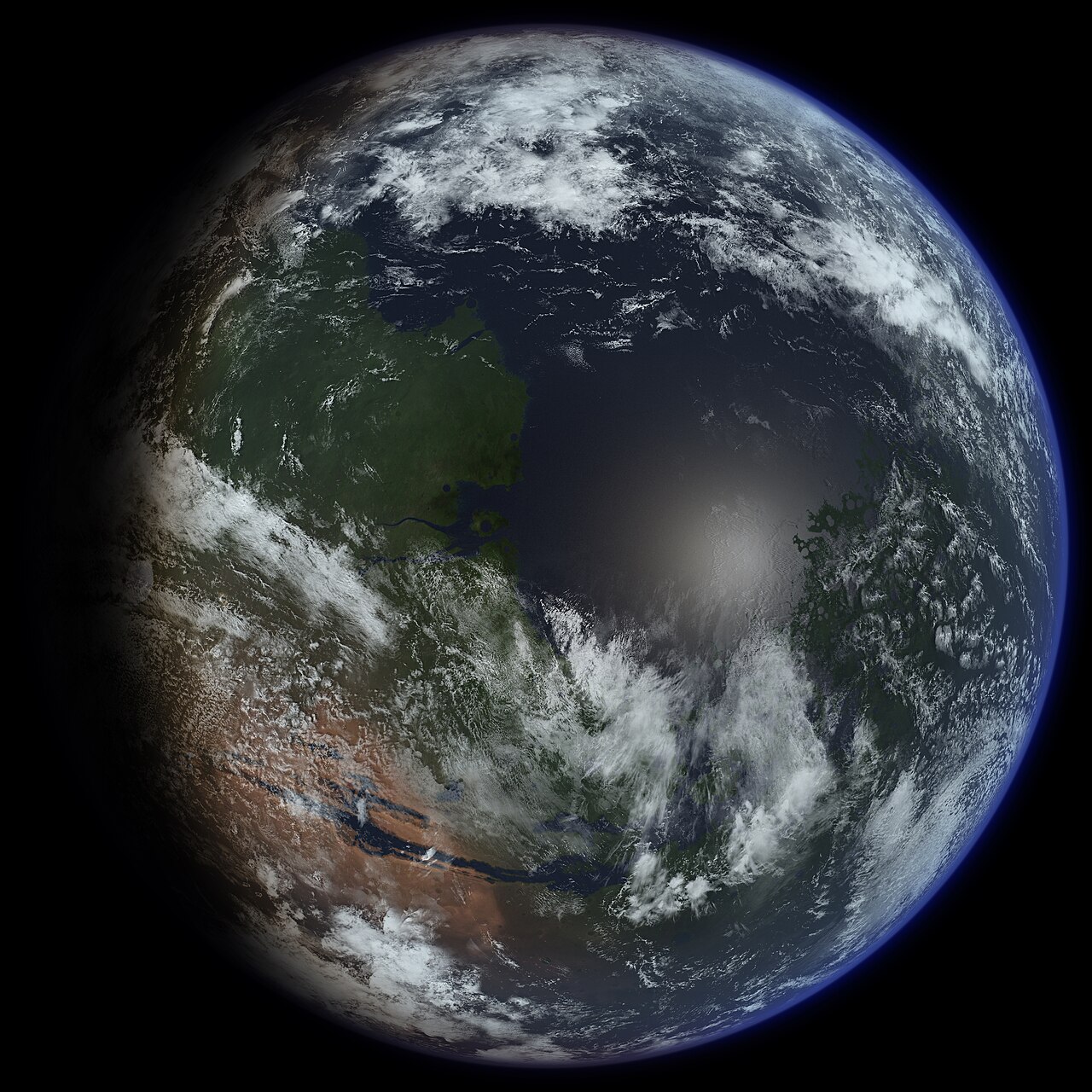
Imagine standing on Mars centuries from now. The sky is no longer faint and pink but thicker and tinted blue. Clouds drift overhead. In a shallow basin, a lake glimmers. Hardy plants grow along its shores. The air is not yet breathable, but it carries the whisper of transformation.
Terraforming Mars is one of the grandest visions ever conceived—a fusion of planetary science, engineering, ecology, and human ambition.
Whether or not we ever complete this task, the very act of studying it deepens our understanding of climate systems, atmospheric chemistry, and planetary evolution.
Mars was once a world of rivers and lakes. Science tells us that planetary climates can change dramatically over time. The question is whether intelligent life can guide such change deliberately.
The red planet waits in cold silence. Whether it remains a monument to ancient water or becomes a cradle for future life depends not on myth, but on physics, patience, and the long arc of human endeavor.