When we look up at the night sky, the stars appear calm and constant—small points of light scattered across the darkness. But this peaceful appearance is an illusion. Some stars are so massive, so violently luminous, that they challenge the limits of physics itself. They burn millions of times brighter than the Sun. They lose mass in fierce stellar winds. They live fast and die catastrophically in explosions that briefly outshine entire galaxies.
Mass is the defining property of a star. It determines how hot it burns, how long it lives, how it dies, and what it leaves behind. Our Sun, steady and life-giving, is considered an average star. But in certain dense stellar nurseries—especially in starburst regions and massive clusters—nature produces true titans.
Below are ten of the most massive stars known in the universe today, measured in terms of their estimated initial mass. These stars represent the extreme upper limits of stellar formation as we currently understand it. Their existence pushes against theoretical boundaries and reveals just how wild the cosmos can be.
1. R136a1
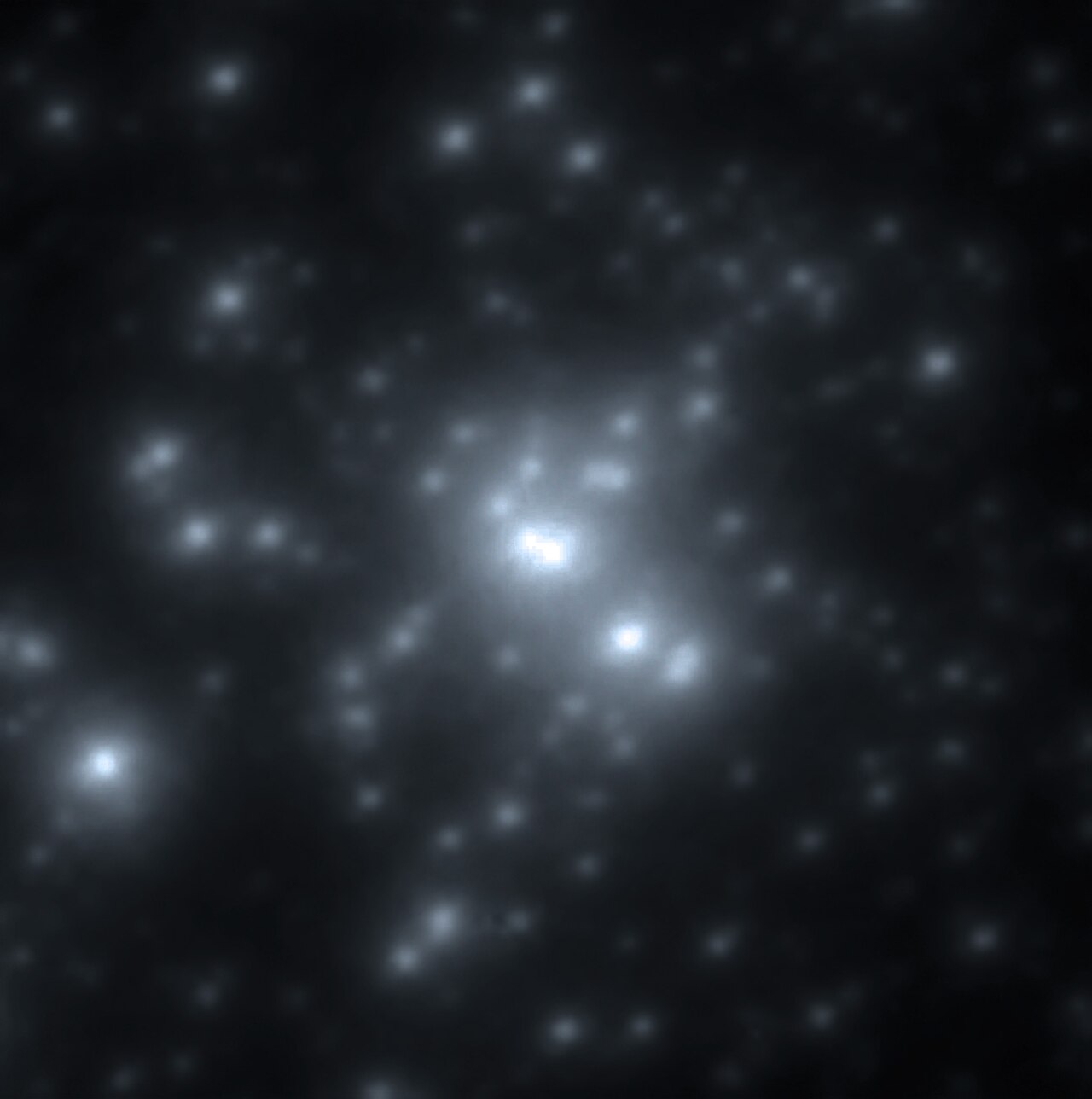
At the very top of the known stellar mass scale stands R136a1, currently the most massive star ever reliably measured. It resides in the R136 star cluster within the Tarantula Nebula in the Large Magellanic Cloud, a satellite galaxy of the Milky Way.
R136a1 is estimated to have had an initial mass of around 250 to 320 times the mass of the Sun. Even today, after losing enormous amounts of material through powerful stellar winds, it still remains extraordinarily massive.
This star is classified as a Wolf–Rayet star, a rare and short-lived phase in the life of very massive stars. It shines with millions of times the luminosity of the Sun and has a surface temperature exceeding 50,000 degrees Celsius.
Stars like R136a1 live only a few million years before ending their lives in catastrophic explosions, possibly as pair-instability supernovae, leaving no remnant behind. It is not merely large—it is a cosmic inferno operating at the edge of what stellar physics permits.
2. R136a2
Close to R136a1 in both space and mass is R136a2, another extreme member of the same dense cluster in the Large Magellanic Cloud.
R136a2 is estimated to have an initial mass of roughly 195 to 285 times that of the Sun. Like its neighbor, it is a Wolf–Rayet star undergoing intense mass loss.
The R136 cluster represents one of the most extreme stellar nurseries known. Its stars likely formed from an unusually dense and massive molecular cloud, allowing nature to assemble stars near the theoretical upper mass limit of around 300 solar masses.
R136a2 demonstrates that such colossal stars are not isolated anomalies. In the right conditions, multiple stellar giants can form side by side.
3. R136a3
R136a3 is yet another member of the remarkable R136 cluster. With an estimated initial mass possibly exceeding 180 solar masses, it ranks among the heaviest stars ever measured.
These stars are so luminous that radiation pressure—the outward force generated by their intense light—nearly balances the inward pull of gravity. If they were slightly more massive, the radiation could prevent further material from accumulating during formation.
The existence of R136a3 strengthens the idea that around 300 solar masses may represent the upper boundary for stars formed through conventional processes.
In the crowded heart of R136, these giants illuminate their surroundings with blinding brilliance, carving cavities into surrounding gas and shaping the nebula’s structure.
4. R136c
R136c, also located in the Tarantula Nebula, is another Wolf–Rayet star of extraordinary mass. Its initial mass is estimated to be around 220 solar masses.
Stars in this mass range are extremely unstable. They experience violent pulsations and lose mass through fierce stellar winds moving at thousands of kilometers per second.
Despite their size, they are not long-lived. The more massive a star is, the faster it consumes its nuclear fuel. R136c is expected to end its life in a supernova explosion within only a few million years—a blink of an eye on cosmic timescales.
5. WR 102ka (Peony Star)
WR 102ka, often called the Peony Star due to its location in the Peony Nebula near the center of the Milky Way, is one of the most massive stars known within our own galaxy.
Its estimated initial mass lies around 150 to 200 solar masses. It is classified as a luminous blue variable or possibly transitioning into a Wolf–Rayet phase.
The galactic center is a turbulent environment with intense radiation fields and strong gravitational forces. That such a massive star formed there indicates that extreme stellar birth is not limited to satellite galaxies like the Large Magellanic Cloud.
WR 102ka radiates millions of times more energy than the Sun and contributes to the dynamic ecosystem of the galactic core.
6. WR 102ka’s Neighbor: WR 102ka-like Massive Star Candidates
Near the galactic center, several other stars rival WR 102ka in mass. Among them is WR 102ka’s close companion candidate and similar massive Wolf–Rayet stars identified in that region.
Some of these stars have estimated initial masses approaching 180 solar masses. However, precise measurements are difficult due to dust obscuration and distance.
These stars provide valuable laboratories for understanding how extreme stellar masses form in high-metallicity environments like the Milky Way, where stellar winds are stronger and mass loss is more significant than in metal-poor galaxies.
7. NGC 3603-B
NGC 3603-B is located in the NGC 3603 star cluster in the Milky Way. This cluster is often compared to R136 due to its dense population of massive stars.
NGC 3603-B is estimated to have an initial mass around 150 to 170 solar masses. It is another Wolf–Rayet star, burning furiously and shedding material into space.
Clusters like NGC 3603 reveal that extremely massive stars are not isolated oddities but part of a broader pattern in intense star-forming regions.
These clusters challenge our understanding of the initial mass function—the statistical distribution of stellar masses at birth.
8. Eta Carinae A
Eta Carinae A, located in the Carina Nebula, is one of the most famous massive stars in the sky. It is part of a binary system and has an estimated initial mass around 150 to 200 times that of the Sun.
In the 19th century, Eta Carinae underwent a dramatic outburst known as the Great Eruption, temporarily becoming one of the brightest stars in the sky. During this event, it expelled an enormous amount of material, forming the Homunculus Nebula.
Eta Carinae A is unstable and nearing the end of its life. It may explode as a supernova or even a hypernova in the relatively near cosmic future.
Its violent behavior offers insight into how massive stars shed mass before their final collapse.
9. VFTS 682
VFTS 682 is a massive Wolf–Rayet star located in the Tarantula Nebula, though not within the central R136 cluster.
Its estimated initial mass is around 150 solar masses. Interestingly, VFTS 682 may be a runaway star, possibly ejected from the R136 cluster through gravitational interactions.
Despite being somewhat isolated, it retains the characteristics of extreme massive stars: intense luminosity, high temperature, and strong stellar winds.
VFTS 682 illustrates how dynamic interactions in dense clusters can scatter massive stars across surrounding regions.
10. HD 269810 (R127)
HD 269810, also known as R127, is a luminous blue variable star located in the Large Magellanic Cloud.
Its estimated initial mass is approximately 85 to 120 solar masses, placing it slightly below the very highest mass category but still among the most massive stars known.
R127 has undergone eruptive phases similar to Eta Carinae. During these episodes, it brightened significantly and expelled large amounts of material.
Luminous blue variables represent a transitional and unstable phase in the evolution of the most massive stars. They stand on the brink of destruction, teetering between equilibrium and collapse.
The Limits of Stellar Mass
The existence of these stars raises profound questions. Why does nature appear to limit stellar masses to roughly 300 solar masses? The answer likely involves radiation pressure.
As a forming star accumulates mass, its core temperature rises and nuclear fusion begins. The intense radiation produced pushes outward against infalling gas. At extreme luminosities, radiation pressure can halt further growth.
This theoretical upper mass limit aligns with observations from clusters like R136. No confirmed star has been measured significantly above 300 solar masses.
These stars represent the boundary where gravity and radiation wage a delicate war.
Lives Lived at Furious Speed
Massive stars live dramatically short lives. While the Sun will burn steadily for about 10 billion years, stars above 100 solar masses may live only two to three million years.
Their immense mass leads to high core pressures and temperatures, accelerating nuclear fusion. They burn hydrogen rapidly, move through heavier fusion stages quickly, and often end in spectacular supernovae.
Some may collapse directly into black holes. Others may undergo pair-instability supernovae, completely obliterating themselves without leaving a remnant.
In their brief existence, they enrich the universe with heavy elements, seeding future generations of stars and planets.
Cosmic Architects
Massive stars are not merely luminous beacons. They are architects of galaxies.
Their radiation ionizes surrounding gas. Their stellar winds carve cavities in nebulae. Their supernova explosions trigger new waves of star formation.
The heavy elements forged in their cores—carbon, oxygen, iron—become the building blocks of planets and life.
Without massive stars, the universe would be chemically impoverished.
The Fragile Giants
Despite their size, these stars are unstable. Pulsations, eruptions, and mass loss are common. Their outer layers are often loosely bound, barely held by gravity.
Observations continue to refine their mass estimates. Binary interactions complicate measurements. Some stars once thought to be single supermassive objects have later been revealed as close binaries.
Astronomy constantly evolves, and new instruments provide more precise data.
A Universe of Extremes
The most massive stars remind us that the universe operates at extremes far beyond human experience. Temperatures of tens of thousands of degrees. Luminosities millions of times that of the Sun. Explosions that briefly rival galaxies.
They are cosmic fireworks, brief and brilliant.
And though they are rare, their influence echoes across billions of years, shaping galaxies and enabling the emergence of life itself.
When we gaze at distant nebulae glowing in deep red and blue hues, we are witnessing the legacy of these giants.
They are the universe at its most powerful—massive, luminous, and fleeting.
And in their fiery deaths, they leave behind the elements that make up our world, our bodies, and our future.
The giants burn fast. But through their destruction, they make everything else possible.