Biology is often introduced as the study of life, but that simple definition barely scratches the surface of what it truly reveals. Beneath the familiar rhythms of breathing, eating, growing, and aging lies a universe of astonishing complexity. Cells behave like miniature cities. DNA stores information with a precision that rivals the most advanced human technologies. Organisms evolve, adapt, and sometimes defy our expectations in ways that feel almost unreal.
What makes biology so captivating is not just its complexity, but its ability to surprise us. Just when we think we understand life, a new discovery challenges our assumptions. The living world is filled with hidden processes, strange adaptations, and elegant solutions that have been refined over billions of years.
Below are ten mind-blowing biological facts—each one not just a piece of trivia, but a doorway into a deeper understanding of how life truly works.
1. Your Body Is More Microbial Than Human
It may sound unsettling, but when you look in the mirror, you are not seeing a purely human organism. You are seeing a complex ecosystem.
The human body contains trillions of microorganisms—bacteria, viruses, fungi, and archaea—that live on your skin, in your mouth, and especially in your gut. These microbes collectively form what scientists call the human microbiome. In terms of sheer numbers, microbial cells rival or even slightly outnumber human cells in your body.
These microscopic inhabitants are not merely passive passengers. They play essential roles in digestion, breaking down complex carbohydrates that your own enzymes cannot process. They help synthesize vitamins such as vitamin K and certain B vitamins. They train your immune system, teaching it to distinguish between harmful invaders and harmless substances.
Perhaps most astonishing is the growing evidence that the microbiome influences your brain. Through what is known as the gut-brain axis, microbes can affect mood, behavior, and even mental health. Signals travel through the nervous system, hormones, and immune pathways, linking your digestive system to your emotional state.
In a very real sense, you are not a single organism. You are a community—a living collaboration between human and microbial life.
2. DNA Is an Unimaginably Dense Storage System
Every cell in your body contains DNA, the molecule that carries the instructions for building and maintaining life. But what is truly astonishing is how much information DNA can store.
If you were to stretch out all the DNA from a single human cell, it would measure about two meters in length. Yet it fits inside a nucleus only a few micrometers wide. This incredible packaging is achieved through complex folding and coiling mechanisms involving proteins called histones.
Even more mind-blowing is DNA’s information density. Scientists have estimated that one gram of DNA could theoretically store hundreds of petabytes of data—far more than any electronic storage medium we currently use.
Researchers have already begun encoding digital information into synthetic DNA, storing text, images, and even videos. The same molecule that encodes the blueprint of life can also preserve human knowledge.
Inside every one of your cells lies a data storage system so efficient that it makes modern technology seem primitive by comparison.
3. Trees Communicate and Share Resources
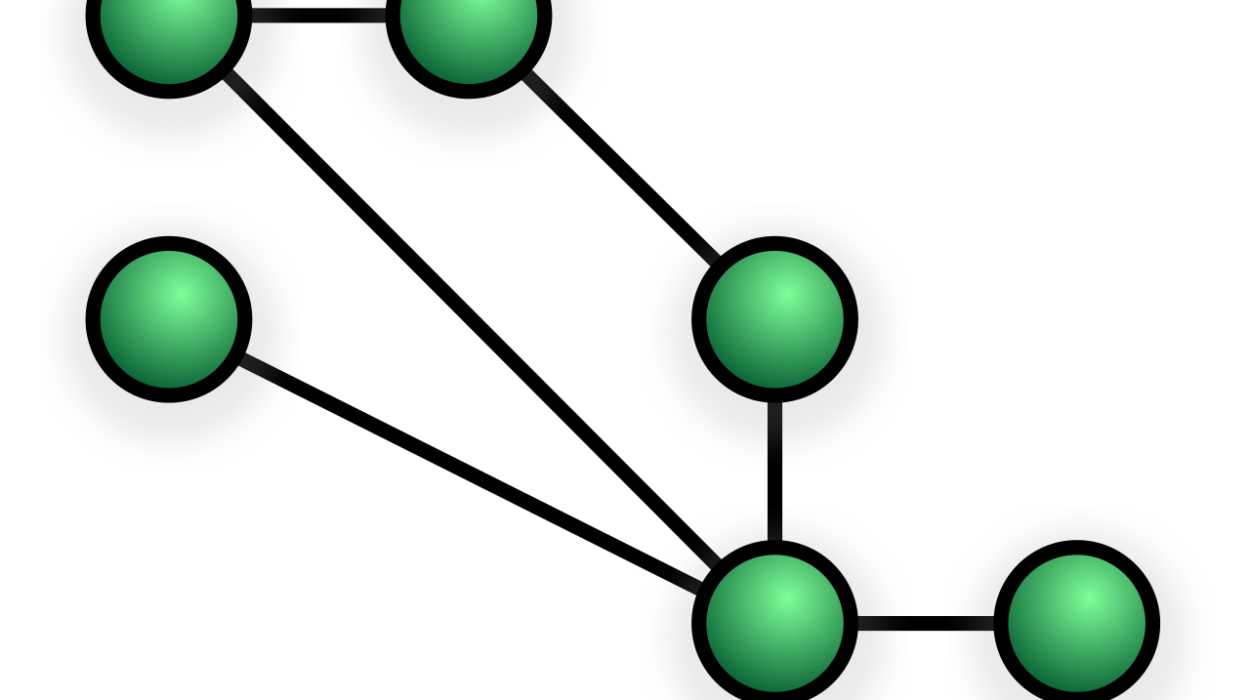
Forests are not just collections of individual trees competing for sunlight and nutrients. They are interconnected networks, quietly communicating and supporting one another.
Beneath the soil lies a vast web of fungal filaments known as mycorrhizal networks. These fungi form symbiotic relationships with plant roots, exchanging nutrients for sugars produced by photosynthesis. But these networks do more than facilitate nutrient exchange—they act as communication systems.
Through chemical signals transmitted via these fungal connections, trees can warn each other of threats such as insect attacks. A tree under attack may release signals that prompt neighboring trees to produce defensive chemicals before the threat reaches them.
Even more remarkably, larger, older trees—sometimes called “mother trees”—can distribute nutrients to younger seedlings through these networks, helping them survive in shaded conditions.
The forest behaves less like a battlefield and more like a community, with cooperation playing a crucial role in survival.
4. Some Animals Can Survive Without Oxygen
Oxygen is often considered essential for complex life. Most animals depend on it to produce energy through cellular respiration. Yet some organisms challenge this assumption.
Certain microscopic animals, such as specific species of parasites, have evolved the ability to survive entirely without oxygen. Instead of relying on mitochondria—the usual energy-producing structures in cells—they use alternative biochemical pathways to generate energy.
One of the most striking discoveries involved a tiny parasite that infects fish and lacks a typical mitochondrial genome. This suggests it does not rely on oxygen at all.
These organisms demonstrate that life can adapt to environments we would consider completely inhospitable. They expand our understanding of what is biologically possible and hint at the kinds of life that might exist in oxygen-poor environments elsewhere in the universe.
5. Your Cells Are Constantly Dying and Being Replaced
The human body feels stable and continuous, but at the cellular level, it is in constant flux. Cells are continually dying and being replaced in a dynamic process that maintains the body’s function.
Skin cells, for example, are constantly shed and replaced. The outer layer of your skin renews itself roughly every few weeks. The cells lining your gut have an even shorter lifespan, often replaced within a few days.
Even your bones are not permanent structures. They are constantly broken down and rebuilt through processes involving specialized cells. This remodeling allows bones to adapt to stress and repair damage.
Some cells, like certain neurons in the brain, can last for decades. But even in the brain, connections between neurons—synapses—are constantly changing, strengthening, or weakening in response to experience.
You are not the same collection of cells you were years ago. Your body is more like a flowing river than a static object, continuously renewing itself while maintaining a coherent identity.
6. Octopuses Have Distributed Intelligence
When we think of intelligence, we often imagine a centralized brain controlling the body. But octopuses challenge this idea in a fascinating way.
An octopus has a large central brain, but most of its neurons—about two-thirds—are located in its arms. Each arm can process information and make decisions independently to some extent. This means that an octopus’s limbs are not merely controlled by the brain; they have a degree of autonomy.
Experiments have shown that octopus arms can explore, manipulate objects, and even react to stimuli without direct input from the central brain. This distributed intelligence allows for remarkable flexibility and adaptability.
Octopuses can solve puzzles, open containers, and exhibit behaviors that suggest problem-solving abilities. Their intelligence evolved along a completely different evolutionary path from vertebrates, offering a glimpse into alternative forms of cognition.
They remind us that intelligence is not a single blueprint but a spectrum of possibilities shaped by evolution.
7. Some Organisms Are Effectively Immortal
Aging is often seen as an inevitable part of life. Cells accumulate damage, systems degrade, and organisms eventually die. Yet some species appear to defy this pattern.
The jellyfish known as Turritopsis dohrnii has the remarkable ability to revert its adult form back into a juvenile state under certain conditions. This process, called transdifferentiation, allows it to cycle between life stages repeatedly.
In theory, this means the organism can avoid death from aging indefinitely, though it can still be killed by predators or disease.
Other organisms, such as certain plants and microorganisms, also exhibit negligible senescence, meaning they show little to no signs of aging over time.
These examples challenge our understanding of biological aging and raise profound questions about whether aging is a fixed rule or a modifiable process.
8. Viruses Blur the Line Between Life and Non-Life
Viruses occupy a strange position in biology. They are not considered fully alive, yet they are not entirely inert either.
A virus consists of genetic material—either DNA or RNA—encased in a protein shell. It cannot reproduce on its own. Instead, it must infect a host cell and hijack its machinery to produce new virus particles.
Outside a host, a virus is essentially inactive. Inside a host, it becomes a dynamic participant in biological processes.
Some viruses carry genes that can influence the evolution of their hosts. Viral DNA can become integrated into host genomes, contributing to genetic diversity over evolutionary timescales.
The existence of viruses challenges our definitions of life. They force us to ask fundamental questions about what it means to be alive.
9. Plants Can “Remember” and Learn
Plants lack brains and nervous systems, yet they are far from passive organisms. They can respond to their environment in sophisticated ways, and some evidence suggests they can even “remember” past experiences.
Experiments have shown that certain plants can learn to associate stimuli. For example, they may alter their growth patterns based on repeated environmental cues. Some plants can “remember” periods of stress, such as drought, and respond more efficiently if the stress occurs again.
This form of memory is not stored in neurons but in biochemical and cellular changes. Gene expression patterns can be altered in response to experience, allowing plants to adapt over time.
Plants also communicate using chemical signals, releasing compounds into the air or soil to warn neighboring plants of threats.
These abilities blur the line between instinct and learning, showing that intelligence and adaptability are not limited to animals.
10. Life on Earth Shares a Common Ancestor
Perhaps the most profound fact in biology is that every living organism on Earth—from bacteria to humans—shares a common origin.
All life uses the same genetic code, with only minor variations. The basic molecular machinery of cells is remarkably conserved across species. This suggests that all life descended from a single ancestral population that lived billions of years ago.
This last universal common ancestor was not the first life form, but it represents a point from which all modern life diverged. Over time, evolution produced the immense diversity we see today.
The idea that every living being is connected through a shared evolutionary history is both humbling and awe-inspiring. It means that the tree outside your window, the bacteria in your gut, and the animals in distant ecosystems are all distant relatives.
Life is not a collection of isolated entities. It is a vast, branching network connected by deep time.
The Endless Wonder of Biology
Biology reveals a world that is far stranger and more intricate than it appears on the surface. It shows us that life is not static but dynamic, not simple but profoundly complex.
From the invisible microbes that shape our health to the vast networks connecting forests, from the mysteries of aging to the blurred boundaries between life and non-life, biology continually challenges our assumptions.
It reminds us that we are part of something much larger—a living system that spans the entire planet and stretches back billions of years.
And perhaps the most mind-blowing fact of all is this: despite everything we have discovered, we have only begun to understand the full depth of life’s complexity.
The story of biology is still being written.