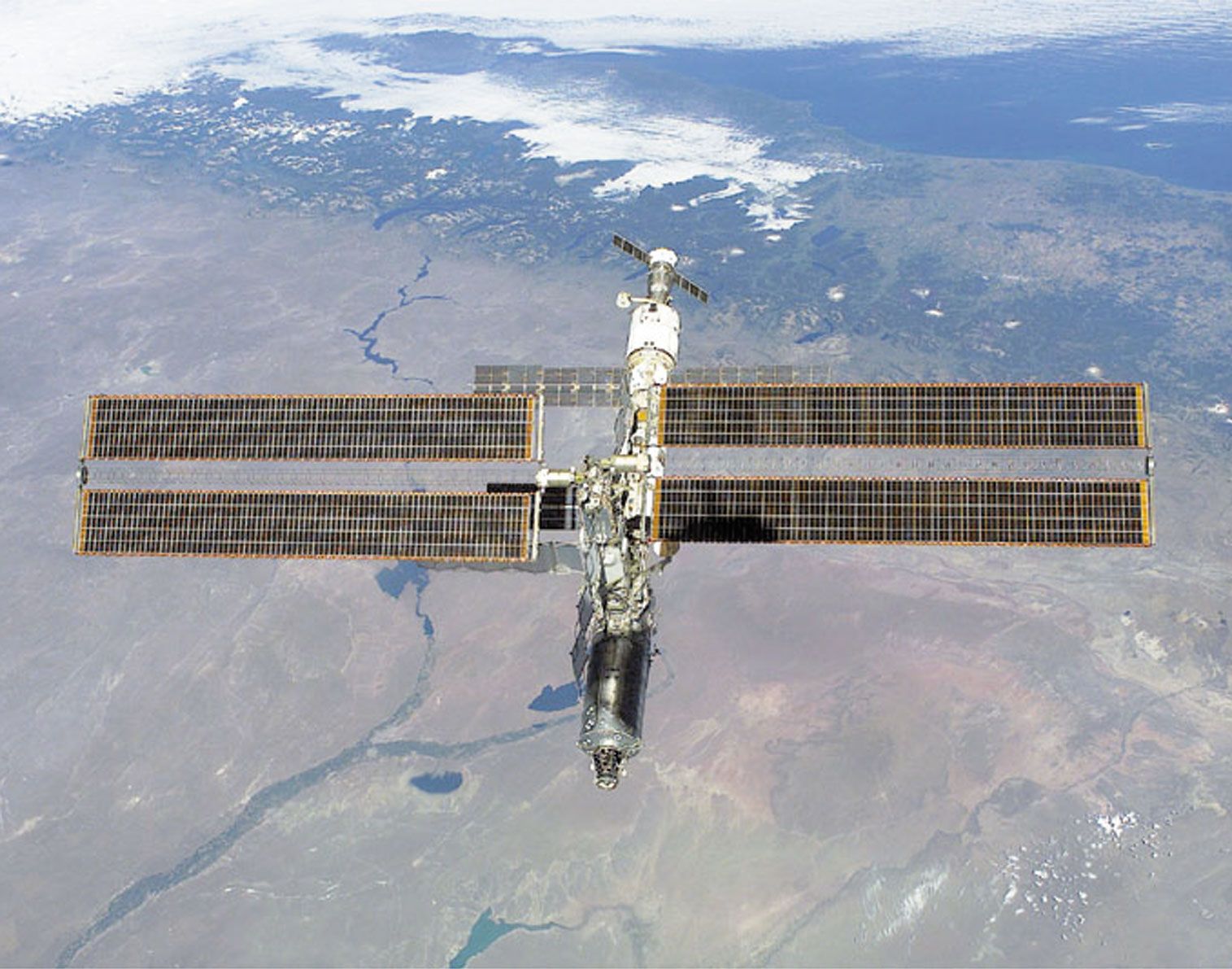
For more than two decades, astronauts have lived and worked aboard the International Space Station, circling Earth every ninety minutes in a continuous dance with gravity. It has been a triumph of engineering and international cooperation. But as humanity sets its sights on the Moon, Mars, and beyond, the question grows more urgent: what will the next generation of space stations look like?
Future space stations will not simply be laboratories bolted together in orbit. They will be stepping stones to other worlds, industrial hubs, deep-space observatories, refueling depots, and perhaps even permanent homes. Some designs are already under development. Others remain bold conceptual studies grounded in physics and engineering principles. All are shaped by the realities of orbital mechanics, radiation hazards, life-support constraints, and the harshness of vacuum.
Below are fifteen scientifically grounded, mind-blowing concept designs that may define humanity’s future in space.
1. Lunar Gateway Orbiting the Moon
One of the most concrete future station concepts is the Lunar Gateway, a small but powerful outpost planned to orbit the Moon in a near-rectilinear halo orbit. Unlike the International Space Station, which circles Earth in low orbit, this station will travel in a highly elliptical path around the Moon, allowing continuous communication with Earth and frequent access to the lunar surface.
The Gateway is designed as a modular station with propulsion, habitation, logistics, and power elements. Solar electric propulsion will maintain its orbit efficiently over long durations. Astronauts will use it as a staging point for lunar surface missions under programs like Artemis.
Scientifically, its orbit is chosen for stability and minimal fuel consumption. Operationally, it reduces the need to land large spacecraft directly on the Moon from Earth. Emotionally, it represents humanity’s first sustained foothold around another celestial body.
2. Mars Transit Habitat for Deep-Space Voyages
A mission to Mars will require astronauts to spend months in transit. A Mars Transit Habitat concept envisions a rotating spacecraft capable of generating artificial gravity during the journey.
Long-duration exposure to microgravity causes bone density loss, muscle atrophy, and cardiovascular changes. By spinning sections of the habitat, centripetal acceleration can simulate gravity. The radius and rotation rate must be carefully balanced to minimize motion sickness while providing sufficient artificial gravity.
Such a habitat would include radiation shielding, closed-loop life support systems recycling air and water, hydroponic food production modules, and redundancy systems for safety. It would function not just as a transport vehicle but as a small, self-sustaining ecosystem traveling through interplanetary space.
3. Rotating O’Neill Cylinder Space Colony
Proposed by physicist Gerard K. O’Neill in the 1970s, the O’Neill Cylinder remains one of the most visionary large-scale space habitat concepts. It consists of two counter-rotating cylinders several kilometers long, spinning to create artificial gravity along their inner surfaces.
Inside, landscapes could exist—fields, forests, lakes, and cities—lit by sunlight reflected through massive mirrors. The rotation would simulate Earth-like gravity, allowing normal human activity without microgravity’s health risks.
Though technologically far beyond current capabilities, the physics is sound. Materials would need to withstand enormous structural stresses, and construction would likely require asteroid mining and in-space manufacturing. But the O’Neill Cylinder represents the possibility of permanent, Earth-like communities in orbit.
4. Stanford Torus Space Habitat
The Stanford Torus is another rotating habitat concept, shaped like a giant wheel approximately 1.8 kilometers in diameter. The torus would spin to generate artificial gravity along its outer rim, where living quarters and agricultural areas would be located.
A central hub would remain in microgravity, connected by spokes to the rotating ring. Sunlight would enter via large mirrors directing light into the interior.
The Stanford Torus design emphasizes manageable scale compared to an O’Neill Cylinder, making it a stepping stone toward large rotating habitats. Its engineering challenges include radiation shielding, micrometeoroid protection, and structural integrity under rotation.
5. Commercial Low-Earth Orbit Stations
As the International Space Station approaches retirement, private companies are developing commercial orbital stations. These stations are designed to support scientific research, tourism, and manufacturing.
They will likely use inflatable habitat modules to maximize internal volume while minimizing launch mass. Inflatable modules, once deployed, can provide spacious living areas and are engineered with multiple layers for micrometeoroid protection and radiation shielding.
These commercial stations represent a shift from purely government-operated platforms to mixed-use orbital infrastructure, potentially enabling a sustainable space economy.
6. Lunar Surface Orbital Elevator Hub
A more speculative concept involves a lunar orbital tether or elevator system. Because the Moon’s gravity is much weaker than Earth’s, a tether anchored to the lunar surface and extending toward an Earth-Moon Lagrange point is theoretically feasible with current high-strength materials.
A station located at the tether’s balance point could serve as a transportation hub. Cargo could travel along the tether using electric climbers, drastically reducing the energy needed for lunar launches.
Such a station would combine orbital mechanics with materials science and would fundamentally change how we move resources between the Moon and space.
7. Deep Space Lagrange Point Observatory Station
At gravitational balance points known as Lagrange points, spacecraft can maintain stable positions relative to Earth and the Sun. A large station at Earth-Sun L2, for instance, could serve as a deep-space observatory hub.
Free from atmospheric distortion and with minimal Earth interference, such a station could support giant segmented telescopes assembled in space. Astronauts or robotic systems could maintain and upgrade instruments over decades.
Scientifically, this would expand our ability to study exoplanets, dark matter, and cosmic background radiation.
8. Asteroid Mining Processing Station
Asteroids contain valuable metals and water ice. A station placed near a resource-rich asteroid could serve as a processing and refining facility.
Water extracted from asteroids can be split into hydrogen and oxygen for rocket fuel. Metals could be used for in-space manufacturing.
An asteroid station would require anchoring systems, rotational stabilization, and radiation shielding. It would represent a shift from exploration to industrial utilization of space resources.
9. Inflatable Mars Orbital Station
Before humans land on Mars permanently, an orbital station could provide communications relay, surface monitoring, and emergency refuge.
An inflatable Mars Orbital Station would use lightweight materials and closed-loop life support. Its orbit would allow coverage of surface operations while minimizing fuel consumption.
From orbit, astronauts could teleoperate rovers on Mars in near real-time, drastically improving efficiency compared to Earth-based control.
10. Solar Power Satellite Station
Gigantic solar arrays in geostationary orbit could collect solar energy continuously and beam it to Earth via microwaves or lasers.
Such stations would require kilometer-scale solar panels, precise beam control, and safety systems to prevent unintended exposure. While technically challenging, the concept is grounded in physics and has been studied for decades.
A solar power satellite station would transform space from a frontier of exploration into a source of sustainable energy for Earth.
11. Artificial Gravity Research Station
Before building massive rotating habitats, smaller artificial gravity stations could test human tolerance to various gravity levels.
These stations might consist of short-radius centrifuges attached to a central hub. By varying rotation rates, scientists could study the minimum gravity needed to prevent bone and muscle loss.
This data would be essential for future Moon and Mars settlements.
12. Modular Interplanetary Transport Hub
A large orbital hub in low Earth orbit could assemble spacecraft for deep-space missions. Instead of launching fully assembled vehicles, components would be launched separately and assembled in orbit.
This reduces launch constraints and enables construction of larger vessels than any single rocket could carry.
Such a hub would feature robotic assembly arms, fuel depots, and docking ports for multiple spacecraft.
13. Venus Atmospheric Floating Station
Though Venus’s surface is hostile, its upper atmosphere contains regions with Earth-like pressure and temperature. A floating station supported by buoyant gas could theoretically hover within this layer.
Because carbon dioxide is denser than breathable air, a habitat filled with oxygen and nitrogen would naturally float. Solar panels could provide power above the thick cloud cover.
A Venus atmospheric station would study atmospheric chemistry and potentially test the viability of aerial habitats.
14. Nuclear-Powered Deep Space Station
Far from the Sun, solar power becomes inefficient. A deep-space station powered by nuclear reactors could operate in the outer solar system.
Small modular reactors would provide reliable energy for life support, propulsion, and scientific instruments. Radiation shielding would protect occupants from both cosmic rays and reactor emissions.
Such stations could support exploration of Jupiter, Saturn, and beyond.
15. Generation Ship Prototype Station
The most ambitious concept envisions a station designed as a prototype for interstellar generation ships. These massive rotating habitats would sustain populations for centuries during voyages to distant stars.
They would require closed ecological life support systems, agricultural modules, recycling at near-perfect efficiency, and social structures designed for long-term stability.
While interstellar travel remains far beyond current capabilities, research into such stations informs our understanding of sustainability and resilience—even on Earth.
The Architecture of Survival and Expansion
Every one of these concepts arises from the same fundamental challenge: space is unforgiving. Vacuum, radiation, microgravity, and extreme temperatures demand careful engineering. Artificial gravity requires rotation and structural strength. Life support requires recycling air, water, and nutrients with minimal waste. Radiation shielding may involve water walls, regolith, or advanced materials.
Yet within these constraints lies extraordinary opportunity.
Future space stations will not merely orbit as isolated laboratories. They will become transportation nodes, industrial centers, scientific observatories, and perhaps thriving communities. They will bridge Earth and the wider solar system.
They will test our technology, our biology, and our social systems. They will force us to design habitats that are self-sufficient, resilient, and efficient.
And perhaps most profoundly, they will redefine what it means to live somewhere.
To stand inside a rotating cylinder where forests grow against a curved horizon. To look out from a lunar gateway and see Earth hanging in blackness. To float within a Venusian sky or orbit Mars as a new world unfolds below.
These are not fantasies divorced from science. They are engineering challenges grounded in physics, materials science, and orbital mechanics.
Humanity’s story has always been one of expansion—from caves to cities, from continents to oceans. The next chapter may unfold in orbit, in cylinders of spinning light and steel.
When we build these stations, we will not merely extend our reach. We will transform ourselves into a spacefaring species.
And the universe, vast and silent, will finally have new homes lit by human hands.