Nature is breathtakingly beautiful. A field of wildflowers shimmering in golden sunlight, a rainforest dripping with emerald life, a quiet forest path lined with delicate blooms — it all feels safe, inviting, peaceful.
But nature has teeth.
Among the soft petals and glossy leaves, some plants carry poisons potent enough to stop a human heart. Others burn skin like acid without ever breaking the surface. A few can blind, paralyze, or kill with shocking efficiency. These plants do not roar or chase. They do not bare fangs. They simply exist — quietly, chemically armed.
Here are twelve of the most dangerous plants on Earth. Some are deceptively beautiful. Some grow in ordinary gardens. And some are so toxic that even touching them can cause severe harm.
1. Nerium oleander
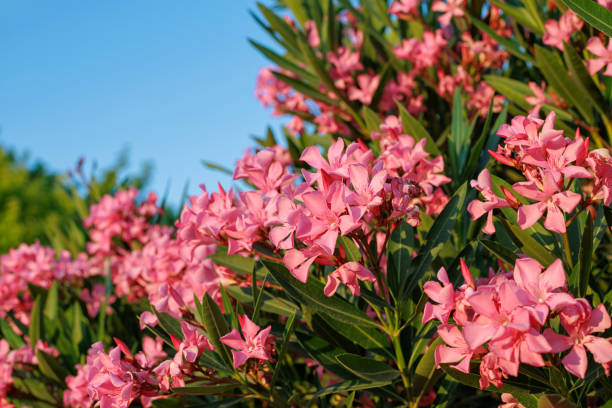
Oleander is stunning. Its clusters of pink, white, red, or yellow blossoms brighten roadsides and gardens in warm climates around the world. It thrives in heat, tolerates drought, and appears harmless.
It is anything but.
Every part of the plant — leaves, flowers, stems, sap — contains potent cardiac glycosides, primarily oleandrin and neriine. These compounds interfere with the sodium-potassium pumps in heart cells, disrupting normal electrical activity.
Ingestion can lead to nausea, vomiting, abdominal pain, irregular heart rhythms, seizures, and death. Even small amounts can be lethal, especially to children and animals. There are documented cases of poisoning from chewing a leaf, drinking water contaminated by fallen leaves, or even using oleander branches to skewer food over a fire.
Handling the plant is generally safe for intact skin, but the sap can cause irritation, and inhaling smoke from burning oleander is dangerous.
Oleander’s danger lies in its accessibility. It grows in schoolyards, parks, and residential landscapes. Beauty, in this case, masks a chemical weapon.
2. Atropa belladonna
The name means “beautiful lady,” a reference to Renaissance women who used its juice to dilate their pupils for cosmetic effect. But this plant’s more common name is deadly nightshade — and that is far more honest.
Deadly nightshade contains tropane alkaloids such as atropine, scopolamine, and hyoscyamine. These chemicals block acetylcholine receptors in the nervous system, disrupting normal parasympathetic function.
The symptoms of poisoning follow a haunting pattern: dry mouth, blurred vision, dilated pupils, rapid heartbeat, confusion, hallucinations, and hyperthermia. In severe cases, respiratory failure and cardiac arrest can occur.
The berries are especially treacherous. They look like glossy black cherries, sweet and inviting. Just a handful can kill a child.
Historically, belladonna has been used medicinally in carefully controlled doses, particularly atropine, which remains an important emergency drug. But outside medical supervision, this plant is profoundly dangerous.
A berry between curious fingers. A taste. A tragedy.
3. Aconitum
Monkshood, also known as wolfsbane, produces dramatic hood-shaped flowers in shades of deep blue and purple. It looks like something from a fairy tale meadow.
Its toxicity is legendary.
Aconitum species contain aconitine, a neurotoxic alkaloid that affects voltage-gated sodium channels in nerve and muscle cells. It forces these channels to remain open, leading to persistent depolarization.
Even skin contact with crushed plant material can allow toxin absorption, causing numbness, tingling, and burning sensations. Ingestion leads to nausea, vomiting, dangerous arrhythmias, paralysis, and death.
Historically, extracts were used to poison arrows and bait for wolves. Death can occur within hours due to heart rhythm disturbances.
Unlike many poisonous plants that require ingestion, monkshood can be hazardous to handle carelessly. Gloves are strongly recommended when gardening around it.
It is one of the rare plants where even touching it — especially broken parts — can carry risk.
4. Heracleum mantegazzianum
Giant hogweed is enormous. Towering stems can reach over five meters tall, crowned with umbrella-like clusters of white flowers. It looks majestic.
It is also a phototoxic nightmare.
The plant’s sap contains furanocoumarins — chemicals that sensitize skin to ultraviolet light. When sap contacts skin and is then exposed to sunlight, it can cause severe phytophotodermatitis.
Within 24 to 48 hours, painful blisters form. The burns can be deep and long-lasting. Scarring and increased sensitivity to sunlight may persist for years. If sap enters the eyes, it can cause temporary or even permanent blindness.
Merely brushing against the plant is enough to transfer sap.
Giant hogweed is invasive in parts of Europe and North America, where it has caused serious injuries. Removal requires protective clothing, eye protection, and caution.
Its danger does not lie in poison you swallow, but in sunlight activated by invisible chemistry.
5. Ricinus communis
The castor bean plant is ornamental and dramatic, with large star-shaped leaves and striking seed pods.
Its seeds contain ricin — one of the most potent plant toxins known.
Ricin works by inhibiting ribosomes, the cellular machinery responsible for protein synthesis. Without the ability to produce proteins, cells die.
Just a few chewed seeds can be fatal. Symptoms of ricin poisoning include severe abdominal pain, vomiting, bloody diarrhea, dehydration, and organ failure. Death may occur within days if untreated.
The seeds are particularly dangerous if chewed, as the hard outer shell can otherwise pass through the digestive system intact. Ricin has been studied and weaponized because of its potency.
Ironically, castor oil — derived from processed seeds — is safe because ricin is removed during manufacturing. But raw seeds are lethal.
A glossy seed in a child’s palm can hide molecular devastation.
6. Hippomane mancinella
Sometimes called “the little apple of death,” the manchineel tree may be the most dangerous tree in the world.
It grows in tropical regions of the Americas and the Caribbean. Its small green fruits resemble apples.
Every part of the tree is toxic.
The fruit contains powerful irritants that can cause severe gastrointestinal distress, bleeding, and potentially death if consumed. The sap is corrosive and can cause blistering upon skin contact.
Even standing beneath the tree in rain can be dangerous. Water dripping from leaves mixed with sap can cause skin burns. Smoke from burning manchineel wood can irritate eyes and lungs.
Beaches in some regions mark these trees with warning signs — sometimes even a red ring painted around the trunk.
It is a tree that punishes curiosity and proximity alike.
7. Dendrocnide moroides
In the rainforests of Australia grows a plant so painful it has been described as causing agony for months.
Gympie-gympie is a stinging tree covered in fine, hair-like needles. These tiny silica hairs inject a complex toxin cocktail when touched.
The immediate pain is described as an intense burning or electric shock sensation. But the torment does not end there. The microscopic hairs can embed in the skin, releasing toxins over time.
Pain can recur for weeks or even months, triggered by cold showers, friction, or stress. In rare cases, severe reactions have led to hospitalization.
The toxin interacts with sodium channels in nerves, prolonging pain signals.
This plant does not kill often — but it inflicts suffering with terrifying persistence.
A brush against a leaf can become a long memory of pain.
8. Cerbera odollam
Native to parts of South and Southeast Asia, the suicide tree produces green fruits containing potent cardiac glycosides, particularly cerberin.
Cerberin disrupts heart rhythm, leading to fatal arrhythmias.
The seeds have been historically used in cases of intentional poisoning. The symptoms resemble those of other cardiac glycoside poisonings: vomiting, slowed heart rate, irregular heartbeat, and collapse.
The plant’s toxicity is difficult to detect in standard autopsies, which historically contributed to its use in covert poisonings.
Its danger is subtle but deadly.
A fruit from a coastal tree can stop a heart silently.
9. Abrus precatorius
Rosary pea seeds are striking — bright red with a black spot. They are often used in jewelry and rosaries.
Inside each seed lies abrin, a toxin similar in mechanism to ricin. It inhibits protein synthesis by damaging ribosomes.
Just one chewed seed can be fatal. Symptoms include severe vomiting, diarrhea, organ failure, and death.
The hard seed coat usually prevents poisoning if swallowed whole, but damaged or drilled seeds used in jewelry can pose a risk if the coating breaks.
The contrast is chilling: something so beautiful, so small, capable of such lethal force.
10. Conium maculatum
Poison hemlock is infamous for its role in history — it was used to execute the philosopher Socrates.
The plant contains coniine and related alkaloids that affect the nervous system. Symptoms of poisoning begin with trembling and weakness, progressing to paralysis.
Death occurs from respiratory failure while the victim remains conscious.
The plant resembles harmless members of the carrot family, increasing the risk of accidental ingestion.
It grows in fields and along roadsides in many regions.
Its toxicity is not dramatic or explosive. It is quiet, progressive, inescapable.
11. Brugmansia
Angel’s trumpet produces large, pendulous, fragrant flowers that look heavenly.
Its name is tragically ironic.
Like belladonna, it contains tropane alkaloids that affect the nervous system. Hallucinations, confusion, tachycardia, hyperthermia, and seizures can result from ingestion.
Accidental poisonings occur when individuals experiment with the plant for its psychoactive effects. The dose-response is unpredictable, and overdoses can be fatal.
Even handling the plant can cause mild irritation.
Its blossoms glow at dusk — beautiful, intoxicating, and dangerous.
12. Hura crepitans
The sandbox tree is sometimes called the dynamite tree.
Its seed pods explode when ripe, scattering seeds at high speeds that can cause injury.
But that is only part of its danger.
The trunk is covered in sharp spines. The sap is toxic and can cause skin irritation and temporary blindness if it contacts the eyes. Indigenous peoples have used its toxins in arrow poisons.
Ingestion leads to vomiting, diarrhea, and potentially serious systemic effects.
It is a tree armed at every level — explosive fruit, chemical sap, and spiked bark.
Nature’s arsenal takes many forms.
A Final Reflection on Botanical Danger
Plants do not move toward us with intention. They do not hate. They do not scheme.
Their toxins evolved as defense mechanisms — against insects, animals, and microbial threats. Chemistry became their armor.
Yet in sharing this planet, we sometimes forget that not all beauty is safe.
From the lethal elegance of deadly nightshade to the blistering fury of giant hogweed, these plants remind us that life is not gentle by default. Evolution crafts survival tools without regard for human fragility.
Science allows us to understand their chemistry, anticipate their risks, and treat their poisonings. Knowledge transforms fear into caution.
But the next time you see a plant glowing invitingly under sunlight, remember this: in the quiet world of leaves and petals, some of the most dangerous forces on Earth grow silently.
And some should never be touched.