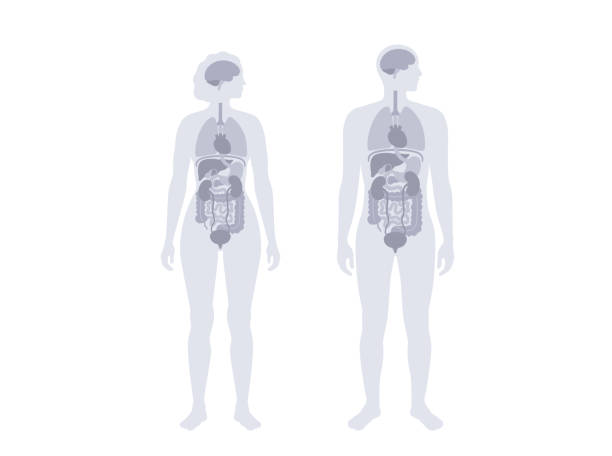
The human body is not just a biological machine. It is a living paradox — fragile yet resilient, predictable yet mysterious, ordinary yet astonishing. Beneath your skin right now, countless processes are unfolding with breathtaking precision. Cells are communicating. Proteins are folding. Electrical signals are flashing across neurons faster than you can blink.
And the strangest part?
Many of the most incredible truths about your body sound completely made up.
But they are not.
Every fact in this article is grounded in established biology, anatomy, physiology, and medical science. No myths. No exaggerations. Just reality — which turns out to be far stranger than fiction.
Let’s step inside.
1. Your Body Is Mostly Empty Space
If you could zoom into your body at the atomic level, you would not see solid structures packed tightly together. You would see vast emptiness.
Atoms, which make up every molecule in your body, consist of a tiny nucleus surrounded by electrons. The nucleus is extraordinarily small compared to the overall size of the atom. If the nucleus were the size of a marble, the atom would be the size of a football stadium.
That means the atoms forming your bones, your skin, your heart — even the screen you’re reading from — are mostly empty space.
So why do you feel solid?
Because solidity is not about packed material. It is about electromagnetic forces. The electrons in the atoms of your hand repel the electrons in whatever you touch. You never truly “touch” anything at the atomic level. You experience the force of repulsion.
Your physical presence is a masterpiece of invisible interactions.
2. You Are More Microbe Than Human (By Cell Count in Some Tissues)
Your body contains roughly 30 trillion human cells. But it also hosts around 30–40 trillion bacterial cells, primarily in your gut.
This collection of microorganisms — bacteria, viruses, fungi, and other microbes — is called the microbiome.
Most of these microbes are not harmful. In fact, many are essential. Gut bacteria help digest food, synthesize vitamins like vitamin K and certain B vitamins, regulate the immune system, and even influence mood and brain function.
Your body is not a single organism in the traditional sense. It is an ecosystem.
You are a walking collaboration.
3. Your Stomach Replaces Its Lining Every Few Days
Your stomach contains hydrochloric acid strong enough to dissolve metal under certain conditions. The pH inside your stomach can drop to around 1–2, similar to battery acid.
So why doesn’t your stomach digest itself?
Because it protects itself.
The stomach lining produces a thick mucus barrier and rapidly regenerates its epithelial cells. The entire stomach lining is replaced approximately every 3 to 5 days.
Without this constant renewal, the acid would erode the tissue and cause catastrophic damage.
You survive because your body rebuilds itself continuously.
4. Your Bones Are Stronger Than Concrete (By Weight)
It sounds exaggerated, but it’s true.
Ounce for ounce, human bone is stronger than concrete and some types of steel. A cubic inch of bone can bear a load of roughly 8,600 kilograms under compression.
Bone is not solid like rock. It is a dynamic, living tissue composed of collagen fibers and mineral crystals, primarily calcium phosphate. This combination gives it both flexibility and strength.
Even more astonishing: bones constantly remodel themselves. Specialized cells called osteoclasts break down old bone, while osteoblasts build new bone.
Your skeleton is alive. It is rebuilding itself right now.
5. You Glow — But You Can’t See It
Humans emit visible light.
Not metaphorically. Literally.
All living organisms produce ultraweak photon emissions as a byproduct of metabolic reactions involving reactive oxygen species. These photons fall within the visible spectrum but are about 1,000 times too faint for the human eye to detect.
Sensitive instruments have captured this faint biological glow.
Your body is quietly shining — even in total darkness.
6. Your Brain Generates Enough Electricity to Power a Small Light Bulb
The human brain runs on electrical signals generated by neurons communicating through electrochemical impulses.
At any given moment, billions of neurons are firing, producing a measurable electrical output of approximately 20 watts.
That is enough to power a dim LED bulb.
All your thoughts, memories, emotions, and dreams arise from this electrical orchestra.
You are, in a very real sense, a living lightning storm contained within bone.
7. Your DNA Could Stretch to the Sun and Back — Repeatedly
Each human cell contains about 2 meters of DNA when fully uncoiled. Considering that your body has around 30 trillion cells, the total length of DNA in your body would stretch roughly 60 billion kilometers.
That’s enough to reach the Sun and back hundreds of times.
And yet all that genetic information fits inside microscopic nuclei because DNA is intricately folded and packaged around proteins called histones.
Inside every one of your cells lies a molecular library of staggering scale.
8. You Lose and Replace Most of Your Cells Regularly
You are not made of the same cells you were born with.
Skin cells shed and regenerate every few weeks. Red blood cells live about 120 days. The lining of your intestines replaces itself every few days. Even parts of your skeleton renew over years.
Some neurons in certain brain regions persist for decades, but many cell populations are in constant turnover.
You are not a static being. You are a process.
The “you” of today is biologically different from the “you” of a decade ago.
9. Your Nose Can Remember 50,000 Different Scents
The human sense of smell is vastly underestimated.
Your olfactory system can distinguish tens of thousands — possibly even trillions — of distinct odors based on combinations of odor molecules.
Smell is directly linked to the limbic system, which governs emotion and memory. That is why a faint scent can transport you back years in an instant.
A single molecule inhaled into your nose can trigger a cascade of neural activity that awakens forgotten moments.
Smell is chemistry touching memory.
10. Your Heart Creates Its Own Electrical Rhythm
Your heart does not need your brain to tell it when to beat.
Embedded in the right atrium is a cluster of specialized cells called the sinoatrial node. This natural pacemaker generates electrical impulses automatically, triggering each heartbeat.
Even if removed from the body and supplied with oxygenated blood under proper conditions, a heart can continue beating independently for a time.
Your heart carries its own rhythm.
It beats because it is built to beat.
11. You Produce About a Liter of Saliva Every Day
It may not sound glamorous, but saliva is essential.
On average, humans produce between 0.5 to 1.5 liters of saliva daily. Saliva contains enzymes like amylase that begin digesting carbohydrates, antimicrobial compounds that protect against pathogens, and proteins that help lubricate food for swallowing.
Without saliva, eating would be difficult, speech would be impaired, and oral infections would increase dramatically.
Even the smallest fluids in your body perform vital roles.
12. Your Body Has a Second “Brain” in Your Gut
Your digestive system contains a vast network of neurons known as the enteric nervous system.
This system includes about 500 million neurons — more than the spinal cord — and can operate independently of the central nervous system.
It regulates digestion, gut motility, enzyme secretion, and blood flow. It also communicates bidirectionally with the brain through the vagus nerve.
This gut-brain connection influences mood, stress responses, and even cognitive function.
You think with your brain.
But you feel with your gut — quite literally.
13. Your Blood Vessels Could Circle the Earth
If you laid out every blood vessel in an adult human body end to end, they would stretch approximately 100,000 kilometers.
That is more than twice the circumference of Earth.
These vessels deliver oxygen, nutrients, hormones, and immune cells to every corner of your body. Capillaries — the smallest blood vessels — are so narrow that red blood cells must pass through them single file.
Inside you flows a vast, intricate highway system.
14. You Have Unique Tongue Prints
Just like fingerprints, tongue prints are unique to each individual.
The surface of your tongue is covered with papillae — small structures that contain taste buds and vary in shape and arrangement from person to person.
Some researchers have explored tongue prints as potential biometric identifiers.
Even inside your mouth, individuality thrives.
15. You Shed Millions of Skin Cells Every Day
You lose roughly 30,000 to 40,000 skin cells every minute.
That amounts to millions per day and several kilograms over a lifetime.
Most household dust is composed largely of dead skin cells.
Your skin is not a static covering. It is a constantly renewing barrier, protecting you from pathogens, UV radiation, and dehydration.
The surface of you is always changing.
16. Your Brain Can Rewire Itself
For much of history, scientists believed the adult brain was fixed and unchangeable.
We now know this is false.
Neuroplasticity allows the brain to reorganize itself by forming new neural connections throughout life. Learning new skills, recovering from injury, adapting to new environments — all involve physical changes in neural circuitry.
Even meditation and therapy can alter measurable brain structures.
Your brain is not a rigid machine.
It is adaptable, dynamic, and responsive to experience.
17. You Have Tiny Mites Living on Your Face
Nearly all adults host microscopic organisms called Demodex mites on their skin, particularly around hair follicles and eyelashes.
These mites are typically harmless and feed on dead skin cells and oils.
They are invisible to the naked eye and usually go unnoticed unless present in unusually high numbers.
You share your body with creatures too small to see — and most of the time, they coexist peacefully.
18. Your Immune System Remembers Infections for Decades
When exposed to pathogens, your immune system generates specialized memory cells.
Some of these memory B cells and T cells can persist for decades — sometimes for life — allowing your body to respond rapidly if the same pathogen appears again.
This is the principle behind vaccination.
Your body carries a biological memory of battles fought and won.
19. Your Body Temperature Fluctuates Throughout the Day
Normal human body temperature is often cited as 37°C (98.6°F), but this is an average.
Your temperature fluctuates naturally throughout the day in a circadian rhythm. It tends to be lowest in the early morning and highest in the late afternoon or evening.
Hormones, metabolism, activity levels, and even menstrual cycles influence body temperature.
Your body runs on an internal clock — constantly adjusting, constantly calibrating.
20. You Are Made of Stardust
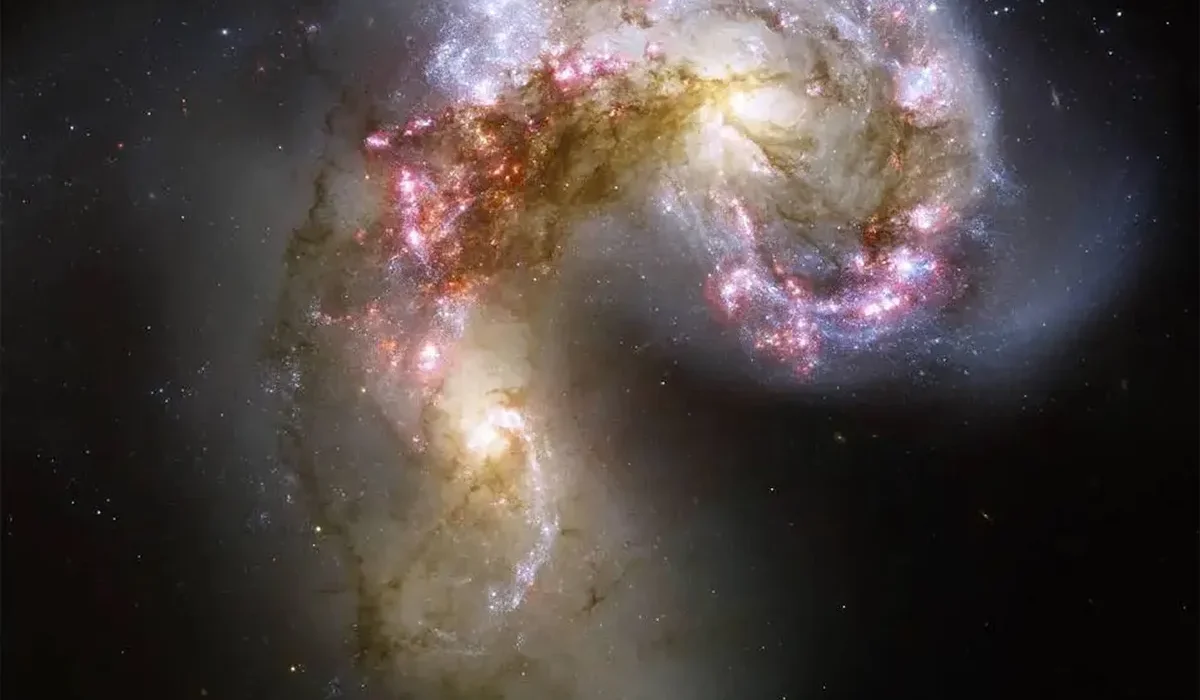
The carbon in your cells, the oxygen you breathe, the iron in your blood — these elements were forged inside ancient stars through nuclear fusion.
When massive stars exploded in supernovae, they scattered these elements into space. Over billions of years, gravity gathered them into new solar systems, planets, and eventually living organisms.
Every atom heavier than hydrogen and helium in your body originated in stellar furnaces.
You are not merely in the universe.
You are the universe — assembled into consciousness.
The Astonishing Ordinary
The strangest truth of all is this: none of these facts are rare or supernatural.
They are happening in every human body.
Right now.
Your heart is generating electrical impulses. Your gut is sending neural signals. Your bones are remodeling. Your cells are dividing. Your immune system is remembering. Your brain is rewiring. Your microbiome is collaborating. Your DNA is coiled in microscopic precision. Your body is glowing faintly in the dark.
And you are likely unaware of most of it.
The human body is not just a biological structure. It is a symphony of chemistry, physics, electricity, and evolution — playing continuously, flawlessly, and often invisibly.
What sounds fake is real.
What feels ordinary is extraordinary.
And the greatest miracle may not be that these facts exist — but that they exist within you.