When most people hear the word blockchain, their thoughts immediately jump to digital currencies, speculative markets, and volatile price charts. For many, blockchain seems inseparable from cryptocurrency. Yet this association captures only a small fraction of what the technology actually is.
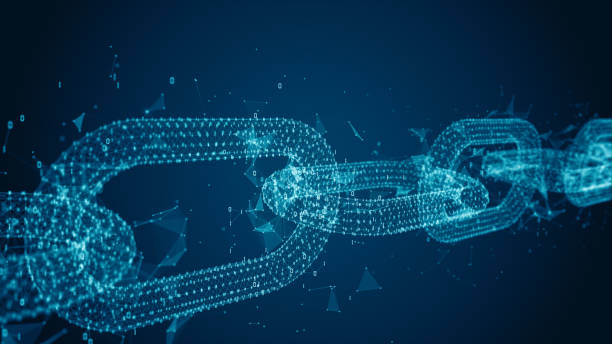
Blockchain is fundamentally a method of recording information in a way that is distributed, verifiable, and extremely difficult to alter retroactively. Instead of storing data in a single centralized database, blockchain distributes identical copies of a ledger across many independent computers. Each new record becomes linked to previous ones through cryptographic verification, forming a chronological chain of data blocks. Once recorded, information cannot be easily modified without consensus across the network.
This structure creates something historically rare in information systems: trust without central authority. Participants who do not know or trust each other can still rely on the integrity of shared records. Transparency and immutability become built into the architecture itself.
Originally developed to support digital currencies, blockchain quickly revealed broader potential. Any system that depends on secure record-keeping, verification, and coordination among multiple parties can theoretically benefit from decentralized ledgers. That includes industries as diverse as healthcare, governance, logistics, science, and environmental management.
Researchers, governments, and private organizations have begun exploring how blockchain can reshape institutions that have existed for centuries. Some applications are already operating in real-world settings. Others remain experimental but promising. Many aim not merely to improve efficiency but to transform how trust, accountability, and cooperation function in complex societies.
The following twelve uses demonstrate how blockchain extends far beyond finance. Each reveals a different dimension of the technology’s ability to reorganize information, reshape institutions, and solve persistent problems of verification, transparency, and coordination.
1. Supply Chain Transparency and Product Authenticity
Modern supply chains are vast, global, and intricate. A single consumer product may involve raw materials from multiple continents, manufacturing across several countries, and distribution through numerous intermediaries. Tracking the journey of goods accurately is extraordinarily difficult.
Blockchain offers a method for recording each step of a product’s lifecycle in a shared, tamper-resistant ledger. Every transfer—from extraction to processing, transport, and sale—can be documented chronologically. Because entries cannot be altered without detection, participants gain a trusted record of origin and movement.
This capability is particularly valuable in industries vulnerable to fraud or contamination. Food safety provides a compelling example. When contamination occurs, tracing the source through conventional records can take weeks. Blockchain-based tracking allows investigators to identify the origin almost instantly, reducing health risks and economic loss.
Large-scale initiatives such as IBM Food Trust demonstrate how distributed ledgers can track agricultural products from farms to supermarkets. Each shipment is logged with verifiable data about origin, storage conditions, and transportation history.
Scientific verification of supply chains also helps combat counterfeit pharmaceuticals, illegal logging, and unethical labor practices. Consumers can access reliable information about where products come from and how they were produced.
In effect, blockchain transforms supply chains into transparent historical narratives. Every object carries an authenticated story of its journey.
2. Secure Medical Records and Interoperable Healthcare Systems
Healthcare systems depend on accurate, confidential, and accessible medical records. Yet these records are often fragmented across hospitals, clinics, laboratories, and insurers. Patients may struggle to transfer information between providers, and data breaches remain a serious concern.
Blockchain enables the creation of unified medical record systems that maintain privacy while ensuring accessibility. Instead of storing data in isolated institutional databases, encrypted medical records can be referenced through a distributed ledger. Patients control access permissions, allowing healthcare providers to retrieve verified information when needed.
This structure enhances both continuity of care and data security. Physicians can access complete medical histories instantly, reducing diagnostic errors and redundant testing. At the same time, unauthorized alteration of records becomes extremely difficult because changes must be validated across the network.
Public health organizations have explored blockchain’s potential for tracking disease outbreaks, managing vaccination records, and coordinating international medical data sharing. Institutions such as the World Health Organization have studied how decentralized ledgers could support reliable global health reporting.
From a scientific perspective, blockchain could also transform clinical research. Verified patient consent, transparent data collection, and tamper-resistant trial records would strengthen the reliability of medical evidence.
Healthcare depends fundamentally on trust in information. Blockchain offers a structural way to preserve that trust.
3. Digital Identity and Self-Sovereign Personal Data
Identity verification is central to modern life. Individuals must prove who they are to access banking services, education, employment, travel, and government programs. Yet traditional identity systems rely on centralized authorities that store sensitive personal data, creating risks of fraud, exclusion, and surveillance.
Blockchain enables a radically different model known as self-sovereign identity. Instead of institutions controlling identity records, individuals hold cryptographically secured digital credentials that can be selectively shared.
A person could prove age, citizenship, educational qualifications, or professional certification without revealing unnecessary personal information. Verification occurs through cryptographic signatures rather than centralized databases.
This approach is especially valuable in regions where many people lack formal identification documents. Decentralized identity systems can provide secure recognition without dependence on fragile or inaccessible bureaucratic structures.
The Baltic nation of Estonia has pioneered digital governance systems that integrate distributed technologies to secure citizen data and streamline public services. While not purely blockchain-based, such systems illustrate how decentralized verification can transform administrative infrastructure.
Identity becomes portable, secure, and under individual control rather than institutional ownership.
4. Transparent Voting and Electoral Integrity
Democratic systems rely on public trust in electoral processes. Yet traditional voting methods—whether paper ballots or electronic machines—can be vulnerable to fraud, miscounting, or disputes about legitimacy.
Blockchain-based voting systems record each vote as a verifiable transaction within a distributed ledger. Once recorded, votes cannot be altered without detection. Because the ledger is publicly auditable, election results can be independently verified.
Cryptographic techniques ensure that ballots remain anonymous while still being counted accurately. Voters can confirm that their vote was recorded without revealing its content.
Pilot programs in various jurisdictions have explored blockchain voting for local elections and organizational governance. The concept promises greater transparency and resilience against tampering.
However, scientific and technical challenges remain. Secure digital identity verification, resistance to cyberattack, and equitable access must all be carefully addressed. Election security involves not only data integrity but also social trust and accessibility.
Nevertheless, blockchain offers a framework for building voting systems that are simultaneously transparent, verifiable, and resistant to manipulation.
5. Intellectual Property Protection and Creative Ownership
Artists, writers, musicians, and inventors depend on recognition and protection of their creative work. Yet proving authorship and managing licensing rights can be complicated, particularly in digital environments where copying is effortless.
Blockchain enables creators to register works in a permanent, time-stamped ledger that establishes verifiable authorship. Smart contracts—self-executing digital agreements—can automatically manage licensing terms, royalty distribution, and usage rights.
Every use of a creative work can be tracked transparently. Payments can be distributed instantly according to predefined rules. This reduces reliance on intermediaries and increases fairness in compensation.
Research groups such as the MIT Media Lab have explored decentralized systems for managing digital ownership and attribution. These systems aim to ensure that creative labor receives measurable recognition and reward.
Blockchain transforms intellectual property from a legal abstraction into a continuously verifiable record of creation and use.
6. Land Ownership and Property Rights Registration
Clear property ownership records are essential for economic stability. Yet in many regions, land registries are incomplete, inconsistent, or vulnerable to corruption and loss.
Blockchain provides a tamper-resistant method for recording property transactions. Once ownership is registered, it becomes extremely difficult to alter records fraudulently. Every transfer is documented permanently, creating a transparent chain of title.
Secure land registries can prevent disputes, reduce administrative costs, and support economic development by enabling reliable collateral for loans.
Pilot programs in multiple countries have demonstrated how decentralized ledgers can strengthen property rights systems, particularly in regions with historically unreliable documentation.
Land ownership becomes not merely a legal claim but a cryptographically verifiable record.
7. Humanitarian Aid Distribution and Resource Accountability
Delivering humanitarian assistance efficiently and fairly is a persistent challenge. Aid often passes through complex networks of agencies, contractors, and intermediaries, increasing the risk of diversion or mismanagement.
Blockchain enables direct, transparent distribution of resources. Aid recipients can receive digital vouchers recorded in a shared ledger, ensuring that funds or supplies reach intended beneficiaries. Every transaction is traceable and auditable.
The United Nations World Food Programme has implemented blockchain systems to distribute food assistance in refugee contexts. These systems reduce administrative costs and increase accountability.
Scientific analysis of such programs shows improved efficiency and reduced fraud. Blockchain does not replace humanitarian organizations but enhances their ability to deliver aid transparently.
In crisis environments, trust in resource distribution can be a matter of survival.
8. Energy Trading and Decentralized Power Grids
Electricity systems traditionally operate through centralized utilities that manage production and distribution. However, renewable energy technologies such as solar panels allow households and communities to generate their own power.
Blockchain enables decentralized energy markets in which producers can sell excess electricity directly to neighbors. Smart meters record generation and consumption automatically, and transactions are verified through distributed ledgers.
This structure supports microgrids—localized networks capable of operating independently from large power systems. Such systems improve resilience during outages and promote renewable energy adoption.
Energy becomes not only a utility but a tradable resource within peer-to-peer networks governed by transparent rules.
9. Scientific Research Integrity and Data Verification
Scientific progress depends on reliable data, reproducible results, and transparent methods. Yet research records can be lost, altered, or selectively reported.
Blockchain offers a way to register experimental data, research protocols, and publication histories in immutable form. Time-stamped entries establish clear records of discovery and prevent post-hoc modification.
Universities including the University of Cambridge have explored distributed ledger systems for preserving research data and verifying academic credentials.
Such systems could reduce scientific fraud, strengthen reproducibility, and provide permanent archives of knowledge creation.
In science, truth depends not only on observation but on trustworthy documentation. Blockchain offers structural integrity for the record of discovery itself.
10. Environmental Monitoring and Climate Accountability
Environmental protection requires accurate measurement of emissions, resource use, and ecological impact. Yet monitoring systems often rely on self-reported data that may be incomplete or manipulated.
Blockchain enables transparent recording of environmental indicators such as carbon emissions, water usage, and conservation activities. Sensors can automatically upload verified measurements to distributed ledgers.
International organizations including the European Union have explored blockchain-based systems for tracking sustainability commitments and environmental compliance.
Reliable data supports policy enforcement, market incentives, and public accountability. Environmental stewardship becomes measurable and verifiable rather than merely declarative.
11. Smart Cities and Urban Infrastructure Management
Cities generate enormous volumes of data—from traffic flow and public transportation to waste management and utility usage. Coordinating these systems efficiently is a major engineering challenge.
Blockchain can provide secure infrastructure for managing urban data across multiple agencies and service providers. Shared ledgers enable real-time coordination while preserving transparency and accountability.
The Dubai has pursued ambitious initiatives to integrate blockchain into municipal services, including licensing, property records, and administrative processes.
Urban governance becomes more efficient when information flows securely across institutional boundaries. Blockchain provides a structural backbone for complex, interconnected city systems.
12. Education Credentials and Lifelong Learning Records
Educational achievements are typically documented through certificates issued by institutions. Yet verifying credentials across borders and career transitions can be difficult.
Blockchain enables permanent, verifiable educational records that follow individuals throughout life. Degrees, certifications, training programs, and skill assessments can be recorded in decentralized ledgers accessible to employers and institutions.
This approach reduces credential fraud and simplifies recognition of qualifications across jurisdictions. It also supports lifelong learning by documenting continuous educational development.
Academic records become portable, secure, and universally verifiable.
The Deeper Transformation of Trust
Each of these applications reflects a common theme: blockchain reorganizes how trust operates in complex systems. Instead of relying solely on centralized authorities, trust emerges from transparent, verifiable records maintained collectively.
This shift has profound implications. Institutions historically built on hierarchical control may evolve toward distributed coordination. Verification becomes mathematical rather than administrative. Accountability becomes structural rather than discretionary.
Blockchain does not eliminate the need for governance, regulation, or human judgment. But it changes the infrastructure through which these functions operate.
A Technology Still Becoming
Despite its promise, blockchain is not a universal solution. Scalability, energy consumption, regulatory frameworks, and usability remain active areas of research. Many proposed applications are still experimental.
Yet the trajectory is clear. Blockchain has moved beyond its origins in digital currency. It has become a general architecture for organizing trustworthy information in decentralized environments.
The Expanding Horizon
From medical data and environmental monitoring to humanitarian aid and scientific research, blockchain reveals itself as a foundational technology for managing complex, interconnected systems.
Its most profound impact may not lie in any single application but in the broader reimagining of how societies coordinate knowledge, resources, and responsibility.
In a world increasingly defined by data, the question is no longer whether information exists—but whether it can be trusted.
Blockchain offers one possible answer: build trust directly into the structure of the record itself.
And that idea, far more than any currency, is what makes the technology truly revolutionary.