Blue eyes have always carried a strange kind of magic. They can look like frozen lakes, pale skies, or distant oceans. Across cultures and centuries, people have attached meaning to them—beauty, rarity, mystery, even power. But beneath the poetry lies something far more fascinating than symbolism: a scientific story written in DNA, shaped by evolution, and expressed through the physics of light.
Unlike many traits that are controlled by straightforward genetic rules, blue eyes are the result of an intricate biological process involving pigmentation, cellular structure, and a subtle mutation that likely began in a single human thousands of years ago. Blue eyes are not caused by blue pigment at all, which makes them one of nature’s most beautiful illusions.
To understand why some people have blue eyes, we must look deeper than appearance. We must explore the hidden architecture of the iris, the genes that control pigment production, and the ancient evolutionary history that transformed a simple mutation into one of humanity’s most recognizable features.
What Determines Eye Color in Humans?
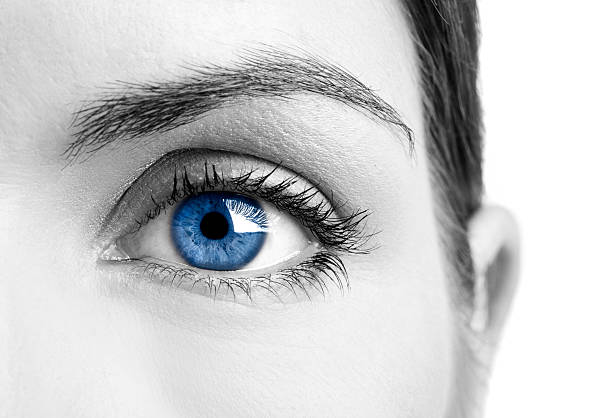
Eye color is determined mainly by the iris, the colored ring of tissue surrounding the pupil. The iris acts like a camera shutter, controlling how much light enters the eye by adjusting the size of the pupil. But beyond its function, the iris is also a complex biological structure filled with cells, connective tissue, and pigments.
The primary pigment responsible for eye color is melanin. Melanin is the same molecule that gives color to skin and hair. It is produced by specialized cells called melanocytes. The more melanin present in the iris, the darker the eye color tends to be.
Brown eyes contain high levels of melanin. Green and hazel eyes contain moderate levels. Blue eyes contain very little melanin in the front layer of the iris.
However, the story does not end with pigment. The arrangement of cells and fibers inside the iris plays an equally important role. In fact, the striking blue color of blue eyes comes not from a pigment but from the way light interacts with the iris’s structure.
This means eye color is a combination of chemistry and physics—biological pigment and optical scattering working together to produce what we see.
Why Blue Eyes Are Not Actually Blue
One of the most surprising truths about blue eyes is that they contain no blue pigment. If you remove the iris from a blue-eyed person and shine light through it, it will not appear blue. It will look almost colorless or slightly grayish.
So why do blue eyes look blue?
The answer lies in how light behaves when it encounters tiny particles and microscopic structures. When sunlight enters the iris, some wavelengths of light are absorbed while others are scattered.
Blue eyes contain low melanin in the front layer of the iris, called the stroma. The stroma is made of collagen fibers and other tissue structures. When light enters this layer, shorter wavelengths—especially blue light—are scattered outward more effectively than longer wavelengths such as red.
This is a phenomenon known as Rayleigh scattering, the same effect that makes the daytime sky appear blue. The sky is not blue because it contains blue material; it is blue because the atmosphere scatters shorter wavelengths of sunlight.
Similarly, the iris of a blue-eyed person scatters blue light back toward the observer, giving the eye its color.
This optical trick is why blue eyes can appear to change shade depending on lighting conditions. In bright sunlight, the scattering effect becomes stronger, making eyes look vividly blue. In dim lighting, they may appear gray or even greenish.
Blue eyes are not painted blue by pigment. They are sculpted blue by light.
The Role of Melanin: The Key Pigment Behind Eye Color
Melanin is the dominant factor in determining whether eyes are dark or light. It acts like a natural filter, absorbing light rather than scattering it.
In brown eyes, the iris contains abundant melanin, especially in the front layer. This melanin absorbs much of the incoming light, reducing scattering. The result is a darker appearance.
In blue eyes, melanin levels are very low in the stroma. Because little light is absorbed, scattering becomes the main visual effect. That scattering emphasizes shorter wavelengths, producing blue coloration.
The amount of melanin in the iris is determined by genetic instructions that regulate pigment production. These genes do not simply switch pigment on or off. Instead, they influence how much melanin is made, how it is distributed, and how melanocytes behave during development.
The difference between blue and brown eyes is not the presence or absence of melanin altogether. Even blue-eyed individuals have melanin in deeper layers of the iris. The difference lies mainly in the surface and stromal layers, which determine how light interacts with the iris.
This is why the genetics of eye color can be complex. It is not a single gene painting the iris, but multiple genes regulating pigment production like dials rather than switches.
The Genetic Foundation: How Eye Color Is Inherited
For many years, eye color was taught as a classic example of simple Mendelian inheritance. In that simplified model, brown eyes were dominant and blue eyes were recessive. If two parents carried the “blue gene,” a child could inherit blue eyes. If a child inherited at least one “brown gene,” the child would have brown eyes.
While this model is not entirely wrong, it is incomplete.
Modern genetics has shown that eye color is influenced by multiple genes. Brown tends to be dominant over blue in many cases, but there are many exceptions. Two brown-eyed parents can have a blue-eyed child, and two blue-eyed parents can occasionally have a child with slightly different eye pigmentation.
The reason is that eye color is polygenic, meaning it is controlled by several genes working together. These genes influence melanin production and distribution in subtle ways.
Still, among these many genes, a few play especially important roles in determining whether someone has blue eyes.
The OCA2 Gene: A Major Player in Eye Color
One of the most important genes associated with eye color is OCA2. This gene provides instructions for making a protein involved in melanin production.
The OCA2 gene is located on chromosome 15 and plays a major role in pigmentation in the iris, hair, and skin. Variations in this gene can strongly influence whether a person has darker or lighter eyes.
If OCA2 activity is high, more melanin is produced, increasing the likelihood of brown eyes. If OCA2 activity is reduced, melanin production decreases, increasing the likelihood of blue or lighter eyes.
Mutations in OCA2 can also contribute to albinism, a condition where melanin production is severely impaired. This shows just how critical this gene is in pigmentation.
But the most important genetic clue behind blue eyes is not always in OCA2 itself. It is in a neighboring gene that controls OCA2 like a switchboard.
The HERC2 Gene: The Mutation That Helps Create Blue Eyes
The gene most strongly associated with blue eyes is called HERC2. It sits close to OCA2 on chromosome 15. HERC2 does not directly produce pigment, but it influences the activity of OCA2.
In particular, a specific mutation in a regulatory region of HERC2 reduces the expression of OCA2. In other words, it turns down the pigment-making machinery.
When OCA2 is dialed down, melanin production in the iris drops significantly. With less melanin in the stroma, light scattering becomes dominant, and the eyes appear blue.
This mutation is often considered the main genetic reason blue eyes exist in humans today.
It is not a mutation that creates blue pigment. Instead, it reduces the amount of brown pigment. Blue eyes are essentially brown eyes with the pigment turned down so low that the iris becomes a light-scattering surface.
This makes blue eyes an absence-based trait. It is not the creation of something new, but the reduction of something old.
Did Blue Eyes Come From a Single Ancestor?
One of the most fascinating discoveries in human genetics is that most blue-eyed people share a common genetic origin.
Research suggests that the mutation in the HERC2 gene associated with blue eyes likely arose in a single individual who lived between 6,000 and 10,000 years ago. That person’s descendants spread the mutation through generations, eventually leading to millions of blue-eyed individuals today.
This does not mean every blue-eyed person is closely related in a family sense. The shared ancestor is far back in time, long before modern nations and ethnic groups existed. But genetically, it implies that blue eyes are a relatively recent trait in human history.
Before that mutation appeared, it is likely that nearly all humans had brown eyes.
This idea is extraordinary because it suggests that a single genetic change—one tiny alteration in DNA—created a trait that became widespread enough to shape human appearance across continents.
In a way, blue eyes are a living fossil of a specific ancient mutation that survived and flourished.
Where Did Blue Eyes First Appear?
The most likely geographic origin of blue eyes is somewhere around the Black Sea region, or possibly parts of Europe and western Asia. Genetic studies suggest the mutation spread as human populations migrated and mixed during the Neolithic period, when agriculture was expanding across Europe.
Blue eyes are most common today in northern and eastern Europe, particularly in countries such as Estonia, Finland, Sweden, Norway, and parts of Russia. In some of these regions, a majority of the population has blue or light-colored eyes.
However, blue eyes are not exclusive to Europe. They can appear in the Middle East, Central Asia, North Africa, and South Asia as well, though at much lower frequencies. This is largely due to historical migration and gene flow between populations.
The distribution of blue eyes is one of the clearest examples of how human traits reflect ancient movement, mixing, and evolutionary history.
Why Did Blue Eyes Survive and Spread?
This is the real mystery. A mutation appears in one person. That mutation spreads. Over thousands of years, it becomes common in certain populations. But why?
From an evolutionary perspective, a trait becomes common if it offers some advantage—or if it spreads through chance and population dynamics.
There are several hypotheses for why blue eyes became widespread.
One possibility is sexual selection. In this scenario, blue eyes may have been considered attractive or unusual, causing individuals with the trait to have more reproductive success. If early human communities found rare eye colors appealing, the trait could spread rapidly.
Another possibility is that blue eyes were linked indirectly to other genes that provided advantages, such as genes related to skin pigmentation or vitamin D synthesis.
A third possibility is genetic drift, a process where traits become common simply due to random chance, especially in small populations. If a small group of humans carrying the blue-eye mutation became isolated and reproduced within that population, the trait could become common even without offering an advantage.
The truth may involve a combination of these factors.
Evolution does not always act with clear purpose. Sometimes a trait spreads because it is beneficial. Sometimes it spreads because it is beautiful. Sometimes it spreads simply because history allowed it.
Blue Eyes and the Evolution of Skin Pigmentation
Blue eyes are often associated with light skin, but the relationship is not absolute. Still, there is a connection worth exploring.
Human skin pigmentation evolved largely in response to sunlight exposure. Darker skin protects against harmful ultraviolet radiation and prevents the breakdown of folate, a nutrient essential for fetal development. Lighter skin allows more UV light to penetrate, improving the body’s ability to produce vitamin D in regions with less sunlight.
As humans migrated northward into Europe and other regions with weaker sunlight, natural selection favored lighter skin in many populations. This helped maintain vitamin D levels.
Blue eyes may have become more common in these populations because the genes influencing eye color are linked to pigmentation pathways. The same evolutionary pressures that reduced skin melanin may have indirectly supported lighter eye colors.
However, this does not fully explain why blue eyes became common specifically, rather than simply lighter brown or hazel shades.
That is why sexual selection remains a compelling idea. Blue eyes are visually striking, and in a population where most people had brown eyes, a rare color might have stood out strongly.
How Blue Eyes Form in a Developing Baby
Eye color is not fully determined at birth. Many babies, especially those of European descent, are born with blue or grayish eyes. This happens because melanin production in the iris is not fully developed in newborns.
Over the first months or years of life, melanocytes in the iris begin producing more melanin. In many children, this causes eye color to darken gradually. A baby with blue eyes may develop green, hazel, or brown eyes over time.
If a child has the genetic variants that reduce melanin production, the eyes may remain blue.
This is why pediatricians often caution parents not to assume a baby’s final eye color too early. Eye color is a developmental process influenced by both genetics and time.
In most cases, eye color stabilizes by around age three, though subtle changes can continue into adolescence.
Are Blue Eyes More Sensitive to Light?
Yes, generally.
Because blue eyes contain less melanin, they absorb less light. Melanin acts like a natural light filter. In darker eyes, melanin reduces glare and limits how much light scatters within the eye.
Blue-eyed individuals often experience greater sensitivity to bright sunlight. They may squint more, feel discomfort in strong light, and be more prone to glare.
This is not always severe, but it is a measurable difference.
Melanin provides a protective function, which is why darker eyes may offer slightly more defense against certain types of light-related stress. However, this does not mean blue eyes are weak or defective. They simply represent a different balance of pigmentation.
In fact, the reduced melanin is exactly what allows blue eyes to appear so luminous.
Do Blue Eyes Increase the Risk of Eye Disease?
There is evidence that lighter eye colors, including blue, may be associated with slightly higher risk for certain eye conditions, though the relationship is complex.
Because melanin can help protect against ultraviolet light, lighter eyes may have less natural shielding. Some studies suggest that people with blue eyes may have a higher risk of developing uveal melanoma, a rare cancer of the eye. They may also have increased vulnerability to UV-related damage.
However, these risks are influenced by many factors, including overall sun exposure, geographic location, and genetics unrelated to eye color.
Blue eyes are not inherently unhealthy. But like fair skin, they may require extra caution with intense sunlight. Wearing UV-protective sunglasses is beneficial for everyone, but especially for individuals with lighter eyes.
Can Two Brown-Eyed Parents Have a Blue-Eyed Child?
Yes, and this often surprises people.
Because eye color is influenced by multiple genes, two brown-eyed parents may both carry genetic variants associated with reduced melanin production. If a child inherits those variants from both parents, the child may have blue eyes.
This is similar to the concept of recessive inheritance, but with a more complex genetic framework.
Brown eyes are often dominant because high melanin production tends to overpower low melanin production in the final appearance. But if both parents carry the right combination of alleles that reduce pigment, a blue-eyed child is possible.
This is not rare enough to be suspicious. It is simply genetics working in subtle ways.
Can Two Blue-Eyed Parents Have a Brown-Eyed Child?
This is less common, but it can happen.
If both parents have blue eyes, they usually carry genetic variants that strongly reduce melanin production in the iris. In most cases, their children will also have blue eyes.
However, because multiple genes influence eye color, certain combinations could allow a child to produce more melanin than expected, resulting in green, hazel, or even light brown eyes. Additionally, some rare genetic mechanisms can introduce pigment variation.
True dark brown eyes from two blue-eyed parents are extremely rare, but slight deviations from blue are possible.
The idea that blue-eyed parents can never have a brown-eyed child is an oversimplification of genetics.
Blue Eyes, Green Eyes, and Hazel Eyes: What’s the Difference?
Eye color exists on a spectrum. Blue eyes are typically the result of very low melanin in the iris stroma. Green and hazel eyes contain more melanin than blue eyes but less than brown eyes.
Green eyes are often produced by a combination of low melanin and the scattering effect, with additional pigmentation that shifts the color toward green. Hazel eyes may include a mixture of brown pigment and scattering, sometimes with different pigment concentrations in different parts of the iris.
This is why hazel eyes can appear to change color depending on lighting and surrounding colors.
Eye color is not simply a paint bucket filled with pigment. It is a complex optical effect influenced by pigment concentration, tissue structure, and light.
Blue eyes represent one extreme of low melanin, where scattering dominates almost entirely.
Why Are Blue Eyes Rare Globally?
Globally, brown eyes dominate. The majority of humans have brown eyes, especially in Africa, Asia, and the indigenous populations of the Americas.
Blue eyes are rare because the genetic mutation that reduces melanin in the iris is relatively recent and became common mainly in certain populations.
Additionally, in regions with intense sunlight, higher melanin levels provide protective advantages. Dark eyes, like dark skin, may have been favored in many environments because they reduce UV damage and glare.
In northern climates with weaker sunlight, these protective pressures are reduced, and traits like blue eyes could spread more easily through drift or sexual selection.
The global rarity of blue eyes is not because they are biologically difficult to produce, but because the genetic history that created them occurred in specific populations and spread unevenly.
The Myth That Blue Eyes Are “Stronger” or “Weaker”
Throughout history, people have invented myths about eye color. Some cultures associated blue eyes with purity or nobility, while others viewed them with suspicion. In modern times, there are myths that blue-eyed people are more intelligent, more sensitive, or biologically different in strange ways.
These beliefs are not supported by science.
Blue eyes are primarily the result of a regulatory mutation that reduces melanin in the iris. They do not indicate superior vision, personality traits, or intelligence. While light sensitivity and certain disease risks may vary slightly, these are small biological differences, not dramatic ones.
Eye color is an outward sign of genetic variation, not a marker of human worth or capability.
Science is clear on this: eye color is a beautiful trait, but it is not destiny.
The Physics and Beauty of Blue Eyes
One reason blue eyes captivate people is because they appear luminous. Brown eyes often look deep and rich, but blue eyes can seem to glow.
That glow is not magical. It is physics.
When light enters the iris of a blue-eyed person, the scattering effect reflects blue wavelengths outward. This creates a visual brightness that can seem almost radiant, especially in sunlight.
Because the scattering depends on lighting, blue eyes can shift dramatically in appearance. They may look pale blue, icy gray, deep ocean blue, or even slightly green depending on environment.
This is why blue eyes often appear expressive. Their color responds to the world around them.
In reality, what you are seeing is not just pigment but an interaction between biology and light—a living optical phenomenon.
Are Blue Eyes a Mutation or an Adaptation?
Blue eyes are almost certainly the result of a mutation. The key genetic change that produces blue eyes is believed to have arisen spontaneously and then spread through human populations.
Whether it is an adaptation depends on what you mean by the term. An adaptation is a trait shaped by natural selection because it improves survival or reproduction.
Blue eyes do not appear to offer a major survival advantage. They may offer a minor disadvantage in strong sunlight. This suggests that natural selection alone may not explain their spread.
Instead, sexual selection and genetic drift likely played a major role. If early humans found blue eyes attractive, the trait could spread even if it offered no survival benefit. If a small population carrying the mutation expanded rapidly, blue eyes could become common.
This is a reminder that evolution is not always about survival. Sometimes it is about reproduction, preference, chance, and history.
Blue eyes may be one of the clearest examples of how beauty can shape biology.
The Deep Genetic Mystery: What Blue Eyes Reveal About Humanity
When you look into a pair of blue eyes, you are not just seeing a color. You are seeing a story of migration, ancestry, and genetic chance.
You are seeing the result of a mutation that likely began in one person thousands of years ago. You are seeing the imprint of ancient human movement across continents. You are seeing evolution’s unpredictable creativity.
Blue eyes remind us that human diversity is not superficial. It is biological history written into the body. Every trait—eye color, hair texture, skin tone—is a record of where our ancestors lived, what pressures they faced, and what random genetic events survived through generations.
The fact that such a small genetic change can create such a dramatic visual effect is part of what makes genetics so fascinating.
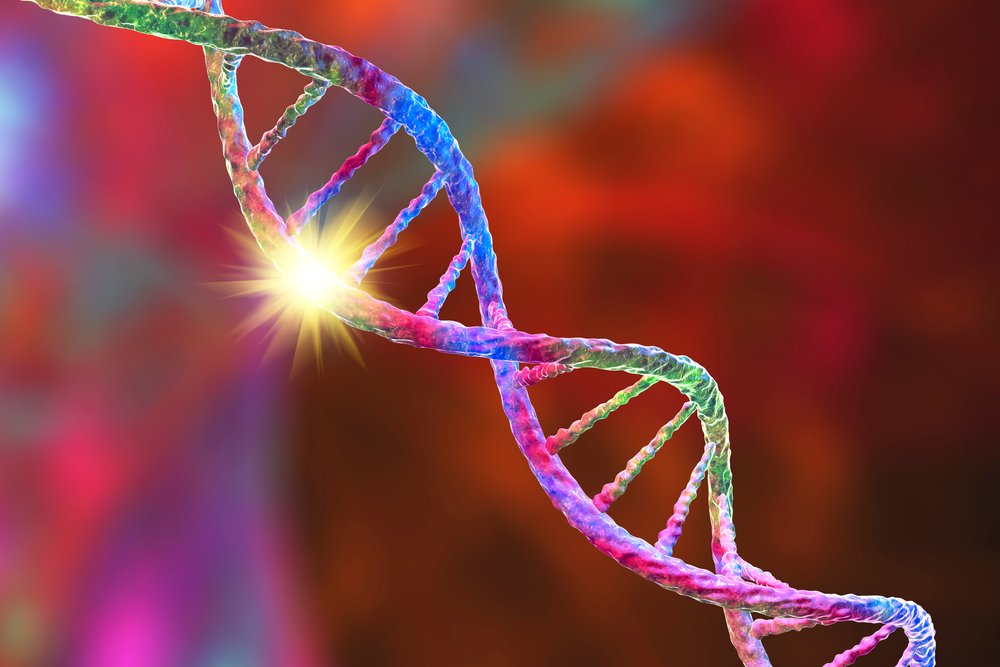
A single mutation in a regulatory DNA region can reduce pigment production in the iris. That reduction changes how light scatters. That scattering changes the color we see. And that color becomes one of the most striking traits in the human species.
Blue eyes are proof that nature can create beauty not by adding pigment, but by subtracting it.
The Final Answer: Why Do Some People Have Blue Eyes?
Some people have blue eyes because of genetic variations that reduce melanin production in the iris, particularly due to a mutation affecting the regulation of the OCA2 gene through the nearby HERC2 gene. With less melanin in the front layer of the iris, light is scattered rather than absorbed, and shorter blue wavelengths are reflected outward, creating the appearance of blue.
Blue eyes are not the result of blue pigment. They are the result of low pigmentation combined with the physics of light scattering.
They likely originated from a single ancient mutation thousands of years ago and spread through populations by a mix of genetic drift, migration, and possibly sexual selection.
In the end, the genetic mystery of blue eyes is not a mystery because it is unsolved, but because it reveals something deeper: that the most enchanting traits in human appearance can emerge from tiny changes in DNA, shaped by history and illuminated by light.
Blue eyes are not just rare.
They are a reminder that the universe can create wonder through the simplest of mechanisms—through genetics, through physics, and through time.