There are few objects in the universe as mesmerizing—or as terrifying—as a black hole.
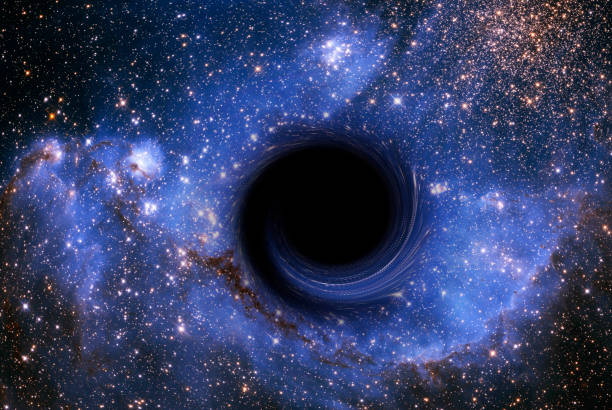
Predicted by Einstein’s theory of general relativity and later confirmed through astronomical observation, black holes are regions of spacetime where gravity becomes so intense that nothing—not even light—can escape once it crosses a boundary known as the event horizon.
They are not cosmic vacuum cleaners roaming the galaxy, indiscriminately devouring everything. Most black holes sit quietly, influencing their surroundings only through gravity like any other massive object. But if you were unfortunate enough to drift too close—past the point of no return—what would happen to you?
The answer depends on the size of the black hole, how you approach it, and what is happening in its environment. But physics gives us a remarkably detailed, scientifically grounded picture of your fate.
Let’s walk through it—step by step.
1. You Would First Encounter an Extreme Gravitational Field
Before anything dramatic happens, you would begin to feel gravity intensifying.
Black holes form when massive stars collapse under their own gravity, compressing matter into an extraordinarily dense state. According to Albert Einstein’s general relativity, mass curves spacetime. A black hole represents curvature taken to an extreme.
As you approach, gravitational acceleration increases rapidly. But here’s something surprising: if the black hole is large enough—say, a supermassive black hole like Sagittarius A*—the gravitational pull at the event horizon might not immediately tear you apart.
Why? Because tidal forces, the difference in gravitational pull between your head and your feet, depend on the gradient of gravity, not just its strength. Larger black holes have weaker tidal forces at the horizon than smaller ones.
So initially, you might not even notice crossing into extreme territory—at least not instantly.
2. Time Would Begin to Behave Strangely
As you approach the event horizon, something profound happens—not to you directly, but to how others see you.
Gravitational time dilation, a consequence of general relativity, causes time to slow down in stronger gravitational fields. To a distant observer, your clock would appear to tick more slowly as you approach the event horizon.
Light emitted from you would become increasingly redshifted, stretched to longer wavelengths by the intense gravity. You would appear to fade, becoming dimmer and redder.
From their perspective, you would never quite cross the event horizon. You would seem to freeze at the edge, asymptotically approaching it forever.
But from your own perspective, your clock runs normally. You would cross the event horizon in finite time, unaware of any dramatic boundary.
The event horizon is not a physical surface. It is a geometric boundary in spacetime—the point beyond which all possible future paths lead inward.
Time itself would begin to lose its familiar meaning.
3. You Would Likely Encounter an Accretion Disk First
In reality, most black holes are surrounded by swirling disks of gas and dust called accretion disks. As matter spirals inward, friction and compression heat it to millions of degrees.
These disks can outshine entire galaxies in X-rays.
If you approached an active black hole, the radiation from the accretion disk would likely kill you long before gravity did. Intense X-rays and gamma rays would damage your cells at the molecular level, ionizing atoms and shredding DNA.
The heat would be extreme. Gas in the inner regions of the disk moves at a significant fraction of the speed of light.
Unless the black hole were dormant and isolated, you would not survive the journey through its energetic surroundings.
4. Tidal Forces Would Begin to Stretch You
As you move closer, tidal forces grow dramatically.
Gravity decreases with distance. If your feet are closer to the black hole than your head, they feel a stronger pull. This difference creates a stretching effect.
In astrophysics, this process has a dramatic name: spaghettification.
Your body would elongate vertically while being compressed horizontally. Blood vessels, tissues, and bones would be stretched beyond structural limits.
For small black holes, this would occur before you cross the event horizon. You would be torn apart outside it.
For supermassive black holes, tidal forces at the horizon may be weak enough that you cross intact—only to be stretched later as you move deeper toward the singularity.
Either way, your body cannot withstand these forces.
5. You Would Experience Extreme Compression in Other Directions
While you are stretched along the direction toward the black hole, you would be compressed sideways.
This combination of stretching and squeezing is due to the geometry of curved spacetime.
Your atoms are held together by electromagnetic forces, vastly stronger than gravity at small scales. But the tidal forces near a black hole can exceed even those.
Eventually, molecular bonds would break. Cells would rupture. Your body would be pulled into a thin stream of matter.
The process is not merely dramatic—it is governed by precise gravitational gradients described by Einstein’s equations.
6. Crossing the Event Horizon Would Be Unremarkable—At First
Contrary to popular imagination, crossing the event horizon does not involve hitting a wall or passing through a glowing barrier.
If the black hole is large enough and you have survived this long, you might not notice crossing it at all.
There is no local signal marking the horizon. Physics behaves normally in your immediate surroundings.
But the geometry of spacetime has changed in a crucial way.
Inside the event horizon, all future-directed paths lead toward the singularity. Moving forward in time becomes equivalent to moving inward.
You cannot turn around—not because of a force pushing you back, but because the structure of spacetime itself directs all possible futures toward the center.
Escape is no longer a physical possibility.
7. External Light Would Become Increasingly Distorted
As you fall inward, light from the outside universe would behave strangely.
Gravitational lensing would warp your view. The entire external universe might appear compressed into a bright, distorted ring overhead.
Time outside would seem to accelerate. In principle, you could witness the distant future of the universe unfold in fast-forward, as signals from outside are blueshifted and compressed.
However, practical limitations—radiation, limited falling time, and extreme conditions—would likely prevent you from observing cosmic history in detail.
Still, the view would be surreal: a collapsing sky, warped by gravity beyond ordinary imagination.
8. You Would Inevitably Approach the Singularity
At the center of a classical black hole lies a singularity—a point where density and spacetime curvature become infinite.
In general relativity, this is where the equations break down.
As you approach this region, tidal forces increase without bound. Even subatomic particles would be crushed. At sufficiently small scales, quantum gravitational effects become important—but we do not yet have a complete theory of quantum gravity to describe them.
Your body, already long disintegrated, would be compressed into an increasingly small volume.
All the matter that once formed your atoms would be carried toward this extreme region.
Physics, as currently understood, cannot describe what truly happens at the singularity. It represents the edge of our knowledge.
9. From the Outside, You Would Appear Frozen in Time
To distant observers, you never quite cross the event horizon.
They would see you slow down, redden, and fade. Signals from you would take longer and longer to arrive, stretched by gravitational time dilation.
Eventually, your image would become too faint to detect.
From their perspective, you would be eternally suspended at the horizon.
This difference between external and internal perspectives highlights the strange nature of spacetime near black holes.
Two observers can have radically different descriptions of the same event—and both can be correct within their reference frames.
10. Your Information Might Not Be Destroyed—But We’re Not Sure
One of the deepest puzzles in theoretical physics concerns what happens to information that falls into a black hole.
According to quantum mechanics, information cannot be destroyed. But if black holes evaporate via Hawking radiation—a phenomenon predicted by Stephen Hawking—what happens to the information about the matter that fell in?
This is known as the black hole information paradox.
Some theories suggest information is encoded on the event horizon, in accordance with the holographic principle. Others propose that subtle correlations in Hawking radiation preserve information.
In recent years, theoretical advances using quantum gravity and holography have suggested that information may indeed escape in highly scrambled form.
If you fell into a black hole, the particles that once composed you might ultimately be radiated back into the universe over unimaginably long timescales.
But whether your information survives intact in some quantum sense remains an open question.
Your physical form would be destroyed. Whether the quantum imprint of your existence is erased or transformed is one of the great mysteries of modern physics.
The Emotional Gravity of It All
Falling into a black hole is not just a thought experiment about death—it is a meditation on the structure of reality.
Black holes are not science fiction. They are astrophysical objects formed from collapsing stars and lurking at the centers of galaxies. Their existence has been confirmed by gravitational wave detections and direct imaging of event horizons.
They stretch spacetime. They bend light. They challenge our understanding of information and quantum mechanics.
If you fell into one, your journey would be dictated not by drama or chaos, but by precise mathematical laws. Gravity would stretch you. Time would distort. Light would warp. And eventually, you would be carried beyond the limits of known physics.
In that sense, falling into a black hole is the ultimate confrontation between human fragility and cosmic power.
Your body is held together by electromagnetic forces, structured by atomic bonds, animated by biochemical reactions. All of it—every heartbeat, every memory—exists within spacetime.
A black hole reveals just how flexible, how dynamic, and how extreme that spacetime can become.
And yet, in studying these objects, we demonstrate something remarkable.
We are small, fragile beings on a rocky planet orbiting an ordinary star. And still, through mathematics and observation, we can predict what would happen at the edge of infinity.
Even if no human will ever fall into a black hole, we understand enough of the universe to imagine it.
That understanding is its own kind of triumph.
Gravity may win in the end.
But curiosity reaches just as far.