The universe is not merely vast. It is bewildering. It is violent. It is elegant and chaotic at once. Every time science answers one profound question, it seems to uncover three more waiting in the darkness. The deeper we look—into the smallest particles or the farthest galaxies—the more reality refuses to behave the way we expect.
Modern physics has achieved astonishing triumphs. We have mapped the cosmic microwave background, detected gravitational waves, photographed a black hole’s shadow, and built machines capable of probing subatomic particles at unimaginable energies. Yet for all our progress, there remain mysteries so immense, so unsettling, that they shake the very foundations of our understanding.
These are not fictional puzzles or supernatural legends. They are real, measurable, scientifically documented phenomena that stubbornly resist explanation. They are the cracks in our cosmic knowledge. And they are terrifying not because they imply monsters or ghosts—but because they reveal how little we truly know.
Below are ten of the most profound and unsettling mysteries of the universe that science has not yet explained.
1. What Is Dark Matter?
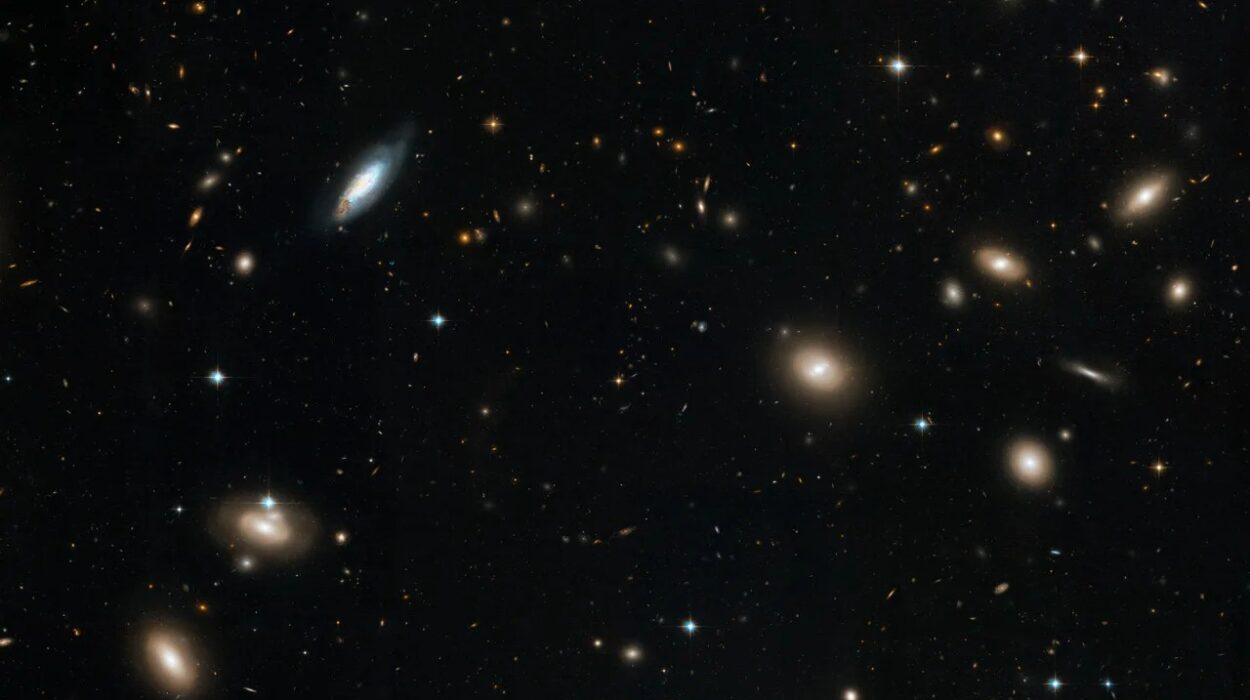
Look up at the night sky and you see stars, nebulae, galaxies—shining matter. But everything visible, every atom in every star and planet, makes up less than five percent of the total content of the universe. About 27 percent is something else entirely: dark matter.
Dark matter does not emit light. It does not absorb light. It does not interact with electromagnetic radiation at all. It is invisible. And yet, it has mass. It exerts gravity.
Astronomers first realized something was wrong when they studied how galaxies rotate. The outer stars of galaxies were moving far too fast. According to the gravity of visible matter alone, these galaxies should have flown apart. They didn’t. Something unseen was holding them together.
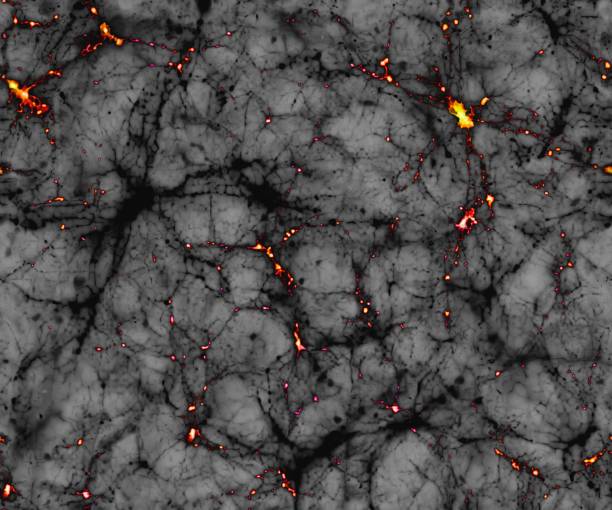
Gravitational lensing—where massive objects bend light from background galaxies—confirms the presence of far more mass than we can see. Galaxy clusters behave as though embedded in enormous halos of invisible material.
We know dark matter is real because its gravitational fingerprints are everywhere. But we do not know what it is made of. It is not ordinary atoms. It is not simply dim stars or black holes in large enough quantities to account for observations.
Physicists have proposed hypothetical particles such as WIMPs or axions. Massive detectors buried deep underground search for rare interactions. Particle accelerators attempt to create dark matter candidates. So far, nothing conclusive has emerged.
The terrifying truth is that most of the matter in the universe is something completely unknown.
2. What Is Dark Energy?
If dark matter is mysterious, dark energy is even more unsettling.
In 1998, astronomers studying distant supernovae discovered that the expansion of the universe is accelerating. Galaxies are not merely drifting apart. They are speeding away from one another at an increasing rate.
This acceleration requires a form of energy with a strange property: negative pressure. It acts like a repulsive gravitational force, pushing space apart rather than pulling it together. Scientists call it dark energy.
Dark energy appears to make up roughly 68 percent of the universe’s total energy density. It dominates the cosmos. And yet, we do not know what it is.
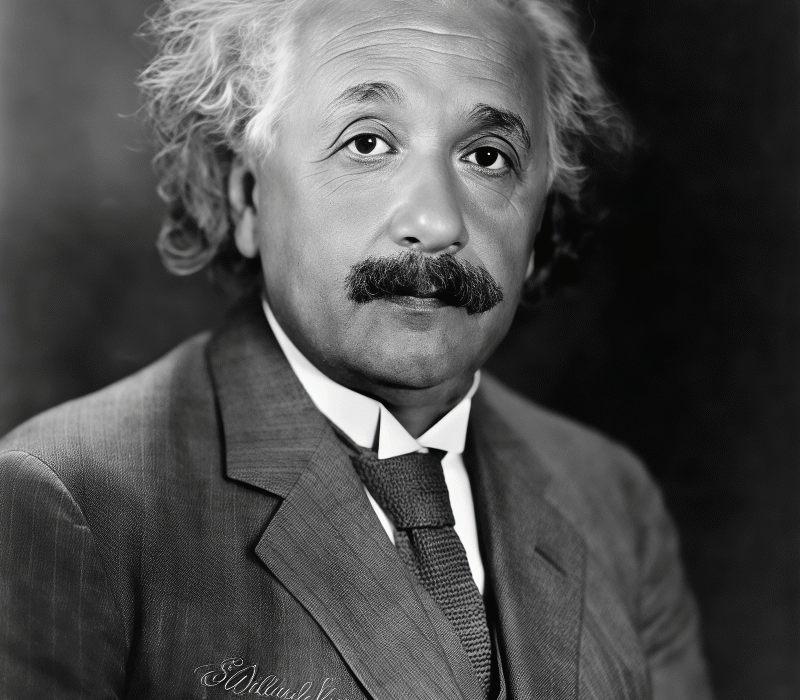
One possibility is that it represents the energy of empty space itself—a cosmological constant, as introduced by Albert Einstein. But when physicists attempt to calculate vacuum energy using quantum field theory, they obtain values wildly larger than what observations show. The discrepancy is one of the worst theoretical predictions in physics history.
Another possibility is that dark energy changes over time, or that gravity behaves differently on cosmic scales than general relativity predicts.
If dark energy continues to dominate, the universe will expand forever, galaxies will drift beyond each other’s horizons, and stars will eventually burn out in a cold, isolated cosmos.
The fact that nearly 70 percent of reality consists of something we do not understand is deeply humbling.
3. What Happened Before the Big Bang?
The prevailing cosmological model tells us the universe began approximately 13.8 billion years ago in an extremely hot, dense state known as the Big Bang. The cosmic microwave background radiation and the abundance of light elements strongly support this model.
But what came before?
General relativity predicts a singularity—a point of infinite density and temperature—at the beginning. Yet infinities in physics usually signal that our theories are incomplete. At such extreme conditions, quantum effects should dominate, but we do not yet possess a complete theory of quantum gravity.
Some models suggest a prior contracting universe that bounced into expansion. Others propose that our universe is one bubble among many in a multiverse. Still others speculate that time itself began with the Big Bang, making “before” meaningless.
We do not know which, if any, of these ideas is correct.
The terrifying possibility is that the origin of everything may lie forever beyond our current theoretical reach—or that reality is far stranger than any of our existing frameworks can accommodate.
4. What Happens Inside a Black Hole?
Black holes are among the most extreme objects in the universe. They form when massive stars collapse under their own gravity, compressing matter into an incredibly dense region where the escape velocity exceeds the speed of light.
We understand much about black holes from general relativity. We can calculate their event horizons, predict gravitational waves from their mergers, and even image the glowing material around them.
But what happens inside?
At the center of a classical black hole lies a singularity, where density becomes infinite and known laws of physics break down. Quantum mechanics, which governs small scales, and general relativity, which governs gravity, clash violently here.
There is also the black hole information paradox. According to quantum mechanics, information cannot be destroyed. But if matter falls into a black hole and the black hole eventually evaporates via Hawking radiation, where does the information go?
Various solutions have been proposed, including holographic principles and quantum entanglement across the event horizon. None are universally accepted.
Beyond the event horizon, causality itself behaves differently. Space and time swap roles. The singularity lies in the future, unavoidable for anything inside.
Black holes are laboratories for the limits of physics. And they confront us with the uncomfortable fact that our two greatest theories cannot yet be reconciled.
5. Why Does Time Flow in One Direction?
The fundamental laws of physics are mostly time-symmetric. The equations work equally well forward or backward in time. Yet in our experience, time has a direction. We remember the past but not the future. Eggs break but do not spontaneously reassemble.
This arrow of time is closely linked to entropy, the measure of disorder. The second law of thermodynamics states that in an isolated system, entropy tends to increase. This gives time its direction.
But here is the mystery: why did the universe begin in such a low-entropy state? The early universe was remarkably smooth and ordered. If it had started in a more random configuration, the arrow of time might not exist as we know it.
No one fully understands why the initial conditions were so special.
Time’s one-way flow shapes our entire existence. It governs memory, causality, aging, and evolution. Yet its origin remains one of the deepest unsolved puzzles in physics.
6. Are We Alone in the Universe?
The observable universe contains hundreds of billions of galaxies, each with billions of stars. Many stars host planets. Observations from missions like the Kepler Space Telescope have shown that Earth-sized planets in habitable zones are common.
Statistically, it seems improbable that life emerged only once.
And yet, we have found no confirmed evidence of extraterrestrial life—no signals, no probes, no unmistakable biosignatures beyond Earth.
This contradiction is known as the Fermi paradox. If intelligent civilizations are common and capable of technological development, why do we see no trace of them?
Possible explanations range from life being extremely rare to civilizations destroying themselves before spreading. Perhaps intelligent life tends to remain silent. Perhaps we are early in cosmic history. Or perhaps interstellar travel is far harder than we imagine.
The silence of the cosmos is haunting. It forces us to confront the possibility that we are either extraordinarily lucky—or profoundly alone.
7. What Is the True Nature of Quantum Reality?
Quantum mechanics works with extraordinary precision. It predicts experimental outcomes to astonishing accuracy. Yet its interpretation remains unsettled.
When a quantum system exists in a superposition, what does that mean physically? Does the wavefunction represent reality itself, or merely our knowledge of it? Does measurement collapse the wavefunction, or do all possible outcomes occur in branching universes?
Interpretations such as the Copenhagen interpretation, many-worlds interpretation, and objective collapse theories offer radically different pictures of reality.
Entanglement allows particles to exhibit correlations that cannot be explained by classical local theories. Experiments have confirmed these correlations, ruling out local hidden variables. The universe appears nonlocal in a deep sense.
Quantum mechanics suggests that observation plays a fundamental role. But what qualifies as an observer? Consciousness? Measurement apparatus?
We can calculate outcomes with remarkable success. But we do not fully understand what the mathematics is telling us about the nature of existence.
8. What Is the Universe Made of at the Smallest Scale?
The Standard Model of particle physics describes fundamental particles and three of the four fundamental forces with remarkable accuracy. The discovery of the Higgs boson confirmed a crucial piece of this framework.
Yet the Standard Model is incomplete.
It does not incorporate gravity. It does not explain dark matter. It does not account for neutrino masses in a fully satisfying way. It does not explain why the constants of nature have the values they do.
Are quarks and leptons truly fundamental, or are they composed of even smaller entities? Do extra spatial dimensions exist beyond the familiar three?
String theory proposes that fundamental particles are tiny vibrating strings in higher-dimensional space. Loop quantum gravity attempts to quantize spacetime itself. Both are mathematically rich but lack definitive experimental confirmation.
We stand at the edge of knowledge, aware that deeper layers of reality may lie hidden beyond our current reach.
9. Why Is There More Matter Than Antimatter?
According to known physics, the Big Bang should have produced matter and antimatter in equal amounts. When matter meets antimatter, they annihilate into energy.
If the early universe had equal quantities, they would have annihilated completely, leaving only radiation. Yet we exist. The universe today is dominated by matter.
Some small asymmetries between matter and antimatter have been observed in certain particle decays. These violate a symmetry known as CP symmetry. However, the amount of CP violation in the Standard Model appears insufficient to account for the vast imbalance we observe.
Some additional mechanism must have favored matter over antimatter in the early universe.
This asymmetry is not a minor detail. It is the reason stars, planets, and life exist. Without it, there would be no atoms, no galaxies, no us.
The fact that our existence hinges on a tiny imbalance whose origin we do not yet understand is both humbling and unsettling.
10. What Is the Ultimate Fate of the Universe?
The universe is expanding, and dark energy appears to drive this expansion ever faster. But what will happen in the distant future?
If dark energy remains constant, the universe may expand forever in a scenario known as the heat death. Stars will burn out, galaxies will grow dark, and entropy will approach a maximum. The cosmos will become cold and dilute.
If dark energy increases over time, a hypothetical Big Rip could occur, tearing apart galaxies, stars, planets, and eventually even atoms.
Alternatively, if dark energy changes sign or weakens, gravitational attraction could halt expansion and reverse it in a Big Crunch. Current observations favor eternal expansion, but uncertainties remain.
Cosmology allows us to glimpse billions or trillions of years into the future. It paints a picture of cosmic loneliness and eventual darkness.
The universe began in fire. It may end in silence.
The Edge of Understanding
Science has illuminated vast regions of the unknown. It has transformed mystery into knowledge again and again. Yet these ten questions remain open.
They are terrifying not because they imply doom, but because they expose the boundaries of human understanding. They remind us that beneath the apparent solidity of reality lies an ocean of uncertainty.
The universe is not obligated to make sense to us. And yet, through mathematics, experiment, and imagination, we continue to probe its depths.
Every mystery listed here is an invitation. An invitation to question, to explore, to challenge assumptions. Somewhere in laboratories, observatories, and theoretical equations, future breakthroughs are waiting.
Perhaps dark matter will be detected tomorrow. Perhaps quantum gravity will unify our theories. Perhaps we will discover life beyond Earth.
Or perhaps the universe will reveal truths stranger than anything we have yet conceived.
Until then, we stand on a small planet orbiting an ordinary star, gazing into cosmic darkness—aware that we understand only a fraction of what is out there.
And that is both terrifying and beautiful.