Black holes occupy a unique place in human imagination. They are real, rigorously studied objects predicted by the laws of physics, yet they seem to belong to the realm of cosmic nightmares. They bend space and time, devour light, and erase familiar notions of cause and effect. Unlike fictional monsters, black holes do not stalk the universe with intent. Their terror lies in their indifference. They follow physical laws with perfect obedience, and those laws allow outcomes that feel profoundly unsettling to the human mind.
What makes black holes especially frightening is not exaggeration or myth, but accuracy. When their true nature is understood, stripped of science-fiction embellishment, the reality is often more disturbing than any fantasy. The following ten facts reveal why black holes are among the most terrifying entities known to science—not because they are supernatural, but because they are entirely natural.
1. Black Holes Can Destroy Stars Without Touching Them
One of the most unsettling truths about black holes is that they do not need to collide with an object to destroy it. Their gravitational influence alone is enough. When a star wanders too close to a black hole, the difference in gravitational pull between the near side and the far side of the star becomes extreme. This process, known as tidal disruption, stretches the star until it is torn apart.
As the star is shredded, its material forms a glowing, spiraling stream around the black hole. Enormous amounts of energy are released as the gas heats up, producing radiation that can outshine entire galaxies for a brief time. Eventually, much of the star’s matter disappears beyond the event horizon, adding to the black hole’s mass.
What makes this terrifying is the scale and inevitability of the process. A star can burn steadily for billions of years, governed by delicate balances of pressure and gravity, only to be unmade in a cosmic instant when it strays too close to a black hole. There is no explosion in the conventional sense, no dramatic impact—just gravity doing what gravity does, without mercy or hesitation.
2. Nothing, Not Even Light, Can Escape a Black Hole
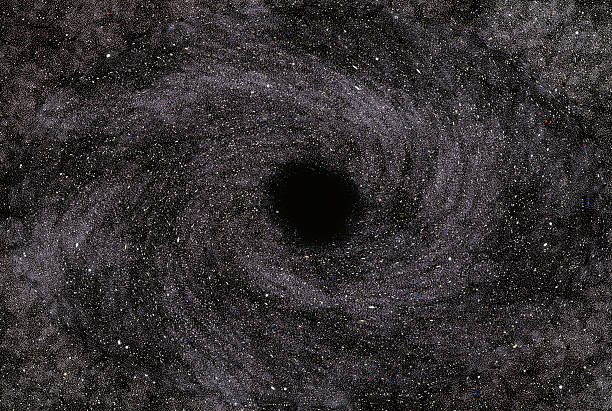
The defining feature of a black hole is the event horizon, a boundary beyond which escape is impossible. This is not because black holes are “vacuum cleaners” sucking in everything nearby, but because their gravity warps space and time so severely that all possible paths lead inward.
Light itself, the fastest thing in the universe, cannot escape once it crosses the event horizon. From the perspective of physics, this means information carried by light—images, signals, evidence of events—is permanently cut off from the rest of the universe. Anything that passes this boundary becomes causally disconnected from the outside world.
This is deeply unsettling because it violates everyday expectations. In normal circumstances, light is the ultimate messenger. If something happens, light can always carry that information away. Black holes create regions of permanent silence, where events occur but can never be observed or confirmed by any external observer. They are not just dark; they are unknowable.
3. Time Slows Down Near a Black Hole in a Horrifying Way
According to Einstein’s theory of general relativity, gravity affects time. The stronger the gravitational field, the more slowly time passes relative to regions of weaker gravity. Near a black hole, this effect becomes extreme.
To a distant observer, an object falling toward a black hole appears to slow down as it approaches the event horizon. Its clocks tick more and more slowly, its motion stretches out, and its light becomes increasingly redshifted. In theory, the object never quite crosses the horizon from the observer’s point of view. It seems frozen in time, fading into darkness.
For the falling object itself, however, time proceeds normally—at least initially. This mismatch between perspectives creates a deeply disturbing reality in which time itself fractures into observer-dependent experiences. Near a black hole, the familiar idea of a single, universal “now” simply does not exist.
This distortion of time is not an illusion or a trick of perception. It is a real, measurable consequence of gravity. Black holes demonstrate that time is not a fixed backdrop to the universe, but a flexible dimension that can be stretched, slowed, and effectively broken.
4. Black Holes Can Spaghettify Objects into Thin Streams of Matter
One of the most infamous and unsettling effects associated with black holes is colloquially known as spaghettification. This occurs when an object experiences extreme tidal forces near a black hole. The gravitational pull on the part of the object closer to the black hole is much stronger than on the part farther away, causing the object to stretch lengthwise and compress sideways.
In the case of stellar-mass black holes, this process would begin well before reaching the event horizon. The stretching would intensify rapidly, pulling matter into a long, thin stream. The object’s original structure would be completely destroyed, its atoms separated and rearranged under immense forces.
What makes this terrifying is not merely the imagery, but the physics behind it. Spaghettification is a predictable outcome of known gravitational laws. It is not a rare anomaly but an expected consequence of approaching a sufficiently strong gravitational field. Black holes reveal that gravity, usually the gentlest of forces in daily life, can become unimaginably violent under extreme conditions.
5. Supermassive Black Holes Lurk at the Centers of Galaxies
Nearly every large galaxy, including our own Milky Way, hosts a supermassive black hole at its center. These objects can have masses millions or even billions of times greater than that of the Sun. Their presence is not hypothetical; it is inferred from precise observations of stars orbiting invisible central masses at extraordinary speeds.
The terrifying aspect of this fact is not that these black holes are actively consuming their galaxies—they are usually relatively quiet—but that they exist at all. Entire galaxies, containing hundreds of billions of stars, are structured around objects that are fundamentally regions of spacetime where known physics breaks down.
These black holes influence the evolution of galaxies over cosmic time. Their growth and activity can regulate star formation, shape galactic structures, and affect the distribution of matter on enormous scales. In a very real sense, the architecture of the universe is partly determined by these dark, invisible entities.
The idea that the graceful spiral of the Milky Way is anchored by something that devours light challenges comforting notions of cosmic order. Beauty and terror coexist at the largest scales, woven together by gravity.
6. Black Holes Can Merge and Shake the Fabric of Space-Time
When two black holes orbit each other, they lose energy through the emission of gravitational waves—ripples in the fabric of spacetime itself. As they spiral closer together, these waves grow stronger until the black holes finally collide and merge.
The resulting event is among the most violent in the universe. In a fraction of a second, enormous amounts of energy are released in the form of gravitational waves, briefly outshining all the stars in the observable universe combined—though this energy is carried not by light, but by distortions of spacetime.
The detection of gravitational waves from black hole mergers has confirmed a prediction made by Einstein more than a century ago. It has also revealed a universe that is far more dynamic and turbulent than previously imagined. Space itself can vibrate, stretch, and ring like a struck bell.
This is terrifying because it means the very stage on which reality unfolds is not stable or rigid. Black holes demonstrate that spacetime is an active participant in cosmic events, capable of being twisted and shaken by massive objects.
7. Black Holes May Destroy Information Forever
One of the deepest and most troubling puzzles in modern physics is the black hole information paradox. According to quantum mechanics, information about a physical system cannot be destroyed. According to classical interpretations of black holes, anything that falls into a black hole is lost forever.
This apparent contradiction strikes at the heart of physical law. If black holes truly destroy information, then one of the most fundamental principles of quantum physics is violated. If they do not, then our understanding of black holes is incomplete.
The terrifying aspect here is conceptual rather than physical. Black holes force physicists to confront the possibility that the universe does not preserve its own history. Events may occur that leave no trace, not even in principle. Cause and effect, memory and record, could simply vanish.
While many theoretical proposals attempt to resolve this paradox, no consensus yet exists. Black holes remain sites where the foundations of physics tremble, suggesting that reality may be less coherent and more fragile than we assume.
8. Falling Into a Black Hole May Reveal the Limits of Reality
At the center of a black hole lies a singularity—a region where density becomes infinite and the known laws of physics break down. General relativity predicts the existence of singularities, but it cannot describe what actually happens there.
This breakdown is not a technical inconvenience; it is a sign that our theories are incomplete. Singularities represent points where space and time themselves cease to behave in any recognizable way. Concepts such as distance, duration, and causality may lose meaning.
The terrifying implication is that black holes mark the edge of understanding. They are not just objects in the universe; they are boundaries of knowledge. If anything falls into a singularity, it enters a realm that cannot be described by current physics, and perhaps cannot be described at all.
Black holes thus confront humanity with intellectual humility. No matter how advanced our theories become, there may always be regions of reality that resist explanation, places where the universe keeps its deepest secrets.
9. Black Holes Can Grow to Enormous Sizes Over Time
Black holes are not static. They can grow by accreting matter from their surroundings or by merging with other black holes. Over billions of years, this process can produce objects of staggering mass.
The existence of supermassive black holes early in the universe poses a significant challenge to astrophysics. Some appear to have grown to enormous sizes in a relatively short cosmic time, pushing the limits of known growth mechanisms.
This rapid growth is terrifying because it suggests that under the right conditions, black holes can dominate their environments with astonishing efficiency. Given enough time and material, gravity alone can build structures that dwarf entire star systems.
Black holes remind us that the universe is not static or gentle. It is a place where extreme outcomes are not just possible, but inevitable given sufficient scale and time.
10. Black Holes Will Outlive Almost Everything in the Universe
Perhaps the most haunting fact about black holes is their longevity. According to theoretical predictions, black holes can slowly lose mass through a process known as Hawking radiation. However, for stellar-mass and larger black holes, this process is unimaginably slow.
Long after stars have burned out, galaxies have faded, and the universe has grown cold and dark, black holes may remain as some of the last significant structures in existence. They are, in a sense, the ultimate survivors—monuments to gravity’s dominance over cosmic history.
This paints a bleak but fascinating picture of the far future. The universe may end not with explosions or collapse, but with quiet evaporation, as black holes slowly dissipate over timescales that dwarf the current age of the cosmos.
The terror here is existential. Black holes force us to confront the long-term fate of the universe and our own impermanence within it. They are reminders that time, on cosmic scales, is vast beyond comprehension, and that even the most dramatic objects eventually fade into silence.
Conclusion: Why Black Holes Terrify Us So Deeply
Black holes are terrifying not because they are malicious, but because they are honest expressions of physical law. They show what happens when gravity is allowed to operate without restraint, when mass and energy are concentrated to their ultimate limits.
They challenge intuition, fracture time, erase information, and mark the edges of understanding. In doing so, they reveal a universe that is both elegant and unforgiving, governed by principles that do not bend to human comfort.
Yet there is also a strange beauty in this terror. By studying black holes, humanity pushes its understanding to the brink, learning not only about the cosmos, but about the nature of knowledge itself. Black holes frighten us because they remind us that the universe is deeper, stranger, and more powerful than we ever imagined—and that we are brave enough to keep looking anyway.