Space has always belonged to both science and imagination. For thousands of years, we have filled the night sky with stories—gods, monsters, prophecies, destinies. In modern times, cinema, television, novels, and internet folklore have replaced ancient myths with new ones. Exploding starships roar through vacuum. Astronauts freeze solid in seconds. Black holes devour everything like cosmic vacuum cleaners.
But the real universe is far more fascinating than fiction.
The danger of space myths is not merely that they are wrong. It is that they distort our understanding of how the cosmos truly works. And the truth—backed by physics, astronomy, and decades of exploration—is often more astonishing than the misconception.
Here are ten of the most common myths about space that everyone needs to stop believing, along with the scientific reality that replaces them.
1. There Is No Gravity in Space
One of the most persistent myths is that astronauts float in orbit because there is no gravity in space. We call it “zero gravity,” and movies often show characters drifting weightlessly as if gravity has somehow been switched off.
In reality, gravity is everywhere.
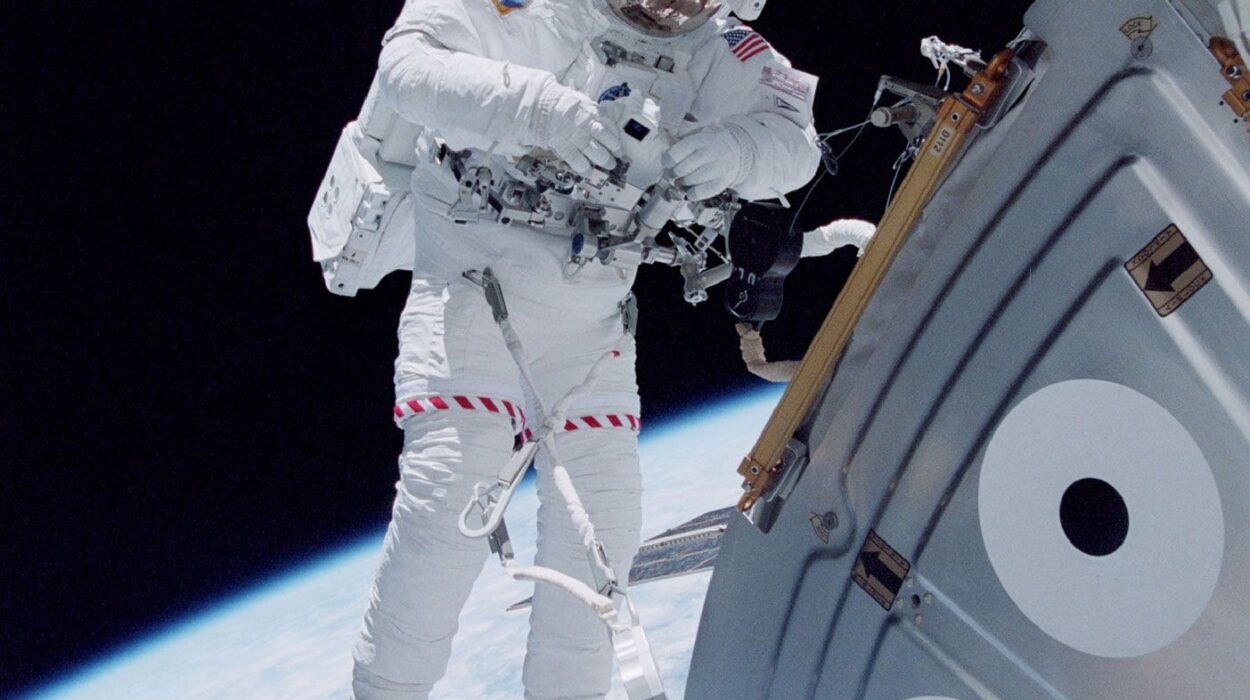
The International Space Station orbits Earth at an altitude of about 400 kilometers. At that height, Earth’s gravitational pull is still about 90 percent as strong as it is on the surface. Astronauts are not floating because gravity is absent. They are floating because they are in continuous free fall.
Imagine throwing a ball forward. It falls toward the ground due to gravity. Now imagine throwing it so fast that as it falls, the Earth curves away beneath it. If you throw it fast enough, it keeps falling around the Earth instead of into it. That is orbit.
Astronauts and the space station are falling together around Earth. Because everything is accelerating downward at the same rate, there is no normal force pressing astronauts against the floor. This creates the sensation of weightlessness.
Gravity extends infinitely, though it weakens with distance. The Moon is held in orbit by Earth’s gravity. Earth is held in orbit by the Sun’s gravity. Even galaxies interact gravitationally across millions of light-years.
Space is not a place without gravity. It is a place where gravity governs everything.
2. The Sun Is Yellow
Ask someone to draw the Sun, and they will likely color it bright yellow. Children’s books and weather icons reinforce this image.
But the Sun is not actually yellow.
The Sun emits light across the visible spectrum. When measured outside Earth’s atmosphere, its light appears essentially white. The yellowish appearance we see from the ground is due to Earth’s atmosphere scattering shorter blue wavelengths of light, especially when the Sun is lower in the sky.
The same scattering effect makes the sky appear blue and sunsets appear red or orange. In space, without atmospheric filtering, the Sun shines white.
This might seem like a minor correction, but it reflects something deeper: our perception of the universe is shaped by our environment. What we see is not always what truly is.
3. Space Is Completely Empty
Space is often described as a perfect vacuum, utterly empty and devoid of matter. While it is far emptier than anything we experience on Earth, it is not truly empty.
Interplanetary space contains stray atoms, mostly hydrogen. The space between stars contains gas and dust known as the interstellar medium. Even the vast voids between galaxies contain sparse particles and radiation.
More profoundly, quantum physics tells us that empty space is never truly empty. Quantum fluctuations cause particles and antiparticles to momentarily appear and disappear in what we call the vacuum. These fluctuations have measurable consequences, such as the Casimir effect.
Space is incredibly sparse compared to Earth’s atmosphere, but it is not nothingness. It is a thin, dynamic medium filled with particles, fields, and radiation.
4. You Would Instantly Explode or Freeze in Space
Science fiction frequently depicts characters exposed to space instantly freezing solid or explosively bursting apart.
Neither is accurate.
If a human were suddenly exposed to the vacuum of space without a suit, the lack of pressure would cause gases in the body to expand. This would be extremely dangerous and likely fatal without rapid rescue. However, you would not explode like a balloon. Human skin is strong and elastic enough to contain internal tissues.
You would also not freeze instantly. Space is cold, but temperature transfer requires contact with matter. In vacuum, heat loss occurs primarily through radiation, which is relatively slow. You would lose consciousness from lack of oxygen within about 10 to 15 seconds before freezing became a concern.
The real dangers of space exposure are hypoxia, decompression, and radiation—not cinematic explosions or immediate ice statues.
Reality is harsh enough without exaggeration.
5. The Great Wall of China Is Visible from Space
This myth has been repeated so often that many accept it as fact. The Great Wall of China is long, so surely astronauts can see it from orbit, right?
Not with the naked eye under normal conditions.
The wall is relatively narrow and made of materials that blend into the surrounding landscape. From low Earth orbit, astronauts can see cities, highways, and large structures—especially at night when illuminated—but the Great Wall is not easily distinguishable without magnification.
This myth likely persists because it feels poetic: a human-made structure so grand that it can be seen from space. But the truth highlights something even more remarkable. Earth from orbit shows sprawling cities and environmental changes that reveal humanity’s impact on the planet.
The wall may not be visible unaided, but our influence on Earth certainly is.
6. Black Holes Suck Everything In Like Cosmic Vacuum Cleaners
Black holes are often portrayed as unstoppable monsters devouring everything nearby. The idea suggests that if the Sun were replaced by a black hole of equal mass, Earth would be instantly sucked in.
That is not how gravity works.
A black hole’s gravitational pull depends on its mass, not on its nature as a black hole. If the Sun were replaced by a black hole with the same mass, Earth would continue orbiting almost exactly as it does now. The only difference would be the absence of sunlight and heat.
Black holes do not roam space randomly consuming planets. They influence objects primarily when those objects venture very close to their event horizon.
Yes, near a black hole gravity becomes extreme. Tidal forces can stretch objects in a process called spaghettification. But from a safe distance, a black hole behaves gravitationally like any other object of equal mass.
The terror of black holes lies in their physics, not in exaggerated suction powers.
7. The Seasons Are Caused by Earth’s Distance from the Sun
Many people believe that summer occurs when Earth is closer to the Sun and winter when it is farther away.
In reality, Earth’s seasons are caused by its axial tilt of about 23.5 degrees.
As Earth orbits the Sun, this tilt causes different hemispheres to receive varying angles of sunlight throughout the year. When the Northern Hemisphere tilts toward the Sun, it experiences summer. When it tilts away, it experiences winter.
Interestingly, Earth is actually slightly closer to the Sun in early January than in July. Yet January is winter in the Northern Hemisphere.
Seasons are not about distance. They are about angle and daylight duration.
This misconception reveals how intuitive reasoning can fail when applied to cosmic mechanics.
8. The Moon Has a Dark Side That Never Sees Sunlight
The phrase “dark side of the Moon” suggests a permanent hemisphere shrouded in eternal darkness.
In truth, the Moon is tidally locked to Earth. This means it rotates on its axis at the same rate it orbits Earth. As a result, we always see the same lunar hemisphere from Earth.
But both sides of the Moon receive sunlight. The far side experiences day and night just like the near side. It is not perpetually dark; it is simply hidden from our view.
When spacecraft first photographed the far side, they revealed a rugged, cratered landscape distinct from the smoother near side.
The Moon does not have a dark side in terms of light. It has a far side in terms of perspective.
9. Asteroids Frequently Threaten Earth with Extinction
Dramatic headlines and disaster movies create the impression that extinction-level asteroids are constantly on the brink of impact.
In reality, large asteroid impacts are rare.
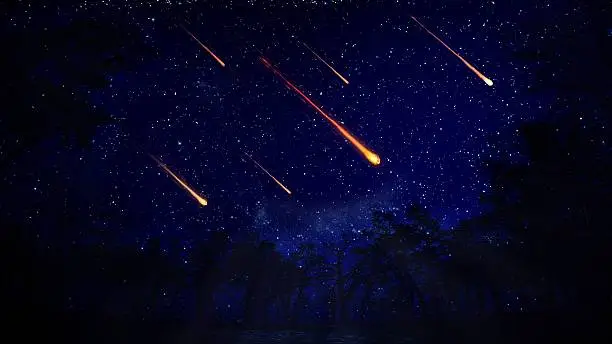
Astronomers actively monitor near-Earth objects. The vast majority of potentially hazardous asteroids have stable, well-understood orbits that pose no imminent danger. While smaller objects enter Earth’s atmosphere frequently, most burn up harmlessly.
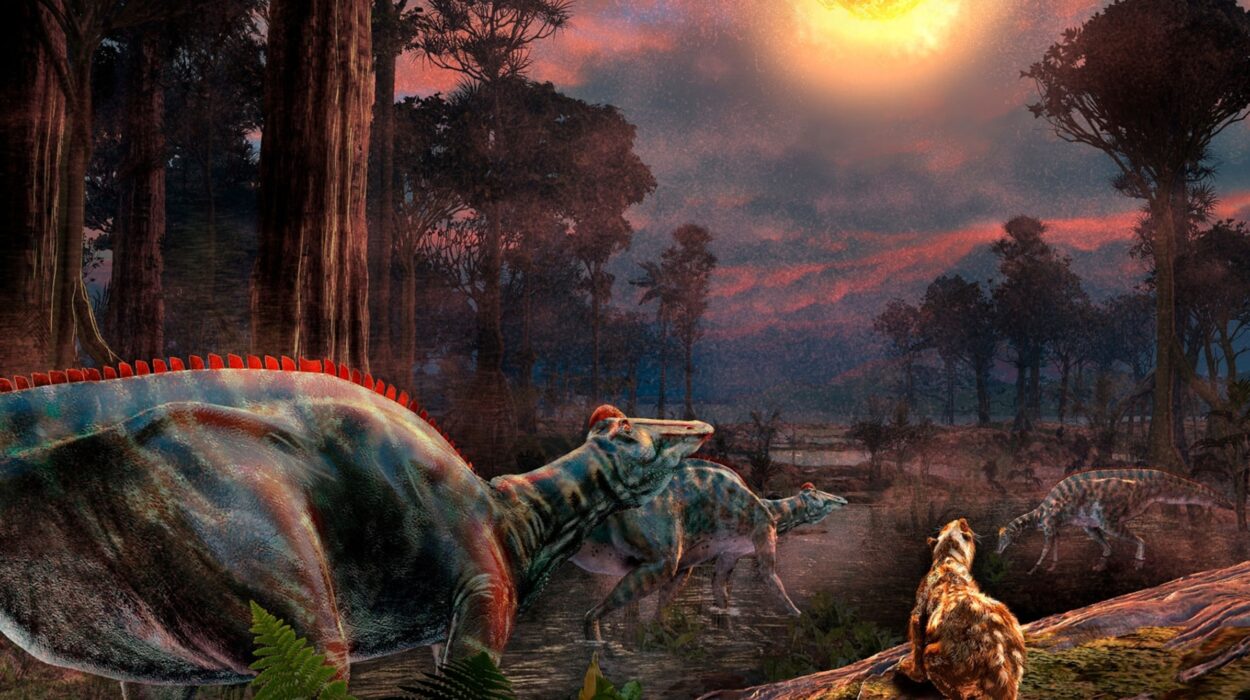
The event that contributed to the extinction of the dinosaurs approximately 66 million years ago was catastrophic—but such impacts occur on timescales of tens to hundreds of millions of years.
Planetary defense is an important scientific effort, and smaller impacts can still cause regional damage. But humanity is not under constant imminent threat from giant space rocks.
The universe is dangerous, but not recklessly so.
10. Humans Would Float Away If They Jumped on the Moon
People often imagine that low gravity on the Moon would make walking impossible, as if a simple jump would send someone drifting into space.
The Moon’s gravity is about one-sixth that of Earth. This means you weigh less and can jump higher, but gravity is still strong enough to pull you back down.
Apollo astronauts demonstrated this beautifully. They bounced in slow arcs but remained firmly grounded. Escape velocity on the Moon is about 2.38 kilometers per second—far beyond what a human could achieve by jumping.
Low gravity changes movement, balance, and muscle use. It does not eliminate gravity.
The Moon is different from Earth, but it is not a zero-gravity playground.
The Real Universe Is More Astonishing Than the Myths
Why do these myths persist? Partly because they are simple. Partly because they are dramatic. And partly because space is so distant from everyday experience that intuition often fails us.
But science invites us to replace myth with understanding.
Gravity does not vanish in orbit. The Sun shines white. Space is not empty nothingness. Black holes obey physical laws. The Moon’s far side basks in sunlight. Seasons follow the tilt of Earth’s axis. Exposure to space is deadly—but not explosive. Asteroids are monitored carefully. And low gravity does not mean no gravity.
The true universe is governed by elegant mathematical principles and astonishing physical phenomena. It does not need exaggeration to inspire awe.
When we abandon myths, we gain something greater: a clearer vision of reality. And reality, illuminated by science, is more beautiful, more subtle, and more profound than fiction ever dared to imagine.
The night sky above us is not a canvas for misconceptions. It is a laboratory of truth.
And the more accurately we understand it, the more extraordinary it becomes.