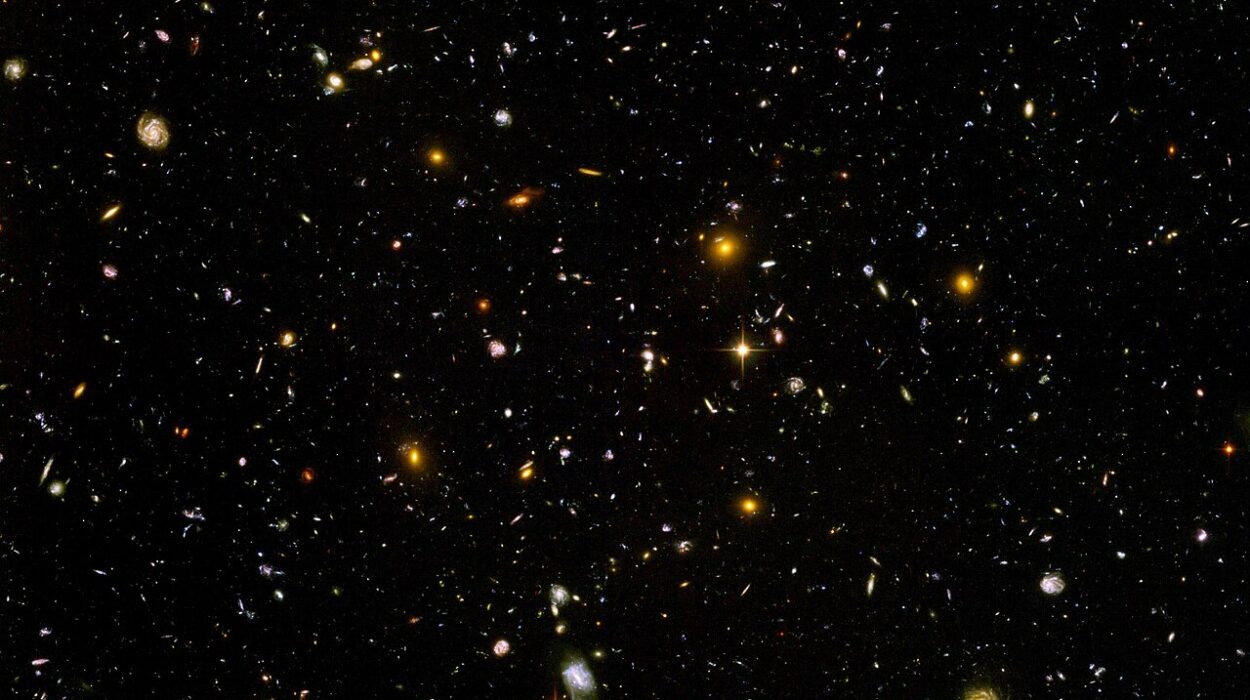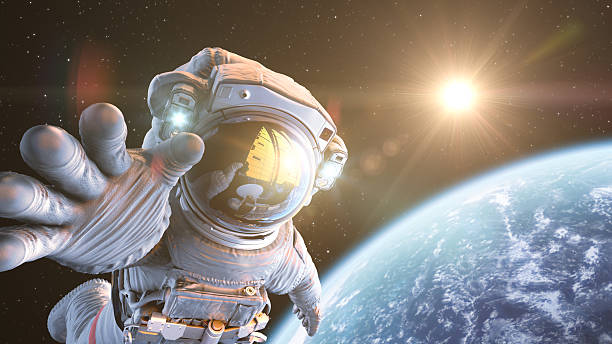
Space is breathtaking. It is silent, star-filled, infinite. It has inspired poetry, revolutions in science, and some of the most ambitious engineering projects in human history. But for all its beauty, space is also deeply hostile to the human body.
We evolved under Earth’s gravity, protected by a thick atmosphere, bathed in filtered sunlight, and surrounded by a stable ecosystem. Remove those conditions, and the body begins to change—sometimes subtly, sometimes dramatically, and sometimes in ways that are frankly unsettling.
Astronauts who spend weeks or months in orbit return to Earth with stories of wonder. They also return with stories of swollen faces, weakened bones, shrinking muscles, vision problems, and even changes in their DNA.
Here are ten scientifically documented, sometimes disturbing things that happen to the human body in space.
1. Your Face Swells and Your Legs Shrink
One of the first things astronauts notice in orbit is that they look… puffy.
On Earth, gravity constantly pulls fluids downward. Blood and other bodily fluids tend to pool slightly in the lower body. In space, where astronauts experience microgravity, that pull disappears. Fluids redistribute toward the upper body and head.
The result is what astronauts call “puffy face and bird legs.” Faces become swollen and rounder. Nasal passages feel congested, as though the astronaut has a cold. Meanwhile, legs appear thinner because they contain less fluid than they do on Earth.
This fluid shift is not merely cosmetic. It increases pressure inside the skull and affects multiple systems in the body. It is one of the earliest and most visible reminders that the human body is finely tuned to gravity—and that without it, things start to rearrange in uncomfortable ways.
2. Your Bones Begin to Dissolve
On Earth, bones are constantly being broken down and rebuilt in a delicate balance. The stress of gravity and movement signals the body to maintain bone density.
In space, that stress disappears. Without regular weight-bearing activity, bones begin to lose minerals, particularly calcium. Astronauts can lose about 1 to 2 percent of their bone density per month in microgravity, especially in weight-bearing bones like the hips and spine.
This process is similar to osteoporosis but accelerated dramatically. Calcium released into the bloodstream increases the risk of kidney stones, another unpleasant side effect of spaceflight.
Even with rigorous exercise routines aboard spacecraft such as the International Space Station, bone loss remains a significant concern for long-duration missions. The skeletal system, once sturdy and reliable, becomes fragile in the absence of gravity.
3. Your Muscles Waste Away
Muscles exist to resist gravity and generate movement. Remove gravity, and many muscles no longer need to work as hard.
In microgravity, astronauts use their legs and back muscles far less than they do on Earth. As a result, muscle fibers shrink. Strength declines. Endurance decreases.
Even though astronauts spend hours each day exercising on specialized equipment designed to simulate resistance, muscle atrophy still occurs. The body adapts efficiently to its environment—and in space, that means letting go of unnecessary strength.
When astronauts return to Earth, standing can feel exhausting. Walking can feel strange. Their muscles must relearn how to function under gravity’s constant pull.
4. Your Vision Can Blur Permanently
One of the most concerning discoveries in recent years involves changes in astronauts’ vision during long-duration spaceflight.
The fluid shift toward the head increases pressure inside the skull. This can affect the shape of the eyeball and the optic nerve. Some astronauts experience flattening of the back of the eye, swelling of the optic disc, and changes in visual acuity.
This condition is now referred to as Spaceflight-Associated Neuro-ocular Syndrome. For some astronauts, vision becomes farsighted. Reading small print becomes difficult. In certain cases, changes may persist even after returning to Earth.
The idea that simply living in space can reshape the human eye is both fascinating and unsettling. It highlights how deeply gravity influences even our most delicate anatomy.
5. You Grow Taller—Temporarily
It sounds like a superpower, but it is actually slightly grotesque.
On Earth, gravity compresses the spine. The discs between vertebrae are constantly under pressure. In space, that compression disappears. The spinal discs expand.
Astronauts can grow up to several centimeters taller in orbit. Their spines lengthen. But this stretching can cause back pain, especially in the early days of a mission.
When astronauts return to Earth, gravity compresses their spines again, and they shrink back to their normal height.
It is a vivid reminder that even our skeletons are shaped by the invisible force of gravity.
6. Your Immune System Weakens
The immune system does not function normally in space.
Studies have shown that certain immune cells become less responsive in microgravity. The body’s ability to fight infections may decline. Viruses that lie dormant in the body, such as herpes viruses, have been observed to reactivate in astronauts during missions.
The stress of spaceflight, radiation exposure, altered sleep cycles, and confined living conditions likely contribute to immune changes.
In the closed environment of a spacecraft, even minor infections can pose serious risks. The immune system, evolved to function on Earth, struggles in orbit.
For future long missions to Mars or beyond, understanding and counteracting immune suppression will be critical.
7. Your Gut Bacteria Change
Inside every human body lives a vast community of microbes collectively known as the microbiome. These bacteria play essential roles in digestion, immunity, and overall health.
Spaceflight alters the microbiome. Changes in diet, stress, radiation exposure, and microgravity all influence microbial populations.
Research involving astronauts has shown shifts in gut bacterial composition during missions. While not necessarily harmful in the short term, these changes could affect digestion, nutrient absorption, and immune function during longer journeys.
Even the invisible ecosystems within us are sensitive to the alien environment of space.
8. You Are Bombarded by Radiation
Earth’s magnetic field and atmosphere shield us from most harmful cosmic radiation. In low Earth orbit, astronauts are partially protected, but they still receive significantly higher radiation doses than people on Earth.
Beyond Earth orbit—on missions to the Moon or Mars—radiation exposure would be far greater. Galactic cosmic rays and solar particle events can damage DNA, increasing cancer risk and potentially affecting the central nervous system.
Radiation can break molecular bonds and cause mutations. The long-term health consequences of extended deep-space missions remain uncertain.
Space is not just empty vacuum. It is filled with high-energy particles traveling at near-light speeds, capable of passing through human tissue and leaving microscopic trails of damage.
9. You Feel Constant Nausea and Disorientation
When astronauts first enter microgravity, many experience space motion sickness.
The inner ear contains structures that detect motion and orientation relative to gravity. In microgravity, these signals conflict with visual cues and bodily sensations. The brain struggles to adapt.
Symptoms can include nausea, vomiting, dizziness, and headaches. Some astronauts feel as though they are tumbling even when they are still.
Eventually, the brain recalibrates and adapts to weightlessness. But upon returning to Earth, the process reverses. Standing upright again can trigger dizziness and balance problems.
The simple act of knowing which way is up becomes complicated when up and down lose meaning.
10. Your Heart Changes Shape
The heart is a muscle, and like other muscles, it responds to changes in workload.
In microgravity, the heart does not have to pump as forcefully to move blood upward against gravity. Over time, the heart muscle can become slightly smaller and more spherical in shape.
Blood volume decreases as the body adjusts to fluid shifts. Upon return to Earth, astronauts may experience orthostatic intolerance, meaning they feel lightheaded or faint when standing because their cardiovascular system struggles to readjust.
The organ that sustains life subtly reshapes itself in response to weightlessness.
The Fragility Beneath the Spacesuit
The human body is extraordinary. It can adapt to deserts, mountains, polar ice, and deep oceans. But space is different. It strips away gravity, protection, and familiarity.
Without constant countermeasures—exercise, careful diet, shielding, medical monitoring—the body begins to deteriorate in microgravity.
Yet despite all these gross and unsettling changes, astronauts continue to venture into orbit. They endure swollen faces, weakened bones, radiation exposure, and disorientation for the sake of exploration and discovery.
Their experiences teach us something profound: life is exquisitely tuned to Earth. Gravity, atmosphere, magnetic field—these are not background conditions. They are active participants in our biology.
As humanity prepares for longer missions to the Moon, Mars, and perhaps beyond, understanding these bodily changes is not merely academic. It is essential for survival.
Space is beautiful. Space is inspiring. But space does not care about human comfort.
And when we leave Earth behind, our bodies remind us—sometimes in unpleasant ways—just how much we belong to this small blue planet.