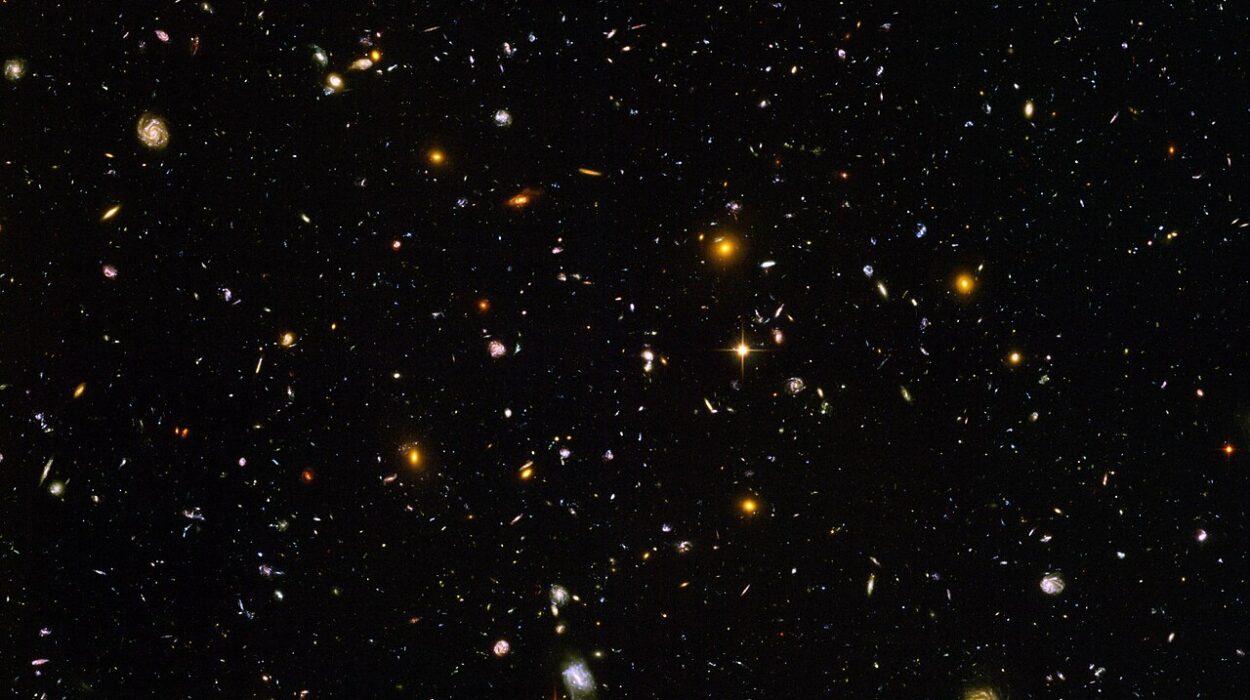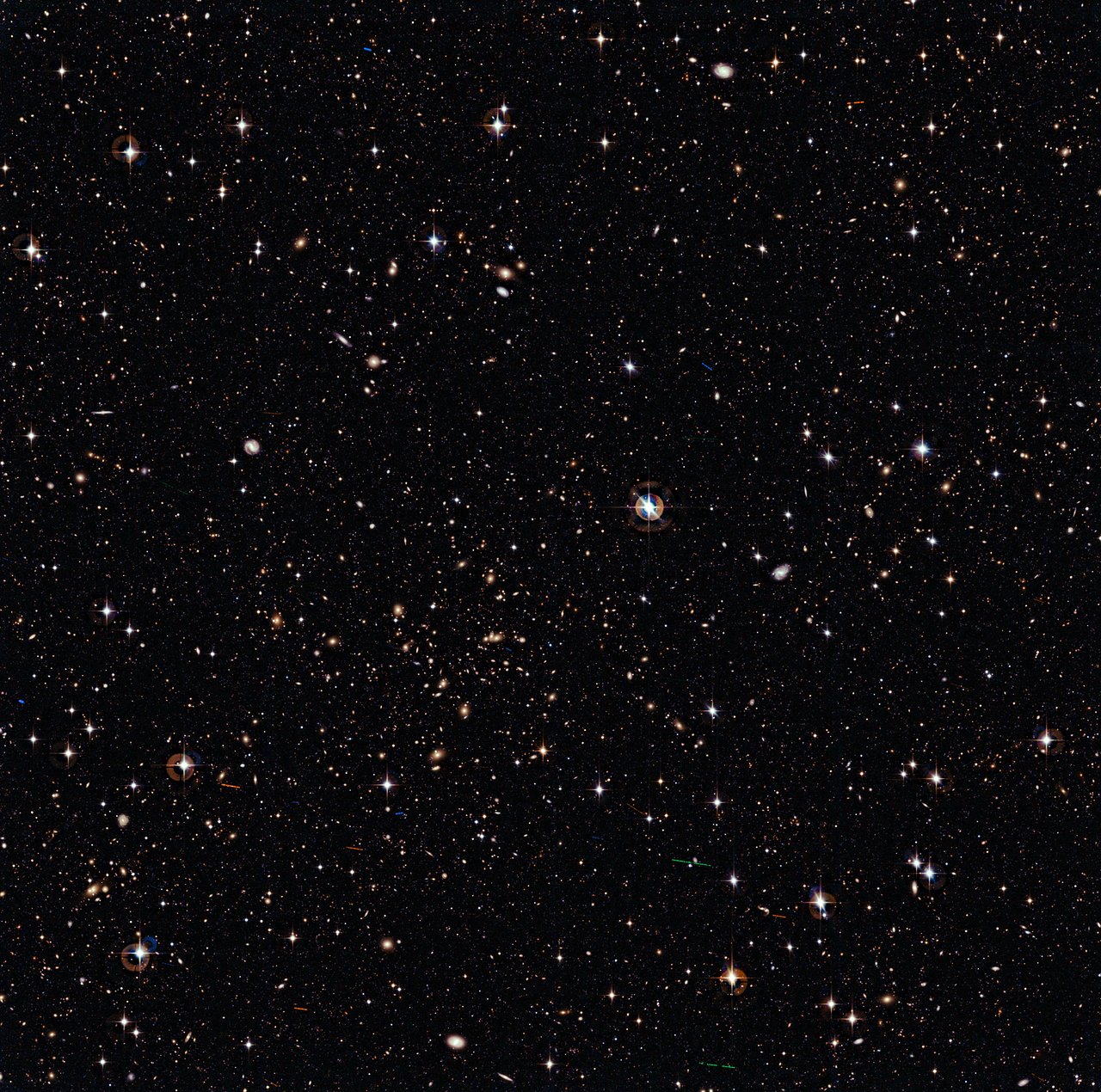
Between the glowing islands of galaxies lies a realm so vast and quiet that it almost feels unreal. When we look at the night sky, we see stars scattered like sparks on black velvet. Telescopes extend that vision to reveal galaxies, each a city of billions of suns. Yet the deeper truth is unsettling: most of the universe is not filled with light or matter but with darkness and emptiness. The space between galaxies, often called the cosmic void or intergalactic medium, is not just empty distance. It is a domain with its own physics, its own history, and its own dark truths. These truths challenge our sense of presence and force us to confront how small and fragile our luminous islands really are.
What follows are fifteen dark truths about the void between galaxies. They are not myths or poetic inventions but conclusions drawn from observation, theory, and experiment. They are emotionally unsettling because they speak of isolation, erosion, and time on scales that mock human experience. They are scientifically accurate because they arise from modern cosmology and astrophysics. Together, they reveal that emptiness is not nothing. It is a powerful actor in the cosmic story.
1. The Void Is the Dominant Feature of the Universe
The first dark truth is simple and brutal: galaxies are rare. What we see as a crowded sky is actually a sparse scattering of matter in an ocean of emptiness. On the largest scales, matter forms filaments and clusters, leaving enormous regions almost completely devoid of galaxies. These voids can stretch for hundreds of millions of light-years.
This means that the universe is structured more by absence than by presence. The familiar luminous shapes of galaxies are like foam on the surface of a vast, dark sea. If you could map the universe from afar, the glowing regions would look like thin threads, while the dominant feature would be the enormous empty bubbles between them.
Scientifically, this structure arises from the way matter clumped together under gravity after the early universe. Tiny density differences grew into walls and filaments of galaxies, leaving behind deep cavities. Emotionally, this truth unsettles us because it shows that what we call “the universe” is mostly a place where nothing shines and almost nothing exists.
2. The Void Is Not Truly Empty
The second dark truth corrects the first. The void may look empty, but it is not nothing. Between galaxies lies the intergalactic medium, an extremely thin soup of particles, mostly hydrogen and helium, left over from the Big Bang. There are also stray atoms torn from galaxies, faint radiation fields, and elusive particles like neutrinos drifting almost undisturbed.
In a typical void, there may be only a few atoms per cubic meter. Compared to Earth’s atmosphere, this is emptiness beyond imagination. Yet even this thin presence matters. These particles absorb and emit radiation, trace the distribution of matter, and record the history of cosmic expansion.
The dark emotional twist here is that even the most silent places are not free from history. The void still carries the imprint of creation. It is a fossil record written not in rock but in rare atoms and fading light.
3. Darkness Is Not the Same as Blackness
When we imagine the space between galaxies, we picture perfect blackness. But scientifically, the void is filled with light, just not light we can see easily. There is the cosmic microwave background, the afterglow of the Big Bang, bathing the void in faint radiation at a temperature just above absolute zero. There are also streams of invisible radio waves, X-rays, and gamma rays passing through.
This means the void is more like a dimly glowing fog than a pitch-black abyss. Its darkness is not the absence of light but the weakness of it. The photons there are cold, ancient, and stretched by cosmic expansion.
The dark truth is that even in the most empty places, the universe cannot forget its violent birth. The faint radiation filling the void is a whisper from a time when everything was crowded into a single, hot point.
4. Expansion Is Strongest Where Matter Is Weakest
One of the most unsettling truths is that cosmic expansion reveals itself most clearly in empty regions. Galaxies inside clusters feel strong gravitational pull toward each other, slowing their separation. In voids, where gravity is weak, space expands more freely.
This makes the voids grow larger over time. They push matter outward, making dense regions denser and empty regions emptier. In this way, emptiness actively shapes the universe’s structure.
The emotional darkness here lies in the idea that absence has power. The void does not merely wait; it expands. It stretches distances and isolates galaxies more and more, turning the universe into a set of lonely archipelagos drifting apart in a growing sea.
5. Dark Energy Rules the Void
Dark energy, the mysterious driver of accelerated cosmic expansion, exerts its influence most clearly where there is little matter to resist it. In galaxy clusters, gravity still fights back. In voids, dark energy dominates.
This means the void is the stage on which the future of the universe will be written. As expansion accelerates, galaxies will recede from one another faster and faster. Eventually, distant galaxies will slip beyond the observable horizon, erased from view by the swelling void.
The dark truth is that emptiness is the ally of dark energy. The less matter there is, the more effectively the universe can tear itself apart.
6. The Void Erases Cosmic Memory
Light takes time to travel. When we look at distant galaxies, we see them as they were billions of years ago. But as expansion accelerates, there will come a time when light from distant regions can no longer reach us. The void will grow so large that it will swallow signals.
Future observers in a distant galaxy will see only their local group of stars. The rest of the universe will be hidden beyond an ever-expanding horizon.
The emotional darkness of this truth lies in the idea of cosmic amnesia. Knowledge of the larger universe will fade not because of ignorance but because of geometry. The void will cut off communication between islands of matter, leaving each alone with its own small patch of reality.
7. Voids Contain the Universe’s Most Pristine Matter
Because galaxies are places of violence, where stars explode and black holes stir chaos, matter inside them is constantly being processed and enriched with heavy elements. In contrast, the void preserves matter close to its original state.
Hydrogen and helium atoms in voids have often remained untouched since the first minutes after the Big Bang. They drift quietly, rarely colliding, rarely changing.
The dark truth here is not destruction but stagnation. The void is a museum of primordial material, frozen in simplicity while galaxies blaze with complexity. It is a reminder that most of the universe never participated in the grand chemical evolution that led to planets and life.
8. Isolation Is Written into the Geometry of Space
Galaxies in clusters interact, merge, and influence one another. Galaxies near voids feel less gravitational pull from neighbors and evolve differently. Their star formation histories, shapes, and motions are shaped by proximity to emptiness.
This shows that isolation is not just a social metaphor; it is a physical condition. Where matter is sparse, interactions are rare. Structures grow slowly.
The emotional weight of this truth is that loneliness has a cosmic version. Entire regions of the universe are condemned to minimal interaction, their galaxies drifting in relative solitude compared to those in crowded cosmic cities.
9. The Void Is Cold Beyond Human Intuition
Temperature in space is defined by radiation and particle motion. In voids, particles are so sparse that they rarely collide, and radiation is stretched to long wavelengths by expansion. The effective temperature approaches just a few degrees above absolute zero.
This cold is not like winter cold. It is a near-total absence of thermal motion. Matter there is almost motionless, not because of peace but because of lack of interaction.
The dark truth is that the void is a freezer of unimaginable scale, preserving particles in near-immobility while stars burn themselves out elsewhere.
10. Time Feels Different in Emptiness
In regions with strong gravity, time runs more slowly relative to regions with weaker gravity. This means that time flows slightly faster in voids than in dense clusters.
The effect is tiny, but real. It means that clocks placed in deep cosmic voids would tick a little faster than clocks in galaxy clusters.
The unsettling implication is that emptiness is not just spatial but temporal. The void is not only where matter thins; it is where time itself subtly accelerates.
11. The Void Hides Most of the Universe’s Volume
If one measures the universe by volume rather than by mass or light, voids dominate. Most cubic kilometers of space lie far from any galaxy.
This means that most of existence is experienced by no star, no planet, and no life. It is a silent domain where nothing observes itself.
The emotional darkness here is existential. If experience requires structure, then most of the universe is blind and mute, a realm without witnesses.
12. The Void Shapes the Cosmic Web
The distribution of voids and filaments forms what cosmologists call the cosmic web. Galaxies trace the edges of empty regions like soap bubbles touching.
This structure arises naturally from gravity acting on early density fluctuations. Voids expand and push matter into walls and threads.
The dark truth is that emptiness is the sculptor of form. The beautiful architecture of the universe is carved not only by matter but by the pressure of absence.
13. The Void Is a Graveyard of Lost Light
Light from distant galaxies travels for billions of years. As the universe expands, that light is stretched to longer wavelengths, losing energy. Eventually, it becomes so redshifted that it blends into the background and effectively disappears from view.
In this sense, the void is a graveyard for photons. It absorbs not by swallowing but by diluting.
The emotional power of this truth lies in the idea that even light, the fastest thing in existence, can be worn down by emptiness and time.
14. Life Is Almost Impossible in the Void
Life as we know it depends on stars, heavy elements, and stable energy sources. Voids contain almost none of these. There are few stars, almost no planets, and little chemical complexity.
While it is not logically impossible for life to exist in extreme conditions, the void offers almost no pathways for it to arise. It lacks the furnaces of stars and the raw materials of chemistry.
The dark truth is that most of the universe is hostile not through violence but through indifference. It does not destroy life; it simply never allows it to begin.
15. The Void Is the Universe’s Future
As cosmic expansion accelerates, galaxies will move farther apart. Clusters will become isolated islands. The voids between them will grow and merge. In the far future, most galaxies will be alone in vast darkness, unable to see others.
Stars will burn out. Matter will decay or collapse into remnants. The universe will become a set of lonely systems surrounded by endless emptiness.
The final dark truth is that the void is not just what lies between galaxies now. It is what will come to dominate everything. Emptiness is not a temporary condition but a destiny written into the laws of expansion and energy.
The Emotional Meaning of Cosmic Emptiness
These fifteen truths paint a picture that is scientifically grounded and emotionally unsettling. The void is vast, cold, expanding, and powerful. It erases memory, isolates structures, and dominates volume. It is not evil or conscious, yet it shapes the universe more than any single galaxy or star.
Yet there is another side to this darkness. The very fact that we can know these truths means that light, thought, and understanding have arisen in a universe mostly made of emptiness. Our small, bright island of matter has learned to map the dark sea around it.
The void between galaxies is not merely a region of nothingness. It is the background against which everything else shines. Its dark truths do not diminish the universe’s beauty; they deepen it. They show that light is precious because it is rare, that structure is meaningful because it stands against emptiness, and that knowledge is powerful because it arises in a cosmos that could so easily have been silent forever.