Every computer, no matter how advanced, shares a humble vulnerability: parts can fail. In ordinary machines, a broken component can freeze a program or erase progress. Quantum computers, often portrayed as fragile marvels balanced on the edge of possibility, are no different. They too can falter mid-task, sometimes in a way that brings everything to a sudden stop. In one particular kind of quantum computer, the problem is surprisingly literal. The machine can simply lose the atoms it depends on to think.
This is the challenge that confronted scientists at Atom Computing, a US-based firm working with quantum computers built from neutral atoms. These atoms, carefully trapped and manipulated with lasers, serve as qubits, the fundamental units of quantum memory and processing. If one atom vanishes during a calculation, the entire process can collapse. A missing qubit is not a small error that can be ignored; it is a hole in the machine’s logic.
Now, in research published in the journal Physical Review X, the team has shown something remarkable. They have demonstrated a quantum computer that can notice when one of its atoms disappears and repair itself while the computation is still running. Instead of stopping, restarting, or giving up, the machine quietly replaces what it has lost and carries on.
The Vanishing Act Inside a Quantum Computer
To understand why this matters, it helps to picture how these quantum computers work. In the neutral atom approach, each qubit is an individual atom with equal numbers of protons and electrons. These atoms are not held in physical containers. Instead, they are suspended in space by focused laser beams known as optical tweezers. The tweezers act like invisible hands, holding each atom in exactly the right place.
But this arrangement is not perfect. From time to time, an atom slips free from its laser trap and disappears from the system altogether. When this happens in the middle of a calculation, the consequences are severe. The quantum computer cannot simply ignore the loss. Its carefully arranged structure depends on every qubit being present, and a single missing atom can cause the entire calculation to grind to a halt.
This vulnerability has long been a practical obstacle. Even if the underlying quantum logic is sound, the physical reality of atoms with limited lifetimes imposes strict limits on how long a computation can run. Each lost atom shortens the machine’s usable time, bringing an ambitious calculation to an early end.
A New Way to Organize a Fragile World
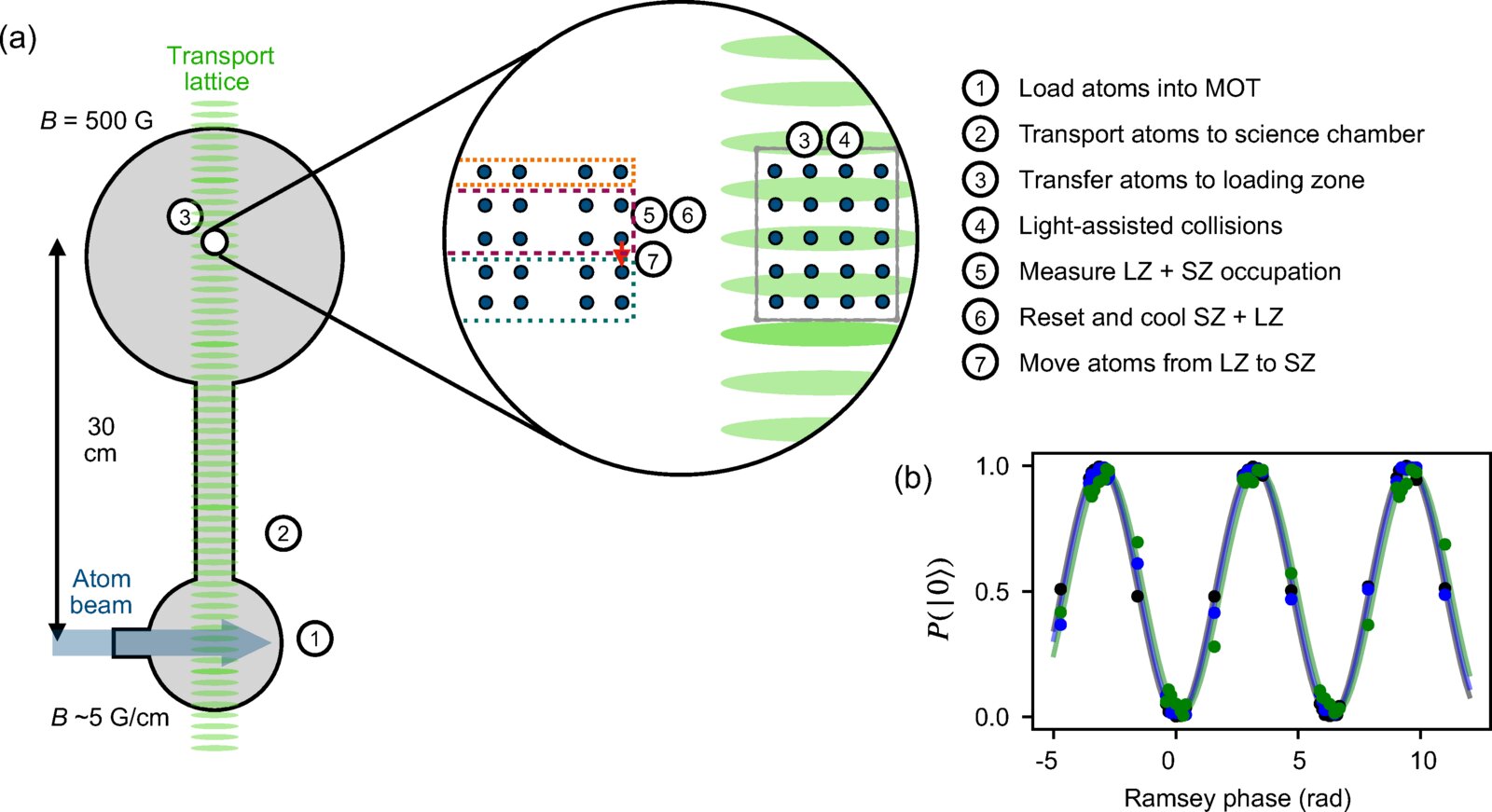
Rather than trying to prevent atoms from ever being lost, the Atom Computing team approached the problem from a different angle. They redesigned the internal layout of the quantum computer itself. Instead of packing all the atoms into one crowded region, they divided the machine into five distinct zones, each with a specific role.
At the heart of the system is the Register, where qubits are stored. Nearby is the Interaction Zone, the place where calculations actually happen as atoms influence one another. There is also a Measurement Zone, where errors are checked using special helper atoms known as ancillas. Beyond these active areas lies a Storage Zone, which serves as a reservoir of spare atoms, ready to replace those that are lost. Finally, a Loading Zone brings in new atoms from outside the machine to replenish the reservoir.
This separation changes how failure unfolds. If an atom disappears in one part of the computer, the rest of the qubits remain unaffected. The loss becomes localized rather than catastrophic. The machine no longer behaves like a single delicate structure that collapses when one piece is removed. Instead, it becomes a system with compartments, capable of absorbing damage without losing everything.
Teaching a Quantum Computer to Notice Its Own Injuries
The real breakthrough, however, goes beyond clever organization. The researchers enabled the quantum computer to detect when a qubit goes missing and respond immediately. When the system notices that an atom has vanished, it does not pause to wait for human intervention. It reaches into the Storage Zone, selects a spare atom, and moves it into the empty spot.
This replacement atom is not immediately ready to work. It must first be prepared, or reinitialized, by resetting it to its ground state, the lowest-energy state from which quantum operations can begin. Once this reset is complete, the atom can take on the role of the lost qubit without disturbing the ongoing calculation.
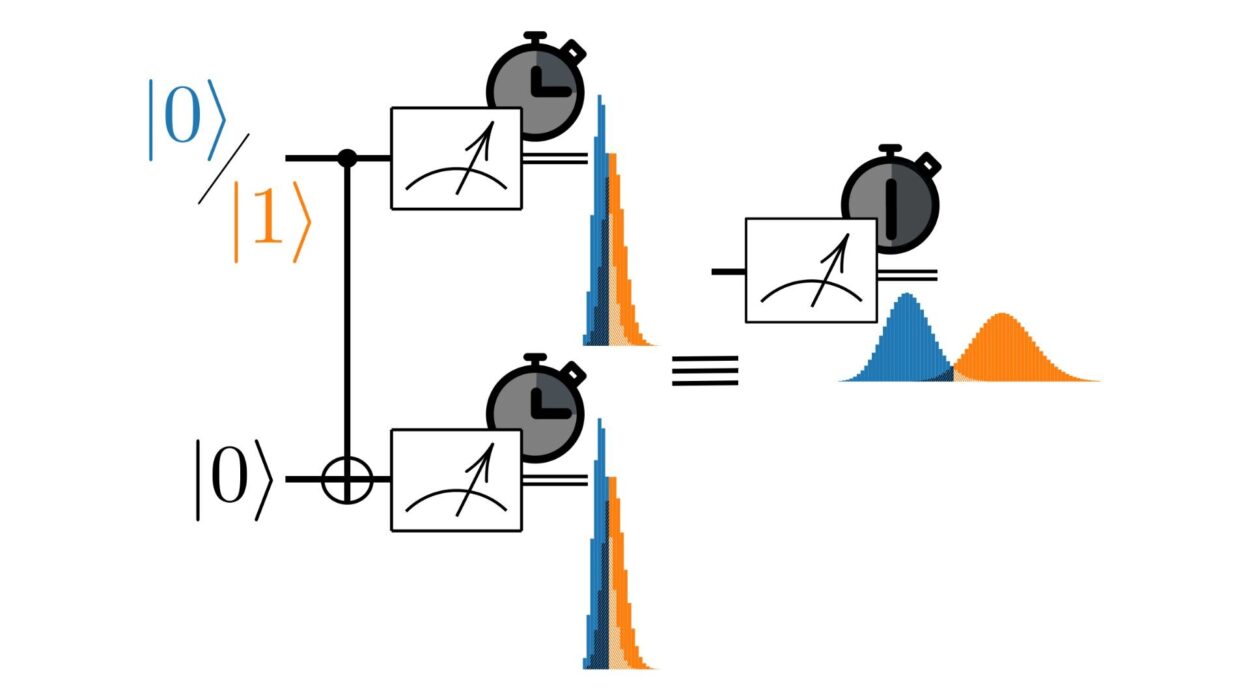
The same idea applies to the ancillas in the Measurement Zone. These helper atoms are used to check for errors, and after they have performed their task, they too can be recycled. By resetting them to their ground state, the system makes them available for reuse, rather than discarding them as spent resources.
The result is a quantum computer that treats atoms not as disposable components but as renewable ones. Losses still happen, but they no longer define the machine’s limits.
Watching the Repair Happen in Real Time
To show that this self-repairing approach truly works, the researchers put their system to a demanding test. They had the quantum computer run a repetition code, a process designed to check its own work for mistakes. This kind of code repeatedly verifies information, making it an ideal way to stress-test the machine’s ability to survive qubit loss.
The computer performed these checks 41 times in a row. Each time an atom was lost, the system successfully replaced it without disturbing the data being processed. The calculation continued smoothly, as if nothing had gone wrong. Without this ability to detect and repair missing atoms, the machine would have run out of usable qubits after just a few rounds.
The significance of this achievement is captured in the researchers’ own words. “We have demonstrated the ability to reinitialize and reuse ancilla atoms following a midcircuit measurement in a neutral atom quantum processor… enabling the indefinite execution of quantum circuits on a platform where qubits have an inherently limited lifetime,” wrote the research team in their paper.
The phrase “indefinite execution” stands out. It points to a future in which quantum computations are no longer tightly bound by the fragile lifetimes of their individual atoms.
Living With Loss Instead of Fearing It
There is something quietly profound about this shift. Traditional approaches to building quantum computers often focus on eliminating errors and losses as much as possible. The work from Atom Computing suggests another path. Instead of demanding perfection from each qubit, the system accepts that atoms will sometimes disappear and builds resilience into its design.
By allowing atoms to be replaced and reused on the fly, the machine adapts to its own imperfections. It becomes less like a brittle experiment and more like a functioning technology, capable of operating continuously despite the small failures that occur along the way.
This does not mean the problem is solved once and for all. The researchers are clear that there is still much work to be done to refine their system. The ability to repair lost atoms is one step in a long journey toward practical, long-running quantum computers.
Why This Research Matters
The importance of this work lies in what it changes about the conversation around quantum computing. One of the major challenges facing the field has been the limited lifetime of qubits. If a quantum computer cannot run for long without losing its basic building blocks, its usefulness is sharply constrained.
By overcoming this limitation in a neutral atom platform, the Atom Computing team has shown that qubit loss does not have to be a hard stop. A quantum computer can be designed to notice damage, respond intelligently, and keep going. This moves the technology closer to systems that can operate indefinitely, not because they never fail, but because they know how to recover.
In the broader story of quantum computing, this is a step toward machines that are not just powerful in theory, but robust in practice. It suggests a future in which quantum computers are defined not by their fragility, but by their ability to endure.
More information: J. A. Muniz et al, Repeated Ancilla Reuse for Logical Computation on a Neutral Atom Quantum Computer, Physical Review X (2025). DOI: 10.1103/v7ny-fg31