The idea is irresistible. Imagine snapping your fingers and freezing the entire world for one perfect minute. The wind halts mid-breath. A bird hangs motionless in the sky. A falling raindrop becomes a suspended crystal. The city’s noise vanishes, not because it quiets down, but because sound itself is no longer moving. Cars stop in the middle of intersections, frozen like sculptures. Flames stop flickering. Even light seems trapped, caught in the air like invisible glass.
And you—somehow—you are still awake. Still thinking. Still able to move.
For a full sixty seconds, the universe is paused. No one notices you. No one can react. No one can stop you.
It sounds like a dream of power, like a scene from science fiction or a superhero story. But if we treat the idea seriously and apply real physics, the question becomes far more fascinating—and far more terrifying.
Because “stopping time” is not like pausing a video. Time is not merely a background clock. It is woven into the structure of reality. If time truly stopped, almost everything we associate with existence would stop with it: motion, energy transfer, chemistry, biology, even light.
So what would actually happen if time could stop for one minute, while you remained able to act?
To answer, we have to take the fantasy and hold it up against the laws of physics. And when we do, the results are astonishing.
What Does It Mean to “Stop Time”?
In everyday language, stopping time means freezing everything else while you continue moving normally. But in physics, time is not separate from the universe—it is part of spacetime, the four-dimensional fabric described by Einstein’s theory of relativity. Space and time are intertwined. If time stops, spacetime itself is no longer functioning as usual.
To stop time globally would mean that every physical process in the universe halts. Atoms stop vibrating. Electrons stop moving around nuclei. Photons stop traveling. Chemical reactions freeze. Heat stops flowing. Gravity stops propagating changes. Even the electrical impulses in brains stop.
In a true “time stop,” the universe becomes a motionless statue.
But the scenario assumes something impossible: you remain conscious and mobile. That means time is still flowing for you. Your body processes continue. Your brain neurons fire. Your muscles contract. Your eyes receive information. Your heart beats. Your lungs exchange gases.
So immediately we face a contradiction. If time is stopped everywhere, it must be stopped in you as well. If it is not stopped in you, then time is not stopped everywhere.
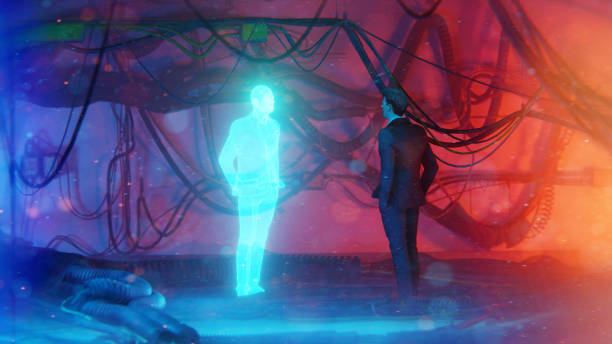
The only way the scenario makes sense is if time stops for everything else relative to you. In other words, you are placed in a region where time continues normally, while the rest of the universe becomes effectively frozen from your perspective.
Even then, physics raises brutal questions. Because if everything outside your “moving bubble” is frozen, how can you interact with it?
To move through a frozen world is not as simple as walking through an empty room. It would be like trying to walk through solidified air, through unmoving light, through motionless molecules.
Stopping time is not just a pause. It would rewrite the rules of matter itself.
The First Thing You’d Notice: Silence Beyond Silence
If time stopped, sound would vanish instantly.
Sound is not a substance—it is motion. It is pressure waves traveling through air. Molecules collide and transfer energy, creating compressions and rarefactions that your ears interpret as sound.
If time stops for the air, the molecules cannot vibrate. No vibrations means no sound waves. No sound waves means no hearing.
You could shout, but your voice would not travel. The air would not carry your words. Your vocal cords might vibrate inside your own time bubble, but the sound would slam into a wall of frozen air.
You might hear your own heartbeat through your skull. You might hear your breathing inside your body. But the world outside would be silent in a way no human has ever experienced.
Even in the deepest cave, even in the vacuum of space, soundlessness feels like absence. This would be something stranger: sound would not merely be absent, it would be impossible.
The universe would feel like it had died.
The Air Would Become an Invisible Wall
In movies, people who stop time walk freely through a frozen environment. In real physics, this is where the fantasy collapses violently.
If time stops for the air, air molecules are not moving. They are fixed in place, frozen mid-motion. Normally, air behaves like a fluid because molecules constantly move, collide, and flow around objects. But if molecular motion halts, air stops behaving like air.
It becomes something closer to a solid lattice of particles.
Try to move your hand forward. Your hand would collide with molecules that cannot move out of the way. Normally, your hand pushes air aside easily because molecules respond, accelerate, and flow around your skin. But if they are frozen, there is nowhere for them to go.
The result would be like punching a wall.
Even worse, the moment you tried to move, you would create an absurd physical problem: you would be forcing motion into a system where motion is not allowed. That would require infinite force, because the frozen air has infinite resistance in the context of “stopped time.”
So if time truly stopped for everything around you, you could not even take a step.
You would be trapped, locked in place by the frozen atmosphere, unable to move through it.
To allow movement, the time-stopping effect would need to include the air in a region around you, letting molecules move aside as you pass. That means you would need a “time bubble” surrounding you—an expanding pocket where time flows normally.
This is the first major requirement for the fantasy to work: you cannot stop time for everything and still move. You must carry time with you like a personal atmosphere.
But even that introduces terrifying consequences.
Light Would Stop, and You Would Be Blind
Now comes one of the most shocking realities: if time is stopped outside your bubble, light cannot travel.
Light is electromagnetic radiation. It moves at the speed of light, about 300,000 kilometers per second. You see because photons travel from objects into your eyes, stimulating cells in your retina. Without incoming photons, vision is impossible.
If time stops for the universe, photons freeze in place. They do not move. They do not reach you. The last photons that entered your eyes before the time stop might still be stimulating your retina for a fraction of a second, but then everything would go black.
You would be standing in perfect darkness—not because there is no light source, but because light itself cannot propagate.
If your time bubble allowed light to move within it, you might still see objects that are inside the bubble. But anything outside would be invisible because no new photons could reach you.
It would be like walking through a world where reality exists but cannot be observed.
You might see a small sphere of space around you, illuminated by whatever photons are already trapped inside your moving region. But beyond that, the world would vanish into darkness.
This means a true time stop would not look like a frozen world with visible motionless people. It would look like a black void unless your power also manipulated light in a way that makes no physical sense.
To preserve sight, the time stop would need to allow photons to travel freely into your eyes. That implies that time is not truly stopped, at least not for electromagnetic waves. But if electromagnetic waves can still propagate, then the universe is not fully frozen.
The deeper you dig, the clearer it becomes: stopping time is not a simple switch. It would require selectively stopping certain processes while leaving others running.
That is not time stoppage. That is rewriting the laws of nature.
Heat Would Stop Moving, and the World Would Become Thermally Strange
Heat is not a thing. Heat is energy transfer, usually through the motion of particles. It flows from warmer objects to cooler ones because particles collide and share energy.
If time stops, those collisions stop.
That means heat transfer stops.
A cup of coffee would not cool. A fire would not spread warmth. Your body would not lose heat to the environment. But your body also might not be able to regulate its temperature properly because sweat evaporation depends on molecular motion and air circulation.
Inside your time bubble, heat transfer would still occur. But outside, thermal processes would be frozen. The world would become a museum of temperature, with every object trapped in its last thermal state.
If you touched a frozen object, what would happen?
Normally, when you touch something cold, heat flows from your hand into it. But if the molecules in that object cannot move, they cannot absorb energy. In a literal time stop, heat exchange becomes impossible. Your hand would not be able to warm it, and it would not be able to cool your hand.
It would feel like touching a concept rather than a material.
But if your bubble allows time to resume in the object you touch, then the moment you touch it, its molecules would suddenly awaken. Heat would begin transferring violently, and you could create extreme temperature shocks.
The physics becomes increasingly unstable, like trying to mix two universes with incompatible rules.
You Could Not Breathe
Breathing depends on air movement and gas diffusion. Oxygen molecules must move into your lungs, cross into your bloodstream, and carbon dioxide must move out.
If the air outside your bubble is frozen, it cannot flow into your lungs. Diffusion stops. Even worse, the air inside your lungs would quickly become depleted of oxygen.
Within seconds, you would begin suffocating.
So if you were able to survive a time stop, your bubble would need to include not just your body but also a supply of air that continues to behave normally. The bubble must contain enough oxygen for at least one minute, and it must allow gases to circulate.
This means your bubble would need to extend outward, carrying a moving pocket of atmosphere with you like a miniature world.
But that creates another problem. If you move through the frozen air, you must push frozen air aside. The boundary between your moving air and the frozen air would be like a shockwave front, producing enormous forces.
In effect, you would be plowing through a solid wall of air at walking speed, which would be catastrophically energetic.
Even a small motion could create explosive pressure differences.
The very act of walking could become lethal.
Motion Would Become Dangerous in Ways You Cannot Imagine
Suppose, somehow, your time bubble solves all of these issues. Air moves, light enters, sound works locally, and you can breathe. Now you try to run.
In normal life, when you run, you push air aside. Air molecules move around you, creating drag. But if the world outside your bubble is frozen, the boundary between moving and frozen air becomes an extreme discontinuity. The faster you move, the more violent the interaction becomes.
At the boundary, molecules would be forced from absolute stillness into motion instantly. That is like accelerating particles from zero to high speed in an instant, which requires enormous energy.
This would generate heat, shockwaves, and potentially explosions along the surface of your bubble. The edge of your time field would behave like the front of a supersonic aircraft, except far more extreme because the “outside world” has zero time progression.
Even at walking speed, you might generate enough compression to create a destructive pressure wave. Running could produce a blast similar to a bomb.
Stopping time for one minute could turn you into a moving catastrophe, leaving a trail of destruction simply because the universe cannot smoothly handle your motion.
The physics of fluid dynamics and shock fronts would become absurd.
You might not be able to move at all without annihilating your surroundings.
Gravity Would Still Hold You, But the Universe Would Feel Unstable
Gravity is often misunderstood as a force that simply “pulls downward.” In Einstein’s view, gravity arises from curved spacetime. Objects follow paths determined by that curvature.
If time stops, what happens to gravity?
In classical Newtonian physics, gravity acts instantaneously at a distance. But in relativity, gravitational changes propagate at the speed of light. If time stopped for the outside universe, those gravitational interactions could become frozen too.
However, Earth’s gravitational field is not something that needs constant updating. It is a stable structure. Even if changes cannot propagate, the curvature already exists. So you would likely still be held to the ground.
But if all motion is frozen, then Earth itself is frozen. The planet stops rotating. The atmosphere stops circulating. The oceans stop moving. The Moon stops orbiting. Everything becomes locked.
If Earth’s rotation stopped instantly in real physics, the consequences would be apocalyptic: inertia would throw oceans and air across the surface at thousands of kilometers per hour. But in a true time stop, inertia itself is paused, so those consequences do not unfold until time restarts.
The moment time resumes, the universe would “remember” its motion. Earth would continue spinning, the atmosphere would resume its currents, and the world would roar back to life.
But if your time stop interfered with Earth’s rotation in any way, you could create unimaginable disasters.
In realistic physics, you cannot simply freeze a rotating planet without dealing with conservation of angular momentum and energy. A global pause would be like slamming the brakes on reality itself.
The forces involved would be beyond comprehension.
Fire Would Freeze Mid-Flame
A frozen candle flame would be one of the strangest sights imaginable—if you could see it.
Fire is a chemical reaction: combustion. It requires oxygen, heat, and fuel. Flames flicker because hot gases rise and turbulence shapes the reaction zone. If time stops, the chemical reaction halts instantly. The flame freezes in its exact shape.
No flicker. No movement. No smoke rising.
It would look like a sculpture made of light and color.
But there is a deeper truth: a flame is not an object. It is a process. If processes stop, fire stops existing as fire. It becomes a paused arrangement of hot gas and reacting molecules.
If you reached out to touch it, what would happen? In normal conditions, heat from the flame would burn you. But if heat transfer is frozen, it might not.
Then again, if the flame is inside your time bubble and remains active, it would burn normally. The boundary between stopped and flowing time becomes the boundary between existence and nonexistence.
A world of frozen flames would be haunting because it would feel like time itself had died, leaving only the last shape of living processes behind.
People Would Be Motionless Statues, But They Would Also Be Untouchable
The most emotionally unsettling part of stopping time would not be the physics. It would be the human stillness.
Everyone would freeze exactly as they were. A smile mid-formation. A blink half-closed. A child reaching for a parent’s hand. A stranger caught in the act of walking, one foot hovering above the ground.
It would look like the world had been turned into a museum of life.
But if time is truly stopped for them, they would not be living in any meaningful sense. Their brains would not be active. Their hearts would not beat. Their blood would not flow. They would not be aware of anything. They would not be experiencing a pause.
For them, no time would pass at all. It would be instant.
Could you touch them? If their molecules are frozen, then like the air, their bodies would be rigid beyond any known material. Their skin would not deform. Their hair would not move. They would be like statues made from matter that cannot respond to force.
If your bubble allows time to resume in whatever you touch, then the moment you grab someone’s arm, their body would begin to move through time again. Their blood would flow. Their nerves would fire. Their eyes might widen in terror as the rest of the world remains frozen.
That would be a terrifying power. It would allow you to “awaken” individuals into your moving pocket of time, dragging them into your private minute of existence while the universe remains paused.
But the consequences could be severe. Their body would suddenly be exposed to a world where air is frozen, sound does not travel, and light may not behave normally. They could suffocate instantly if not inside your air bubble. They could experience intense disorientation, panic, and potentially injury.
Stopping time would not create a harmless playground. It would create a trap.
Could You Move Objects While Time Is Stopped?
This is where many time-stop fantasies focus: you stop time, move objects around, then restart time and watch chaos unfold.
But physics again becomes merciless.
If an object is frozen in time, it has no ability to respond to force. To move it, you must accelerate it. Acceleration requires time. Without time passing for the object, it cannot change its velocity. It cannot move.
So in a strict interpretation, you cannot move anything. A frozen baseball cannot be picked up. A frozen door cannot be opened. Everything is locked.
If your power allows you to “resume time” for objects you touch, then yes, you could move them. But then those objects are no longer frozen. They are now part of your moving region.
That means you are not stopping time globally. You are selectively restarting time for certain things.
Now consider what happens when you restart time after one minute. The objects you moved would suddenly be out of place. That is manageable. But what about objects you pushed?
Suppose you push a car forward. If time is stopped, there is no friction acting normally, because friction depends on electromagnetic interactions over time. If friction is reduced or altered, you could accidentally impart enormous momentum.
When time restarts, the car might lurch violently, as if it had been launched.
Even worse, if you throw an object during the stopped minute, what happens when time resumes? Does it suddenly regain its velocity relative to the world? If so, you could effectively launch projectiles without anyone seeing you do it.
The ability to manipulate momentum during a time stop would be dangerous beyond imagination. It could be used to cause accidents, injuries, even death.
It would not be a harmless prank power. It would be a weapon.
The Air Itself Could Become a Catastrophe When Time Restarts
If your time stop freezes the atmosphere and you move through it, you might disturb the air inside your bubble. You could displace it, compress it, heat it, and create turbulence.
When time restarts, all of that disturbed air suddenly reconnects with the rest of the atmosphere. The pressure differences could equalize violently.
Even small changes could generate powerful gusts, shockwaves, or even localized explosions.
Imagine walking across a room, pushing aside air inside your bubble. When time resumes, the air could surge back into equilibrium, creating sudden winds.
If you ran or moved quickly, the pressure effects could be severe. You could unintentionally create a blast strong enough to shatter glass or knock people over.
The world might experience your one-minute time stop as an unexplained burst of wind, a mysterious sonic boom, or a strange localized storm.
You might not even intend harm, but physics does not care about intention.
What Would Happen to Light and Shadows?
If time is stopped and photons are frozen, then shadows stop existing in the way we understand them. Shadows are patterns created by moving light.
If photons are suspended, then the light field around Earth becomes static. Sunlight would be trapped in place. The Sun itself would not “shine” because shining is the act of emitting photons over time.
But the photons already traveling through space would remain frozen. This means Earth could be locked in whatever lighting condition existed at the moment time stopped. If it was noon, the sunlight that had already arrived would remain suspended. If it was night, darkness would remain.
In your time bubble, if light can move, then you might see a shifting, distorted boundary between moving and frozen photons. The edges of your bubble could appear like shimmering walls or strange distortions, because the normal flow of electromagnetic waves is interrupted.
The sky itself might look wrong. The stars might disappear. The Sun might become a frozen disk of light without radiance.
Reality would not just pause. It would become visually alien.
Would You Age During That Minute?
If time is stopped for the world but not for you, then yes, you would age for one minute.
Your cells would continue metabolism. Your brain would continue firing. You would experience sixty seconds of conscious life.
But to everyone else, you would appear not to have aged at all, because for them no time passed.
From your perspective, you would have lived an extra minute outside the normal flow of history. That sounds small, but if you could repeat it many times, it would add up. A person who stopped time repeatedly could live years more than everyone else, accumulating experience while the world remains frozen.
But the psychological effects could be enormous. Isolation is not only about space; it is about time. Experiencing minutes that no one else experiences would create a growing separation between you and humanity.
Even one minute might feel eerie. The world would become a silent, motionless stage, and you would be the only actor.
That kind of solitude could feel intoxicating or horrifying depending on the person.
Would You Be Able to Think Faster Than Normal?
Many people imagine time stopping as an opportunity to do more, to think more, to plan, to act with supernatural speed.
But if your brain is operating normally, you are not thinking faster. You are simply thinking while others are frozen.
From the outside, it would look like you acted instantly. But inside your own experience, it would still take effort. You would still be limited by human reaction time, muscle strength, and decision-making.
Stopping time does not make you a supercomputer. It simply gives you privacy in the flow of reality.
Yet even that is profound. Imagine having sixty seconds in which no one can interrupt you. No distractions. No consequences unfolding while you hesitate. No urgent crisis forcing immediate action.
For some people, it would feel like a gift. For others, it would feel like being trapped in a dead world.
Could You Save Someone’s Life?
If stopping time were possible, the first noble fantasy is saving lives. A person steps into traffic. A gun is fired. A building begins to collapse. You stop time and intervene.
But physics complicates heroism.
If the bullet is frozen midair, you cannot simply grab it unless your power resumes time for the bullet. If you resume time for it, it is still moving at lethal speed. You would need to slow it down safely, which would require applying force and dissipating energy.
If you tried to catch it with your hand, you would likely be injured or killed because the bullet’s kinetic energy must go somewhere. Stopping time does not remove energy; it just pauses its effects.
If a car is frozen mid-motion, moving a person out of its path might work, but only if the person can breathe and survive inside your time bubble. If you drag them out but leave them outside the bubble when time restarts, they would simply resume as if nothing happened, now in a different location.
That could save them.
However, if you move them while their body is frozen, you might break bones or tear tissue because their muscles and tendons are not responding normally. The body is designed to move under its own biological control. Moving a frozen human like a mannequin could cause severe injury.
To rescue someone safely, you would likely need to bring them into your bubble so their body can respond naturally. That means they would experience the stopped-time minute with you, which could be traumatic.
Still, in principle, stopping time could allow life-saving interventions, especially in accidents involving slow-moving threats like falling debris or approaching vehicles.
But it would not be effortless. It would still require strength, planning, and physical limitations.
What Would the Universe “Feel” Like During a Time Stop?
Beyond the mechanics, the strangest part would be the atmosphere of the frozen world.
The air would be still in a way no windless day has ever been. No leaves moving. No insects flying. No shifting clouds. No subtle tremors of life. It would not feel peaceful—it would feel unnatural.
Everything alive would become eerily quiet. Dogs frozen mid-step. Birds suspended. Fish paused in water like statues.
If you could see their eyes, they would not blink. Their bodies would not breathe. They would not be alive in any active sense.
It would feel like you had entered a world after the end of time.
And if you looked into a mirror, you would see yourself moving in a dead universe. That might produce a deep, unsettling awareness of what time really is: not merely a measurement, but the engine that allows existence to unfold.
Time is not the backdrop of life. It is the current life swims in.
Stopping it would reveal how dependent reality is on flow.
The Moment Time Restarts: The World Would Explode Back Into Motion
The end of the minute would be as dramatic as the beginning.
Everything would resume exactly where it left off. A bird would complete its wingbeat. A raindrop would continue falling. A person mid-sentence would finish the word. Cars would continue moving. Flames would flicker again.
For everyone else, nothing happened. The pause would not be experienced. There would be no memory, no awareness, no sensation of missing time.
But if you changed anything—moved objects, repositioned people, opened doors—those changes would suddenly appear in the flow of reality as if they had always been there.
That could create confusion, panic, or chaos. A person could blink and suddenly find themselves in a different position. A driver could suddenly find their car door open. A cup could suddenly be missing from a table.
The world would not know what happened. It would feel like a glitch in reality.
If you were careless, the consequences could be disastrous. If you moved something heavy, it could fall unexpectedly. If you placed an object in someone’s path, they could trip. If you altered a machine’s position, it could malfunction.
The universe does not tolerate sudden discontinuities gracefully. It continues forward, indifferent to the fact that you rewrote the arrangement of matter during its pause.
The Most Important Truth: Stopping Time Violates the Laws of Physics
At the deepest level, stopping time is not just difficult. It is fundamentally incompatible with our understanding of physics.
Time is required for change. Without time, no motion occurs. Without motion, no energy transfers. Without energy transfer, no forces can act. Without forces, you cannot move, see, breathe, or think.
If you are still conscious, then time is still flowing—at least locally. That means you have not stopped time; you have created an extreme form of time dilation, a relativistic effect where your time passes normally while the rest of the world slows almost to a halt.
Relativity does allow time dilation. Time really can pass at different rates for different observers. Clocks moving at high speed or near strong gravitational fields tick more slowly compared to clocks elsewhere.
But the amount of time dilation required to make the entire world appear frozen for one minute while you remain normal would be beyond any achievable physical process. It would require energies and gravitational conditions so extreme that Earth itself would be destroyed.
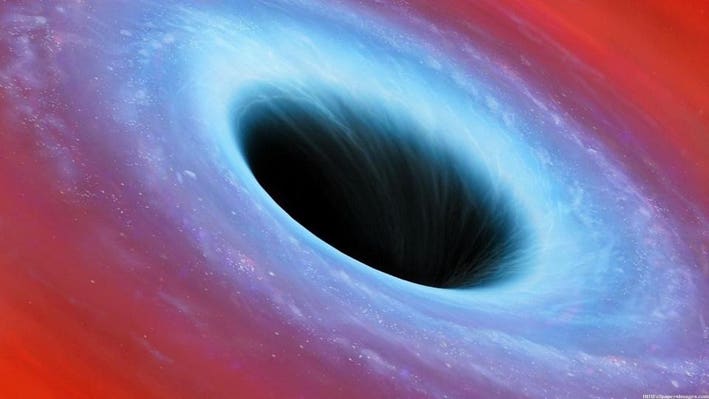
To “stop time” for the planet would mean bending spacetime to an impossible degree. It would likely involve black hole-level gravity, which would tear matter apart long before you enjoyed your sixty-second advantage.
In other words, stopping time is not just unrealistic—it is catastrophically unrealistic.
The universe does not provide a pause button.
So What Would Really Happen If You Could Stop Time for One Minute?
If we insist on a scientifically accurate answer, the honest conclusion is that true time stoppage would not allow you to move, see, breathe, or act. If time stopped, you would stop with it. A frozen universe includes you, your thoughts, and your heartbeat.
If the universe were frozen except for you, then the conditions required would create impossible contradictions in physics. You would likely be trapped by frozen air, blinded by frozen light, and suffocated by frozen oxygen. Even if you carried a bubble of normal physics around you, moving through a frozen world would generate catastrophic pressure waves and energy discontinuities.
The world would not become a harmless still-life. It would become an unstable collision between two incompatible realities: one where time flows, and one where it does not.
The fantasy of stopping time feels empowering because it suggests freedom from consequence. But physics reveals the opposite. Time is not your enemy. Time is what makes life possible.
Without time, there is no breath, no movement, no sound, no warmth, no heartbeat, no thought.
The Deeper Meaning Behind the Question
Even though stopping time is physically impossible, the question remains powerful because it reveals something true about human desire.
People fantasize about stopping time because they want relief from pressure. They want a moment to think. A moment to act without fear. A moment where mistakes cannot catch up. A moment where life slows down enough to be understood.
In a way, the desire to stop time is the desire to escape the unstoppable flow of existence. Time carries everything forward—aging, loss, responsibility, change. We cannot pause it, rewind it, or negotiate with it. We can only live inside it.
And perhaps that is why the fantasy is so haunting. Because if you could stop time for one minute, you might realize something unsettling.
The world without time is not peaceful.
It is not beautiful.
It is dead.
Final Answer: A Minute Without Time Would Be a Minute Without Reality
If you could truly stop time for one minute, the Earth would not simply freeze like a paused film. The universe would lose the very process that allows it to exist. Light would not travel. Air would not flow. Sound would not move. Chemistry would halt. Life would stop functioning.
If you somehow remained active, you would be trapped in darkness and silence, unable to move through frozen air, unable to breathe, unable to interact with the world in any meaningful way.
The popular image of walking through frozen crowds, rearranging objects, and enjoying secret freedom is not compatible with real physics. A true pause in time would not give you power.
It would erase everything that makes action possible.
The terrifying truth is that time is not something happening to the universe.
Time is the universe happening.
And if it stopped, even for one minute, reality would not become still.
Reality would stop being reality at all.