Imagine standing beneath a clear night sky. Above you, countless stars shine across the darkness. The Moon circles Earth. Earth circles the Sun. The Sun travels around the center of the Milky Way. Entire galaxies dance through space, pulled and guided by invisible forces that shape the universe itself.
For centuries, people wondered what keeps these cosmic objects moving. Why do apples fall from trees? Why does the Moon stay in orbit instead of flying away? Why do planets follow predictable paths around the Sun?
In the seventeenth century, Sir Isaac Newton provided an answer that transformed science. He proposed that gravity is a force that attracts objects toward one another. His theory worked astonishingly well, explaining everything from falling objects to planetary motion.
For more than two hundred years, Newton’s ideas appeared nearly perfect.
Then came a quiet patent clerk from Germany who changed humanity’s understanding of the universe forever.
That man was Albert Einstein.
In 1915, Einstein unveiled one of the greatest intellectual achievements in human history: the theory of General Relativity.
This theory did far more than improve Newton’s understanding of gravity. It completely reimagined what gravity actually is.
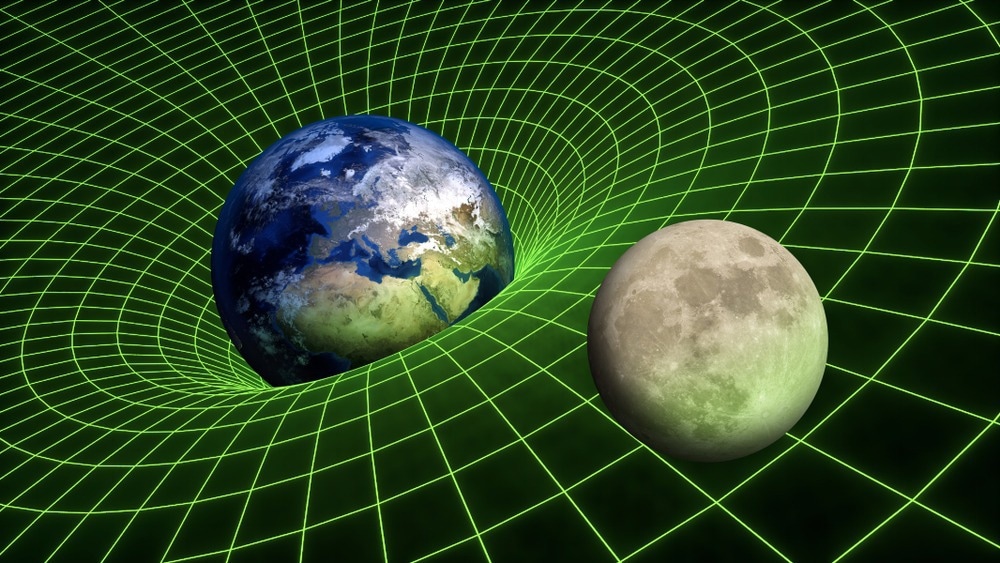
According to General Relativity, gravity is not a force pulling objects through space. Instead, gravity emerges because massive objects bend and warp the very fabric of space and time.
The idea sounded strange, almost unbelievable.
Yet more than a century later, every major test has confirmed Einstein’s extraordinary vision.
General Relativity explains the motion of planets, the existence of black holes, the behavior of galaxies, the expansion of the universe, and even the ripples in spacetime known as gravitational waves.
It remains one of the most beautiful and successful scientific theories ever created.
The World Before Einstein
To appreciate General Relativity, it helps to understand the scientific world that existed before Einstein entered the scene.
For over two centuries, Newton’s theory of gravity dominated physics.
Newton proposed that every object with mass attracts every other object with mass.
The larger the mass, the stronger the attraction.
The farther apart two objects are, the weaker the attraction becomes.
This simple idea explained a remarkable range of phenomena.
It explained why apples fall.
It explained why the Moon orbits Earth.
It explained the motion of planets around the Sun.
It even helped predict the existence of previously unknown planets.
Newton’s theory was so successful that many scientists believed gravity had been completely understood.
Yet there was one troubling question.
Newton could describe how gravity worked, but not why.
How could Earth instantly affect the Moon across hundreds of thousands of kilometers of empty space?
How could the Sun influence planets millions or billions of kilometers away?
Newton himself admitted he did not know the answer.
This mystery remained unresolved for generations.
Einstein’s Revolutionary Perspective
Einstein approached the problem from a completely different direction.
Instead of asking how gravity pulls objects, he began asking whether gravity was truly a force at all.
This question eventually led him toward one of the deepest insights in scientific history.
Einstein noticed a curious fact.
If a person falls from a rooftop, they feel weightless during the fall.
Their body, keys, wallet, and everything around them fall together.
For a brief moment, gravity seems to disappear.
This observation became the foundation of what Einstein called the Equivalence Principle.
The Equivalence Principle states that gravity and acceleration are deeply connected.
This simple idea became the seed from which General Relativity eventually grew.
Understanding the Equivalence Principle
Imagine sitting inside a sealed elevator.
You have no windows.
You cannot see outside.
If the elevator rests on Earth, you feel your feet pressed against the floor.
Now imagine the elevator floating far from any stars or planets.
Suddenly rockets begin accelerating the elevator upward.
You would once again feel yourself pressed against the floor.
From inside the elevator, the two situations would feel remarkably similar.
Without looking outside, you might not know whether you were experiencing gravity or acceleration.
Einstein realized this was not merely a coincidence.
Gravity and acceleration appeared to be fundamentally related.
This insight suggested that gravity might not be an ordinary force after all.
Instead, it could be a consequence of something deeper.
The Birth of Spacetime
To understand General Relativity, we must first explore one of Einstein’s most profound concepts: spacetime.
Before Einstein, people thought of space and time as separate entities.
Space was the stage where events occurred.
Time was a universal clock ticking identically everywhere.
Einstein’s earlier theory, Special Relativity, had already challenged this view.
Special Relativity showed that space and time are interconnected.
Different observers moving at different speeds can measure different distances and different amounts of time.
Rather than being separate, space and time form a unified four-dimensional structure called spacetime.
Every object in the universe exists within this cosmic framework.
General Relativity takes this idea much further.
Gravity Is Geometry
Perhaps the most astonishing feature of General Relativity is its explanation of gravity.
According to Einstein, gravity is not a force transmitted through space.
Gravity is the curvature of spacetime itself.
Massive objects distort the geometry of the universe around them.
Planets, stars, galaxies, and black holes bend spacetime.
Objects moving nearby simply follow the curved paths created by this distortion.
A common analogy involves placing a heavy bowling ball on a stretched rubber sheet.
The bowling ball creates a depression in the sheet.
Smaller balls rolling nearby naturally move toward the depression.
The bowling ball is not pulling the smaller balls directly.
Instead, it changes the geometry of the surface they move across.
Although this analogy is imperfect, it captures the central idea.
Mass tells spacetime how to curve.
Curved spacetime tells matter how to move.
This elegant relationship lies at the heart of General Relativity.
Why Objects Fall
Under Newton’s theory, an apple falls because Earth exerts a gravitational force.
Einstein offered a different explanation.
Earth’s mass curves spacetime around it.
The apple naturally follows the straightest possible path through this curved geometry.
To us, that path appears as a fall toward the ground.
In Einstein’s view, the apple is not being pulled by an invisible force.
Instead, it is following the shape of spacetime itself.
This subtle shift in perspective completely transformed our understanding of gravity.
How Planets Orbit the Sun
The motion of planets provides another powerful example.
Newton described planetary orbits as the result of the Sun’s gravitational pull.
General Relativity describes them differently.
The Sun’s enormous mass creates a significant curvature in spacetime.
Earth moves through this curved spacetime.
Its orbit arises naturally from the geometry surrounding the Sun.
Imagine rolling a marble around the edge of a large bowl.
The marble follows curved paths because of the bowl’s shape.
Similarly, planets follow curved paths because spacetime itself is curved.
The result looks similar to Newton’s predictions in most situations, but Einstein’s explanation reveals a deeper reality.
The Mathematical Challenge
Developing General Relativity was extraordinarily difficult.
Einstein spent years struggling with complex mathematics.
The equations required to describe curved spacetime were unlike anything most physicists had previously used.
He collaborated with mathematicians and explored advanced geometric concepts.
Eventually, in November 1915, Einstein presented the final field equations of General Relativity.
These equations are often considered among the most beautiful formulas in science.
Despite their compact appearance, they contain an astonishing amount of information about the structure of the universe.
They describe how matter, energy, space, and time interact.
Solving these equations has occupied physicists for more than a century.
The First Major Test
A scientific theory succeeds only if observations support it.
Einstein’s first major test came from an unusual problem involving the planet Mercury.
Astronomers had long noticed a small discrepancy in Mercury’s orbit.
Newton’s theory explained almost everything, but not quite perfectly.
Mercury’s orbit shifted slightly more than expected.
The discrepancy was tiny, but persistent.
When Einstein applied General Relativity to Mercury’s motion, the missing amount appeared naturally.
His theory explained the anomaly precisely.
This was the first major victory for General Relativity.
It suggested that Einstein was uncovering something fundamentally true about the universe.
Bending Light
One of General Relativity’s most surprising predictions involved light.
According to Newton’s theory, gravity acts on mass.
But light has no mass.
Would gravity affect light at all?
Einstein realized that if gravity is really curved spacetime, then light should follow curved paths as well.
A beam of light passing near a massive object should bend.
This prediction seemed extraordinary.
In 1919, astronomers tested it during a solar eclipse.
When the Sun was blocked, stars near its edge became visible.
Their apparent positions had shifted exactly as Einstein predicted.
The results made international headlines.
Einstein became world famous almost overnight.
General Relativity had passed another crucial test.
Gravitational Lensing
The bending of light led to one of astronomy’s most useful tools.
Today, scientists call this phenomenon gravitational lensing.
Massive objects act like cosmic lenses.
Their gravity bends and magnifies light from more distant sources.
Sometimes a distant galaxy appears stretched into arcs.
Sometimes multiple images of the same object become visible.
In extreme cases, light forms nearly complete rings around foreground objects.
These structures are known as Einstein rings.
Gravitational lensing allows astronomers to study galaxies too distant to observe directly.
It also provides evidence for dark matter.
What began as a strange prediction became an essential tool for exploring the universe.
Time Runs Differently in Gravity
One of General Relativity’s most astonishing predictions concerns time itself.
According to the theory, gravity affects the passage of time.
Clocks closer to massive objects run more slowly than clocks farther away.
This phenomenon is called gravitational time dilation.
Near Earth, the effect is extremely small.
Near neutron stars or black holes, it becomes dramatic.
Imagine two identical clocks.
One remains on Earth.
The other travels into deep space.
After sufficient time, the clocks would no longer agree perfectly.
Time itself has flowed differently for each clock.
This is not science fiction.
Experiments have repeatedly confirmed gravitational time dilation.
Even modern technology must account for it.
General Relativity and GPS
Many people unknowingly rely on General Relativity every day.
Global Positioning System satellites orbit Earth while continuously transmitting timing signals.
These satellites experience slightly different gravitational conditions than people on the ground.
As a result, their onboard clocks tick at different rates.
Without corrections based on Einstein’s theory, GPS errors would rapidly accumulate.
Navigation systems would become inaccurate by several kilometers within a short time.
Every time someone uses GPS navigation, they benefit from General Relativity.
A theory born from abstract thought experiments now guides millions of people worldwide.
Black Holes: Einstein’s Most Extreme Prediction
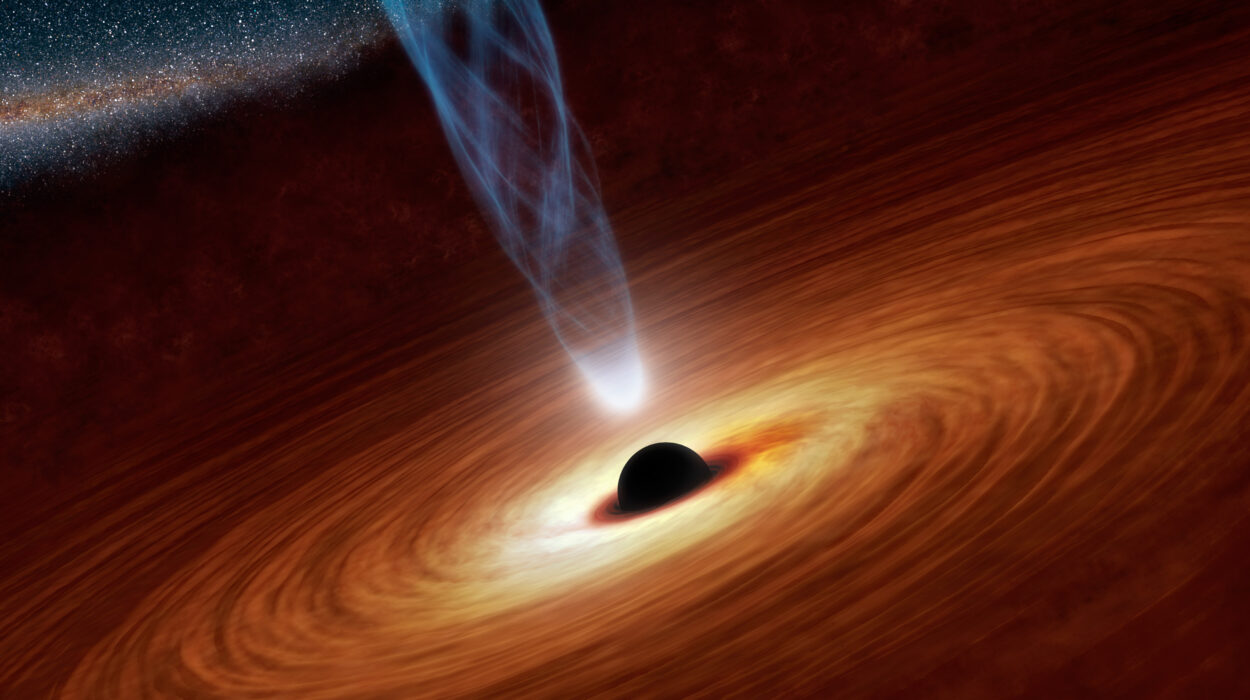
Among General Relativity’s most famous consequences are black holes.
Black holes arise when enormous amounts of mass become compressed into extremely small regions.
The resulting curvature of spacetime becomes extraordinarily intense.
Gravity grows so strong that nothing—not even light—can escape.
For years, even Einstein felt uncomfortable with this implication.
The idea seemed too strange.
Yet nature appears to create black holes abundantly.
Today astronomers have discovered evidence for countless black holes throughout the universe.
Some possess masses several times greater than the Sun.
Others contain millions or billions of solar masses.
These giant black holes often reside at the centers of galaxies.
Black holes represent General Relativity pushed to its limits.
Event Horizons and the Point of No Return
The boundary surrounding a black hole is called the event horizon.
Crossing this boundary marks a one-way journey.
Once an object passes beyond the event horizon, escape becomes impossible.
Even light cannot return.
To an outside observer, time appears to slow dramatically near the event horizon.
This strange behavior arises directly from the extreme curvature of spacetime.
The closer one approaches the black hole, the more distorted space and time become.
Black holes remain among the most fascinating predictions of General Relativity.
The Expanding Universe
When Einstein first developed General Relativity, he assumed the universe was static and unchanging.
However, his equations suggested otherwise.
The mathematics implied that the universe should either expand or contract.
This result troubled Einstein.
To preserve a static universe, he introduced an additional term known as the cosmological constant.
Years later, astronomers discovered that distant galaxies are moving away from one another.
The universe is expanding.
Einstein reportedly called his earlier adjustment his greatest mistake, though modern cosmology has given new significance to the cosmological constant.
Today, General Relativity forms the foundation of our understanding of cosmic expansion.
The Big Bang and Relativity
Modern cosmology relies heavily on General Relativity.
When scientists apply Einstein’s equations to the universe as a whole, they find that space itself expands over time.
Tracing this expansion backward leads to an extraordinarily dense and hot early state.
This idea became known as the Big Bang.
General Relativity does not merely explain gravity within the universe.
It helps explain the evolution of the universe itself.
Without Einstein’s theory, modern cosmology would be impossible.
Gravitational Waves
One of General Relativity’s most remarkable predictions remained unconfirmed for a century.
Einstein proposed that accelerating massive objects should create ripples in spacetime.
These ripples travel through the universe at the speed of light.
He called them gravitational waves.
For decades, scientists doubted whether such tiny disturbances could ever be detected.
Then, in 2015, researchers achieved the impossible.
The LIGO observatory detected gravitational waves produced by two merging black holes.
The signal matched Einstein’s predictions perfectly.
Humanity had gained an entirely new way of observing the cosmos.
Listening to the Universe
Before gravitational wave astronomy, scientists primarily studied the universe through electromagnetic radiation such as visible light, radio waves, and X-rays.
Gravitational waves opened a new window.
Instead of seeing cosmic events, astronomers could now hear them in a sense.
Merging black holes, colliding neutron stars, and other violent phenomena create detectable spacetime vibrations.
Each detection provides fresh insights into the universe.
It is one of the most significant scientific achievements of the modern era.
Where General Relativity Struggles
Despite its extraordinary success, General Relativity is not the final word in physics.
Problems arise when scientists attempt to combine it with quantum mechanics.
Quantum mechanics governs the microscopic world of atoms and particles.
General Relativity governs gravity and large-scale structures.
Individually, both theories work remarkably well.
Together, they create contradictions.
Physicists continue searching for a deeper framework that can unify them.
This quest remains one of the greatest challenges in modern science.
Why Einstein’s Theory Matters
General Relativity transformed far more than physics.
It changed humanity’s conception of reality.
Before Einstein, space and time seemed fixed and absolute.
After Einstein, they became dynamic and interconnected.
Gravity was no longer a mysterious force acting across empty space.
It became geometry itself.
Massive objects shape spacetime, and spacetime guides motion.
This new understanding revealed a universe far stranger and more beautiful than anyone had imagined.
The Elegance of General Relativity
Scientists often describe General Relativity as beautiful.
This beauty comes from its simplicity and depth.
A single conceptual idea—that gravity arises from curved spacetime—explains an enormous range of phenomena.
Planetary orbits.
Falling objects.
Black holes.
Cosmic expansion.
Gravitational lensing.
Time dilation.
Gravitational waves.
All emerge naturally from the same underlying framework.
Few scientific theories possess such explanatory power.
Einstein’s Lasting Legacy
More than a century after its creation, General Relativity remains one of humanity’s greatest intellectual achievements.
It emerged not from giant laboratories or advanced technology but from deep thought, imagination, and relentless determination.
Einstein dared to question assumptions that others accepted without hesitation.
He looked at gravity—a phenomenon familiar to every human being—and discovered something entirely unexpected.
The result was a new vision of reality.
A universe where space bends.
Where time slows.
Where black holes lurk in darkness.
Where ripples in spacetime carry messages across billions of light-years.
His masterpiece continues to shape astronomy, cosmology, and physics today.
Conclusion
General Relativity is Einstein’s revolutionary theory of gravity, published in 1915. Rather than describing gravity as a force that pulls objects together, the theory explains gravity as the curvature of spacetime caused by mass and energy. Massive objects such as planets, stars, and black holes warp the fabric of spacetime, and other objects move along paths determined by this curvature.
Over the past century, General Relativity has successfully explained countless phenomena, including planetary motion, gravitational lensing, time dilation, black holes, the expansion of the universe, and gravitational waves. Its predictions have been tested repeatedly and confirmed with remarkable precision.
More than a scientific theory, General Relativity represents a profound shift in humanity’s understanding of reality. It reveals that space and time are not passive backgrounds but dynamic participants in the story of the cosmos. Through Einstein’s insight, gravity became not merely a force but a manifestation of the geometry of the universe itself. Even today, as scientists explore the deepest mysteries of existence, General Relativity remains one of the most powerful and inspiring ideas ever conceived.