The Sun has been shining over Earth for billions of years, lighting our days, warming our oceans, and making life possible. Every sunrise feels ordinary because it happens every day. Yet the star that rises above the horizon each morning has an extraordinary story—one that began long before Earth even existed and will continue long after humanity is gone.
Like every star in the universe, the Sun has a life cycle. It was born from a giant cloud of gas and dust, grew into a stable star, and one day it will age, expand into a giant, and eventually fade into a tiny, glowing remnant. This journey unfolds over billions of years, making a human lifetime seem like the blink of an eye.
Understanding the Sun’s life cycle helps us understand not only our own star but also the countless billions of stars scattered across the Milky Way and beyond.
The Sun Is an Ordinary Star with an Extraordinary Importance
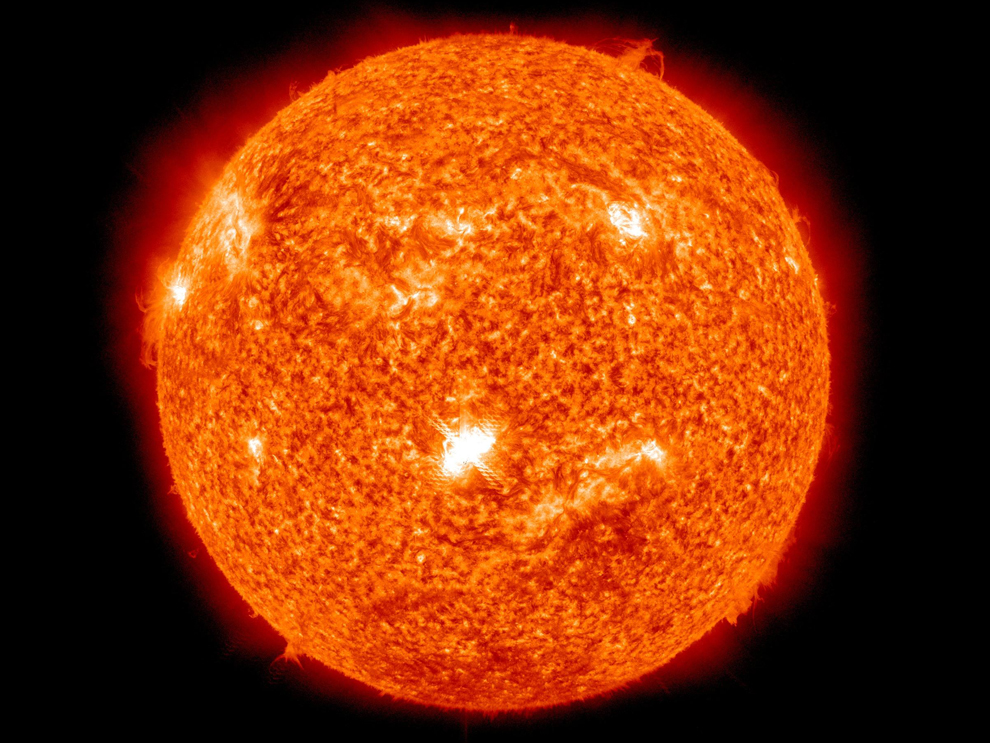
Although the Sun is the most important object in our sky, astronomers consider it a fairly ordinary star.
It is a G-type main-sequence star, often called a yellow dwarf. It contains about 99.8% of all the mass in our Solar System and lies approximately 150 million kilometers (93 million miles) from Earth.
The Sun is enormous compared to Earth. More than one million Earths could fit inside it. At its center, temperatures reach about 15 million degrees Celsius (27 million degrees Fahrenheit), where nuclear fusion produces the energy that eventually reaches our planet as sunlight.
While the Sun seems permanent, it is constantly changing, even if those changes happen over millions or billions of years.
Every Star Begins Inside a Giant Molecular Cloud
The Sun’s story began about 4.6 billion years ago inside a cold, dark region of space known as a giant molecular cloud.
These immense clouds are made mostly of hydrogen gas, along with helium and tiny grains of cosmic dust. They can stretch across hundreds of light-years and contain enough material to create thousands of stars.
For millions of years, this cloud drifted quietly through the Milky Way. Then something disturbed its balance.
Astronomers think the shock wave from a nearby exploding star, called a supernova, may have compressed part of the cloud. Once gravity took over, the cloud began collapsing inward.
As the cloud shrank, gravity squeezed the gas closer together. The center became hotter, denser, and brighter.
The Sun’s life had begun.
A Protostar Takes Shape
As the collapsing cloud continued to gather material, it formed what astronomers call a protostar.
A protostar is not yet a true star. It shines mainly because gravity compresses its material, releasing heat. Nuclear fusion has not fully started.
The growing Sun continued pulling in gas from its surroundings. Around it formed a spinning disk of leftover gas and dust.
This disk would eventually become the Solar System.
Within this swirling material, tiny dust particles collided and stuck together. Over millions of years, they grew into rocks, then planetesimals, and eventually planets, moons, asteroids, and comets.
While Earth was slowly forming, the young Sun continued becoming hotter.
The Birth of a True Star
Eventually, conditions inside the Sun’s core became extreme.
The pressure and temperature rose so high that hydrogen nuclei began fusing into helium.
This process, known as nuclear fusion, releases tremendous amounts of energy.
At this moment, the Sun officially became a star.
Fusion created an outward pressure that balanced gravity’s inward pull. This balance, called hydrostatic equilibrium, has kept the Sun stable for billions of years.
Without this delicate balance, the Sun would either collapse under its own gravity or expand uncontrollably.
Instead, it settled into a long, steady phase of life.
The Long Main Sequence Stage
Today, the Sun is in the longest period of its existence, known as the main sequence.
This stage lasts about 10 billion years in total.
The Sun has already spent roughly 4.6 billion years here and is therefore about halfway through its stable lifetime.
Every second, the Sun converts around 600 million metric tons of hydrogen into helium through nuclear fusion. A small fraction of this mass becomes pure energy according to Einstein’s famous equation, E = mc².
That energy travels outward from the core.
Surprisingly, a photon produced in the Sun’s core does not escape immediately. Because it constantly collides with particles inside the dense interior, it may take tens of thousands to hundreds of thousands of years to reach the Sun’s surface.
Once sunlight finally escapes into space, however, it takes only about eight minutes and twenty seconds to reach Earth.
The sunlight warming your face today actually began its journey inside the Sun long before humans built the first cities.
The Sun Slowly Changes Even During Stability
Although the Sun appears constant, it is gradually changing.
As hydrogen in the core is converted into helium, the core slowly becomes denser and hotter.
This increases the fusion rate slightly.
As a result, the Sun becomes a little brighter over time.
Astronomers estimate that the young Sun was about 70% as bright as it is today.
Billions of years from now, it will continue becoming more luminous.
This gradual increase in brightness will eventually have major consequences for Earth.
What Will Happen to Earth First?
Long before the Sun reaches the end of its life, Earth will become increasingly difficult for life.
As the Sun grows brighter over the next one to two billion years, Earth’s surface temperature will slowly rise.
Higher temperatures will increase evaporation, altering the climate and eventually causing the oceans to disappear over immense timescales.
Without liquid water, complex life as we know it could no longer survive.
This transformation will happen gradually, not suddenly.
The Sun itself will still be a stable star.
It is simply becoming more energetic as part of its natural aging process.
The Sun Begins to Run Out of Hydrogen
Eventually, after roughly 10 billion years on the main sequence, the hydrogen fuel in the Sun’s core will become exhausted.
Fusion in the core will largely stop.
Without the outward pressure produced by fusion, gravity will begin compressing the core once again.
As the core contracts, it heats up dramatically.
Meanwhile, hydrogen fusion continues in a shell surrounding the core.
This shell produces even more energy than before.
Instead of shrinking, the Sun’s outer layers begin expanding enormously.
The quiet yellow star starts transforming into something much larger.
The Sun Becomes a Red Giant
The next major chapter in the Sun’s life is the red giant phase.
During this stage, the Sun’s diameter will grow to more than 100 times its current size.
Its surface temperature will actually become cooler, giving it a reddish appearance.
Despite its cooler surface, the Sun will become much more luminous because of its enormous size.
Mercury will almost certainly disappear inside the expanding star.
Venus will also be engulfed.
The fate of Earth is less certain.
Current models suggest Earth may either be swallowed by the expanding Sun or survive just beyond its outer atmosphere while becoming an uninhabitable, scorched world.
Either way, the planet we know today will be completely transformed.
Helium Fusion Begins
As the core continues heating, it eventually reaches temperatures of around 100 million degrees Celsius.
At this point, helium nuclei begin fusing together.
This process creates carbon and oxygen.
For a star with the Sun’s mass, helium fusion begins suddenly in an event called the helium flash.
Although the name sounds dramatic, the flash occurs deep inside the star and cannot be seen from outside.
Afterward, the Sun briefly becomes stable again, burning helium in its core.
This phase lasts much less time than the main sequence—only around one hundred million years.
The Sun Cannot Become a Supernova
Many people wonder whether the Sun will explode.
The answer is no.
The Sun simply does not have enough mass.
Only stars that are many times more massive than the Sun can end their lives as spectacular supernova explosions.
The Sun’s future is much quieter.
Instead of exploding, it will gently shed its outer layers into space.
A Beautiful Planetary Nebula Appears
As helium becomes exhausted, the Sun becomes unstable again.
It begins pulsating and losing its outer layers.
Powerful stellar winds push enormous amounts of gas into surrounding space.
These expanding shells of glowing gas create one of the universe’s most beautiful sights—a planetary nebula.
Despite the name, planetary nebulae have nothing to do with planets.
Early astronomers thought they resembled the round disks of distant planets when viewed through small telescopes.
The colorful clouds shine because the hot core left behind emits intense ultraviolet radiation that causes the expelled gas to glow.
For tens of thousands of years, the dying Sun will create a magnificent cosmic display.
The Birth of a White Dwarf
After the outer layers drift away, only the Sun’s incredibly hot core remains.
This remnant is called a white dwarf.
Although it contains roughly half the Sun’s original mass, it is only about the size of Earth.
A teaspoon of white dwarf material would weigh many tons on Earth because the matter is packed so tightly.
The white dwarf no longer produces energy through fusion.
Instead, it shines simply because it is still extremely hot.
Over billions and eventually trillions of years, it slowly cools.
The Final Stage: A Black Dwarf
As unimaginable stretches of time pass, the white dwarf will gradually lose all its remaining heat.
Eventually, it will become a cold, dark object known as a black dwarf.
Interestingly, the universe is not old enough for any black dwarfs to exist yet.
The oldest white dwarfs are still cooling.
The first black dwarfs will not appear until far into the universe’s future—many trillions of years from now.
How Scientists Know the Sun’s Future
No human has ever watched a star complete its entire life cycle.
Instead, astronomers study millions of stars at different ages.
Some are newborn protostars.
Others are stable main-sequence stars.
Some have already become red giants.
Others exist as white dwarfs.
By comparing stars of different masses and ages while using well-tested models of stellar physics, scientists can reconstruct how stars evolve.
These models are supported by observations, laboratory measurements, nuclear physics, and decades of astronomical research.
The Sun fits these models remarkably well.
The Sun’s Life Supports Every Living Thing
Every tree, every ocean, every cloud, every animal, and every person owes their existence to the Sun.
Plants transform sunlight into chemical energy through photosynthesis.
That energy moves through nearly every food chain on Earth.
The Sun also drives weather, ocean currents, and Earth’s climate.
Even the atoms in our bodies tell part of the Sun’s story.
The hydrogen inside us formed shortly after the Big Bang, while many heavier elements—including the carbon in our cells, the oxygen we breathe, and the iron in our blood—were forged inside ancient stars that lived and died before the Sun was born.
In that sense, the Sun is part of a much larger cosmic cycle.
The Sun’s Story Is Still Being Written
The Sun has already completed nearly half of its extraordinary journey. It has illuminated Earth for billions of years and still has roughly five billion years of stable life ahead. During that time, it will continue powering our planet, sustaining life, and inspiring curiosity in everyone who looks toward the sky.
Its future is neither violent nor mysterious. Guided by the well-understood laws of stellar physics, the Sun will gradually exhaust its fuel, expand into a majestic red giant, cast its outer layers into space as a glowing planetary nebula, and settle into its final form as a white dwarf.
The life cycle of the Sun reminds us that even the brightest stars are not eternal. They are born, they change, and they eventually fade. Yet in doing so, they create the elements, energy, and conditions that make planets and life possible. Our own existence is woven into this grand stellar story—a story that began in a cloud of cosmic gas 4.6 billion years ago and will continue long after the last human has looked up to watch another sunrise.