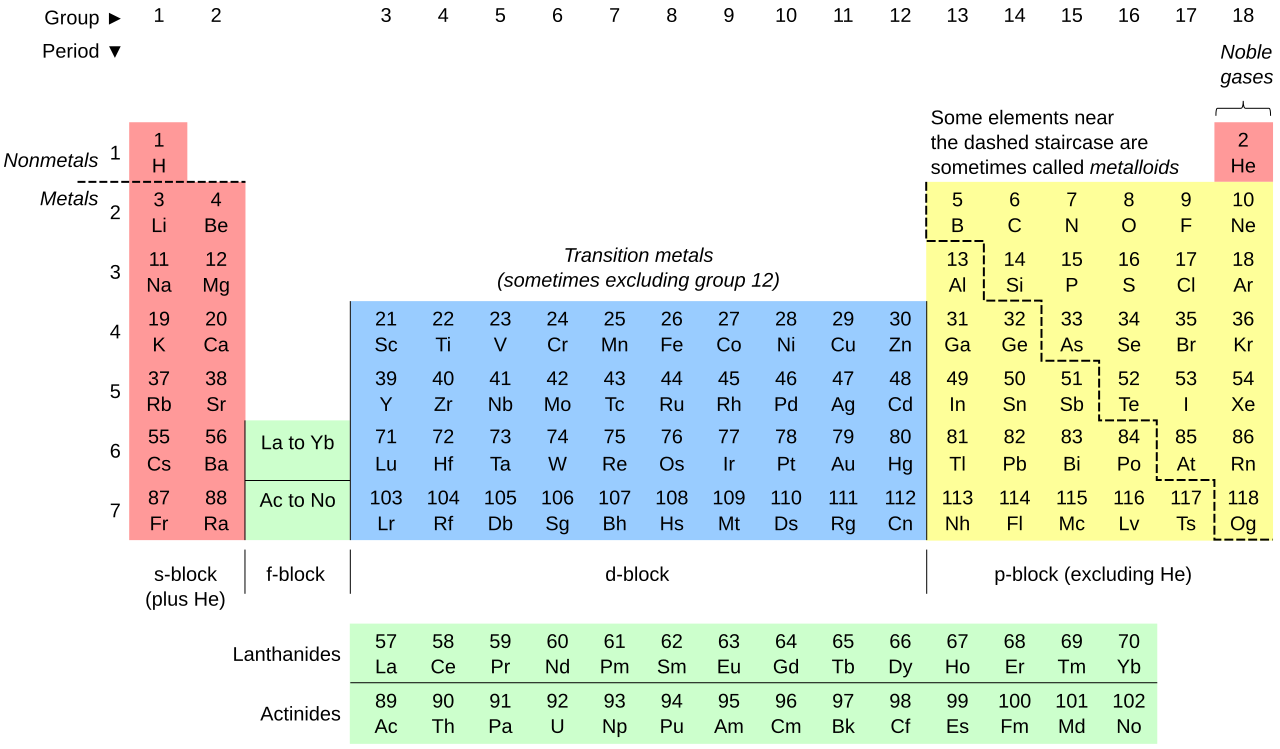
At first glance, the periodic table appears to be one of science’s greatest triumphs—a neat arrangement of colorful boxes, each representing an element with well-defined properties. Students memorize symbols, scientists rely on it daily, and chemists use it as the foundation of their field. It feels complete, orderly, and almost reassuring.
But beneath this apparent order lies a universe of unanswered questions.
The periodic table is not merely a catalog of elements. It is a map of matter itself. Every star, planet, ocean, mountain, living organism, and human being is built from the elements it contains. Yet despite more than 150 years of scientific progress since Dmitri Mendeleev introduced his groundbreaking version of the periodic table in 1869, many of its deepest mysteries remain unsolved.
Modern chemistry, quantum mechanics, nuclear physics, and astrophysics have explained much about why elements behave the way they do. Scientists understand electron orbitals, atomic nuclei, chemical bonding, and nuclear reactions with extraordinary precision. Yet fundamental questions persist. Why does the periodic table have its particular structure? Why do some elements exist while others cannot? Where do the heaviest elements come from? Is there an ultimate limit to the number of possible elements? Could entirely new regions of matter exist beyond what we know today?
These are not questions for science fiction.
They are active areas of scientific research.
Every new element synthesized in laboratories pushes the boundaries of chemistry and physics. Every observation of distant stars refines our understanding of how elements are forged in cosmic explosions. Every experiment involving atomic nuclei tests theories about the forces that govern matter itself.
The periodic table may look complete.
Science knows it is not.
Here are fifteen fascinating mysteries that continue to challenge researchers around the world.
1. Where Does the Periodic Table Actually End?
One of the most profound unanswered questions concerns the periodic table’s ultimate boundary.
Scientists have successfully synthesized elements up to atomic number 118, oganesson. Each new element has required increasingly sophisticated experiments involving particle accelerators and extremely rare nuclear reactions.
But could elements beyond 118 exist?
According to current nuclear physics, increasingly heavy nuclei become progressively more unstable because the enormous positive charge of their protons creates intense electrostatic repulsion. The strong nuclear force binds nuclei together, but only over extremely short distances.
Eventually these competing forces may make additional elements impossible.
The problem is that nobody knows exactly where this ultimate limit lies.
Different theoretical models predict different maximum atomic numbers.
Some suggest elements may exist well beyond 120.
Others predict limits closer to 170.
Still others propose that relativistic effects may fundamentally alter electron behavior before such nuclei can even exist.
No experiment has yet determined the true endpoint of the periodic table.
2. Does the Island of Stability Really Exist?
One of nuclear physics’ most intriguing ideas is the hypothetical “Island of Stability.”
Most superheavy elements survive for only fractions of a second before decaying.
Yet theoretical calculations suggest that certain combinations of protons and neutrons may produce unusually stable nuclei.
These nuclei would still be radioactive, but they might survive for minutes, days, years—or perhaps much longer.
The concept arises from quantum shell structure within atomic nuclei.
Just as electrons occupy shells around the nucleus, protons and neutrons also fill nuclear energy levels.
Certain shell configurations may provide exceptional stability.
Scientists have not yet reached this predicted region experimentally.
Whether the Island of Stability truly exists—and exactly where it lies—remains one of the greatest mysteries in modern nuclear chemistry.
Its discovery would dramatically expand our understanding of matter.
3. Why Is Hydrogen So Strange?
Hydrogen occupies the very first position in the periodic table.
Yet it fits almost nowhere comfortably.
It contains only one proton and one electron.
Because it has a single valence electron, it resembles the alkali metals.
Yet because it requires one additional electron to complete its shell, it also resembles the halogens.
Unlike alkali metals, hydrogen forms covalent molecules.
Unlike halogens, it behaves differently under many conditions.
Under extreme pressures inside giant planets, hydrogen may even become metallic.
Scientists still debate where hydrogen truly belongs.
Many periodic tables place it above lithium simply for convenience.
Others separate it entirely.
Hydrogen’s unique behavior reflects the fact that it is unlike every other element.
Its proper classification remains surprisingly controversial.
4. Why Does Helium Refuse to Behave Like Other Noble Gases?
Helium also appears deceptively simple.
As the second-lightest element, it belongs to the noble gases because its outer electron shell is complete.
Yet helium differs dramatically from every other member of its group.
It has the lowest boiling point of any element.
At normal pressure, it never freezes regardless of how cold it becomes.
Instead, it requires both low temperature and high pressure to solidify.
Below approximately 2.17 kelvin, helium becomes a superfluid—a bizarre quantum state capable of flowing without viscosity.
It can climb container walls.
It can flow through microscopic pores.
It conducts heat with astonishing efficiency.
Why helium displays such extraordinary quantum behavior while heavier noble gases do not remains deeply connected to quantum mechanics itself.
5. Why Does Gold Have Its Distinctive Color?
Most metals appear silver because they reflect nearly all visible wavelengths equally.
Gold does not.
Its warm yellow appearance has fascinated humanity for thousands of years.
The explanation involves one of the most beautiful consequences of Einstein’s theory of relativity.
Electrons in gold orbit extremely close to its massive nucleus.
Their velocities become significant fractions of the speed of light.
Relativistic effects alter electron energies, changing which wavelengths of light are absorbed.
This shifts reflected light toward yellow.
Scientists understand the general mechanism.
Yet predicting relativistic effects accurately for very heavy elements remains extraordinarily challenging.
Gold reminds us that even ordinary jewelry reflects profound physics.
6. Why Is Mercury Liquid at Room Temperature?
Mercury is another remarkable exception.
Almost every metal is solid under ordinary conditions.
Mercury remains liquid.
Its atoms bond much more weakly than expected.
Again, relativistic effects play an important role.
The inner electrons move so rapidly that outer electron interactions become weaker.
This reduces metallic bonding.
Although quantum theory explains much of mercury’s behavior, researchers continue refining calculations because accurately modeling heavy atoms remains computationally difficult.
Mercury continues serving as an important testing ground for relativistic quantum chemistry.
7. Why Are Some Elements Missing in Nature?
Many elements exist naturally.
Others exist only because scientists created them.
But why?
Elements heavier than uranium generally decay too rapidly to survive since Earth’s formation.
However, traces of certain heavier elements can occasionally form through natural nuclear reactions.
Some isotopes appear briefly during stellar explosions.
Others emerge through radioactive decay chains.
Exactly which superheavy nuclei might occur naturally under rare astrophysical conditions remains uncertain.
Astronomers continue searching for signatures of these elusive atoms.
8. Where Are the Universe’s Missing Heavy Elements Made?
For decades, scientists believed supernova explosions created nearly all heavy elements.
Modern astronomy has complicated that picture.
Observations now show that collisions between neutron stars produce enormous quantities of gold, platinum, uranium, and many other heavy elements through rapid neutron capture known as the r-process.
Yet questions remain.
Which elements originate primarily in supernovae?
Which form mainly during neutron star mergers?
Do additional cosmic environments contribute?
How much does each process contribute throughout cosmic history?
These questions connect chemistry directly with astrophysics.
The periodic table is literally written among the stars.
9. Why Do Some Isotopes Behave Unexpectedly?
Atoms of the same element differ only in neutron number.
Most behave chemically almost identically.
Yet certain isotopes display surprising nuclear properties.
Some exhibit unexpected shapes.
Others have unusual lifetimes.
Certain isotopes possess “halo nuclei,” where neutrons extend remarkably far beyond the main nucleus.
These fragile structures challenge existing nuclear models.
Understanding isotope behavior remains one of nuclear physics’ central goals.
10. What Really Determines Nuclear Stability?
Scientists know that proton-neutron ratios influence stability.
So do nuclear shells.
So do quantum interactions.
Yet predicting whether an unknown nucleus will exist remains surprisingly difficult.
Many theoretical models succeed for known nuclei but disagree substantially when extrapolated to undiscovered regions.
The precise balance between strong nuclear force, electromagnetic repulsion, and quantum shell effects remains incompletely understood.
Every newly synthesized isotope tests these theories.
11. Why Do Electron Orbitals Follow Their Peculiar Pattern?
Chemistry depends upon electron orbitals.
These determine bonding, reactivity, and periodic trends.
Quantum mechanics predicts orbital structures remarkably well.
Yet the deeper mathematical reasons behind certain orbital energy orderings remain subtle.
Why do orbitals fill in the sequence observed experimentally?
Why do exceptions occur among transition metals?
Why do relativistic effects become increasingly important for heavy elements?
Researchers continue refining theoretical calculations to answer these questions with ever greater precision.
12. Could Unknown Chemical Behavior Exist Beyond Element 118?
If scientists eventually create much heavier elements, chemistry itself may change dramatically.
Relativistic effects become increasingly powerful as nuclear charge increases.
Electron orbitals may rearrange.
Traditional periodic trends may begin breaking down.
Some predicted superheavy elements may not resemble lighter members of their groups at all.
Their chemistry could differ fundamentally from current expectations.
Because these atoms have never been studied directly, their true behavior remains unknown.
13. Why Are Some Periodic Trends Imperfect?
The periodic table beautifully predicts many chemical properties.
Atomic size generally decreases across periods.
Ionization energy generally increases.
Electronegativity follows recognizable trends.
Yet exceptions appear everywhere.
Beryllium behaves unexpectedly.
Nitrogen and oxygen break predicted patterns.
Transition metals often refuse to follow simple rules.
Lanthanides introduce additional complications.
These irregularities arise from subtle quantum interactions among electrons.
Scientists understand many individual exceptions.
The complete theoretical picture, however, remains extraordinarily complex.
14. Why Does Matter Prefer These Particular Elements?
The observable universe contains enormous amounts of hydrogen and helium.
Carbon, oxygen, silicon, and iron are also abundant.
Other elements are exceedingly rare.
Part of the explanation involves stellar nucleosynthesis.
Stars efficiently produce certain nuclei while skipping others.
Yet deeper questions remain.
Why do the fundamental constants of physics permit precisely these nuclear reactions?
If those constants differed slightly, would chemistry itself become impossible?
The periodic table depends ultimately upon the values of nature’s fundamental physical constants.
Why those constants possess their observed values remains one of science’s greatest unanswered questions.
15. Could There Be Entirely New Forms of Matter Beyond the Periodic Table?
Perhaps the most mind-bending mystery is whether the periodic table represents only one chapter in a much larger story.
Ordinary elements consist of protons, neutrons, and electrons.
Yet particle physics suggests additional possibilities.
Could stable strange matter exist?
Might exotic quark combinations form entirely new types of atomic nuclei?
Could dark matter involve unknown particles capable of forming unfamiliar structures?
Current evidence does not support entirely separate “shadow periodic tables.”
Nevertheless, physicists continue exploring possibilities beyond conventional matter.
Future discoveries in particle physics could fundamentally reshape our understanding of what an element actually is.
Why These Mysteries Matter
The periodic table is often presented as finished science.
In reality, it remains an active frontier.
Every unanswered question connects chemistry with other scientific disciplines.
Quantum mechanics explains electron behavior.
Nuclear physics governs atomic stability.
Astrophysics creates the elements.
Particle physics explores matter’s deepest foundations.
The periodic table serves as the meeting point for all of them.
The Future of the Periodic Table
Scientists around the world continue searching for new elements.
Particle accelerators become more powerful.
Detectors become more sensitive.
Astronomers observe increasingly distant stellar explosions.
Supercomputers model atomic nuclei with unprecedented precision.
Artificial intelligence assists researchers in predicting nuclear properties that have never been measured experimentally.
Each breakthrough refines humanity’s understanding of matter.
One day, element 119—or even heavier elements—may be confirmed.
The Island of Stability may finally emerge from theory into reality.
The ultimate limit of the periodic table may be discovered.
Or researchers may uncover entirely new questions nobody has yet imagined.
A Table That Is Still Being Written
The periodic table hangs in classrooms around the world as though it were complete.
In one sense, it is.
It successfully organizes every confirmed chemical element known to science.
In another sense, however, it remains unfinished.
Its edges are uncertain.
Its deepest patterns are still being explored.
Its heaviest members may not yet exist.
Its cosmic origins continue to be investigated.
Its underlying physics reaches into some of the greatest mysteries of the universe.
Far from being a static chart, the periodic table is a living scientific document—one that continues to evolve with every new experiment, every newly synthesized atom, every astronomical observation, and every theoretical breakthrough.
The colorful grid that seems so familiar is, in reality, one of humanity’s most profound maps of the unknown. It reminds us that even the building blocks of existence still hold secrets waiting to be discovered, and that the story of the elements is far from over.