Every night, astronomers point powerful telescopes toward the sky, capturing light that has traveled for millions or even billions of years. Spacecraft explore distant planets, radio antennas listen for whispers from the cosmos, and detectors buried deep underground search for particles that barely interact with ordinary matter. Humanity has never known more about the universe than it does today.
And yet, the more we discover, the more mysterious the universe becomes.
Modern astronomy has revealed black holes that warp space and time, planets orbiting distant stars, gravitational waves rippling through the fabric of spacetime, and galaxies that formed astonishingly early in cosmic history. We can trace the universe back to a fraction of a second after the Big Bang and estimate its age to about 13.8 billion years.
But beneath these remarkable achievements lies an uncomfortable truth: scientists still do not understand some of the most fundamental aspects of reality.
What is most of the universe made of?
Why is the universe expanding faster over time?
What happens inside a black hole?
Are we truly alone?
Why does anything exist at all?
These questions are not fringe ideas or speculative fantasies. They are among the biggest unsolved scientific problems in modern astronomy and physics. Solving even one of them could transform our understanding of the cosmos forever.
Here are fifteen of the greatest mysteries that continue to challenge astronomers, cosmologists, and physicists around the world.
1. What Is Dark Matter?
Perhaps the greatest cosmic mystery is that most matter in the universe appears to be invisible.
Astronomers have long known that galaxies rotate far too quickly for the gravity of their visible stars and gas alone to hold them together. According to Newtonian gravity and Einstein’s theory of general relativity, these galaxies should fly apart.
Instead, something unseen provides additional gravity.
This mysterious substance is called dark matter.
Dark matter neither emits nor absorbs light, making it invisible to telescopes. Scientists infer its existence entirely through its gravitational effects.
Evidence for dark matter comes from multiple independent observations.
Galaxies rotate too rapidly.
Galaxy clusters contain more gravity than visible matter can explain.
Gravitational lensing bends light more strongly than ordinary matter allows.
The large-scale structure of the universe also matches simulations that include dark matter.
Together, these observations strongly suggest that about 85% of all matter is dark.
Yet no one knows what dark matter actually is.
Scientists have proposed many candidates.
Weakly interacting massive particles, or WIMPs, were once leading contenders, but decades of experiments have failed to detect them.
Axions—hypothetical lightweight particles—remain another possibility.
Some researchers investigate sterile neutrinos or other exotic particles beyond the Standard Model of particle physics.
Others question whether gravity itself behaves differently on cosmic scales.
Despite enormous underground detectors, particle accelerators, and astronomical surveys, dark matter remains invisible.
The universe appears filled with something we cannot directly observe.
2. What Is Dark Energy?
If dark matter is mysterious, dark energy is even stranger.
In 1998, two independent research teams studying distant exploding stars made a shocking discovery.
Instead of slowing down under gravity, the expansion of the universe is accelerating.
Something appears to be pushing galaxies apart.
Astronomers call this unknown phenomenon dark energy.
Current observations suggest that dark energy accounts for roughly 68% of the universe’s total energy content.
That means ordinary matter—everything we can see, including stars, planets, galaxies, and people—makes up less than 5% of the cosmos.
Scientists have several ideas.
Dark energy may be the energy of empty space itself, represented mathematically by Einstein’s cosmological constant.
Alternatively, it could arise from a dynamic field that changes over time.
Some researchers suggest that general relativity may require modification on enormous cosmic scales.
At present, no explanation has been confirmed.
The force driving the expansion of the universe remains one of science’s greatest mysteries.
3. What Happened Before the Big Bang?
The Big Bang theory successfully explains how the universe evolved from an extremely hot, dense state approximately 13.8 billion years ago.
However, it does not necessarily explain what came before.
According to general relativity, extrapolating backward leads to a singularity—a point of infinite density where known physics breaks down.
Most physicists believe this singularity indicates that current theories are incomplete rather than physically real.
Several possibilities have been proposed.
The universe may have emerged from a quantum fluctuation.
It might be one cycle in an endlessly repeating sequence of cosmic expansions and contractions.
Our universe could have formed from another, earlier universe.
Some theories suggest that time itself began with the Big Bang, making “before” a meaningless concept.
Others envision a multiverse in which countless universes continually form.
At present, observations cannot distinguish among these ideas.
The true origin of the universe remains unknown.
4. What Caused Cosmic Inflation?
Very shortly after the Big Bang, the universe appears to have undergone an extraordinary burst of expansion known as cosmic inflation.
During this brief period, space expanded exponentially faster than the speed of light—not because matter moved through space faster than light, but because space itself expanded.
Inflation explains several puzzling observations.
It accounts for the remarkable uniformity of the cosmic microwave background.
It helps explain why the universe appears geometrically flat.
It predicts tiny density fluctuations that later grew into galaxies.
Observational evidence strongly supports inflation.
However, scientists still do not know what actually caused it.
What field drove inflation?
Why did inflation begin?
Why did it stop?
Until these questions are answered, the earliest fraction of a second in cosmic history remains deeply mysterious.
5. What Happens Inside a Black Hole?
Black holes are among the most extraordinary objects in nature.
Their gravity becomes so intense that nothing—not even light—can escape once it crosses the event horizon.
Astronomers now routinely observe black holes through X-rays, gravitational waves, and even direct imaging of their surrounding shadows.
Yet no one knows what happens beyond the event horizon.
General relativity predicts a singularity at the center.
Quantum physics suggests that infinities signal incomplete understanding.
The conflict between these theories creates one of modern physics’ greatest challenges.
Questions multiply.
Does information disappear forever inside black holes?
Can singularities truly exist?
What happens to matter crossing the event horizon?
Is spacetime itself fundamentally altered?
These questions lie at the frontier where gravity and quantum mechanics collide.
6. Why Is There More Matter Than Antimatter?
The laws of physics suggest that the Big Bang should have produced nearly equal amounts of matter and antimatter.
Whenever particles form, corresponding antiparticles usually appear.
Matter and antimatter annihilate each other upon contact, converting their mass into energy.
If equal amounts had existed, almost everything would have vanished.
Yet our universe is overwhelmingly composed of matter.
Some tiny imbalance must have favored matter early in cosmic history.
Physicists call this problem baryon asymmetry.
Certain particle interactions violate perfect symmetry between matter and antimatter, but the observed violations appear too small to explain the enormous imbalance.
Some unknown process likely tipped the scales.
Without it, galaxies, stars, planets, and people would never have existed.
7. Are We Alone in the Universe?
Among humanity’s oldest questions remains one of its greatest scientific mysteries.
Does life exist elsewhere?
Astronomers have discovered more than 5,000 confirmed exoplanets orbiting other stars.
Many lie within habitable zones where liquid water could potentially exist.
Some are rocky worlds remarkably similar in size to Earth.
The ingredients for life appear widespread.
Organic molecules exist in interstellar clouds.
Water is abundant throughout the Solar System.
Complex chemistry occurs naturally across space.
Yet despite decades of searching, no confirmed evidence of extraterrestrial life has been found.
This contradiction is often called the Fermi Paradox.
If intelligent civilizations are common, where is everybody?
Scientists continue searching through planetary exploration, atmospheric spectroscopy, radio astronomy, and studies of biosignatures.
The answer remains unknown.
8. What Is the Nature of Time?
Time feels obvious.
It flows forward.
Clocks measure it.
People experience it continuously.
Yet physics reveals that time is extraordinarily strange.
Einstein showed that time slows near massive objects and for rapidly moving observers.
Quantum mechanics treats time differently from general relativity.
The second law of thermodynamics introduces an arrow of time through increasing entropy.
But why does time move forward?
Could it emerge from more fundamental physics?
Is the passage of time real, or is it an aspect of human perception?
No complete answer exists.
Time remains one of the deepest mysteries in both physics and philosophy.
9. How Do Supermassive Black Holes Grow So Quickly?
Nearly every large galaxy appears to contain a supermassive black hole at its center.
Some exceed billions of times the Sun’s mass.
Remarkably, astronomers have observed enormous black holes that already existed less than a billion years after the Big Bang.
Growing such massive objects in so little time challenges current theories.
Did they begin as unusually large seeds?
Did they grow through extraordinarily rapid accretion?
Did repeated mergers accelerate their growth?
Recent observations from modern telescopes continue to discover unexpectedly massive black holes in the early universe.
Their origin remains an active area of research.
10. What Is the Hubble Tension?
One of the newest mysteries in cosmology concerns the expansion rate of the universe.
Scientists can estimate this rate—known as the Hubble constant—using different methods.
Measurements based on the early universe produce one value.
Measurements using nearby galaxies produce another.
The disagreement is larger than expected from measurement uncertainties.
This discrepancy is called the Hubble tension.
It may indicate unknown systematic errors.
Or it could signal new physics beyond the current cosmological model.
If confirmed, the Hubble tension may reshape our understanding of cosmic evolution.
11. What Are Fast Radio Bursts?
Beginning in 2007, astronomers identified an entirely new cosmic phenomenon.
Known as Fast Radio Bursts, or FRBs, these events release enormous amounts of radio energy within milliseconds.
Some occur only once.
Others repeat.
Their sources lie billions of light-years away.
Researchers have linked certain FRBs to highly magnetized neutron stars called magnetars.
However, magnetars may not explain every burst.
Different FRBs may arise from multiple physical mechanisms.
Understanding these mysterious signals remains an active field of astronomical research.
12. What Happens to Information in Black Holes?
Closely related to black hole physics is the famous information paradox.
Quantum mechanics states that information cannot simply disappear.
Yet black holes seem capable of evaporating through Hawking radiation.
If a black hole eventually disappears, what happens to the information describing everything that fell inside?
Several competing ideas exist.
Information may escape through subtle quantum correlations.
It could remain encoded on the event horizon.
Perhaps black holes never truly destroy information at all.
Resolving this paradox may require a successful theory of quantum gravity.
13. How Common Are Earth-Like Worlds?
Astronomers continue discovering planets at astonishing rates.
Many resemble Earth in size.
Some orbit stars similar to the Sun.
Others reside within potentially habitable zones.
Yet appearance alone cannot determine habitability.
Scientists still know remarkably little about these distant worlds.
Do they possess atmospheres?
Liquid water?
Magnetic fields?
Plate tectonics?
Stable climates?
Future telescopes aim to analyze exoplanet atmospheres for gases associated with biological activity.
The first confirmed detection of life beyond Earth may come not from a spacecraft landing, but from subtle chemical fingerprints observed across interstellar distances.
14. What Is Quantum Gravity?
Modern physics rests upon two extraordinarily successful theories.
General relativity explains gravity.
Quantum mechanics explains the microscopic world.
Both have been tested with extraordinary precision.
Yet they are mathematically incompatible under extreme conditions.
Inside black holes.
Near the Big Bang.
At the smallest possible scales.
Physicists seek a unified theory called quantum gravity.
Candidates include string theory, loop quantum gravity, and several other approaches.
No experimental confirmation yet exists.
Until quantum gravity is understood, our description of reality remains incomplete.
15. What Will Be the Ultimate Fate of the Universe?
Everything that exists today will eventually change.
Stars exhaust their fuel.
Galaxies collide.
Black holes evaporate over unimaginable timescales.
But how does the entire universe end?
Several possibilities remain scientifically plausible.
If dark energy remains constant, galaxies will drift ever farther apart until the universe approaches a cold, dark state known as the Heat Death.
If dark energy strengthens, cosmic expansion could eventually tear apart galaxies, stars, planets, and even atoms in a scenario called the Big Rip.
If gravity someday overcomes expansion, the universe might reverse into a Big Crunch, although current evidence makes this less likely.
Other possibilities involve cyclic universes or entirely unknown physics.
The final destiny of the cosmos remains uncertain.
Why the Universe Keeps Surprising Us
History repeatedly teaches the same lesson.
Every major breakthrough in astronomy reveals new mysteries.
When Galileo first observed Jupiter’s moons, the Solar System became more complicated.
When Edwin Hubble discovered expanding galaxies, the universe grew vastly larger.
When astronomers found exoplanets, planetary systems proved more diverse than imagined.
Every answer creates new questions.
Science does not eliminate mystery.
It transforms mystery into discovery.
The Future of Cosmic Exploration
The coming decades promise remarkable advances.
Next-generation space telescopes will search exoplanet atmospheres for biosignatures.
Radio observatories will map hydrogen across cosmic history.
Gravitational-wave detectors will observe collisions throughout the universe.
Particle physics experiments will continue searching for dark matter.
Artificial intelligence will analyze enormous astronomical datasets beyond human capability.
Each discovery may solve one mystery while uncovering several more.
That is the nature of science.
A Universe That Refuses to Give Up Its Secrets
Perhaps the most astonishing fact about the universe is not its immense size or extraordinary beauty.
It is how much remains unknown.
Everything humans have ever built, every civilization that has ever existed, every scientific breakthrough ever achieved has occurred within a tiny fraction of a cosmos whose deepest workings still elude complete understanding.
Dark matter surrounds galaxies but cannot be seen.
Dark energy dominates the universe but remains unidentified.
Black holes conceal their interiors.
Time itself resists explanation.
The origin of existence remains uncertain.
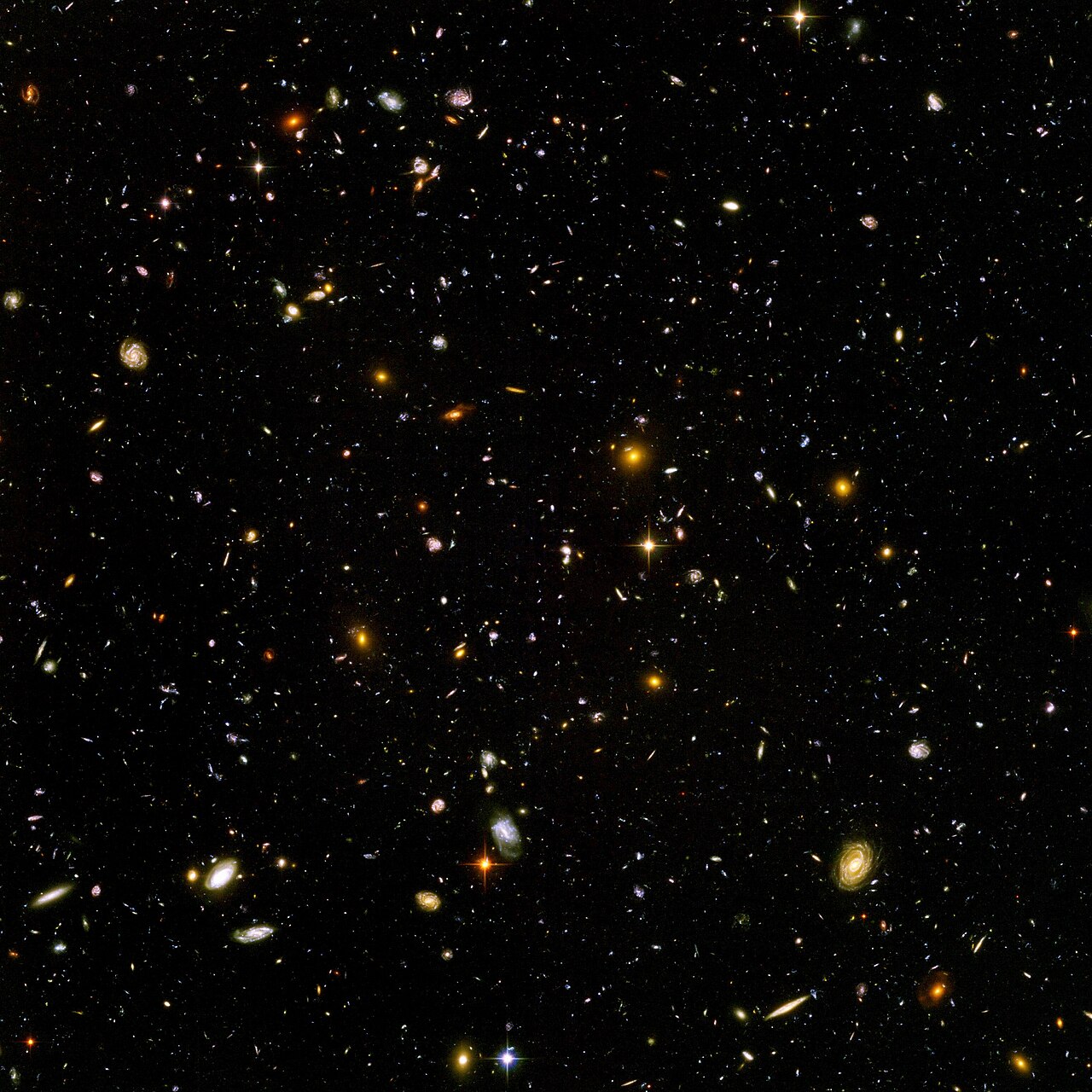
And somewhere among the hundreds of billions of stars in our galaxy—and the hundreds of billions of galaxies beyond—it is entirely possible that other minds are asking the very same questions.
These mysteries keep astronomers awake at night not because they are impossible to solve, but because history has shown that today’s greatest mystery often becomes tomorrow’s greatest discovery. The universe has surprised humanity countless times before, and there is every reason to believe its most astonishing revelations are still waiting beyond the next observation.