Since humanity first looked up at the night sky, space has inspired wonder, curiosity, and an endless desire to explore the unknown. For thousands of years, the stars remained beyond our reach. Then, in the twentieth century, science and engineering transformed dreams into reality. Rockets carried machines—and eventually people—beyond Earth’s atmosphere, opening a new chapter in human history.
Every successful space mission has expanded our understanding of the universe. Some missions proved what was possible. Others revealed breathtaking discoveries about planets, stars, galaxies, and the origins of the cosmos. A few fundamentally changed how humanity sees its place in the universe.
The following missions represent some of the greatest achievements in space exploration. Each one overcame enormous technological challenges and left a lasting scientific legacy that continues to shape astronomy, planetary science, and the future of exploration.
1. Apollo 11 (1969): Humanity’s First Steps on the Moon
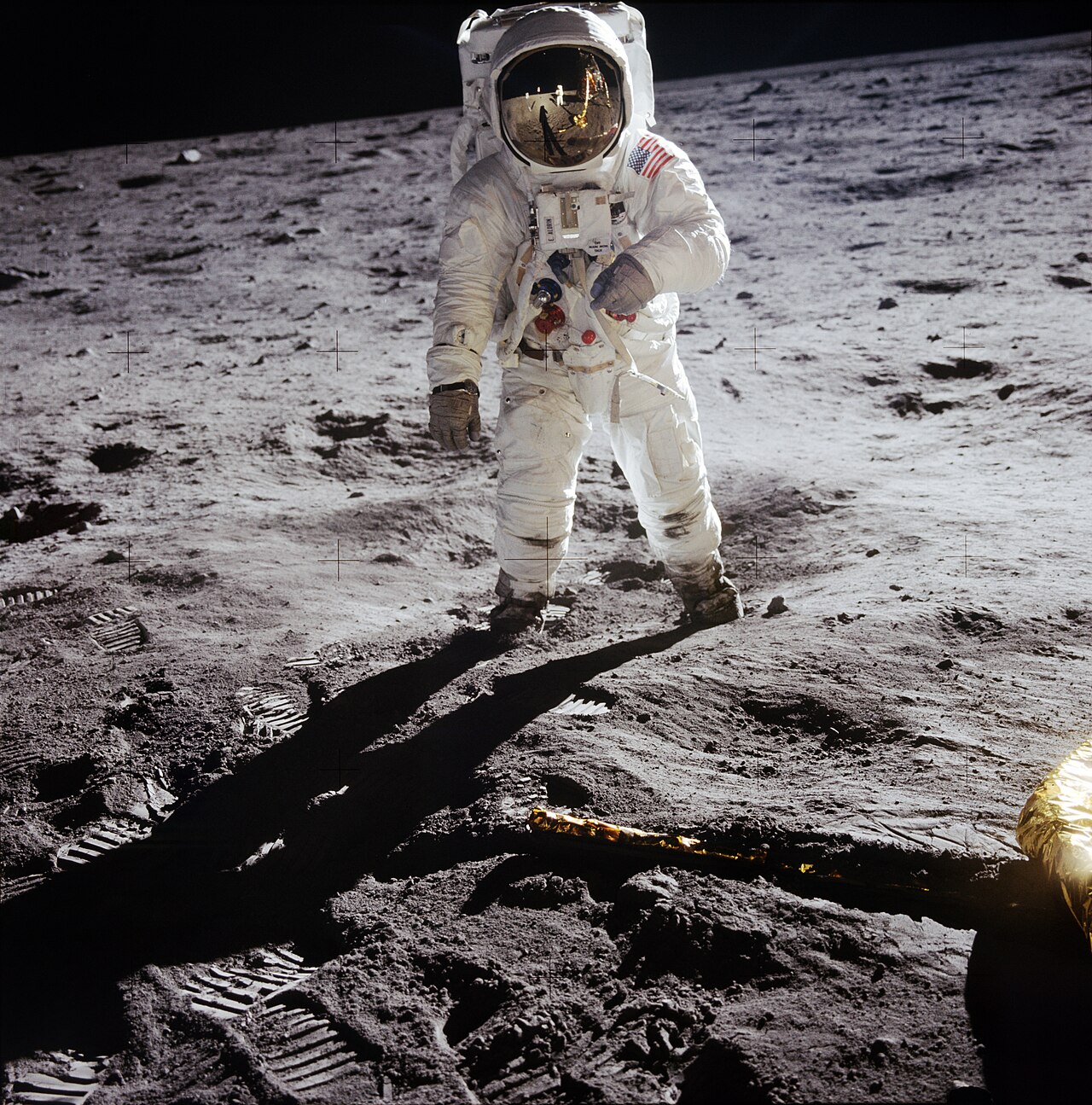
Few moments in history have inspired humanity as profoundly as the Apollo 11 mission. On July 20, 1969, astronauts Neil Armstrong and Buzz Aldrin became the first humans to walk on the Moon, while Michael Collins remained in lunar orbit aboard the command module.
When Armstrong stepped onto the lunar surface and spoke the famous words, “That’s one small step for man, one giant leap for mankind,” it marked far more than an American victory during the Space Race. It represented an achievement for all humanity.
Apollo 11 demonstrated that humans could safely travel nearly 384,400 kilometers (238,855 miles) through space, land on another world, conduct scientific experiments, and return safely to Earth.
The astronauts collected lunar rocks and soil that transformed scientists’ understanding of the Moon’s formation. These samples continue to be studied decades later using technologies that did not even exist during the mission.
Apollo 11 remains one of humanity’s greatest technological and scientific accomplishments.
2. Voyager 1 (1977): The Mission That Left the Solar System
Launched in 1977, Voyager 1 began as a mission to study Jupiter and Saturn. No one expected it would become the most distant human-made object ever created.
The spacecraft revealed extraordinary details about Jupiter’s atmosphere, volcanic activity on its moon Io, Saturn’s rings, and Titan’s thick atmosphere.
After completing its planetary tour, Voyager 1 continued outward toward interstellar space.
In 2012, it became the first spacecraft to enter interstellar space, crossing the heliopause—the boundary where the Sun’s influence gives way to the space between stars.
Today, Voyager 1 continues sending scientific data from more than 24 billion kilometers from Earth. Although its power supply gradually decreases, it remains a symbol of humanity’s desire to explore beyond every known frontier.
Attached to Voyager is the famous Golden Record, containing sounds, music, greetings, and images from Earth—a message intended for any intelligent civilization that might someday discover it.
3. Hubble Space Telescope (1990): Opening a New Window on the Universe
Before Hubble, Earth’s atmosphere blurred many astronomical observations.
The Hubble Space Telescope changed everything.
Orbiting above Earth’s atmosphere since 1990, Hubble has captured some of the most breathtaking images ever taken.
Its observations have transformed nearly every field of astronomy.
Hubble helped determine the age of the universe with much greater precision. It provided strong evidence that the universe’s expansion is accelerating, leading to the discovery of dark energy. It revealed galaxies forming in the distant early universe, studied black holes, examined stellar nurseries, observed dying stars, and investigated planets around other stars.
Unlike most spacecraft, Hubble was serviced multiple times by astronauts, extending its life and improving its capabilities.
Even after more than three decades, Hubble continues making important scientific discoveries.
4. Cassini-Huygens (1997–2017): Unlocking the Secrets of Saturn
The Cassini-Huygens mission represented one of the most ambitious international collaborations in space exploration.
After arriving at Saturn in 2004, Cassini spent thirteen years studying the giant planet, its spectacular rings, and dozens of moons.
The mission revealed astonishing discoveries.
Enceladus, once thought to be a frozen, inactive moon, was found to eject enormous plumes of water vapor and ice from beneath its icy surface. Scientists concluded that a global ocean exists beneath the ice, making Enceladus one of the most promising places to search for extraterrestrial life.
Meanwhile, the Huygens probe landed on Titan, Saturn’s largest moon, becoming the first spacecraft to land in the outer Solar System. It discovered rivers, lakes, rain, and weather—but instead of water, these features are made primarily of liquid methane and ethane.
Cassini ended dramatically in 2017 by intentionally plunging into Saturn, preventing accidental contamination of potentially habitable moons.
5. James Webb Space Telescope (2021): Seeing the Earliest Universe
The James Webb Space Telescope is the most powerful space observatory ever built.
Using infrared vision, Webb can peer through cosmic dust and observe some of the earliest galaxies formed after the Big Bang.
Its giant segmented mirror allows it to collect far more light than previous space telescopes.
Within months of beginning scientific operations, Webb discovered galaxies that existed surprisingly early in cosmic history, studied the atmospheres of exoplanets, revealed stunning details inside star-forming regions, examined black holes, and produced unprecedented images of distant galaxies.
Webb is helping scientists answer some of astronomy’s biggest questions about how stars, galaxies, and planetary systems formed.
Its discoveries are expected to continue for decades.
6. Mars Curiosity Rover (2011): Searching for Ancient Habitability
When Curiosity landed inside Gale Crater in 2012 using the spectacular “sky crane” landing system, it became one of the most advanced robotic laboratories ever sent to another planet.
Curiosity’s mission was not to search directly for life but to determine whether ancient Mars could once have supported microbial life.
The rover found overwhelming evidence that billions of years ago Mars possessed rivers, lakes, groundwater, and the chemical ingredients necessary for life.
It detected ancient sediments deposited by flowing water and discovered complex organic molecules preserved within Martian rocks.
Curiosity transformed our understanding of Mars from a cold, dry desert into a world that was once potentially habitable.
7. Viking 1 (1975): Humanity’s First Successful Mars Landing
Long before Curiosity or Perseverance, Viking 1 became the first spacecraft to successfully land and operate on Mars.
Its mission included experiments designed to detect possible biological activity.
Although the results remain scientifically debated, Viking dramatically improved knowledge of the Martian surface, atmosphere, weather, and geology.
The mission returned thousands of photographs and operated for years beyond its planned lifetime.
Viking laid the foundation for every successful Mars mission that followed.
8. Sputnik 1 (1957): The Beginning of the Space Age
Sputnik 1 was a small metal sphere no larger than a beach ball.
Yet its launch permanently changed human history.
When the Soviet Union launched Sputnik into orbit on October 4, 1957, humanity entered the Space Age.
For the first time, an artificial object circled Earth.
The satellite simply transmitted radio signals, but its success demonstrated that reaching orbit was possible.
Sputnik triggered rapid advances in rocketry, satellite technology, telecommunications, weather forecasting, navigation systems, and eventually human spaceflight.
Without Sputnik, modern space exploration might have unfolded very differently.
9. International Space Station (1998–Present): A Laboratory Above Earth
Unlike a single spacecraft, the International Space Station represents decades of continuous international cooperation.
Built by multiple space agencies, the ISS has remained continuously inhabited since November 2000.
Orbiting Earth roughly every 90 minutes, astronauts conduct research impossible under Earth’s gravity.
Experiments aboard the station have advanced medicine, biology, materials science, physics, and engineering.
The ISS has also taught scientists how long-duration spaceflight affects the human body, knowledge essential for future missions to the Moon and Mars.
Beyond science, the station demonstrates what nations can accomplish when they work together toward shared goals.
10. New Horizons (2006): Humanity’s First Visit to Pluto
For decades, Pluto remained little more than a blurry point of light.
Everything changed in July 2015.
New Horizons flew past Pluto after traveling nearly ten years through space.
The spacecraft revealed a surprisingly active world with towering mountains of water ice, vast nitrogen glaciers, frozen plains, haze-filled skies, and unexpectedly complex geology.
Scientists had expected Pluto to be geologically inactive.
Instead, they found a dynamic dwarf planet unlike anything previously imagined.
New Horizons continues exploring the distant Kuiper Belt beyond Pluto.
11. Perseverance Rover (2020): Preparing the Search for Ancient Life
Perseverance landed inside Jezero Crater in February 2021, where an ancient river delta once existed.
Its primary mission is to search for signs of ancient microbial life and collect carefully selected rock samples for future return to Earth.
The rover carries sophisticated instruments capable of analyzing minerals, chemistry, and organic compounds with extraordinary precision.
It also transported Ingenuity, the small helicopter that achieved the first powered flight on another planet.
Ingenuity exceeded every expectation, proving aerial exploration is possible in the thin Martian atmosphere.
Together, Perseverance and Ingenuity opened an entirely new era of planetary exploration.
12. Rosetta and Philae (2004–2016): Landing on a Comet
Comets are among the oldest objects in the Solar System.
The Rosetta mission became the first spacecraft to orbit a comet and deploy a lander onto its surface.
After traveling for over a decade, Rosetta reached Comet 67P/Churyumov-Gerasimenko.
The Philae lander bounced unexpectedly during landing but still returned valuable scientific data.
Rosetta revealed the comet’s unusual shape, complex chemistry, jets of escaping gas, and organic molecules that may provide clues about the ingredients available during the early Solar System.
The mission greatly improved understanding of how comets evolve and their possible role in delivering water and organic compounds to Earth.
13. Pioneer 10 (1972): First Journey Through the Asteroid Belt
Before Pioneer 10, no spacecraft had traveled safely through the asteroid belt.
Some scientists worried collisions might destroy any spacecraft attempting the journey.
Pioneer proved those fears unfounded.
After crossing the asteroid belt, it became the first spacecraft to visit Jupiter, revealing unprecedented images and scientific measurements of the giant planet.
It later became the first spacecraft to travel beyond the known planets of its time.
Like Voyager, Pioneer carries a plaque designed to introduce humanity to any future discoverers.
14. Chandrayaan-3 (2023): A Historic Lunar South Pole Landing
India’s Chandrayaan-3 mission achieved one of the most significant milestones in modern lunar exploration.
Its Vikram lander successfully touched down near the Moon’s south polar region, making India the first nation to achieve a soft landing in this challenging area.
The rover Pragyan explored the lunar surface, analyzed rocks and soil, and investigated the region’s chemical composition.
The mission highlighted the growing role of emerging space programs in advancing global space exploration and contributed valuable scientific information about one of the Moon’s most intriguing regions.
15. Apollo 13 (1970): A Triumph of Human Ingenuity
Apollo 13 never landed on the Moon.
Yet it remains one of history’s greatest space missions because of what happened after disaster struck.
An oxygen tank exploded during the journey to the Moon, crippling the spacecraft and placing the astronauts’ lives in immediate danger.
What followed became one of the most extraordinary rescue efforts ever attempted.
Engineers on Earth worked around the clock with the astronauts to improvise solutions using limited equipment.
Every decision had to be scientifically precise.
Against overwhelming odds, the crew safely returned home.
Apollo 13 demonstrated that success in space exploration is measured not only by reaching destinations but also by courage, teamwork, creativity, and determination under impossible circumstances.
The Legacy of These Extraordinary Missions
Together, these fifteen missions tell the story of humanity’s greatest adventure.
They have carried people to another world, explored every major planet, visited comets, landed on Mars, reached Pluto, traveled beyond the Solar System, and revealed galaxies formed shortly after the birth of the universe.
Each mission answered important questions while raising countless new ones. Every discovery reminded us that the universe is far more complex, beautiful, and mysterious than we once imagined.
The journey is far from over. New spacecraft are preparing to return humans to the Moon, explore icy ocean worlds, collect samples from Mars, study potentially habitable exoplanets, and perhaps one day carry people to the Red Planet itself.
The greatest space missions are not simply milestones in science and engineering. They are milestones in human curiosity. They remind us that exploration is part of our nature, that every horizon invites another journey, and that beyond every answered question lies an even greater mystery waiting among the stars.