The universe is never truly still.
While our daily lives unfold beneath familiar skies, the cosmos is constantly putting on breathtaking performances. Stars explode, planets align, meteors streak across the atmosphere, the Moon changes its appearance, and distant galaxies continue their timeless dance. Some astronomical events happen every night if you know where to look, while others occur only once in a lifetime—or even once in thousands of years.
For most of human history, people looked to the sky with awe. Ancient civilizations built monuments aligned with celestial events, sailors navigated using stars, and cultures around the world created myths inspired by the changing heavens. Today, modern astronomy allows us to understand the science behind these incredible sights, making them even more astonishing rather than less mysterious.
Whether you’re an experienced stargazer or someone who has never looked through a telescope, these are among the most spectacular astronomical events every person should experience at least once.
1. A Total Solar Eclipse
Few natural phenomena inspire as much wonder as a total solar eclipse.
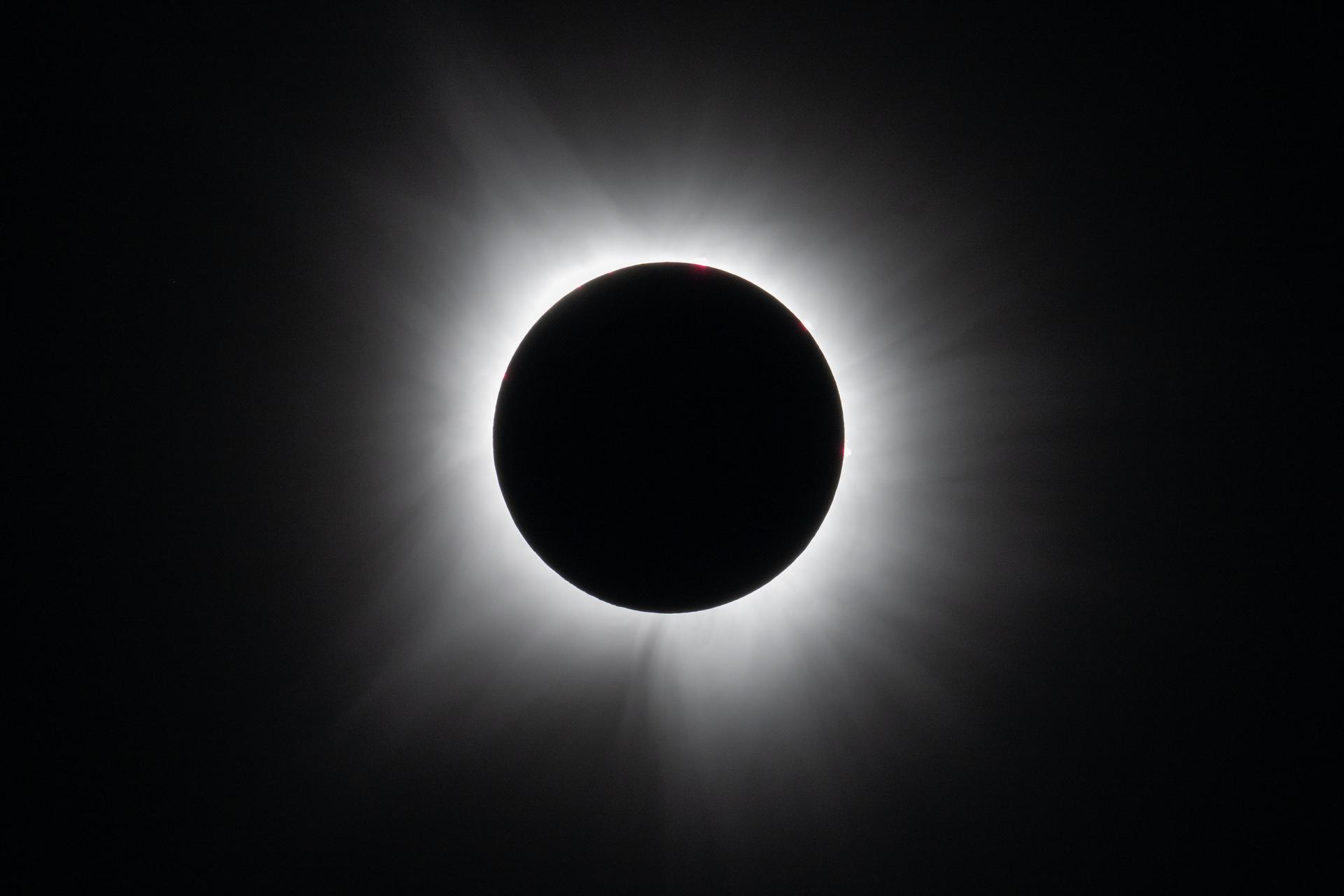
During this rare event, the Moon passes directly between Earth and the Sun, perfectly blocking the Sun’s bright disk for observers within a narrow path on Earth’s surface. For a few unforgettable minutes, daytime transforms into an eerie twilight.
As the last rays of sunlight disappear, the Sun’s outer atmosphere, called the corona, becomes visible as a glowing white halo surrounding the dark silhouette of the Moon. Bright stars and planets may suddenly appear, birds often become quiet as if night has arrived, and temperatures can drop noticeably.
A total solar eclipse is possible because the Sun is about 400 times wider than the Moon but also about 400 times farther away, making both objects appear nearly the same size in our sky.
No photograph truly captures the emotional impact of witnessing totality with your own eyes. However, it is essential to remember that looking directly at the Sun is dangerous except during the brief period of totality. Proper eclipse glasses or specially designed solar filters must always be used during the partial phases.
2. A Total Lunar Eclipse
Unlike a solar eclipse, a total lunar eclipse is visible from the entire night side of Earth.
It occurs when Earth passes directly between the Sun and the Moon, casting its shadow across the lunar surface. Instead of disappearing completely, the Moon usually turns a deep copper-red color, leading to the popular nickname “Blood Moon.”
This reddish appearance occurs because Earth’s atmosphere bends and filters sunlight into its shadow. Blue wavelengths scatter more strongly, while red light continues through the atmosphere and reaches the Moon.
Watching the Moon slowly darken and transform into a glowing crimson orb is a peaceful and unforgettable experience that unfolds over several hours.
Unlike solar eclipses, lunar eclipses are completely safe to observe without any special eye protection.
3. A Brilliant Meteor Shower
On certain nights each year, Earth passes through streams of dust left behind by comets.
As these tiny particles enter Earth’s atmosphere at tremendous speeds, they heat the surrounding air until it glows, creating the brilliant streaks of light we call meteors or “shooting stars.”
Major annual meteor showers include the Perseids in August, the Geminids in December, the Quadrantids in January, and the Leonids in November.
Under dark skies during peak activity, observers may witness dozens or even more than one hundred meteors every hour. Occasionally, exceptionally intense storms produce thousands of meteors in a single night, although such events are rare.
The best way to enjoy a meteor shower is simply to lie back beneath a dark, moonless sky and let your eyes adjust to the darkness.
4. A Bright Comet
Throughout history, bright comets have fascinated civilizations across the globe.
Modern astronomy has shown that comets are icy bodies left over from the formation of the Solar System about 4.6 billion years ago.
As a comet approaches the Sun, solar heating causes its frozen materials to vaporize, releasing gas and dust that create a glowing coma and often a spectacular tail stretching millions of kilometers into space.
Some comets become bright enough to see with the naked eye, dominating the night sky for weeks.
Unlike planets or stars, every bright comet is unique. Some display long graceful dust tails, while others produce vivid blue ion tails shaped by the solar wind.
Seeing a magnificent naked-eye comet is often considered one of astronomy’s greatest privileges because many only appear once in a human lifetime.
5. The Aurora Borealis and Aurora Australis
The northern and southern lights are among Earth’s most beautiful natural phenomena.
These shimmering curtains of green, pink, purple, and red light dance across polar skies when charged particles from the Sun collide with gases high in Earth’s atmosphere.
The colors depend on which atmospheric gases are excited and at what altitude the collisions occur. Oxygen often produces green and red light, while nitrogen contributes blue and purple hues.
Although auroras are most common near Earth’s magnetic poles, unusually strong solar storms can make them visible much farther from the poles.
Watching an aurora ripple silently across the sky feels almost otherworldly, reminding us that Earth’s magnetic field constantly protects our planet from energetic particles streaming outward from the Sun.
6. A Planetary Conjunction
Occasionally, two or more planets appear remarkably close together in the sky.
These events, known as conjunctions, occur because the planets line up from Earth’s perspective, even though they remain separated by millions or hundreds of millions of kilometers in space.
Some conjunctions are especially dramatic.
Venus and Jupiter, the two brightest planets, sometimes appear almost touching after sunset or before sunrise. On rare occasions, multiple planets gather in a beautiful celestial arrangement visible to the naked eye.
Although the planets never actually collide during these events, conjunctions provide striking reminders that the Solar System is constantly in motion.
7. The Milky Way on a Moonless Night
Many people living in brightly lit cities have never truly seen the Milky Way.
Far from artificial lights, however, the night sky transforms into an extraordinary panorama.
A glowing river of countless stars stretches across the heavens from horizon to horizon.
This luminous band is our view of the disk of the Milky Way Galaxy, which contains hundreds of billions of stars along with enormous clouds of gas and dust.
The dark lanes winding through the Milky Way are not empty spaces but dense clouds that block the light of stars behind them.
Simply standing beneath a pristine dark sky can be one of the most humbling experiences in astronomy.
8. Saturn Through a Telescope
Few astronomical sights surprise first-time observers more than Saturn.
Even a modest telescope reveals the planet’s magnificent ring system, making it appear almost unreal.
Saturn’s rings consist primarily of countless particles of water ice mixed with smaller amounts of rocky material. Although they stretch hundreds of thousands of kilometers across, they are astonishingly thin in most places.
Nearby, several of Saturn’s largest moons may also be visible.
For countless amateur astronomers, seeing Saturn’s rings for the first time sparks a lifelong passion for exploring the night sky.
9. Jupiter and Its Dancing Moons
Jupiter is the largest planet in the Solar System, and even a small telescope reveals impressive details.
Its cloud bands, giant storms, and especially its four largest moons create a constantly changing celestial show.
These moons—Io, Europa, Ganymede, and Callisto—were first observed by Galileo Galilei in 1610.
Their nightly movements around Jupiter provided powerful evidence that not everything revolves around Earth, helping revolutionize astronomy.
Watching the positions of these moons change from one evening to the next offers a direct glimpse into the mechanics of planetary systems.
10. A Supermoon Rising
A supermoon occurs when a full Moon happens near perigee, the point where the Moon is closest to Earth in its elliptical orbit.
At this time, the Moon appears slightly larger and brighter than an average full Moon.
Although the difference is modest, the effect becomes especially striking when the Moon rises near the horizon. An optical illusion often makes it appear enormous as it climbs above mountains, forests, or city skylines.
Photographers frequently capture stunning images during these evenings, but witnessing the dramatic moonrise firsthand is even more memorable.
11. A Partial or Total Planetary Transit
Planetary transits occur when a planet passes directly across the face of the Sun as viewed from Earth.
Mercury transits happen around a dozen times per century, while Venus transits are extraordinarily rare, occurring in pairs separated by more than a century.
During a transit, the planet appears as a tiny black dot slowly crossing the solar disk.
These events have played important roles in the history of astronomy, helping scientists refine measurements of the Solar System.
Because transits involve observing the Sun, proper solar filters are always required for safe viewing.
12. The Zodiacal Light
One of the least-known but most beautiful astronomical sights is the zodiacal light.
Under exceptionally dark skies shortly after sunset or before sunrise, observers may notice a faint triangular glow extending upward from the horizon.
This soft light is produced when sunlight reflects from tiny dust particles scattered throughout the inner Solar System.
These dust grains originate from collisions between asteroids and material shed by comets over millions of years.
The zodiacal light is subtle yet remarkably beautiful, offering a glimpse of the dusty environment through which Earth travels as it orbits the Sun.
13. An Occultation
An occultation occurs when one celestial object completely blocks another from view.
The most common occultations involve the Moon passing in front of a bright star or planet.
Unlike the gradual fading seen during an eclipse, stars often disappear almost instantly because they are so distant that they appear as tiny points of light.
Watching a bright star suddenly blink out behind the Moon’s dark edge and reappear minutes later feels surprisingly dramatic.
Astronomers also use occultations to study distant objects, discover planetary atmospheres, and measure the sizes of asteroids.
14. A Bright Fireball
Most meteors are brief streaks lasting less than a second.
Occasionally, however, an exceptionally large meteoroid enters Earth’s atmosphere, producing a brilliant fireball.
These dazzling objects can outshine Venus or even the full Moon, illuminating landscapes and casting shadows.
Some fireballs fragment dramatically, creating spectacular explosions known as bolides.
If surviving fragments reach Earth’s surface, they become meteorites, offering scientists valuable information about the early Solar System.
Witnessing a brilliant fireball unexpectedly streak across the sky is an unforgettable moment for anyone lucky enough to see one.
15. The International Space Station Crossing the Sky
Not every astronomical wonder is natural.
The International Space Station (ISS) is one of the brightest human-made objects visible from Earth.
As it orbits approximately 400 kilometers (250 miles) above the planet, sunlight reflects from its large solar arrays, allowing it to appear as a bright, steadily moving point of light.
Unlike airplanes, it has no flashing navigation lights and crosses the sky smoothly in just a few minutes.
Knowing that astronauts may be living and working aboard while it silently passes overhead creates a remarkable connection between humanity and space exploration.
It serves as a reminder that our curiosity has carried us beyond Earth itself.
Why These Events Matter
Astronomical events do more than entertain.
They connect us with the immense scale of the universe and remind us that Earth is part of a much larger cosmic story. Every eclipse, meteor shower, aurora, and planetary alignment reflects the predictable laws of physics that govern everything from tiny atoms to vast galaxies.
These celestial spectacles also inspire scientific discovery. Eclipses have helped scientists study the Sun’s atmosphere, meteor showers reveal the remnants of ancient comets, planetary transits have improved our understanding of orbital mechanics, and auroras provide insight into the interaction between the Sun and Earth’s magnetic field.
Most importantly, these events awaken something deeply human: curiosity. Looking up at a sky filled with stars has inspired explorers, philosophers, artists, and scientists for thousands of years. Even in the age of powerful space telescopes and robotic probes, witnessing these wonders with your own eyes creates a sense of perspective that no photograph or video can fully capture.
The universe performs these spectacular shows not for a select few, but for anyone willing to step outside, look upward, and appreciate the extraordinary beauty unfolding above our world.