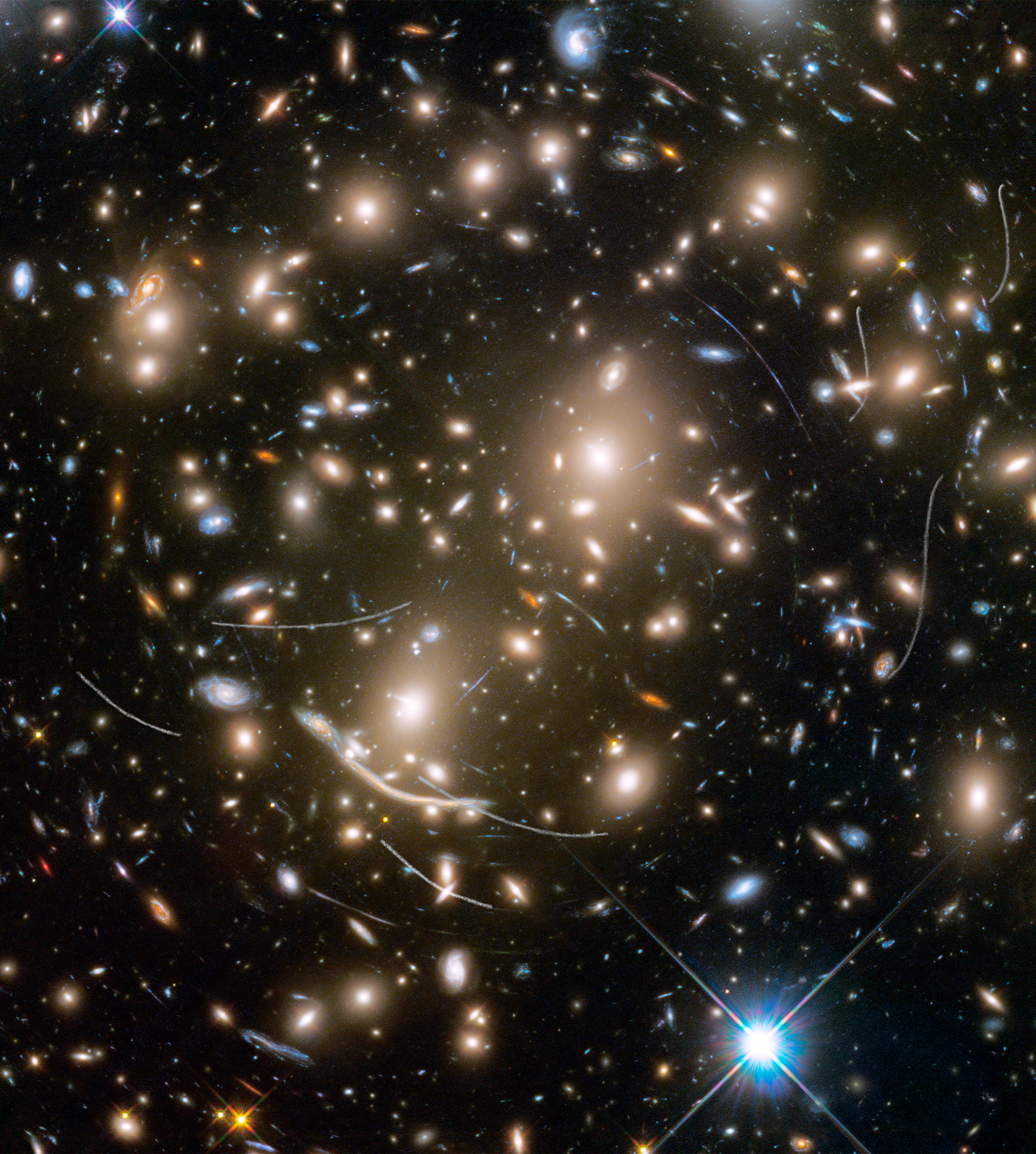
For more than six decades, NASA has transformed humanity’s understanding of the universe. Since its founding in 1958, the U.S. space agency has launched hundreds of spacecraft, landed astronauts on the Moon, explored every planet in the Solar System, peered into the deepest reaches of space, and revealed discoveries that have forever changed science.
NASA’s achievements extend far beyond dramatic rocket launches and breathtaking images from space. Many of its greatest discoveries have answered questions that puzzled humanity for centuries while also raising entirely new mysteries. These discoveries have reshaped astronomy, planetary science, physics, Earth science, and even our understanding of life’s potential beyond our planet.
From proving that black holes truly exist to finding thousands of distant worlds orbiting other stars, NASA has repeatedly expanded the boundaries of human knowledge. Each breakthrough has reminded us that the universe is far more complex, dynamic, and astonishing than anyone once imagined.
Here are ten of NASA’s greatest scientific discoveries that continue to shape modern science.
1. Thousands of Planets Beyond Our Solar System
For most of human history, nobody knew whether planets existed around other stars. Although philosophers had long imagined countless distant worlds, there was no direct evidence.
That changed dramatically in the last few decades, thanks in large part to NASA’s planet-hunting missions.
The Kepler Space Telescope, launched in 2009, revolutionized astronomy by monitoring the brightness of more than 150,000 stars. Whenever a planet crossed in front of its parent star, Kepler detected the tiny decrease in light. This technique, known as the transit method, allowed astronomers to discover thousands of exoplanets.
NASA’s Transiting Exoplanet Survey Satellite (TESS), launched in 2018, expanded the search by surveying nearly the entire sky and identifying thousands of additional planet candidates around nearby stars.
Together, these missions have shown that planets are incredibly common throughout the Milky Way. Scientists now estimate that our galaxy alone likely contains hundreds of billions of planets.
Perhaps even more remarkable, NASA has discovered rocky Earth-sized worlds, giant gas planets larger than Jupiter, ultra-hot lava worlds, ocean candidates, and planets orbiting two stars simultaneously.
These discoveries fundamentally changed humanity’s perspective. Our Solar System is no longer seen as unique but as one planetary system among countless others scattered across the galaxy.
2. Water Exists Throughout the Solar System
For generations, scientists assumed Earth might be the only world rich in water. NASA’s robotic explorers completely overturned that assumption.
Spacecraft observations have revealed water in astonishing places across the Solar System.
Mars contains enormous reserves of water ice beneath its polar caps and buried underground. Ancient river valleys, lakebeds, deltas, and mineral deposits demonstrate that liquid water once flowed across much of the planet’s surface billions of years ago.
The Cassini mission discovered towering geysers erupting from Saturn’s moon Enceladus. These jets contain water vapor, ice particles, salts, and organic molecules originating from a global ocean beneath the moon’s icy crust.
NASA’s Galileo spacecraft found compelling evidence that Jupiter’s moon Europa also hides a vast salty ocean beneath its frozen surface. Scientists estimate Europa may contain more liquid water than all of Earth’s oceans combined.
Even comets, asteroids, dwarf planets, and permanently shadowed craters on Earth’s Moon contain significant amounts of water ice.
These discoveries dramatically expanded the number of potentially habitable environments in our Solar System.
3. The Universe Is Filled With Black Holes
Black holes were once considered purely theoretical objects predicted by Einstein’s theory of general relativity.
NASA missions have transformed them into observable cosmic realities.
The Chandra X-ray Observatory has detected intense X-ray emissions from matter falling into black holes throughout the universe. These observations have revealed both stellar-mass black holes formed after massive stars explode and supermassive black holes lurking at the centers of galaxies.
The Hubble Space Telescope has shown that nearly every large galaxy hosts a supermassive black hole millions or even billions of times more massive than the Sun.
NASA’s NuSTAR telescope has discovered hidden black holes obscured by thick clouds of gas and dust, while other missions have observed stars being torn apart by black holes through tidal disruption events.
Rather than rare cosmic oddities, black holes are now understood to be common and fundamental components of galaxy evolution.
4. The Accelerating Expansion of the Universe
One of the most surprising discoveries in modern cosmology is that the universe is not merely expanding—it is expanding faster over time.
NASA’s Hubble Space Telescope played a central role in refining measurements of distant exploding stars known as Type Ia supernovae.
These observations helped confirm that distant galaxies are moving away from one another at an accelerating rate.
The cause remains one of science’s greatest mysteries.
Astronomers attribute this acceleration to an unknown phenomenon called dark energy, which appears to make up nearly 70% of the universe’s total energy content according to current cosmological models.
Although dark energy remains poorly understood, NASA observations have been essential for studying its effects and refining measurements of cosmic expansion.
This discovery fundamentally changed cosmology and revealed that most of the universe consists of forms of matter and energy that scientists still do not fully understand.
5. Mars Was Once a Habitable World
For centuries, Mars fascinated observers because of its reddish appearance and seasonal changes.
NASA transformed speculation into detailed scientific investigation.
Orbiters and rovers have shown that ancient Mars possessed rivers, lakes, groundwater, deltas, minerals formed in water, and perhaps even oceans.
The Opportunity rover found rocks shaped by flowing water.
Curiosity discovered ancient lake sediments, clay minerals, and organic molecules preserved in Gale Crater.
Perseverance is currently exploring Jezero Crater, where an ancient river once emptied into a lake, collecting rock samples that may eventually be returned to Earth for laboratory analysis.
NASA has not found evidence of past life on Mars.
However, its discoveries strongly indicate that billions of years ago Mars possessed many ingredients considered favorable for microbial life.
Mars is now viewed as one of the most promising places to search for evidence of ancient extraterrestrial biology.
6. Gravitational Waves Opened a New Window on the Universe
For over a century, gravitational waves remained one of Albert Einstein’s boldest predictions.
These tiny ripples in spacetime were finally detected in 2015 by the Laser Interferometer Gravitational-Wave Observatory (LIGO), a project funded by the U.S. National Science Foundation.
NASA played a crucial supporting role through space-based observations that helped study the astronomical events producing these waves.
When neutron stars collided in 2017, NASA’s Fermi Gamma-ray Space Telescope detected an accompanying burst of gamma rays only seconds after the gravitational-wave signal.
Multiple NASA observatories then helped study the aftermath across X-ray, ultraviolet, and infrared wavelengths.
This marked the birth of multi-messenger astronomy, where scientists investigate cosmic events using both gravitational waves and electromagnetic radiation.
Together, these observations revealed how heavy elements such as gold and platinum are forged during neutron star mergers.
7. The Hubble Space Telescope Revealed the Deep Universe
Few scientific instruments have changed astronomy more profoundly than the Hubble Space Telescope.
Since its launch in 1990, Hubble has observed planets, stars, nebulae, galaxies, and the distant universe with extraordinary clarity.
One of its greatest achievements came through the Hubble Deep Field and later Ultra Deep Field observations.
Instead of pointing toward bright objects, astronomers directed Hubble at seemingly empty regions of the sky for many days.
The result stunned the scientific community.
Those apparently empty patches contained thousands of distant galaxies stretching back billions of years into cosmic history.
These observations demonstrated that galaxies fill the universe almost everywhere scientists look.
Hubble also measured the ages of stars, refined estimates of the universe’s age, observed galaxy evolution, investigated dark matter through gravitational lensing, and studied the atmospheres of some exoplanets.
Its discoveries transformed nearly every branch of astronomy.
8. Earth Is Constantly Changing
Although NASA is famous for exploring space, some of its most important discoveries concern our own planet.
Using satellites equipped with sophisticated instruments, NASA continuously monitors Earth’s atmosphere, oceans, forests, glaciers, clouds, sea ice, and land surfaces.
These observations have provided detailed evidence of long-term climate change.
NASA satellites have documented shrinking Arctic sea ice, melting glaciers, rising sea levels, changing vegetation, increasing atmospheric greenhouse gases, and shifts in weather patterns.
They also help scientists monitor hurricanes, droughts, wildfires, volcanic eruptions, floods, and agricultural conditions.
Because satellites repeatedly observe the entire planet over many years, they provide an unparalleled record of Earth’s changing environment.
These measurements have become essential for climate science and disaster response.
9. Organic Molecules Are Common in Space
Life on Earth depends on carbon-based molecules.
NASA missions have shown that many of these chemical building blocks exist naturally throughout the Solar System and beyond.
The Cassini spacecraft detected complex organic compounds within Enceladus’ water plumes.
The OSIRIS-REx mission returned samples from the near-Earth asteroid Bennu, revealing a chemically rich environment that includes carbon-containing compounds and minerals formed through interactions with water.
Space telescopes have identified organic molecules inside interstellar clouds where new stars and planets are born.
Comets also contain numerous organic compounds.
These discoveries do not prove that life exists elsewhere.
However, they demonstrate that the raw chemical ingredients needed for life are widespread throughout the cosmos.
This greatly strengthens the scientific possibility that life’s building blocks may develop wherever suitable environments exist.
10. The James Webb Space Telescope Is Revealing the Earliest Universe
Launched in 2021, the James Webb Space Telescope represents one of NASA’s greatest scientific achievements.
Operating primarily in infrared light, Webb can observe objects too distant, faint, or dust-obscured for many previous telescopes.
Within months of beginning science operations, Webb detected galaxies that formed only a few hundred million years after the Big Bang.
It has studied the atmospheres of exoplanets, identified molecules including water vapor and carbon dioxide in some distant planetary atmospheres, examined stellar nurseries hidden within thick clouds of dust, and revealed unprecedented details of galaxies, nebulae, and planetary systems.
Many of Webb’s observations are refining—or in some cases challenging—existing models of how galaxies formed and evolved in the early universe.
As the mission continues, scientists expect Webb to produce groundbreaking discoveries for many years, making it one of NASA’s most important observatories ever built.
Why These Discoveries Matter
Each of these discoveries answered questions that had puzzled scientists for decades—or even centuries. Yet each answer also opened new mysteries.
Finding thousands of exoplanets forces us to ask whether any of them host life.
Discovering oceans beneath icy moons raises exciting possibilities about hidden ecosystems.
Observing dark energy reminds us that most of the universe remains unexplained.
Exploring Mars encourages scientists to continue searching for evidence of ancient life.
Detecting organic molecules across space suggests that the ingredients for biology are not unique to Earth.
The James Webb Space Telescope continues pushing our view closer to the beginning of cosmic history, revealing that the early universe was more complex than previously imagined.
NASA’s greatest discoveries are therefore not simply collections of scientific facts. They are milestones in humanity’s quest to understand where we came from, how the universe works, and whether we are alone in the cosmos.
Conclusion
NASA has fundamentally transformed our understanding of the universe. Through robotic explorers, powerful space telescopes, Earth-observing satellites, and international scientific collaborations, it has revealed that planets are abundant, water is widespread, black holes shape galaxies, the universe is accelerating, Mars was once habitable, gravitational waves can be observed alongside light, Earth’s climate is changing, organic molecules are common in space, and the earliest galaxies are now within our reach.
These discoveries represent far more than scientific achievements—they are chapters in humanity’s expanding story of exploration. Every mission pushes the boundaries of knowledge a little farther, replacing mystery with understanding while revealing even greater questions beyond. As new spacecraft venture deeper into space and more advanced observatories peer farther into time, NASA’s next great discovery may once again reshape how we see the universe and our place within it.