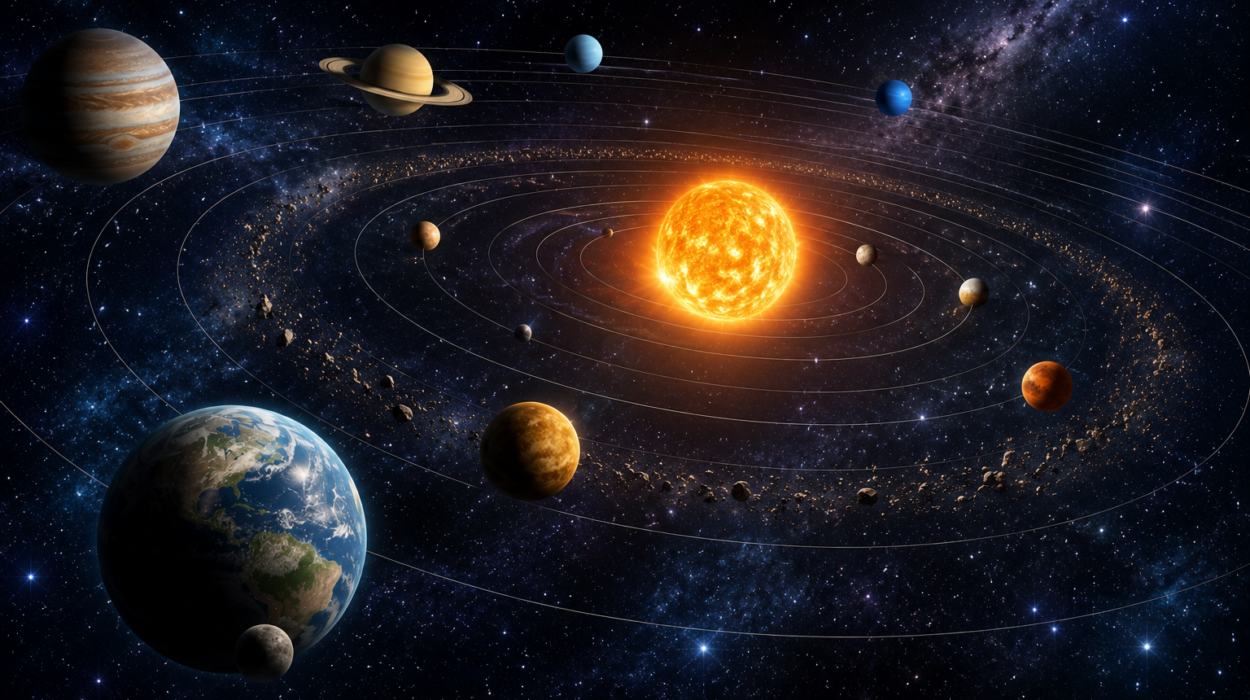
For as long as humanity has looked up at the stars, we have wondered where the universe came from. Today, modern cosmology has given us a remarkable answer: the observable universe began nearly 13.8 billion years ago in an extremely hot, dense state known as the Big Bang. Galaxies formed, stars ignited, planets emerged, and eventually life appeared on at least one small world orbiting an ordinary star.
But every beginning raises another profound question.
How will it all end?
Will galaxies slowly fade into darkness? Could space itself tear apart every atom? Might the universe collapse back into a cosmic fireball? Could an invisible quantum event erase reality without warning?
Unlike science fiction, these questions are not products of imagination alone. Physicists and astronomers have spent decades developing mathematically rigorous models describing the possible futures of the cosmos. Some are supported by current observations. Others remain speculative but arise naturally from established physical theories. None have been proven, because the universe’s ultimate fate depends on properties of dark energy, gravity, quantum mechanics, and cosmic evolution that scientists are still trying to understand.
One important fact shapes nearly every modern theory: the universe is expanding. Even more surprisingly, observations show that this expansion is accelerating. Whatever drives that acceleration—commonly attributed to dark energy—plays a central role in determining the future of everything.
The following fifteen theories represent some of the most fascinating scientific ideas about how the universe might eventually end.
1. The Heat Death of the Universe
Among all proposed endings, the Heat Death is considered by many cosmologists to be the most likely based on current evidence.
Despite its dramatic name, Heat Death is not an explosion or catastrophic event. It is an unimaginably slow fading of all activity.
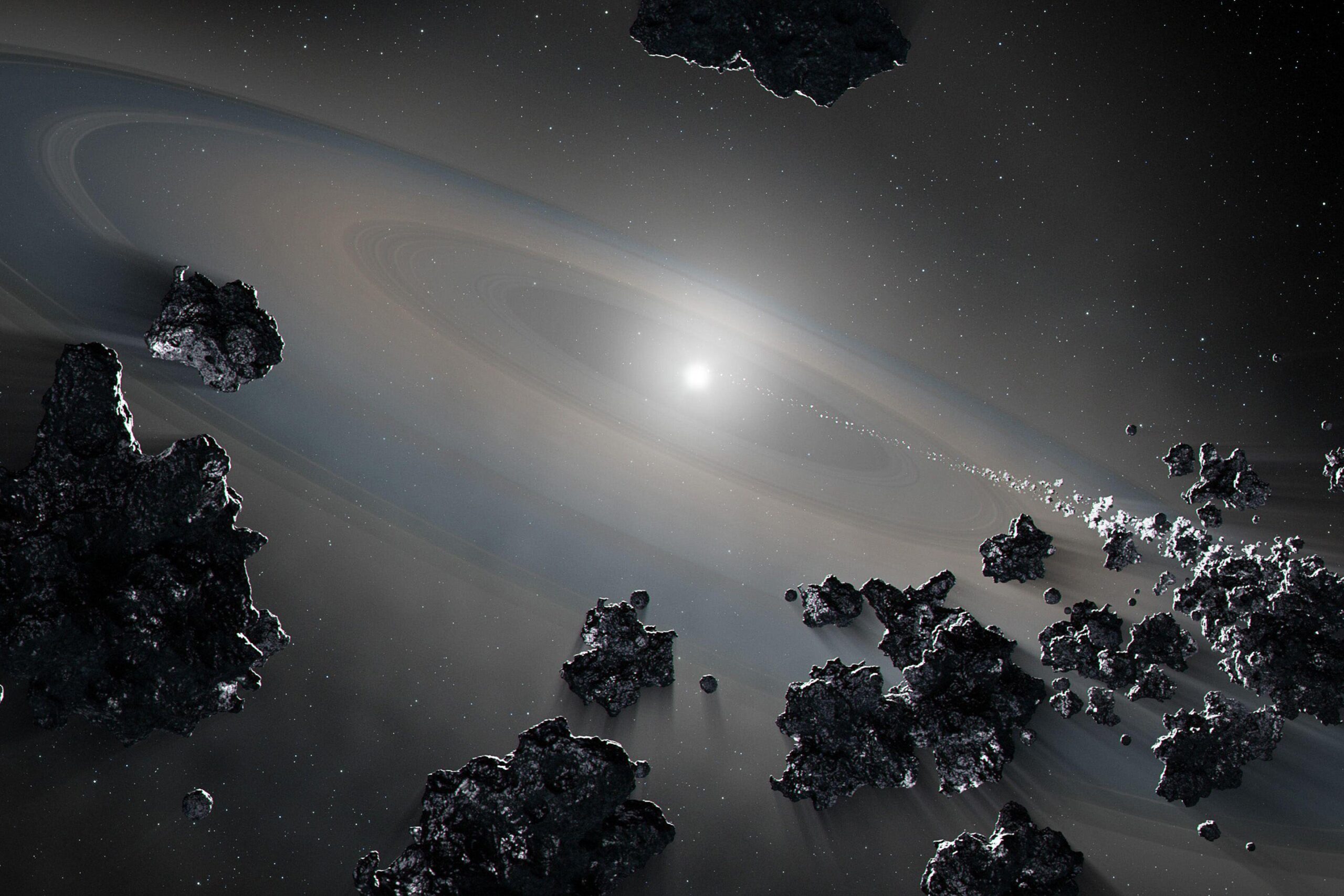
The universe continues expanding forever. Galaxies drift farther apart. New stars gradually stop forming because clouds of gas become exhausted. Existing stars burn through their nuclear fuel and eventually die.
White dwarfs cool into black dwarfs.
Neutron stars slowly lose energy.
Black holes dominate the remaining cosmic landscape.
Eventually, even black holes evaporate through a quantum process known as Hawking radiation, first proposed by physicist Stephen Hawking.
After unimaginable spans of time—far longer than the current age of the universe—only extremely low-energy particles remain.
Matter becomes incredibly diffuse.
Temperature approaches absolute uniformity.
Without temperature differences, no useful energy can flow.
Without energy flow, no physical process capable of supporting stars, planets, chemistry, or life can continue.
The universe does not explode.
It simply becomes quiet forever.
2. The Big Rip
Imagine the expansion of the universe becoming stronger instead of merely continuing.
That possibility leads to one of the most terrifying cosmological scenarios ever proposed.
The Big Rip assumes that dark energy grows increasingly powerful over time.
Initially, galaxies move away from one another faster than they do today.
Later, galaxy clusters themselves are torn apart.
Eventually, individual galaxies disintegrate.
Then solar systems become gravitationally unstable.
Planets leave their stars.
Finally, the expansion becomes so intense that it overcomes electromagnetic forces holding atoms together.
Even atomic nuclei cannot survive.
Matter itself is ripped apart.
In this scenario, every physical structure—from galaxy superclusters to subatomic particles—is ultimately destroyed by the expansion of space.
Current observations do not strongly support this outcome, but they also have not completely ruled it out.
Its possibility depends upon the exact nature of dark energy, one of the greatest unsolved mysteries in modern physics.
3. The Big Crunch
Before astronomers discovered cosmic acceleration, many scientists considered the Big Crunch a leading possibility.
In this scenario, gravity eventually overcomes cosmic expansion.
The universe slows.
Expansion stops.
Then everything begins falling inward.
Galaxies move toward one another.
Cosmic density increases.
Temperatures rise dramatically.
Eventually, the entire universe collapses into an extremely hot, dense state resembling conditions near the Big Bang.
Whether such a collapse could trigger another cosmic beginning remains uncertain.
Current evidence indicates that expansion is accelerating rather than slowing, making the Big Crunch appear less likely under present observations.
Nevertheless, it remains an important theoretical possibility if dark energy behaves differently than currently understood.
4. The Big Bounce
What if the Big Bang was not truly the beginning?
The Big Bounce proposes that our expanding universe emerged from an earlier collapsing universe.
Instead of ending permanently in a Big Crunch, the collapse reaches an extreme density where quantum gravitational effects prevent complete destruction.
The universe “bounces.”
Expansion begins again.
Each cosmic cycle produces another universe.
This idea appears in several approaches to quantum gravity and cyclic cosmology.
Scientists do not yet possess a complete theory of quantum gravity, so the mechanism remains speculative.
If true, our universe might simply represent one chapter in an endless sequence of cosmic births and rebirths.
5. Vacuum Decay
Perhaps the most unsettling possibility involves no warning whatsoever.
Quantum field theory suggests that what we perceive as empty space is not actually empty.
Instead, it possesses measurable energy.
Some physicists have proposed that our universe may exist in a metastable vacuum—a state that appears stable but is not the absolute lowest possible energy state.
If true, a tiny quantum fluctuation could someday trigger a transition to a lower-energy vacuum.
A bubble of this new vacuum would expand outward at nearly the speed of light.
Inside the bubble, the laws of physics themselves might change.
Fundamental particles could acquire different properties.
Atoms might no longer exist.
Chemistry could become impossible.
The bubble would destroy everything in its path.
Because it travels at nearly light speed, no observer would see it coming.
Fortunately, if vacuum decay is possible, current calculations suggest it is extraordinarily unlikely to occur anytime soon.
6. Eternal Expansion
Not every cosmic ending involves violence.
The universe may simply continue expanding forever without dramatic catastrophe.
Galaxies beyond our Local Group gradually disappear beyond the observable horizon.
Future civilizations would see fewer galaxies with each passing epoch.
Eventually, distant galaxies become permanently invisible because their light can no longer overcome cosmic expansion.
Astronomy itself changes.
Future observers may conclude they live in a lonely universe containing only their own galaxy.
The cosmos survives.
It simply becomes increasingly empty.
7. Black Hole Era
Long after ordinary stars disappear, black holes may dominate the universe.
This future represents a distinct phase of cosmic evolution.
Stars collapse into black holes.
Galaxies become populated primarily by these incredibly dense objects.
Black holes occasionally merge, producing larger ones.
Over immense timescales, however, Hawking radiation slowly removes their mass.
Large black holes evaporate astonishingly slowly.
The most massive may survive for around 10¹⁰⁰ years or more.
Eventually, even they disappear.
The Black Hole Era marks one of the final chapters before complete Heat Death.
8. Proton Decay
The stability of ordinary matter depends upon whether protons truly last forever.
The Standard Model of particle physics treats protons as stable.
However, several Grand Unified Theories predict that protons eventually decay into lighter particles.
No experiment has yet observed proton decay.
Current measurements indicate that if it occurs, a proton’s lifetime exceeds approximately 10³⁴ years.
If proton decay proves real, ordinary matter gradually disappears.
Planets dissolve.
Stars vanish.
Atoms cease to exist.
Only radiation and elementary particles remain.
Whether proton decay actually happens remains one of particle physics’ greatest unanswered questions.
9. The False Vacuum Bubble Triggered by Black Holes
Some theoretical physicists have explored whether extremely energetic environments surrounding microscopic black holes might increase the probability of vacuum decay.
The idea remains highly speculative.
Certain quantum gravity models suggest black holes could influence vacuum stability under specific conditions.
If correct, a black hole might someday initiate the catastrophic vacuum transition described earlier.
Current evidence offers no indication that this process occurs naturally in our universe.
Nevertheless, it illustrates how different areas of theoretical physics can intersect in unexpected ways.
10. The Cyclic Universe
Closely related to the Big Bounce but conceptually distinct, cyclic cosmology proposes that the universe repeatedly expands and contracts through countless cosmic ages.
Each cycle begins with conditions resembling a Big Bang.
Expansion continues for billions or trillions of years.
Eventually, contraction begins.
Another expansion follows.
Some versions of the theory suggest that information or physical structures from earlier cycles could influence later ones.
Whether such cycles can occur without violating known physical laws remains an active area of research.
11. Brane Collision Cosmology
Certain versions of string theory suggest that our observable universe exists on a higher-dimensional membrane known as a brane.
Another brane may exist nearby within higher-dimensional space.
Periodic collisions between these enormous structures could produce events resembling Big Bangs.
In this framework, our universe’s beginning may have resulted from such a collision.
Future collisions could dramatically reshape or effectively end the observable universe.
Although mathematically intriguing, this idea remains speculative because string theory itself has not yet been experimentally confirmed.
12. Quantum Gravitational Collapse
Modern physics successfully describes gravity through general relativity and microscopic particles through quantum mechanics.
Unfortunately, these two theories remain difficult to reconcile.
A complete theory of quantum gravity might reveal entirely new possibilities for cosmic evolution.
Some speculative models predict previously unknown instabilities arising under extreme conditions.
Others suggest that space-time itself may possess microscopic structures capable of evolving in unexpected ways.
Until quantum gravity is fully understood, entirely new endings remain possible.
13. Dark Energy Transformation
Dark energy currently appears remarkably constant.
But what if it changes?
Future observations may reveal that dark energy evolves over cosmic time.
If its strength decreases, expansion might eventually slow.
If it reverses sign, contraction could begin.
If it increases dramatically, the Big Rip becomes possible.
If it oscillates, entirely different cosmic histories may unfold.
Because scientists still do not know what dark energy actually is, changes in its behavior remain one of the greatest uncertainties in predicting the universe’s future.
14. Cosmic Fragmentation
Some theoretical models suggest that different regions of the expanding universe may eventually become permanently isolated from one another.
Expansion stretches space so rapidly that communication between distant regions becomes forever impossible.
Each observable region effectively becomes its own separate cosmic island.
Over immense timescales, every gravitationally bound structure exists within an increasingly isolated pocket of the universe.
The universe does not technically end.
Instead, it fragments into disconnected cosmic domains that can never again influence one another.
15. An Ending We Have Not Yet Imagined
Perhaps the most scientifically honest possibility is that every theory above is incomplete.
History repeatedly teaches that revolutionary discoveries transform humanity’s understanding of nature.
Before Einstein, nobody imagined curved space-time.
Before quantum mechanics, microscopic reality appeared fundamentally different.
Before dark energy, astronomers expected cosmic expansion to slow rather than accelerate.
Future discoveries may reveal entirely new laws of physics.
Dark matter could behave unexpectedly.
Quantum gravity may reshape cosmology.
Hidden dimensions might influence cosmic evolution.
There may be phenomena that current science has not even conceived.
The universe could end in a manner no existing theory predicts.
Sometimes the greatest scientific mystery is recognizing how much remains unknown.
What Current Evidence Suggests
Among all proposed scenarios, present astronomical observations favor continued accelerated expansion.
Measurements of distant supernovae, the cosmic microwave background, and the large-scale distribution of galaxies all support this picture.
If dark energy behaves as a cosmological constant—a possibility consistent with current data—the universe most likely approaches Heat Death.
However, significant uncertainties remain.
Dark energy has never been directly identified.
Dark matter remains mysterious.
Quantum gravity remains incomplete.
Because these missing pieces influence the universe’s long-term evolution, no prediction can yet be considered absolutely certain.
Why the Universe’s Fate Matters
At first glance, the end of the universe may seem irrelevant.
Most proposed scenarios unfold over timescales so vast that they dwarf the current age of the cosmos.
Yet studying cosmic endings answers much deeper questions.
It reveals how gravity shapes reality.
It tests theories of quantum mechanics.
It probes the nature of dark energy.
It challenges our understanding of time itself.
The future of the universe is ultimately a question about the laws governing everything.
Humanity’s Place in the Cosmic Story
There is something profoundly humbling about contemplating the universe’s final chapter.
Every civilization in history has risen beneath stars that themselves are temporary.
Our Sun will eventually exhaust its nuclear fuel long before any cosmological ending occurs.
Galaxies evolve.
Stars die.
Black holes evaporate.
Even space itself may not last forever.
Yet the remarkable fact is not that the universe will someday end.
The remarkable fact is that tiny, conscious beings living on a small rocky planet have become capable of asking how.
Through mathematics, observation, and imagination disciplined by evidence, humanity has extended its curiosity from the smallest quantum particles to the ultimate destiny of the cosmos.
Whether the universe fades into eternal darkness, tears itself apart, collapses into a new beginning, or follows a path no scientist has yet imagined, its ending remains one of the greatest scientific mysteries ever explored—a reminder that while the universe may one day reach its final chapter, our quest to understand it is still very much at the beginning.