Biology has transformed our understanding of life more profoundly than almost any other science. We know that DNA stores genetic information, cells form the building blocks of living organisms, and evolution by natural selection explains the incredible diversity of species on Earth. Scientists can sequence entire genomes, edit genes with remarkable precision, observe individual molecules inside cells, and even reconstruct ancient evolutionary histories from fragments of fossilized DNA.
Yet despite these extraordinary achievements, life continues to surprise us.
Some of biology’s biggest questions remain unanswered—not because scientists have failed, but because living systems are astonishingly complex. Every answer reveals deeper layers of mystery. The more researchers learn about cells, brains, ecosystems, and evolution, the more they discover phenomena that challenge existing theories or remain only partially understood.
These mysteries are not supernatural. They are active areas of scientific research. Many have promising hypotheses supported by growing evidence, but no explanation has yet gained universal acceptance. Others remain so poorly understood that even the right questions are still being debated.
The following seventeen biological mysteries remind us that Earth itself is one of the greatest laboratories in the universe—and we are only beginning to understand how life truly works.
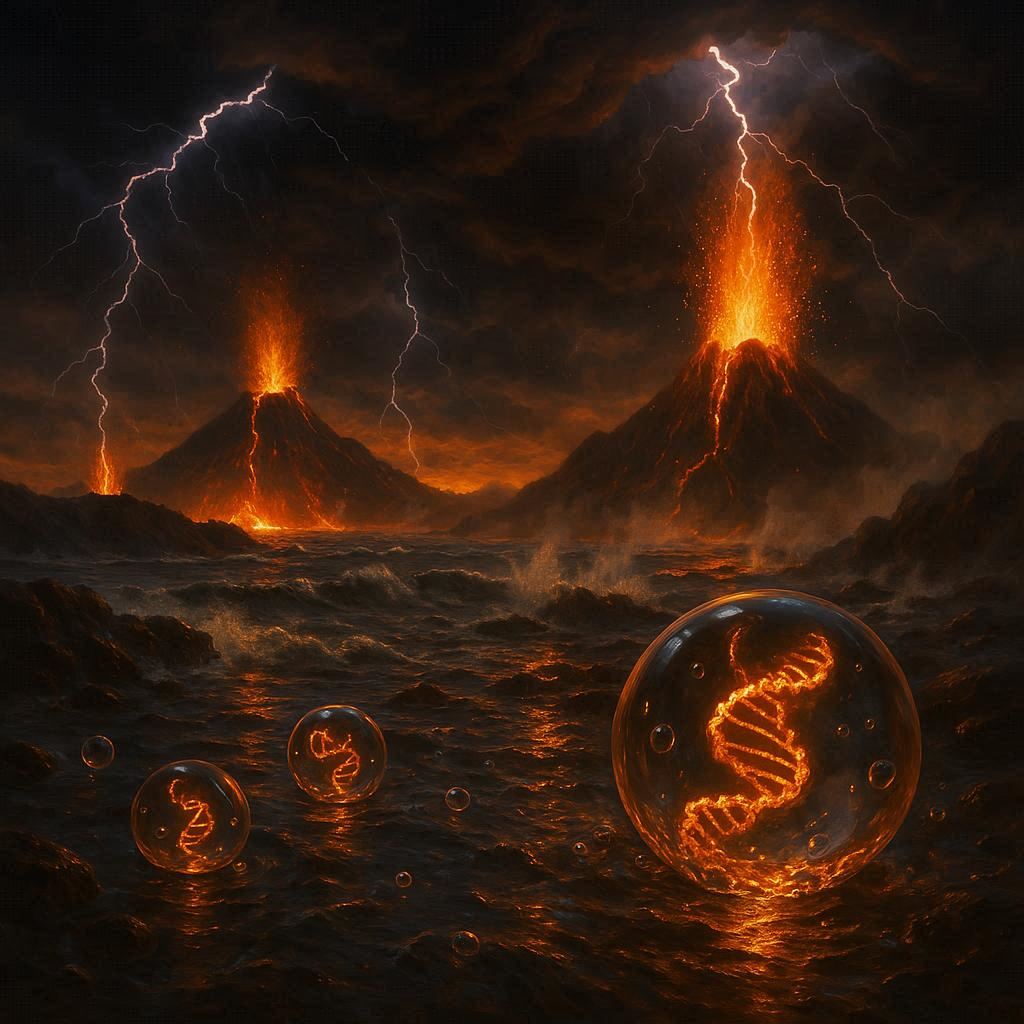
1. How Did Life Begin?
Every organism on Earth, from bacteria to blue whales, ultimately traces its ancestry back to the first living system.
But how did life itself begin?
This question lies at the heart of biology.
Scientists distinguish between biological evolution and the origin of life. Evolution explains how living organisms diversify after life already exists. It does not explain how the first self-replicating system emerged from non-living chemistry.
Researchers have proposed several leading hypotheses.
The RNA World hypothesis suggests that early RNA molecules may have both stored genetic information and catalyzed chemical reactions before DNA and proteins evolved.
Other scientists investigate hydrothermal vents on the ancient ocean floor, where mineral-rich environments could have promoted increasingly complex chemistry.
Some propose shallow ponds that experienced repeated wet-dry cycles capable of concentrating organic molecules.
Others examine mineral surfaces that may have acted as natural templates for molecular organization.
Laboratory experiments have shown that amino acids, nucleotides, lipids, and many other biological building blocks can form under plausible prebiotic conditions.
What remains unknown is how these components organized themselves into the first evolving, self-replicating cells.
Somewhere between chemistry and biology lies one of science’s greatest unanswered questions.
2. Why Did Complex Cells Evolve Only Once?
Every plant, animal, fungus, and protist is built from eukaryotic cells—cells containing nuclei and specialized internal structures called organelles.
Evidence strongly suggests that these complex cells evolved only once in Earth’s history.
Why?
Simple bacterial cells appeared over 3.5 billion years ago.
Complex eukaryotic cells emerged much later.
The prevailing explanation involves endosymbiosis.
An ancestral archaeal cell engulfed a bacterium capable of efficient energy production.
Rather than being digested, the bacterium became a permanent partner.
Over evolutionary time it transformed into the mitochondrion, the energy-producing organelle found in nearly all eukaryotic cells.
Plants later acquired chloroplasts through another endosymbiotic event involving photosynthetic bacteria.
Although this explains how complex cells likely formed, scientists still do not know why this extraordinary transition appears to have happened only once.
If the process was advantageous, why didn’t it occur repeatedly?
Or did it happen multiple times, with only one lineage surviving?
The answer remains hidden deep within the earliest chapters of life’s history.
3. Why Do We Dream?
Nearly every human dreams.
Many mammals also experience sleep states associated with dreaming, and birds appear to undergo similar neurological activity.
Yet the biological purpose of dreams remains uncertain.
Several leading theories compete.
Some researchers suggest dreams help consolidate memories by strengthening important neural connections.
Others argue they assist emotional regulation by allowing the brain to process stressful experiences.
Another hypothesis proposes that dreams simulate threatening situations, allowing animals to rehearse responses without real danger.
Still others believe dreaming may simply be an unavoidable by-product of normal brain activity during sleep.
Neuroscience has identified brain regions involved in dreaming and mapped patterns of activity during rapid eye movement (REM) sleep.
Even so, scientists still cannot explain why vivid dream experiences evolved or why they often contain bizarre, emotionally intense narratives.
One of the most familiar human experiences remains biologically mysterious.
4. What Exactly Is Consciousness?
Among all biological mysteries, none is more profound.
How does physical activity inside the brain create subjective experience?
Billions of neurons exchange electrical and chemical signals every second.
Scientists increasingly understand how these signals process information, control movement, recognize objects, and store memories.
Yet knowing how neurons communicate does not fully explain consciousness itself.
Why does information processing produce awareness?
Why is there an inner experience associated with seeing colors, hearing music, or feeling pain?
Numerous theories attempt to answer these questions.
Integrated Information Theory suggests consciousness emerges from highly integrated information processing.
Global Workspace Theory argues that consciousness arises when information becomes broadly available across multiple brain systems.
Other researchers emphasize predictive processing or recurrent neural networks.
No theory has yet achieved universal acceptance.
Neuroscience has made enormous progress in understanding the mechanisms associated with consciousness.
Its fundamental nature remains one of biology’s deepest mysteries.
5. Why Do We Age?
Every multicellular organism grows older.
Cells accumulate damage.
Tissues gradually lose function.
Disease risk increases.
Eventually, life ends.
But why?
Evolution explains why natural selection weakens after reproduction, allowing harmful age-related changes to accumulate.
However, this evolutionary explanation does not fully explain the biological mechanisms driving aging.
Researchers investigate several interconnected processes.
DNA damage accumulates.
Proteins become misfolded.
Mitochondria gradually lose efficiency.
Stem cells decline.
Chronic inflammation increases.
Chromosomes shorten their protective telomeres during repeated cell division.
None of these processes alone fully explains aging.
Instead, aging appears to result from multiple interacting mechanisms.
Understanding these mechanisms could transform medicine.
Scientists continue searching for ways to extend healthy lifespan while recognizing that aging remains extraordinarily complex.
6. Why Can Some Animals Regrow Entire Body Parts?
If a salamander loses a leg, it can grow another.
Some flatworms can regenerate an entire body from a tiny fragment.
Sea stars regenerate arms.
Certain jellyfish reverse aspects of their life cycle.
Humans, by comparison, possess only limited regenerative ability.
Why?
The genes involved in regeneration often exist in humans as well.
The difference lies not simply in genetics but in how developmental programs become activated after injury.
Researchers study regenerative species hoping to uncover mechanisms that might someday improve human healing.
How cells know where to grow, when to stop, and how to rebuild complex anatomy remains only partially understood.
7. How Do Migratory Animals Navigate So Precisely?
Every year, billions of animals undertake astonishing journeys.
Arctic terns travel from pole to pole.
Sea turtles return to the beaches where they hatched.
Salmon locate the rivers of their birth.
Monarch butterflies migrate thousands of kilometers despite never making the journey before.
Scientists know these animals use multiple navigation systems.
Some detect Earth’s magnetic field.
Others rely on the Sun, stars, polarized light, odors, landmarks, or ocean currents.
Exactly how these cues combine inside the brain remains an active area of research.
Particularly mysterious is magnetoreception—the biological ability to sense magnetic fields.
Several mechanisms have been proposed, including specialized proteins called cryptochromes and microscopic magnetic particles.
Definitive answers remain elusive.
8. Why Is Sleep Essential?
Nearly every animal sleeps.
Even species highly vulnerable to predators devote precious time to unconsciousness.
From an evolutionary perspective, this seems risky.
Why has sleep been so strongly conserved?
Scientists know sleep supports memory, metabolism, immune function, and brain health.
Recent discoveries suggest cerebrospinal fluid helps remove metabolic waste from the brain during sleep.
Yet none of these functions fully explains why sleep is universally necessary.
The ultimate evolutionary reason remains uncertain.
9. Why Do Octopuses Have Such Extraordinary Intelligence?
Octopuses evolved intelligence independently from vertebrates.
Their last common ancestor with humans lived more than 500 million years ago.
Yet octopuses solve puzzles, escape enclosures, recognize individuals, use tools, and display remarkable behavioral flexibility.
Their nervous systems differ dramatically from ours.
Most of their neurons reside not in the brain but within their arms.
Researchers continue investigating how such distributed intelligence evolved.
Octopuses challenge assumptions about what intelligent life should look like.
10. Why Are There So Many Species on Earth?
Scientists have formally described roughly two million species.
The actual number is likely several times higher.
Why has evolution produced such extraordinary diversity?
Natural selection explains adaptation.
Speciation explains the formation of new species.
Yet predicting biodiversity remains difficult.
Why do some lineages diversify explosively while others remain relatively unchanged for millions of years?
The balance between extinction and diversification continues to shape Earth’s living richness in ways scientists still strive to understand.
11. What Determines Biological Complexity?
Some organisms possess relatively small genomes yet display remarkable complexity.
Others have enormous genomes while remaining comparatively simple.
This contradiction is known as the C-value paradox.
Genome size alone does not determine organismal complexity.
Scientists now recognize important roles for gene regulation, noncoding DNA, epigenetics, alternative splicing, and developmental networks.
Even so, the relationship between genetic information and biological complexity remains incompletely understood.
12. How Does Memory Become Physically Stored?
Every memory leaves a physical trace somewhere within the brain.
But precisely how?
Researchers know memories involve changes in synaptic strength, neural circuits, and protein synthesis.
Individual neurons can participate in multiple memories.
Networks continually reorganize.
Scientists have identified groups of neurons called engrams associated with memory storage.
Exactly how countless experiences become stable yet flexible neural representations remains one of neuroscience’s greatest challenges.
13. Why Do Some Diseases Affect Only Certain Species?
Many pathogens infect only specific hosts.
Some viruses infect humans but not chimpanzees.
Others infect bats without causing illness.
Still others jump between species unexpectedly.
Host specificity depends on immune systems, cellular receptors, evolutionary history, microbiomes, and countless molecular interactions.
Predicting which pathogens can cross species boundaries remains extraordinarily difficult.
Understanding these processes is essential for preventing future pandemics.
14. How Did Multicellularity Evolve?
Life existed as single cells for billions of years.
Then multicellular organisms emerged independently multiple times.
Why?
Researchers know that individual cells began cooperating, specializing, and communicating.
Genes controlling adhesion, signaling, and development played crucial roles.
Yet scientists still seek to understand how evolutionary pressures consistently favored increasingly complex cooperation over competition among cells.
Multicellularity transformed Earth’s history, but its origins remain only partly understood.
15. Why Do Some Animals Live So Much Longer Than Others?
A mouse may live only a few years.
A bowhead whale can survive for more than two centuries.
The Greenland shark may live for around 400 years or more.
Some tiny marine organisms exhibit negligible biological aging under certain conditions.
Why do lifespans vary so dramatically?
Researchers investigate DNA repair, metabolism, cancer resistance, protein maintenance, and evolutionary ecology.
No universal explanation has emerged.
Long-lived species may hold important clues for understanding aging itself.
16. Why Is the Human Brain So Unusually Large?
Compared with body size, humans possess exceptionally large brains.
Maintaining them requires enormous energy.
Natural selection generally favors efficiency.
Why then did evolution support such an expensive organ?
Numerous hypotheses exist.
Language.
Social complexity.
Tool use.
Cooperative hunting.
Cultural learning.
Climate variability.
Cooking and improved nutrition.
Each likely contributed.
Exactly how these factors interacted over millions of years remains one of evolutionary biology’s central questions.
17. Are We Alone in Earth’s Biosphere?
This mystery may sound surprising.
Scientists know countless organisms inhabit Earth.
Yet one profound question remains unanswered.
Has life originated only once?
Every known organism shares the same fundamental genetic code, molecular machinery, and biochemical architecture.
This strongly suggests a common ancestor.
But did life emerge only a single time?
Or did multiple independent origins occur, with all but one lineage disappearing?
Some researchers search for a hypothetical “shadow biosphere”—organisms fundamentally different from known life that might have escaped detection.
No evidence currently supports such life.
Nevertheless, the possibility remains scientifically intriguing because it bears directly on how common life might be throughout the universe.
Why Biology Is Different from Other Sciences
Unlike many areas of physics or chemistry, biology studies systems shaped by billions of years of evolution.
Evolution does not produce perfect designs.
It modifies existing structures.
Living organisms are historical products as much as physical systems.
This historical dimension makes biological mysteries uniquely challenging.
Scientists cannot simply derive every answer from universal equations.
They must reconstruct ancient events from incomplete evidence preserved in genes, fossils, molecules, and ecosystems.
New Technologies Are Opening New Doors
Recent technological advances are transforming biology.
Artificial intelligence identifies protein structures once thought impossible to predict.
Single-cell sequencing reveals differences among individual cells.
Cryo-electron microscopy allows scientists to visualize molecular machines at near-atomic resolution.
Ancient DNA reconstructs extinct populations.
Gene editing enables direct testing of biological hypotheses.
Satellite monitoring tracks migrations across continents.
These tools are solving mysteries that seemed inaccessible only decades ago.
Yet every breakthrough reveals additional questions.
The Beauty of Biological Uncertainty
It is tempting to imagine science as a collection of facts.
In reality, science is also a process of discovering what we do not yet know.
The greatest mysteries in biology remind us that life is more intricate than any textbook can fully capture.
A single living cell contains millions of interacting molecules.
A human brain contains roughly 86 billion neurons.
A rainforest may harbor millions of species whose ecological relationships are only partially understood.
Life is not merely complicated.
It is layered with history, adaptation, cooperation, chance, and emergence.
The Living Frontier
Perhaps the most exciting aspect of biology is that its greatest discoveries may still lie ahead.
Somewhere in an unexplored rainforest, deep-ocean trench, desert cave, or microscopic ecosystem may live organisms unlike anything scientists have yet encountered.
Somewhere within the human brain may exist principles of consciousness still beyond current understanding.
Somewhere inside every cell operate molecular processes that researchers have not yet discovered.
Biology continues to reveal that life is not simply a collection of organisms—it is an ongoing experiment that has unfolded for nearly four billion years. Every species, every ecosystem, every genome, and every living cell carries clues to mysteries that remain unsolved. And with each discovery, scientists are reminded of a remarkable truth: the more we learn about life, the more extraordinary—and mysterious—it becomes.