Chemistry is often described as the “central science” because it connects physics, biology, geology, environmental science, and even astronomy. It explains why water freezes, how stars create the elements, how medicines heal disease, and how life itself is built from atoms and molecules. Over the past two centuries, chemistry has transformed human civilization, giving us plastics, fertilizers, batteries, pharmaceuticals, semiconductors, and countless other technologies.
It is tempting to think that chemistry is now a mature science—that scientists understand nearly everything about atoms and molecules, leaving only small details to uncover.
Nothing could be further from the truth.
Modern chemistry is filled with mysteries that challenge some of the brightest scientific minds. Researchers can design complex molecules atom by atom, simulate chemical reactions with supercomputers, and observe individual atoms using advanced microscopes. Yet some of the most fundamental questions remain unanswered.
How did life’s first molecules assemble into living systems? Why does water behave so strangely? How can certain reactions proceed with astonishing efficiency while others stubbornly refuse? Why do some crystals seem to organize themselves? What truly happens during the earliest moments of a chemical reaction?
These mysteries are not evidence that chemistry is failing. They demonstrate that nature is often more sophisticated than our current understanding.
The following seventeen chemistry mysteries continue to inspire research around the world. Some may eventually be solved. Others could reshape our understanding of matter itself.
1. How Did Life’s First Molecules Become Living Chemistry?
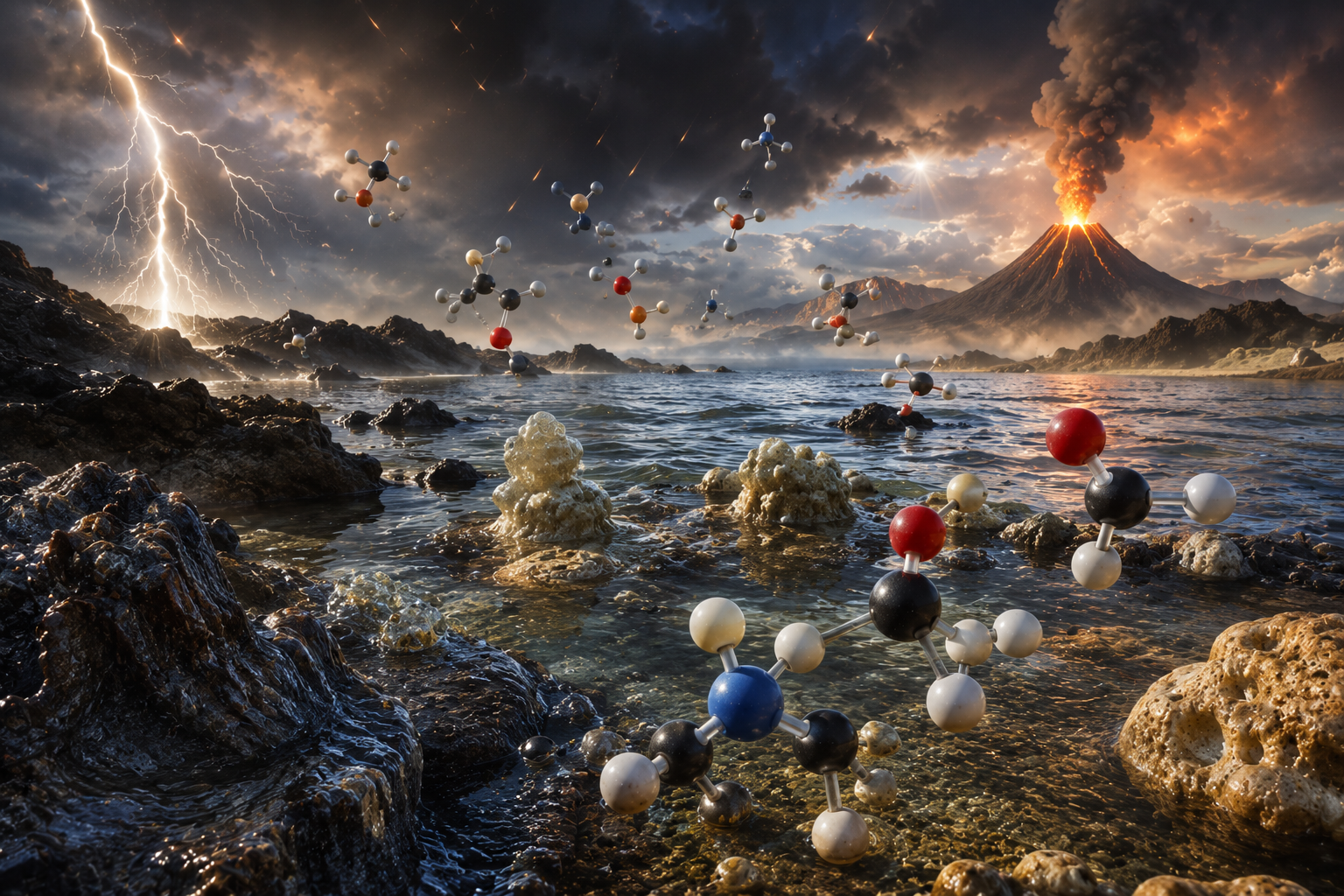
Perhaps the greatest mystery in all of chemistry concerns the origin of life.
Scientists understand many of the building blocks involved. Amino acids, nucleotides, lipids, and sugars can form under certain natural conditions. Laboratory experiments have demonstrated that some organic molecules can arise from relatively simple chemical mixtures.
Yet there remains an enormous gap between simple chemistry and the first self-replicating system.
Exactly how nonliving molecules organized themselves into something capable of evolution remains unknown.
Several hypotheses compete for attention.
The RNA World hypothesis proposes that RNA molecules may have acted as both genetic material and catalysts before DNA and proteins evolved.
Other researchers investigate metabolism-first models, in which networks of chemical reactions emerged before genetic molecules.
Some scientists explore hydrothermal vents on the ocean floor, while others investigate shallow ponds, volcanic environments, or even icy settings.
No single explanation currently accounts for all available evidence.
The transition from chemistry to biology remains one of science’s greatest unsolved problems.
2. Why Is Water So Unusual?
Water appears ordinary.
Yet it behaves unlike almost every other liquid.
Ice floats instead of sinking because solid water is less dense than liquid water. Most substances behave in exactly the opposite way.
Water has an unusually high boiling point for such a small molecule.
It possesses exceptional heat capacity, allowing oceans to moderate Earth’s climate.
Its surface tension is remarkably strong.
It dissolves an extraordinary variety of substances.
Scientists understand that hydrogen bonding plays a major role in these properties.
However, many details remain mysterious.
Researchers continue debating the microscopic structure of liquid water. Molecules constantly rearrange themselves through fleeting hydrogen-bond networks lasting only trillionths of a second.
Some studies suggest that water may exist in multiple liquid forms under extreme conditions.
Others investigate unusual behavior in supercooled water below its normal freezing point.
Despite being the most familiar liquid on Earth, water continues revealing unexpected complexity.
3. How Exactly Did Biological Homochirality Arise?
Many molecules exist in mirror-image forms known as enantiomers.
Like left and right hands, these molecular versions cannot be perfectly superimposed.
Curiously, life strongly favors only one version.
Nearly all naturally occurring amino acids in living organisms are left-handed.
Most biological sugars are right-handed.
Chemistry alone generally produces equal mixtures of both forms.
So why did life choose only one?
Scientists have proposed several explanations.
Tiny asymmetries in polarized light from stars might have influenced early chemistry.
Mineral surfaces may have selectively concentrated one form.
Random chance followed by amplification could also explain the phenomenon.
Laboratory experiments have demonstrated partial versions of several mechanisms.
None has yet fully explained how Earth’s remarkable molecular handedness originated.
4. Why Do Some Chemical Reactions Occur Astonishingly Fast?
Chemists often predict reaction rates using well-established theories.
Yet certain reactions occur dramatically faster than expected.
Enzymes provide perhaps the greatest example.
Some biological enzymes accelerate reactions by factors exceeding a trillion compared with uncatalyzed reactions.
Researchers understand many aspects of enzyme catalysis.
They know enzymes stabilize transition states, position reactants precisely, and lower activation energy.
However, debate continues over whether additional quantum effects contribute in certain systems.
Some researchers investigate quantum tunneling, where particles effectively pass through energy barriers instead of climbing over them.
Exactly how biology achieves such extraordinary efficiency remains an active area of research.
5. The Mystery of Chemical Self-Organization
Certain chemical systems appear capable of organizing themselves into surprisingly complex structures.
Soap molecules assemble into membranes.
Proteins fold into precise shapes.
Liquid crystals develop ordered patterns.
Some reactions produce beautiful spirals, concentric rings, or oscillating color changes without external guidance.
These phenomena belong to the broader field of self-organization.
Scientists understand many underlying principles.
Yet predicting when and how complexity emerges remains difficult.
Tiny differences in starting conditions sometimes produce dramatically different outcomes.
Understanding self-organization could eventually improve materials science, medicine, and even theories about life’s origins.
6. Why Do Some Glasses Behave Like Neither Solids Nor Liquids?
Glass appears solid.
Yet its atoms lack the orderly crystal arrangement found in ordinary solids.
Instead, they resemble a liquid frozen into place.
This unusual state raises fundamental questions.
Is glass actually a solid?
Is it an extremely slow-moving liquid?
Or does it represent an entirely separate state of matter?
Modern evidence indicates that ordinary window glass behaves as an amorphous solid rather than a flowing liquid.
However, the microscopic nature of the glass transition remains one of condensed matter chemistry’s major challenges.
Researchers continue investigating why molecules suddenly lose mobility without forming conventional crystals.
7. What Really Happens During the First Femtoseconds of a Chemical Reaction?
Chemical reactions often occur incredibly quickly.
The earliest stages unfold within femtoseconds—millionths of a billionth of a second.
Thanks to ultrafast laser technology, scientists can now observe these initial moments.
Yet interpreting what they see remains difficult.
Electrons rearrange before nuclei fully respond.
Temporary molecular structures appear and disappear almost instantly.
Energy flows through molecules in highly complex ways.
Capturing these fleeting events represents one of modern chemistry’s greatest experimental achievements.
Understanding them completely remains an ongoing challenge.
8. Why Can Some Molecules Fold Perfectly Every Time?
Proteins begin as long chains of amino acids.
Remarkably, they often fold spontaneously into precisely the correct three-dimensional structures required for biological function.
The number of possible folding arrangements is astronomically large.
Yet many proteins reach their correct configuration within milliseconds or seconds.
Scientists have made enormous progress.
Artificial intelligence systems have revolutionized structure prediction.
Nevertheless, researchers continue investigating the physical principles governing folding pathways, stability, and misfolding diseases such as Alzheimer’s and Parkinson’s.
9. The Mystery of Amorphous Ice
Most people imagine ice as a crystal.
However, under certain conditions, water freezes into non-crystalline forms known as amorphous ice.
Several varieties exist.
Scientists suspect these forms may help explain unusual properties of liquid water itself.
Amorphous ice also appears throughout the Solar System, coating comets, icy moons, and interstellar dust grains.
Understanding its formation could improve knowledge of planetary evolution and astrochemistry.
Many questions remain regarding transitions between different amorphous phases.
10. Why Do Certain Catalysts Work So Selectively?
Catalysts accelerate chemical reactions without being consumed.
Modern industry depends on them.
Yet some catalysts display astonishing selectivity.
They produce one desired product while ignoring countless alternative pathways.
Chemists understand many catalytic mechanisms.
However, predicting catalyst behavior from first principles remains extraordinarily difficult.
Even tiny changes in atomic arrangement can transform catalytic performance.
Designing catalysts entirely by theory remains one of chemistry’s grand challenges.
11. How Do Complex Organic Molecules Form in Deep Space?
Radio telescopes have detected hundreds of molecules drifting between stars.
Some are surprisingly complex.
Alcohols, aldehydes, amino acid precursors, and aromatic compounds all exist in interstellar clouds.
Temperatures in these environments are often only a few degrees above absolute zero.
Chemical reactions should proceed extremely slowly.
Yet complex chemistry somehow continues.
Researchers investigate ultraviolet radiation, cosmic rays, dust grain surfaces, and quantum tunneling as possible explanations.
The exact pathways remain uncertain.
12. Why Do Certain Crystals Grow into Perfect Symmetry?
Crystals obey mathematical rules.
Atoms arrange themselves into repeating patterns.
Yet some natural crystals achieve astonishing perfection despite growing in messy geological environments.
Small disturbances should introduce defects.
Instead, many crystals remain remarkably ordered.
Scientists understand the basics of crystallization.
Predicting exactly how perfect structures emerge under varying environmental conditions remains surprisingly difficult.
13. The Hidden Chemistry of Atmospheric Aerosols
Tiny particles suspended in Earth’s atmosphere influence climate, weather, and human health.
Many consist of extraordinarily complex chemical mixtures.
Thousands of different compounds interact within microscopic droplets.
Researchers continue investigating reactions occurring inside these particles.
Unexpected chemistry may influence cloud formation, pollution, and climate feedbacks.
Despite decades of study, atmospheric aerosol chemistry remains incompletely understood.
14. Why Are Some Chemical Oscillations So Beautifully Ordered?
Most reactions proceed steadily toward completion.
Others behave dramatically differently.
In oscillating reactions, concentrations repeatedly rise and fall.
Colors shift rhythmically between blue, red, and clear.
The famous Belousov–Zhabotinsky reaction demonstrates this behavior spectacularly.
Scientists understand the mathematical principles behind many oscillating reactions.
Yet predicting which systems will display such behavior remains challenging.
These reactions provide important insights into biological rhythms and complex systems.
15. How Do Molecules Recognize One Another So Precisely?
Inside living cells, molecules constantly identify specific partners.
Enzymes locate particular substrates.
Antibodies bind individual targets.
DNA strands recognize complementary sequences.
This molecular recognition depends upon shape, electrical charge, hydrogen bonding, and other interactions.
Scientists understand these principles broadly.
However, predicting recognition behavior precisely within crowded cellular environments remains difficult.
Improving this understanding could transform drug development and synthetic biology.
16. Why Do Some Chemical Systems Suddenly Become Chaotic?
Certain reactions remain stable for long periods before abruptly changing behavior.
Small differences in concentration, temperature, or pressure sometimes trigger enormous chemical changes.
These transitions resemble tipping points observed in ecology and climate science.
Researchers study nonlinear chemical dynamics to understand these phenomena.
Such systems challenge traditional assumptions about predictability.
Chaos, rather than simplicity, often emerges naturally from ordinary chemistry.
17. Will Chemistry Ever Explain Consciousness?
Perhaps the deepest mystery connected to chemistry lies beyond molecules themselves.
Every thought, memory, emotion, and sensation ultimately depends upon chemical reactions inside the brain.
Neurotransmitters cross synapses.
Ion channels open and close.
Proteins change shape.
Membranes generate electrical signals.
Scientists increasingly understand these processes individually.
Yet how these chemical events collectively produce conscious experience remains unknown.
This question extends beyond chemistry into neuroscience, physics, philosophy, and cognitive science.
Nevertheless, chemistry remains central.
Without chemical interactions, no nervous system could function.
Whether chemistry alone can eventually explain consciousness remains one of the greatest scientific questions ever asked.
Why These Mysteries Matter
It is easy to assume that unsolved mysteries represent failures of science.
In reality, they are signs of scientific progress.
Researchers only recognize mysteries after discovering enough to ask meaningful questions.
Every unsolved problem described here has inspired decades of careful experimentation, theoretical development, and technological innovation.
Many questions once considered impossible have already been answered.
The structure of DNA.
The nature of chemical bonds.
The periodic organization of the elements.
The mechanisms of photosynthesis.
The chemistry of combustion.
Each was once mysterious.
Future discoveries may similarly transform today’s uncertainties into tomorrow’s textbook knowledge.
The Future of Chemical Discovery
Chemistry is entering one of the most exciting periods in its history.
Artificial intelligence is helping scientists predict molecular structures and design new materials.
Quantum computers may eventually simulate complex chemical systems beyond the reach of today’s supercomputers.
Ultrafast spectroscopy continues revealing reactions in unprecedented detail.
Space missions are bringing samples from asteroids and comets, expanding our understanding of cosmic chemistry.
Researchers are designing artificial enzymes, programmable molecules, molecular machines, and self-healing materials.
Each advance answers old questions while uncovering new ones.
That is the nature of science.
The Endless Curiosity of Chemistry
Chemistry is often taught as a collection of equations, formulas, and laboratory procedures.
In reality, it is an ongoing exploration of matter itself.
Every atom carries a story billions of years old.
Every molecule represents countless interactions governed by the laws of nature.
Most of those laws are now understood with remarkable precision.
Yet some of the most fascinating questions remain unanswered.
Why does life exist at all?
Why is water so extraordinary?
How does complexity emerge from simplicity?
How do molecules organize themselves into cells, brains, ecosystems, and ultimately civilizations capable of asking these very questions?
These mysteries remind us that chemistry is far from complete.
Instead, it stands at the frontier of discovery—where every experiment has the potential to reveal something entirely unexpected, and where even the smallest molecule can still hold secrets that challenge humanity’s greatest scientific minds.