Every star has a story. Some are born in quiet clouds of gas and dust, spend billions of years shining steadily, and then fade away with little fanfare. Others end their lives in spectacular explosions that can briefly outshine entire galaxies. But somewhere between these two extremes lies one of the most fascinating chapters in stellar evolution: the red giant phase.
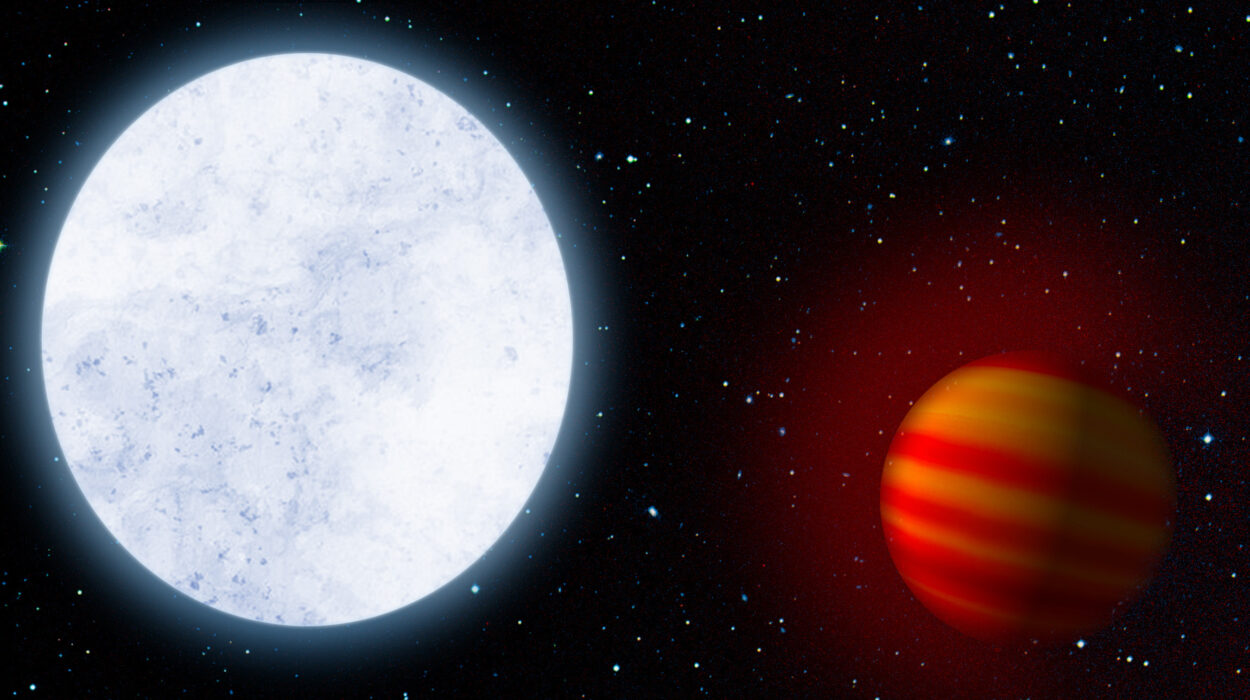
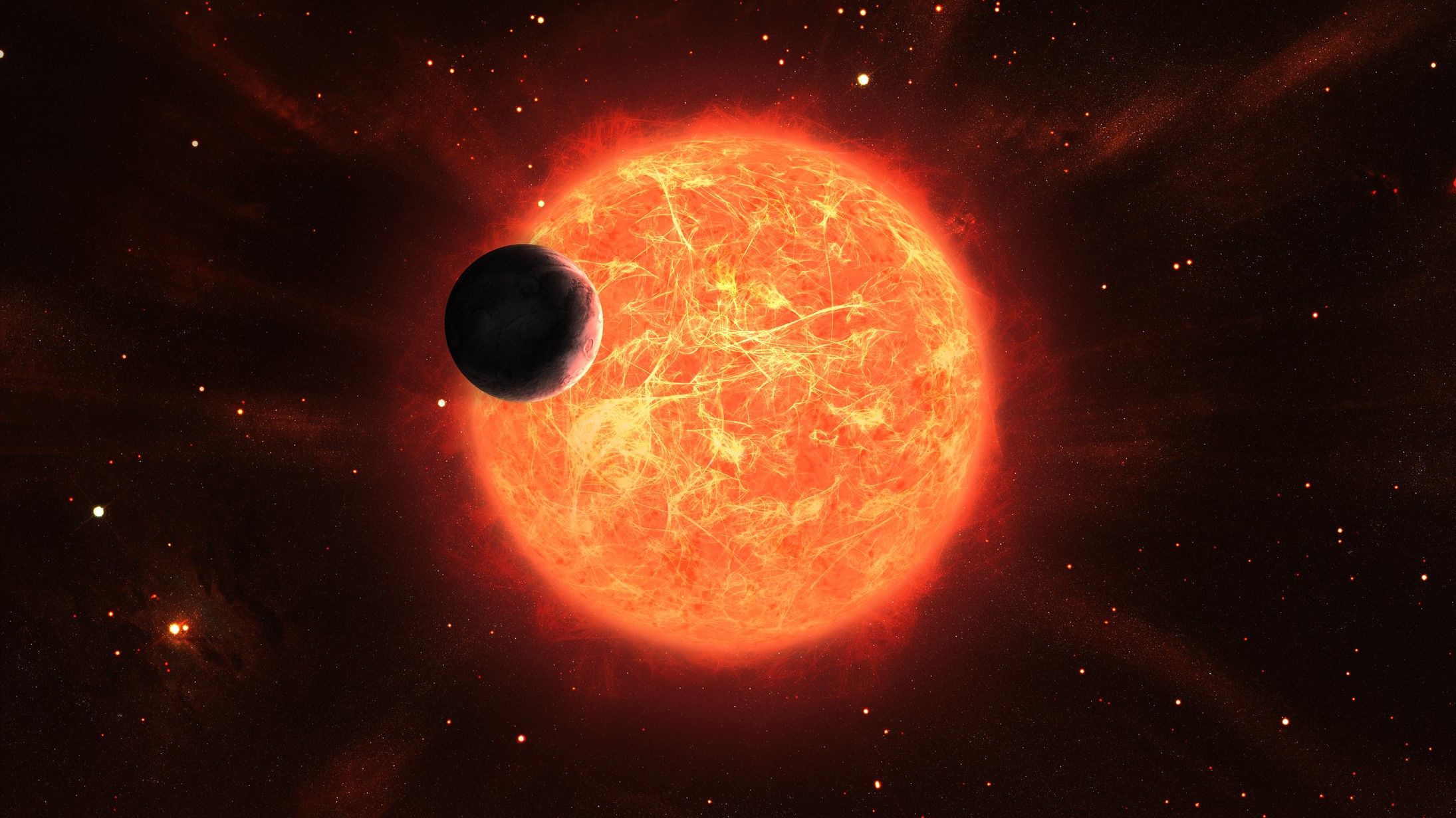
A red giant is a star nearing the end of its life that has expanded to enormous proportions. It glows with a distinctive reddish-orange color and can become hundreds of times larger than it was during its earlier years. Although the term “giant” may sound dramatic, it hardly captures the true scale of these cosmic behemoths. If some red giants replaced our Sun at the center of the Solar System, they would extend far beyond Earth’s orbit and potentially engulf several planets.
Yet despite their immense size, red giants are actually dying stars.
At first glance, that sounds contradictory. How can a dying star become larger and brighter than ever before? Why does a star swell into a giant instead of simply fading away? And what will happen when our own Sun eventually enters this remarkable stage?
The story of red giants is one of transformation, survival, and cosmic recycling. It is a tale that unfolds over billions of years and ultimately shapes the future of planets, solar systems, and even life itself.
Understanding How Stars Live
To understand what a red giant is, we first need to understand how stars spend most of their lives.
Stars are enormous spheres of hot gas, primarily hydrogen and helium. They form when vast clouds of gas and dust collapse under gravity. As the material falls inward, pressure and temperature rise dramatically in the star’s core.
Eventually, the core becomes so hot that hydrogen atoms begin fusing together to form helium.
This process, known as nuclear fusion, releases tremendous amounts of energy.
That energy pushes outward while gravity pulls inward. For billions of years, these two forces remain balanced.
This balance is what allows a star to shine steadily.
Astronomers call this long, stable period the “main sequence” stage. During this phase, stars spend the majority of their lives converting hydrogen into helium.
Our Sun is currently a main-sequence star.
It has been shining in this stable state for about 4.6 billion years and is expected to continue doing so for another five billion years or so.
But no star can fuse hydrogen forever.
Eventually, the fuel in the core begins to run out.
That is when the transformation into a red giant begins.
The Beginning of the End
A star’s journey toward becoming a red giant starts deep inside its core.
For billions of years, hydrogen fusion generates energy that supports the star against gravitational collapse. However, as hydrogen is consumed, helium gradually accumulates in the center.
Eventually, the hydrogen fuel in the core becomes depleted.
Fusion slows dramatically.
Without enough fusion occurring in the core, the outward pressure weakens.
Gravity begins to win.
The core starts contracting.
At first, this may seem like the beginning of the star’s death.
But something unexpected happens.
As the core contracts, it becomes hotter.
The increasing temperature ignites hydrogen fusion in a shell surrounding the helium core.
This shell fusion produces even more energy than the star generated before.
The additional energy pushes the outer layers outward.
The star begins expanding.
And expanding.
And expanding.
What was once a relatively ordinary star starts transforming into a giant.
Why Red Giants Become So Huge
One of the most surprising aspects of red giants is their enormous size.
When people imagine a dying star, they often picture something shrinking and fading.
Instead, many stars become vastly larger.
The reason lies in how energy moves through the star.
The contracting core releases energy that heats the surrounding layers. This energy causes the star’s outer atmosphere to expand dramatically.
As the outer layers spread farther from the core, they cool.
The surface temperature drops significantly compared to the star’s earlier phase.
This cooler temperature gives the star its reddish appearance.
Even though the surface becomes cooler, the star’s total brightness often increases because it has become so large.
Imagine a small but extremely hot light bulb compared with a massive glowing lantern.
The lantern’s surface may be cooler, but because it covers a much larger area, it can emit more total light.
This is essentially what happens with red giants.
Why They Appear Red
Color plays an important role in astronomy.
The color of a star reveals valuable information about its temperature.
Hot stars appear blue or blue-white.
Moderately hot stars, like our Sun, appear yellow-white.
Cooler stars appear orange or red.
As stars expand into red giants, their surface temperatures typically fall to between about 3,000 and 5,000 degrees Celsius.
Although this is still incredibly hot by human standards, it is cooler than the Sun’s surface temperature of approximately 5,500 degrees Celsius.
Because of this lower temperature, red giants emit more red and orange light.
This gives them their characteristic color.
Their reddish glow is one of the clues astronomers use to identify them across vast distances.
The Future of Our Sun
Perhaps the most fascinating red giant for us is one that does not yet exist.
It is our future Sun.
Today, the Sun provides warmth, light, and the energy that sustains life on Earth.
But it will not remain unchanged forever.
In roughly five billion years, the Sun will exhaust most of the hydrogen in its core.
The red giant phase will begin.
As the Sun expands, its diameter will increase enormously.
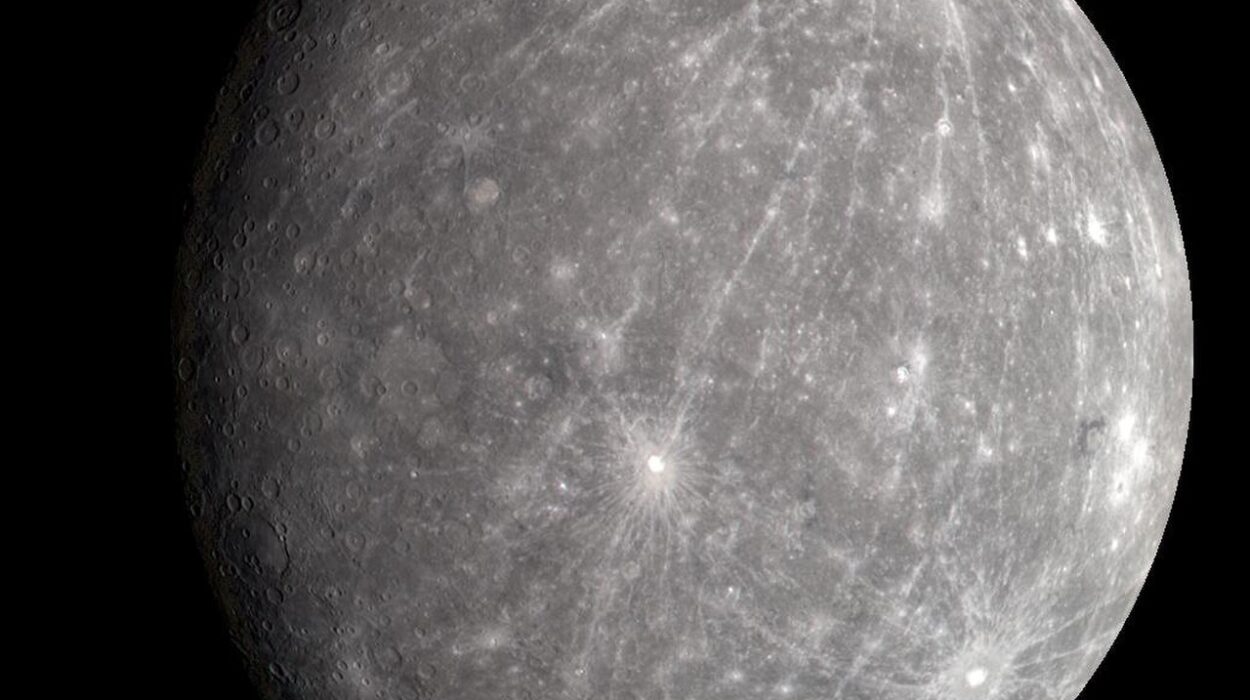
Its outer layers may extend outward to the orbit of Mercury.
Eventually, the expansion could reach Venus.
Whether Earth itself will be engulfed remains an active area of scientific research. Some models suggest the Sun’s outer atmosphere may reach Earth’s orbit, while others indicate Earth might survive but become utterly uninhabitable.
Either way, the result will be catastrophic for our planet.
Long before the Sun physically reaches Earth, increasing luminosity will boil away the oceans.
The atmosphere will be stripped away.
Surface temperatures will become extreme.
Life as we know it will disappear.
The transformation of the Sun into a red giant represents the ultimate fate of the inner Solar System.
A Star’s Core Under Pressure
While the outer layers balloon outward, dramatic changes continue deep inside the star.
The helium core keeps contracting.
Pressure and temperature rise steadily.
Eventually, the core becomes hot enough for a new type of fusion to begin.
Helium atoms start combining to form carbon and oxygen.
This marks a major turning point in the star’s life.
The star has found a new energy source.
For stars similar in mass to the Sun, this transition can occur suddenly in an event known as the helium flash.
Despite its dramatic name, the helium flash is hidden inside the star and cannot be directly observed from outside.
It represents a rapid ignition of helium fusion under extreme conditions.
Afterward, the star settles into a new period of relative stability.
But the story is far from over.
Different Stars, Different Fates
Not all red giants are identical.
A star’s mass largely determines what happens next.
Smaller stars generally experience gentler endings.
More massive stars undergo increasingly dramatic transformations.
Stars similar to the Sun become red giants and eventually shed their outer layers.
The exposed core remains behind as a white dwarf.
Massive stars continue fusing heavier and heavier elements.
They can evolve into enormous red supergiants before ending their lives in spectacular supernova explosions.
Thus, while all red giants are aging stars, their futures can differ dramatically.
The universe does not follow a single script.
Each star’s mass determines its destiny.
Red Giants and Red Supergiants
People sometimes confuse red giants with red supergiants.
Although they sound similar, they are not the same thing.
Red giants typically originate from stars with low to intermediate masses.
Red supergiants come from much more massive stars.
The differences are extraordinary.
A red giant might be dozens or hundreds of times wider than the Sun.
A red supergiant can be more than a thousand times wider.
These colossal stars rank among the largest known objects in the universe.
One famous example is Betelgeuse.
If placed at the center of our Solar System, Betelgeuse could extend beyond the orbit of Mars and possibly even Jupiter, depending on how its size is measured.
Such stars represent the final stages before some of the most powerful explosions in the cosmos.
The Spectacular Atmospheres of Red Giants
The atmosphere of a red giant differs greatly from that of a younger star.
As the star expands, its outer layers become less tightly bound by gravity.
Material can escape more easily into space.
Powerful stellar winds carry gas outward.
Over time, red giants lose substantial amounts of mass.
This process enriches the surrounding region with newly created elements.
Carbon, oxygen, and other materials forged inside the star are gradually released into space.
These elements eventually become part of future stars, planets, and perhaps even living organisms.
In a very real sense, red giants help recycle the universe.
The atoms needed for future worlds are often produced and dispersed by dying stars.
The Birthplace of Cosmic Elements
One of the most profound discoveries in astronomy is that stars create many of the elements found throughout the universe.
The early universe contained mostly hydrogen and helium.
Heavier elements formed later inside stars.
Red giants play a crucial role in this process.
Helium fusion creates carbon.
Additional nuclear reactions can produce oxygen and other elements.
These materials become part of the star’s interior.
When the star sheds its outer layers, those elements enter interstellar space.
Eventually, new stars and planets form from enriched clouds of gas and dust.
The carbon in your body, the oxygen you breathe, and the calcium in your bones all originated inside ancient stars.
Red giants are part of that remarkable story.
Observing Red Giants in the Night Sky
Many red giants are visible without telescopes.
Their distinctive color makes them stand out among other stars.
One famous example is Aldebaran.
Its orange-red glow is easily noticeable in the night sky.
Another well-known example is Arcturus.
Arcturus is one of the brightest stars visible from Earth and has fascinated skywatchers for centuries.
When you look at these stars, you are witnessing a phase that our Sun has not yet reached.
You are seeing glimpses of a distant future.
These stars provide valuable clues about what lies ahead for solar systems throughout the galaxy.
Pulsations and Variability
Many red giants do not shine with perfectly constant brightness.
Instead, they pulsate.
The star expands and contracts rhythmically.
These pulsations cause changes in brightness over time.
The phenomenon occurs because the star’s outer layers become unstable.
As they expand and cool, physical conditions change.
Gravity eventually pulls them inward again.
The cycle repeats.
Some red giants vary only slightly.
Others exhibit dramatic fluctuations visible even to amateur astronomers.
These rhythmic changes offer important insights into the internal structure of stars.
By studying stellar pulsations, astronomers can learn about processes hidden deep within stellar interiors.
Mira and the Discovery of Variable Stars
One of the most famous variable red giants is Mira.
Mira’s brightness changes dramatically over a cycle lasting several months.
Sometimes it becomes easy to see with the naked eye.
At other times it fades from view.
When observers first noticed these changes centuries ago, they were astonished.
The heavens had long been considered unchanging.
Mira challenged that assumption.
Today, astronomers know that many stars vary in brightness, but Mira remains one of the most famous examples.
Its behavior helped reveal the dynamic nature of the cosmos.
The Creation of Planetary Nebulae
For stars similar to the Sun, the red giant phase eventually leads to one of the most beautiful phenomena in astronomy.
As the star loses its outer layers, enormous shells of gas drift into space.
Ultraviolet radiation from the hot stellar core illuminates this material.
The result is a glowing cloud known as a planetary nebula.
Despite the name, planetary nebulae have nothing to do with planets.
Early astronomers simply thought they resembled planetary disks when viewed through small telescopes.
These glowing structures display extraordinary colors and intricate shapes.
They rank among the most visually stunning objects in the universe.
At their centers lies the exposed core of the former red giant.
This core will eventually become a white dwarf.
The White Dwarf Remnant
After shedding its outer layers, the star’s core remains behind.
This remnant is known as a white dwarf.
A white dwarf is incredibly dense.
It contains a significant fraction of the Sun’s mass compressed into a volume roughly comparable to Earth.
No further fusion occurs.
The white dwarf shines because it retains heat from earlier stages of stellar evolution.
Over immense periods of time, it gradually cools and fades.
The red giant phase is therefore not the final chapter of a star’s life.
It is a dramatic transition leading to a quieter existence.
Massive Stars and a More Violent Future
For massive stars, the story becomes even more dramatic.
These stars continue fusing increasingly heavy elements after becoming red supergiants.
Carbon gives way to neon.
Neon gives way to oxygen.
Oxygen gives way to silicon.
Eventually, the core begins producing iron.
Iron creates a problem.
Unlike lighter elements, fusing iron does not release energy.
Without a source of energy to support the core, collapse becomes inevitable.
The core implodes.
A supernova explosion follows.
For a brief period, the dying star may outshine billions of stars.
Such explosions create many of the heavy elements found throughout the universe.
They also leave behind neutron stars or black holes.
How Long Does the Red Giant Phase Last?
Compared to a star’s entire lifespan, the red giant phase is relatively brief.
A star like the Sun spends billions of years as a main-sequence star.
The red giant stage lasts only a fraction of that time.
Nevertheless, “brief” in astronomy can still mean hundreds of millions of years.
Human civilizations rise and fall in mere thousands of years.
Stars operate on vastly larger timescales.
To us, red giants appear stable and permanent.
In reality, they are undergoing profound transformations.
Red Giants as Cosmic Laboratories
Astronomers study red giants because they provide valuable insights into stellar physics.
These stars allow researchers to investigate nuclear fusion, energy transport, mass loss, and stellar evolution.
Advanced telescopes can analyze the light emitted by red giants.
That light contains clues about temperature, composition, motion, and internal processes.
Modern techniques even allow scientists to study vibrations within stars, a field known as asteroseismology.
By examining these subtle oscillations, astronomers can effectively “listen” to stars and learn about their hidden interiors.
Red giants serve as natural laboratories for understanding the laws of physics under extreme conditions.
What Red Giants Teach Us About Life and Time
There is something deeply moving about red giants.
They remind us that change is universal.
Even stars, which seem eternal from a human perspective, evolve and eventually die.
Yet stellar death is not simply an ending.
It is also a beginning.
The materials released by dying stars become the raw ingredients for future generations of stars and planets.
Without ancient red giants, many of the elements necessary for life would not exist.
The universe continuously recycles itself.
Death creates opportunities for renewal.
This cosmic cycle connects everything.
The atoms within our bodies were forged in stars that died long before Earth formed.
When we study red giants, we are studying part of our own history.
The Future Night Sky
Billions of years from now, if observers somehow remained on Earth, the sky would look very different.
The Sun would dominate the heavens as an enormous red giant.
Its swollen disk would appear vastly larger than it does today.
The familiar balance of the Solar System would be gone.
Planetary orbits would change.
Inner worlds might disappear entirely.
The transformation would be breathtaking and terrifying.
Fortunately, this future remains unimaginably distant.
Yet understanding it helps us appreciate both the temporary nature and the grandeur of cosmic evolution.
Conclusion
A red giant is far more than simply a large red star. It represents one of the most dramatic stages in stellar evolution, a period when an aging star exhausts the hydrogen fuel in its core and undergoes an extraordinary transformation. As the core contracts and heats up, the outer layers expand enormously, turning the star into a giant glowing sphere that can dwarf entire planetary systems.
These dying stars play a crucial role in shaping the universe. They create and distribute many of the elements needed for future stars, planets, and living organisms. Their expanding atmospheres enrich interstellar space, ensuring that the cycle of cosmic creation continues.
The story of red giants is also the story of our own future. One day, billions of years from now, the Sun itself will become a red giant. The peaceful yellow star that currently sustains life on Earth will transform into a vast and powerful giant nearing the end of its life.
Yet the red giant phase is not merely a tale of destruction. It is a story of renewal. Through their final acts, these stars help build the next generation of cosmic structures. They remind us that endings and beginnings are often inseparable, even on the scale of the universe itself.
Every red giant shining in the night sky is a glimpse into the future of stars, a monument to the passage of cosmic time, and a vivid reminder that the universe is constantly changing, evolving, and creating new possibilities from the remnants of what came before.