On a clear night, when we look up at the stars, it is easy to imagine that the brightest ones dominate the universe. Massive blue stars blaze with incredible energy. Giant yellow and white stars shine across vast distances. Some stars are so luminous that they can be seen with the naked eye from hundreds of light-years away.
Yet appearances can be deceiving.
The most common stars in the universe are not the bright giants that capture our attention. Instead, they are small, faint, and easy to overlook. These stars are known as red dwarfs, and despite their modest appearance, they may be the most important stars in the cosmos.
Red dwarfs are cosmic survivors. They burn their fuel so slowly that they can continue shining for trillions of years. While massive stars live fast and die young, red dwarfs take a completely different approach. They conserve their energy, endure for unimaginable lengths of time, and may remain among the last shining objects in the universe long after stars like our Sun have disappeared.
In many ways, red dwarfs teach us a fascinating lesson about longevity. The stars that seem least impressive at first glance may ultimately outlast everything else.
Understanding What a Red Dwarf Is
A red dwarf is a small and relatively cool star that belongs to the main sequence category of stars. Main sequence stars generate energy by fusing hydrogen into helium within their cores.
Like all stars, red dwarfs are enormous balls of hot gas held together by gravity. Their immense mass creates crushing pressure in their centers, allowing nuclear fusion to occur.
The difference is that red dwarfs contain much less mass than stars like the Sun.
Most red dwarfs possess between about 8 percent and 60 percent of the Sun’s mass. Because they are smaller, they generate less pressure and lower temperatures in their cores. As a result, nuclear fusion occurs at a much slower rate.
This slower fusion process makes red dwarfs cooler and dimmer than larger stars.
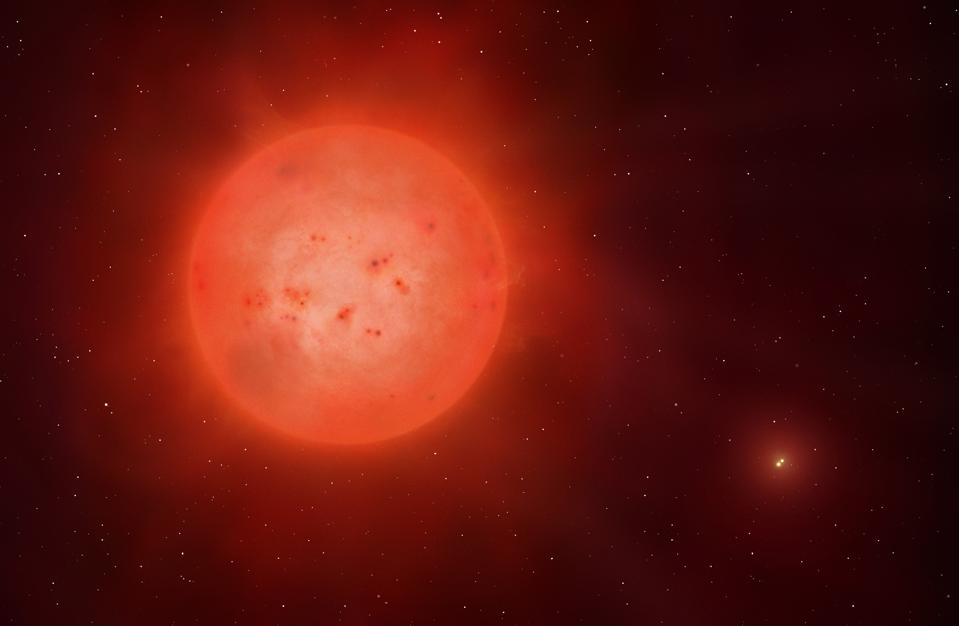
Their surface temperatures usually range between about 2,400 and 3,700 degrees Celsius. By comparison, the Sun’s surface temperature is approximately 5,500 degrees Celsius.
The lower temperature gives red dwarfs their distinctive reddish appearance, which is how they earned their name.
The Most Common Stars in the Universe
One of the most surprising facts about red dwarfs is their abundance.
Astronomers estimate that red dwarfs make up roughly 70 percent of the stars in our galaxy. Some estimates suggest the number may be even higher.
This means that when you look at the Milky Way, most of the stars you cannot see are probably red dwarfs.
The reason they are difficult to observe is simple: they are incredibly faint.
Even the nearest red dwarf stars are often invisible to the naked eye. Their low brightness makes them easy to overlook despite their enormous numbers.
Imagine attending a gathering with one hundred people. If seventy of them belonged to a particular group, that group would clearly dominate the room.
The same is true in the galaxy.
Although bright stars attract attention, red dwarfs are the true majority.
They are the quiet citizens of the cosmos, filling space in vast numbers while rarely drawing notice to themselves.
Why Are Red Dwarfs So Small?
The story of a star begins inside enormous clouds of gas and dust.
These clouds, known as molecular clouds, gradually collapse under gravity. As material gathers together, the center becomes hotter and denser.
Eventually, conditions become extreme enough for nuclear fusion to ignite.
The amount of material available during this process determines the star’s final mass.
Red dwarfs form when relatively small amounts of gas collapse into a new star.
Because they begin with less mass, they never develop the intense temperatures and pressures found in larger stars.
Their smaller size affects every aspect of their existence, from their brightness and color to their lifespan.
In astronomy, mass is often the most important factor determining a star’s destiny.
For red dwarfs, having less mass turns out to be a tremendous advantage.
The Slow-Burning Engines of Space
To understand why red dwarfs live so long, it helps to think about fuel consumption.
Imagine two cars beginning a journey.
One car races down the highway at full speed, burning fuel rapidly. The other travels slowly and carefully, using fuel much more efficiently.
The fast car may cover distance quickly, but it will run out of fuel much sooner.
The slow car may take longer, but it can continue traveling for a far greater period.
Stars behave in a similar way.
Massive stars burn their hydrogen fuel at astonishing rates. Some consume so much energy that they exhaust their fuel supplies within only a few million years.
Red dwarfs take the opposite approach.
Their fusion reactions occur slowly and steadily. They use energy with remarkable efficiency.
This efficiency allows them to survive for periods that dwarf the age of the present universe.
How Long Can a Red Dwarf Live?
The age of the universe is currently estimated to be about 13.8 billion years.
That number sounds enormous.
Human civilizations have existed for only a tiny fraction of that time. Dinosaurs disappeared around 66 million years ago. Even Earth itself is only about 4.5 billion years old.
Yet for many red dwarfs, 13.8 billion years is merely the beginning.
Some of the smallest red dwarfs may survive for trillions of years.
A trillion is one thousand billion.
To put that into perspective, a star living for 10 trillion years would survive more than 700 times longer than the universe has existed so far.
This extraordinary lifespan makes red dwarfs the longest-lived stars known.
In fact, because the universe is not yet old enough, astronomers have never observed a red dwarf reaching the end of its life.
Every red dwarf that has ever formed still exists today.
The Secret Behind Their Incredible Longevity
Red dwarfs possess an advantage that larger stars do not.
Inside stars like the Sun, fusion primarily occurs within the core. Eventually, hydrogen in the core becomes depleted, limiting the star’s future evolution.
Red dwarfs operate differently.
Many are fully convective.
This means that hot material from the interior continually circulates throughout the star, much like water boiling inside a pot.
As fresh hydrogen moves toward the center and helium moves outward, the star can access a much larger fraction of its fuel supply.
Instead of burning only a small portion of its hydrogen, a red dwarf can use much of the hydrogen throughout its entire structure.
Combined with its slow fusion rate, this efficient mixing dramatically extends the star’s life.
It is one of the reasons red dwarfs are such extraordinary cosmic survivors.
Why Red Dwarfs Are So Dim
Despite their immense longevity, red dwarfs are not particularly bright.
Brightness depends largely on a star’s temperature and size.
Red dwarfs are both cooler and smaller than stars like the Sun.
As a result, they emit much less light.
Some red dwarfs produce less than one-thousandth of the Sun’s luminosity.
If our Sun were replaced by a typical red dwarf, daylight on Earth would become dramatically dimmer.
The sky might resemble permanent twilight.
This faintness explains why red dwarfs remained difficult to study for much of astronomical history.
Even nearby examples can be challenging to observe without powerful telescopes.
Yet advances in modern astronomy have revealed just how numerous and important these stars truly are.
The Closest Star to the Sun
The nearest known star to our solar system is not a Sun-like star.
It is a red dwarf called Proxima Centauri.
Located approximately 4.24 light-years away, Proxima Centauri is part of the Alpha Centauri system.
Despite being our closest stellar neighbor, it cannot be seen with the naked eye.
Its small size and low brightness make it surprisingly difficult to observe without optical assistance.
The discovery that our nearest neighboring star belongs to the red dwarf category highlights just how common these stars are.
They surround us throughout the galaxy.
The Curious Behavior of Red Dwarfs
Red dwarfs may appear calm and unremarkable, but many are surprisingly active.
Young red dwarfs often produce powerful stellar flares.
These eruptions release enormous amounts of radiation into space.
Some flares can be far stronger than those produced by the Sun.
A red dwarf may suddenly brighten dramatically before returning to normal.
For planets orbiting nearby, these outbursts can have significant consequences.
Intense radiation can affect atmospheres, alter surface conditions, and potentially influence the development of life.
This combination of stability and occasional violence makes red dwarfs particularly interesting to astronomers.
Planets Around Red Dwarfs
One reason scientists are fascinated by red dwarfs is that they appear to host enormous numbers of planets.
Observations suggest that planetary systems are common around these stars.
Many red dwarfs possess rocky planets similar in size to Earth.
Because red dwarfs are so abundant, the number of potentially Earth-sized worlds orbiting them may be staggering.
The discovery of these planets has transformed discussions about life beyond Earth.
If red dwarfs dominate the galaxy and frequently host planets, they may also dominate the search for extraterrestrial life.
The implications are profound.
The majority of habitable worlds in the Milky Way could potentially orbit red dwarf stars.
The Habitable Zone Around a Red Dwarf
Astronomers often discuss something called the habitable zone.
This is the region around a star where temperatures might allow liquid water to exist on a planet’s surface.
Water is considered one of the most important ingredients for life as we know it.
Because red dwarfs are relatively cool, their habitable zones lie much closer to the star than Earth’s orbit around the Sun.
A planet may need to orbit extremely near a red dwarf to receive sufficient warmth.
At first glance, this seems beneficial.
Planets in these zones could maintain stable temperatures for billions or even trillions of years.
However, being close to a red dwarf introduces unique challenges.
The Problem of Tidal Locking
When a planet orbits very close to a star, gravitational forces can become significant.
Over time, these forces may cause tidal locking.
A tidally locked planet always shows the same face to its star.
This is similar to how Earth’s Moon always presents the same side toward Earth.
If a habitable-zone planet around a red dwarf becomes tidally locked, one side may experience permanent daylight while the other remains in eternal darkness.
For years, scientists worried that such conditions would make life impossible.
More recent research suggests the situation may be more complex.
Atmospheric circulation and ocean currents could potentially distribute heat around the planet.
In some cases, large regions might remain suitable for life.
The question remains one of the most fascinating areas of modern planetary science.
Could Life Exist Around Red Dwarfs?
The possibility of life around red dwarfs has become one of astronomy’s most exciting topics.
On one hand, red dwarfs provide extraordinary stability.
They can shine for trillions of years, giving life immense amounts of time to emerge and evolve.
On the other hand, their frequent stellar flares may pose challenges.
Intense radiation could strip away atmospheres or damage biological molecules.
Scientists continue investigating how these competing factors influence habitability.
The answer may vary from one planetary system to another.
Some worlds may be hostile environments blasted by radiation.
Others could possess protective atmospheres, magnetic fields, or oceans capable of supporting life.
The search is still underway.
Famous Red Dwarf Planetary Systems
Several red dwarf systems have attracted global attention.
One of the most famous is TRAPPIST-1.
This remarkable star hosts multiple Earth-sized planets.
Several orbit within or near the habitable zone.
The discovery captured worldwide interest because it demonstrated that compact systems of rocky planets can form around small stars.
Another famous example is Proxima Centauri, which hosts at least one Earth-sized planet within its habitable zone.
These systems provide valuable laboratories for studying planetary formation and habitability.
They also fuel hopes that life may exist elsewhere in the galaxy.
How Red Dwarfs Differ From the Sun
Although both are stars, red dwarfs and the Sun differ significantly.
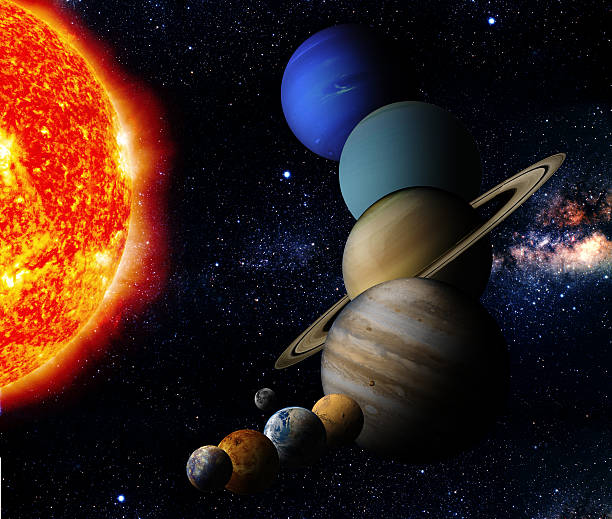
The Sun is classified as a G-type main sequence star.
It possesses greater mass, higher temperatures, and much higher luminosity.
The Sun burns hydrogen more rapidly and will eventually evolve into a red giant.
Red dwarfs follow a different path.
Their lower masses prevent many of the dramatic evolutionary stages experienced by larger stars.
They remain relatively stable for incredibly long periods.
The contrast highlights how strongly stellar mass influences stellar evolution.
Two stars may form through similar processes yet experience vastly different lifetimes and destinies.
The Future of the Sun
The Sun is approximately halfway through its life.
In roughly five billion years, it will exhaust hydrogen in its core and begin transforming into a red giant.
Its outer layers will expand enormously.
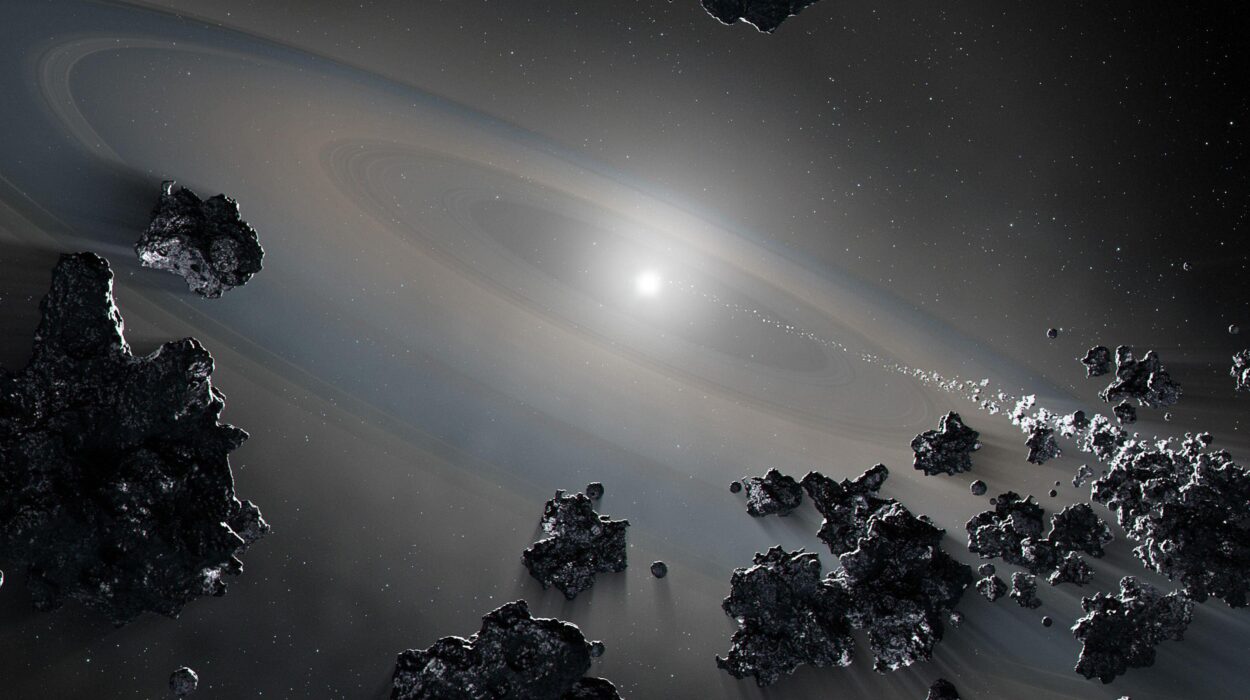
Eventually, the Sun will shed much of its material and leave behind a white dwarf.
This process represents the normal fate of medium-sized stars.
Red dwarfs avoid much of this drama.
Their slow-burning nature allows them to remain stable far longer.
Long after the Sun has faded, countless red dwarfs will continue shining.
The Distant Future of the Universe
Thinking about red dwarfs inevitably leads to questions about the future of the cosmos.
Astronomers believe star formation will eventually decline as available gas becomes depleted.
Massive stars will die first.
Medium-sized stars like the Sun will disappear later.
Over unimaginably long timescales, red dwarfs may become the dominant remaining stars.
For trillions of years, they could continue illuminating the darkness.
If intelligent civilizations exist during that distant era, red dwarfs may be among the few stellar lights still visible.
The universe of the far future may belong to them.
What Happens When a Red Dwarf Finally Dies?
One of the most remarkable facts about astronomy is that nobody has ever witnessed the complete death of a red dwarf.
The universe simply is not old enough.
Scientists rely on theoretical models to predict their ultimate fate.
Eventually, after trillions of years, a red dwarf will consume most of its hydrogen fuel.
As fusion slows, the star’s characteristics will gradually change.
Unlike larger stars, red dwarfs are not expected to become dramatic red giants.
Instead, they may slowly transform into hotter, brighter objects sometimes called blue dwarfs.
Interestingly, no blue dwarfs currently exist because not enough time has passed for any red dwarf to evolve into one.
Eventually, these stars would cool and fade into white dwarf-like remnants.
This future lies so far ahead that it almost defies imagination.
Why Red Dwarfs Matter to Astronomy
Red dwarfs are more than just small stars.
They influence nearly every major question in modern astronomy.
They help scientists understand stellar evolution.
They provide insights into planetary formation.
They play a crucial role in the search for life beyond Earth.
Their extraordinary longevity offers clues about the distant future of the universe.
Because they are so numerous, understanding red dwarfs is essential for understanding the galaxy itself.
Ignoring them would mean overlooking most of the stars in existence.
The Quiet Giants of Cosmic Time
There is something poetic about red dwarfs.
The brightest stars often receive the most attention. Their brilliance dominates the night sky. Their explosive deaths create spectacular cosmic events.
Red dwarfs follow a different path.
They are modest.
They are patient.
They shine quietly while larger stars come and go.
They remind us that endurance can be more powerful than intensity.
A massive star may blaze magnificently for millions of years.
A red dwarf may glow gently for trillions.
In the grand story of the universe, longevity often wins.
Conclusion
Red dwarfs are the smallest and coolest true stars in the cosmos, yet they may also be the most important. Making up the majority of stars in the Milky Way, these faint red suns quietly populate the galaxy in astonishing numbers. Their low masses and slow-burning fusion processes allow them to use their fuel with extraordinary efficiency, granting lifespans measured not in billions but in trillions of years.
Unlike larger stars that live dramatic but relatively brief lives, red dwarfs are masters of patience. They evolve slowly, shine steadily, and may remain among the last luminous objects in the universe’s distant future. Their abundance, longevity, and tendency to host rocky planets have made them central to one of humanity’s greatest scientific quests: the search for life beyond Earth.
The next time you look into the night sky, remember that the stars you can see are only part of the story. Hidden among the darkness are countless red dwarfs—small, faint, and easily overlooked. Yet these humble stars may ultimately outlive nearly everything else in existence, carrying their gentle light across cosmic ages that stretch far beyond the limits of human imagination.