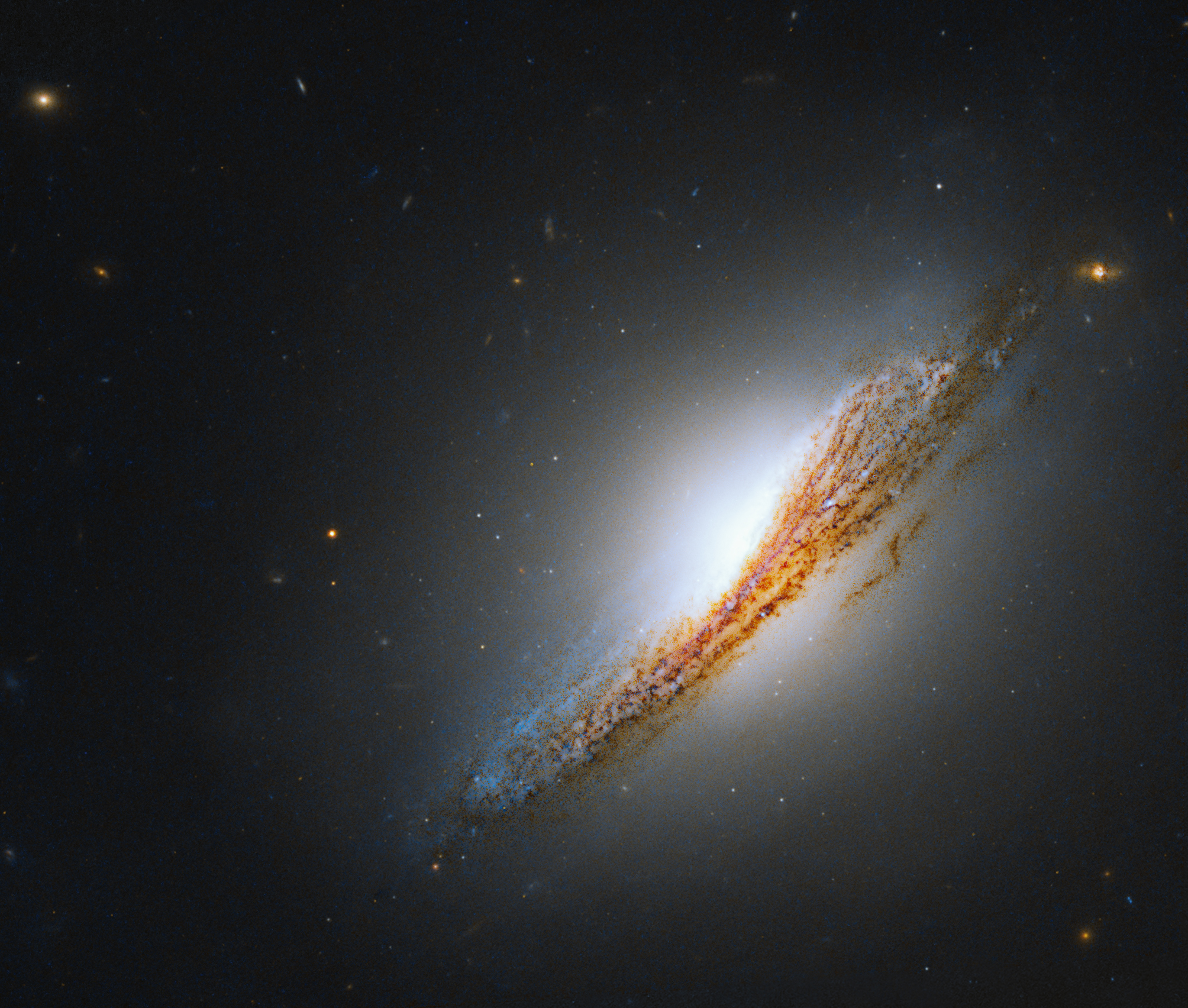
The universe is full of wonders that challenge our imagination. Some galaxies shine with the light of hundreds of billions of stars. Others glow with the energy of newborn suns, while some hide mysterious black holes deep within their hearts. Yet among the most extraordinary objects in the cosmos are radio galaxies—galaxies that broadcast immense amounts of energy across space in the form of radio waves.
If human eyes could naturally see radio waves, the night sky would look dramatically different. Some radio galaxies would appear larger than entire constellations. Vast invisible structures would stretch across millions of light-years, dwarfing the galaxies that created them. What appears through an ordinary telescope as a relatively normal galaxy may actually be one of the most powerful objects in the universe when viewed through radio instruments.
Radio galaxies are cosmic powerhouses. They are capable of launching gigantic jets of high-energy particles across intergalactic space. They can emit more energy than trillions of Suns. Their influence extends far beyond their visible boundaries, affecting the evolution of entire galaxy clusters.
These remarkable objects are not merely astronomical curiosities. They provide crucial insights into black holes, galaxy formation, cosmic magnetic fields, and the evolution of the universe itself. Understanding radio galaxies means exploring some of the most energetic and dramatic processes known in nature.
Understanding Galaxies Before Exploring Radio Galaxies
To appreciate what makes a radio galaxy special, it is important to first understand what a galaxy is.
A galaxy is a vast collection of stars, gas, dust, dark matter, planets, and other celestial objects bound together by gravity. Galaxies come in many forms, including spirals, ellipticals, lenticular galaxies, and irregular galaxies.
Our own home galaxy, the Milky Way, contains hundreds of billions of stars and stretches roughly 100,000 light-years across.
Most galaxies emit light in visible wavelengths. Their stars shine, gas clouds glow, and dust reflects radiation. However, galaxies also emit energy across many other parts of the electromagnetic spectrum, including infrared light, ultraviolet light, X-rays, gamma rays, and radio waves.
A radio galaxy is distinguished by the extraordinary amount of radio-wave energy it emits.
What Is a Radio Galaxy?
A radio galaxy is a galaxy that emits unusually powerful radio waves, often through enormous structures extending far beyond the visible galaxy itself.
Although all galaxies emit some radio energy, radio galaxies produce radio emissions that are exceptionally intense. In many cases, their radio output far exceeds the energy emitted at visible wavelengths.
What makes these galaxies especially fascinating is that much of their radio emission does not come from stars.
Instead, the energy is generated by processes occurring near a supermassive black hole located at the galaxy’s center.
These black holes are among the largest known, often containing millions or billions of times the mass of the Sun.
As matter falls toward these black holes, extraordinary amounts of energy are released. Under certain conditions, this energy powers gigantic jets that shoot outward into space and generate the radio emissions that define radio galaxies.
The Discovery of Radio Galaxies
The story of radio galaxies began during the early twentieth century with the birth of radio astronomy.
For centuries, astronomers studied the universe using visible light. Telescopes collected starlight and revealed planets, nebulae, and galaxies.
Everything changed in the 1930s.
An engineer named Karl Jansky was investigating sources of radio interference affecting communications. While conducting his research, he discovered radio signals originating from space.
This unexpected finding marked the beginning of radio astronomy.
Over the following decades, astronomers built increasingly sophisticated radio telescopes.
They soon discovered that some celestial objects emitted astonishing amounts of radio energy.
Among these objects were certain galaxies whose radio emissions were so strong that they became some of the brightest sources in the radio sky.
These became known as radio galaxies.
What Are Radio Waves?
To understand radio galaxies, it helps to understand radio waves themselves.
Radio waves are a form of electromagnetic radiation.
Visible light, X-rays, infrared radiation, ultraviolet light, microwaves, and radio waves are all part of the electromagnetic spectrum.
The difference between them lies primarily in wavelength and frequency.
Radio waves possess some of the longest wavelengths and lowest frequencies in the spectrum.
Humans use radio waves every day for communication technologies, including radio broadcasting, television transmission, mobile phones, satellites, and Wi-Fi systems.
In space, radio waves are produced by many natural processes.
Stars emit radio signals.
Planets generate radio emissions.
Gas clouds produce radio radiation.
But radio galaxies generate these waves on an entirely different scale.
Why Radio Galaxies Are So Powerful
The immense power of radio galaxies comes from one central source: a supermassive black hole.
Nearly every large galaxy appears to host a supermassive black hole at its center.
Most of these black holes remain relatively quiet.
However, some become active when large amounts of gas, dust, or stars fall toward them.
As material spirals inward, it forms a rapidly rotating structure called an accretion disk.
Within this disk, matter becomes compressed, heated, and accelerated to extraordinary speeds.
Temperatures rise dramatically.
Magnetic fields become intensely powerful.
The environment surrounding the black hole transforms into one of the most energetic regions in the universe.
Rather than allowing all incoming matter to disappear beyond the event horizon, part of the energy is redirected into enormous jets that shoot outward from the black hole’s poles.
These jets are responsible for much of a radio galaxy’s remarkable behavior.
The Heart of a Radio Galaxy
At the center of every radio galaxy lies an active galactic nucleus.
An active galactic nucleus is a compact region surrounding a supermassive black hole that emits tremendous amounts of energy.
In many radio galaxies, the active nucleus can outshine the entire galaxy.
The black hole itself does not emit light because nothing can escape once it crosses the event horizon.
Instead, the surrounding material produces the radiation.
Gas moving through the accretion disk reaches incredible temperatures.
Particles become accelerated to near-light speeds.
Powerful magnetic fields shape the motion of charged particles.
Together, these processes generate enormous amounts of energy across multiple wavelengths.
Radio emissions are among the most striking manifestations of this activity.
The Formation of Relativistic Jets
Perhaps the most spectacular feature of radio galaxies is their relativistic jets.
These jets consist of streams of charged particles accelerated to speeds approaching the speed of light.
The exact mechanism responsible for launching these jets remains an area of active research.
Scientists believe magnetic fields play a crucial role.
Near the black hole, magnetic field lines become twisted and compressed by rapidly rotating matter.
These magnetic structures can channel particles outward along narrow paths extending far into space.
The resulting jets emerge from opposite sides of the galaxy’s nucleus.
Like cosmic searchlights, they project enormous amounts of energy into the surrounding universe.
Some jets stretch for hundreds of thousands or even millions of light-years.
Synchrotron Radiation: The Source of Radio Waves
The radio waves emitted by radio galaxies are primarily produced through a process called synchrotron radiation.
This phenomenon occurs when high-speed charged particles move through magnetic fields.
As electrons spiral around magnetic field lines, they emit electromagnetic radiation.
The faster the electrons move and the stronger the magnetic field, the more energy is released.
In radio galaxies, electrons travel at near-light speeds.
The resulting synchrotron radiation produces powerful radio emissions detectable across vast cosmic distances.
This process allows astronomers to map structures that would otherwise remain invisible.
Without synchrotron radiation, many of the most impressive features of radio galaxies would never be seen.
The Giant Radio Lobes
One of the most astonishing aspects of radio galaxies is the presence of radio lobes.
Radio lobes are enormous regions of radio-emitting material located at the ends of galactic jets.
These structures can become vastly larger than the galaxy itself.
While a galaxy may span hundreds of thousands of light-years, its radio lobes can extend millions of light-years into surrounding space.
As jets travel outward, they eventually collide with intergalactic gas.
The energy carried by the jets accumulates in giant reservoirs of particles and magnetic fields.
These reservoirs form the radio lobes observed by radio telescopes.
The lobes continue emitting radio waves long after the particles arrive.
In many radio images, the lobes dominate the appearance of the entire system.
Seeing the Invisible Universe
Human eyes cannot detect radio waves.
If we observed a radio galaxy through ordinary vision, much of its most spectacular structure would remain hidden.
Radio telescopes reveal a different universe.
Instead of stars and visible gas clouds, astronomers see jets, lobes, magnetic fields, and energetic particles.
Some radio galaxies appear relatively ordinary in visible light but become gigantic monsters when observed at radio wavelengths.
Their invisible structures may stretch across distances difficult to comprehend.
These observations demonstrate how much of the universe exists beyond the limits of human perception.
Radio astronomy expands our senses and allows us to explore realities hidden from ordinary sight.
The First Famous Radio Galaxies
Among the earliest and most important radio galaxies discovered was Cygnus A.
Located hundreds of millions of light-years away, Cygnus A became one of the strongest radio sources in the sky.
Its radio lobes revealed enormous structures extending far beyond the visible galaxy.
Cygnus A helped astronomers understand that radio emissions originated from energetic processes associated with galactic nuclei.
Another famous example is Centaurus A.
Centaurus A is one of the closest radio galaxies to Earth and one of the most extensively studied.
Visible images show a peculiar galaxy crossed by a dark dust lane.
Radio observations reveal massive jets and lobes extending far beyond the visible structure.
These galaxies became key laboratories for understanding active galactic nuclei and supermassive black holes.
Radio Galaxies and Black Hole Feeding
A radio galaxy’s activity depends heavily on the availability of material for the central black hole.
Black holes require fuel.
This fuel comes primarily from gas, dust, and occasionally stars.
Galaxy mergers often provide abundant material.
When galaxies collide, gravitational forces funnel gas toward the center.
The influx of matter feeds the black hole and can trigger active galactic behavior.
As the black hole consumes material, jets may form and radio emissions intensify.
Over time, the available fuel can become depleted.
When this happens, activity declines and the radio galaxy gradually becomes quieter.
Thus, radio galaxies represent particular phases in a galaxy’s life cycle.
Different Types of Radio Galaxies
Astronomers classify radio galaxies according to their structure and radio brightness.
Some display bright outer regions where jets terminate.
Others possess brighter emissions closer to their centers.
These differences likely reflect variations in jet power, environmental conditions, and evolutionary history.
Although classification systems help organize observations, radio galaxies exhibit tremendous diversity.
No two are exactly alike.
Each possesses a unique combination of black hole activity, jet structure, magnetic fields, and surrounding environments.
This diversity makes radio galaxies particularly valuable for scientific research.
Radio Galaxies and Galaxy Clusters
Many radio galaxies reside within galaxy clusters.
A galaxy cluster is a vast collection of galaxies bound together by gravity.
These clusters contain enormous quantities of hot gas filling the space between galaxies.
The jets emitted by radio galaxies can strongly influence this environment.
As jets push through surrounding gas, they inject energy into the cluster.
This process can heat the gas and affect future star formation.
In some cases, radio galaxies help regulate the growth of galaxies within entire clusters.
Their influence extends far beyond their visible boundaries.
They are not merely participants in cosmic evolution—they actively shape it.
The Relationship Between Radio Galaxies and Quasars
Radio galaxies belong to a broader family of objects known as active galaxies.
Another famous member of this family is the quasar.
Quasars are among the brightest objects in the universe.
Like radio galaxies, they are powered by supermassive black holes and active galactic nuclei.
Scientists believe that radio galaxies and quasars may sometimes represent the same underlying phenomenon viewed from different angles.
The orientation of jets relative to Earth can dramatically affect what astronomers observe.
This idea forms part of the unified model of active galaxies.
According to this model, many seemingly different objects may simply be different perspectives on similar physical systems.
Radio Galaxies as Cosmic Time Machines
Because light travels at a finite speed, observing distant radio galaxies allows astronomers to look into the past.
A radio galaxy located one billion light-years away appears as it existed one billion years ago.
The most distant radio galaxies reveal conditions that existed when the universe was much younger.
These ancient objects help scientists study galaxy formation, black hole growth, and cosmic evolution.
By comparing nearby and distant radio galaxies, researchers can trace how these systems changed over billions of years.
In this way, radio galaxies serve as natural time machines.
They allow humanity to witness chapters of cosmic history otherwise inaccessible.
Magnetic Fields on a Galactic Scale
Magnetic fields play a central role in radio galaxies.
Without magnetic fields, jets could not form in their observed manner, and synchrotron radiation would not occur.
Radio observations allow astronomers to study magnetic structures extending across enormous distances.
Some magnetic fields stretch hundreds of thousands or even millions of light-years.
Understanding these fields remains one of the major challenges of astrophysics.
Radio galaxies provide some of the best laboratories for investigating how magnetic fields originate, evolve, and influence cosmic structures.
The Largest Structures Created by Galaxies
Some radio galaxies produce structures so enormous that they rank among the largest individual objects in the universe.
Their radio lobes may span millions of light-years.
For comparison, the Milky Way measures roughly 100,000 light-years across.
Certain giant radio galaxies extend more than fifty times farther.
These immense systems challenge our sense of scale.
Distances that seem unimaginable in everyday life become ordinary in the cosmic arena.
Radio galaxies demonstrate how small our familiar world is compared to the vastness of the universe.
Modern Radio Astronomy
The study of radio galaxies has entered an exciting era.
Modern radio telescopes possess capabilities unimaginable to earlier generations of astronomers.
Facilities such as the Very Large Array and the Square Kilometre Array are transforming our understanding of the radio universe.
These instruments can detect faint signals from enormous distances.
They can map radio structures with extraordinary precision.
They allow scientists to investigate black holes, jets, magnetic fields, and galaxy evolution in unprecedented detail.
Each new observation reveals fresh surprises.
The universe continues to prove more complex and fascinating than expected.
Why Radio Galaxies Matter
Radio galaxies occupy a special place in modern astronomy.
They connect multiple fields of research, including black hole physics, galaxy evolution, plasma physics, cosmology, and magnetic field studies.
Through radio galaxies, scientists can investigate how supermassive black holes interact with their host galaxies.
They can study the behavior of matter under extreme conditions.
They can examine how energy moves across enormous cosmic distances.
Radio galaxies serve as bridges linking small-scale processes near black holes to large-scale structures spanning millions of light-years.
Few astronomical objects provide such a comprehensive view of the universe’s workings.
The Emotional Wonder of Radio Galaxies
There is something profoundly inspiring about radio galaxies.
At their centers lie black holes—objects often associated with darkness and destruction.
Yet these black holes become engines capable of illuminating the universe through radio waves.
Invisible streams of particles travel across intergalactic space.
Magnetic fields guide them over unimaginable distances.
Energy released near a black hole influences regions millions of light-years away.
The scale is almost impossible to grasp.
And yet, on a small planet orbiting an ordinary star, intelligent beings have learned to detect these signals and understand their origins.
Radio galaxies remind us that the universe is not silent.
It is filled with messages carried by invisible waves, waiting to be discovered.
Conclusion
A radio galaxy is a galaxy that emits extraordinarily powerful radio waves, primarily due to activity surrounding a supermassive black hole at its center. As matter falls toward the black hole, immense amounts of energy are released, generating relativistic jets that propel particles across vast distances. These particles interact with magnetic fields to produce synchrotron radiation, creating the radio emissions that define these remarkable objects.
Far more than unusual galaxies, radio galaxies are among the most energetic structures in the universe. Their jets and radio lobes can extend millions of light-years beyond the visible galaxy, influencing surrounding environments and shaping the evolution of entire galaxy clusters. Through them, astronomers study black holes, magnetic fields, galaxy formation, and the history of the cosmos itself.
Invisible to human eyes yet brilliant in radio wavelengths, radio galaxies reveal a hidden universe of astonishing power and beauty. They stand as cosmic beacons, broadcasting across the darkness of space and offering profound insights into the forces that govern the universe. Their story is one of energy, transformation, and discovery—a reminder that the cosmos still holds wonders beyond imagination.