Almost everyone has felt it at least once: a sudden, eerie certainty that this moment has happened before. You might be walking into a room you have never visited, meeting someone for the first time, or hearing a sentence in conversation—and then, without warning, reality seems to echo. The air feels familiar. The details feel pre-written. For a few seconds, your mind insists that the present is actually a memory.
This strange mental glitch is called déjà vu, a French phrase meaning “already seen.” It is one of the most haunting experiences the human brain can produce because it makes us question something we usually take for granted: our sense of time. Déjà vu feels like a crack in reality, as if the mind accidentally peeked into the future or replayed the past.
But neuroscience offers a different explanation—one that is not supernatural, but still astonishing. Déjà vu is not proof that you have lived this moment before. It is evidence that your brain’s memory system is so complex, so fast, and so interconnected that it can occasionally misfire in a way that creates the illusion of repetition.
To understand what happens inside your brain during déjà vu, you have to explore how memory is built, how the brain recognizes familiarity, and how thin the line is between perception and recollection.
Déjà Vu: A Glimpse Into the Brain’s Reality Machine
The human brain is not a passive recorder of the world. It is an active construction system. Every second, your brain takes in sights, sounds, smells, and sensations, then organizes them into a coherent experience. It decides what matters, what should be ignored, what should be stored, and what should be forgotten.
This process is so seamless that you rarely notice it. You feel as if you are simply “seeing reality.” But what you experience as reality is actually your brain’s best interpretation of incoming information.
Déjà vu happens when that interpretation briefly collapses into confusion. It is as if the brain’s internal labeling system accidentally marks the present moment as “memory,” even though it is new.
This is why déjà vu feels so disturbing. It is not just familiarity—it is misplaced familiarity. It is the sensation that the mind has a record of something it logically should not know.
And because memory is tied so closely to identity, déjà vu can feel like a direct disturbance of the self.
How Your Brain Normally Separates the Present From the Past
To understand déjà vu, it helps to understand how the brain normally distinguishes between what is happening now and what happened before.
When you experience something, your brain processes it through multiple regions. Sensory areas in the brain decode what you see, hear, and feel. At the same time, deeper brain structures begin asking a crucial question: is this important enough to store?
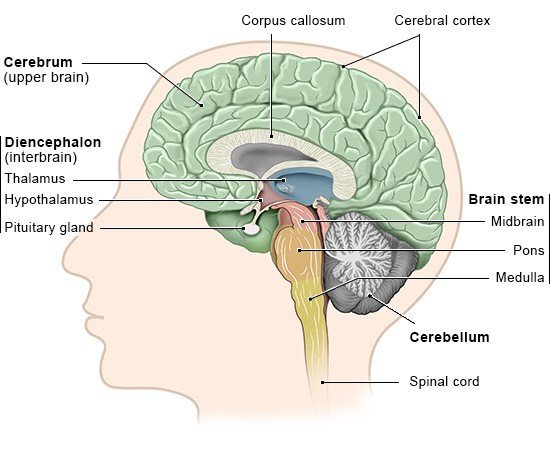
The brain’s memory system is not a single “memory center.” It is a network. But one region is especially important: the hippocampus, located deep in the temporal lobe. The hippocampus is responsible for forming new episodic memories, the kind of memories that involve personal experiences—where you were, what you saw, what happened.
Near the hippocampus is another important region called the parahippocampal cortex. This area plays a major role in recognizing context, such as places and environments. It helps your brain identify the setting you are in and determine whether it matches something you have encountered before.
Another region, the perirhinal cortex, contributes to the feeling of familiarity. It is part of the brain’s system for recognizing whether something seems known, even if you cannot immediately recall where you have seen it.
Normally, these systems work together. The perirhinal cortex might generate a familiarity signal, the hippocampus might retrieve a related memory, and the prefrontal cortex helps evaluate whether the memory fits the current situation.
When everything works smoothly, you correctly identify what is new and what is remembered.
Déjà vu occurs when that system produces a familiarity signal without an actual memory to support it.
The Core Mystery: Familiarity Without Memory
The most widely accepted explanation for déjà vu is that it is a mismatch between familiarity and recollection.
Familiarity is a feeling. It is the mental signal that something seems known. Recollection is different. Recollection is the retrieval of actual details: the place, the people, the sequence of events.
When you recognize a friend’s face, you experience both familiarity and recollection. You know the face is familiar, and you remember who the person is, where you met, and what experiences you share.
But sometimes you experience familiarity without recollection. This happens when you see someone who looks familiar but cannot place them. You might feel a strange tension as your brain searches for the missing connection.
Déjà vu is like that experience, except the “familiar thing” is an entire moment.
Your brain suddenly generates a strong sense that the present situation is familiar, but when you search your memory, you cannot find a matching event. This conflict between familiarity and logical reality creates the eerie sensation that defines déjà vu.
It is not that you remember the moment. It is that your brain wrongly flags it as remembered.
The Brain Regions Most Involved in Déjà Vu
Neuroscientists have investigated déjà vu by studying healthy individuals, memory experiments, and patients with certain neurological conditions. Over time, a clear pattern has emerged: déjà vu is strongly tied to the temporal lobes, especially structures involved in memory processing.
The hippocampus is central because it helps encode new memories and retrieve old ones. If hippocampal activity becomes slightly disrupted, the brain may fail to properly label the experience as new.
The parahippocampal cortex is heavily involved in spatial and contextual recognition. Many déjà vu experiences happen in places or situations that feel oddly familiar, even when the person has never been there before. This suggests the brain’s context-recognition circuits may sometimes activate incorrectly.
The perirhinal cortex is especially interesting. Research suggests this region is responsible for generating the “familiarity signal.” When it becomes active, the brain experiences a sense of recognition. If the perirhinal cortex fires without a corresponding memory retrieval from the hippocampus, the result could be déjà vu: familiarity without content.
The prefrontal cortex also plays a role because it evaluates and monitors mental experiences. When déjà vu occurs, your prefrontal cortex may attempt to resolve the conflict by searching for explanations. This may be why people often feel compelled to “figure out” where they have experienced the moment before.
The phenomenon is short-lived partly because the brain quickly realizes something is wrong and suppresses the false familiarity signal.
Déjà Vu as a Memory System “Glitch”
A useful way to think about déjà vu is as a momentary error in the brain’s memory labeling process.
Your brain constantly sorts experiences into categories. Some experiences are recognized as new. Others are recognized as familiar. But the decision happens almost instantly and largely unconsciously.
Déjà vu may occur when the brain mistakenly assigns the wrong label. Instead of tagging the moment as new, it tags it as familiar.
This could happen for several reasons: a brief delay in processing, a misfiring of memory circuits, or overlapping neural patterns that resemble older experiences.
The experience is similar to a computer glitch where a file is mistakenly flagged as “already opened.” The file itself is new, but the system acts as if it has been accessed before.
The brain is not malfunctioning in a catastrophic way. It is simply showing its complexity. A system capable of storing and retrieving a lifetime of experience will occasionally produce false positives.
The “Dual Processing” Theory: When the Brain Processes Reality Twice
One popular scientific explanation for déjà vu is called the dual processing theory. This theory suggests that déjà vu occurs when the brain processes the same sensory information twice, with a slight delay between the two processing streams.
Imagine you walk into a café. Your brain begins processing the environment—colors, sounds, smells, layout. But due to a brief timing mismatch, part of your brain processes the scene milliseconds before another part does.
When the second processing stream catches up, the brain may interpret it as repetition. It feels like the moment has already occurred because the brain has already processed the same information once.
The time delay is so tiny that you do not consciously notice it, but the brain’s memory circuits might interpret it as a previous experience.
This could create the illusion of familiarity even though the experience is brand new.
Although this theory is difficult to prove directly, it aligns with what we know about how complex and parallel brain processing is. Your brain is not one single processor. It is a network of many systems running simultaneously. A minor timing error could create a powerful psychological illusion.
Pattern Recognition: The Brain’s Hunger for Familiarity
Another major factor in déjà vu is the brain’s pattern recognition ability.
Your brain is constantly comparing the present to the past. It is always asking: does this match something I have experienced before? This is not just for memory—it is for survival. Familiarity can signal safety. Recognition helps predict what happens next.
Sometimes, a new situation resembles an old one in subtle ways. The arrangement of furniture in a room, the lighting, the sound of a voice, or the shape of a street might match a memory fragment from years ago. Even if you do not consciously recognize the similarity, your brain may detect it.
This partial match could trigger a familiarity signal. But because the match is incomplete, you cannot recall the original memory.
The result is déjà vu: the brain senses familiarity but cannot identify its source.
This explanation suggests that déjà vu may not always be an error. Sometimes it may be a real recognition of hidden similarity, a subconscious comparison between the present and stored fragments of experience.
Your conscious mind believes the moment is completely new, but your unconscious brain may be detecting echoes of the past.
Memory Fragments and the Feeling of “Almost Remembering”
Déjà vu often feels like being on the edge of remembering something important. Many people describe it as a moment when the brain is searching for a missing piece of information.
This sensation is linked to how memory retrieval works.
Memories are not stored as complete recordings. They are stored as networks of associations: images, emotions, smells, sounds, and contextual details. When you recall a memory, your brain reconstructs it by activating these associations.
Sometimes, only part of the network becomes active. You might recall the feeling of a memory but not the details. You might sense that something is connected to your past without knowing exactly what.
Déjà vu may be the result of partial activation of a memory network. The brain activates the emotional and familiarity components but fails to activate the detailed recollection.
It is like hearing the first few notes of a song you know well, but not being able to remember its name. The familiarity is strong, but the full memory does not appear.
This incomplete retrieval may create the eerie sensation that you have “been here before,” even though the brain cannot provide proof.
Déjà Vu and the Temporal Lobe Connection
One of the strongest clues about déjà vu comes from neurology. Déjà vu is commonly reported in people with temporal lobe epilepsy, a condition where abnormal electrical activity occurs in the temporal lobes of the brain.
Some patients experience déjà vu as part of their seizures, sometimes just seconds before a seizure begins. In these cases, déjà vu is not a random psychological event. It is a neurological symptom.
This suggests that déjà vu may occur when electrical activity disrupts memory-related structures in the temporal lobe, such as the hippocampus and surrounding cortex. A sudden burst of abnormal activity could generate a powerful false familiarity signal.
This does not mean that ordinary déjà vu is epilepsy. Most people who experience déjà vu are perfectly healthy. But the epilepsy connection strongly supports the idea that déjà vu originates in memory circuitry, particularly the temporal lobe.
It is evidence that déjà vu is not mystical. It is biological.
What Happens at the Neuron Level During Déjà Vu?
At the microscopic level, the brain operates through neurons sending electrical impulses and communicating through chemical signals called neurotransmitters.
During normal perception, sensory information travels through neural pathways, activating patterns of neurons that represent what you are seeing or hearing. These patterns are compared to stored neural patterns representing past experiences.
If the pattern matches a stored memory, the brain produces recognition.
During déjà vu, the brain may accidentally trigger the “recognition pattern” even when there is no true match. This could happen if neurons in the familiarity system become activated spontaneously, or if the brain mistakenly identifies the current pattern as similar enough to an old one.
In other words, the brain’s recognition threshold may be temporarily lowered, allowing a weak resemblance to trigger a strong familiarity response.
This is a reminder that memory is not perfect. It is probabilistic. The brain is always guessing, always predicting, always interpreting. Déjà vu may be a moment when the brain’s predictive system misfires.
Déjà Vu and the Brain’s Prediction Engine
Modern neuroscience increasingly views the brain as a prediction machine. Your brain does not simply react to the world; it predicts what is about to happen, then updates those predictions based on sensory input.
This predictive system helps you move smoothly through life. It allows you to catch a ball, understand language, and anticipate danger. It also helps you feel that the world is stable and continuous.
Déjà vu may occur when the brain’s prediction system incorrectly signals that the present moment matches a predicted or previously experienced pattern. The brain may interpret the current situation as “expected,” even though it is new.
This could create a strange illusion of repetition. It feels like the brain already knew what would happen, even if it did not.
The result is the unsettling sensation that the present is a replay.
Why Déjà Vu Feels So Intense
Déjà vu is not just a mild sense of familiarity. It can feel overwhelming, as if reality itself has shifted.
This intensity likely comes from how strongly the brain trusts its memory systems. Familiarity is a powerful signal. It is tied to emotion and survival. If something feels familiar, the brain assumes it matters.
When déjà vu occurs, the brain is essentially shouting: “This is known. This has happened before.”
But the rational mind cannot confirm it. That contradiction creates emotional tension. The brain experiences a moment of cognitive dissonance, where two beliefs collide: “This is new” and “This is familiar.”
The emotional discomfort may amplify the sensation, making it feel more vivid than it otherwise would.
In a way, déjà vu is frightening because it challenges the brain’s authority. If your mind can mistake the present for the past, what else can it misinterpret?
Why Déjà Vu Usually Lasts Only a Few Seconds
Déjà vu rarely lasts more than a few seconds because the brain quickly corrects itself.
Once the familiarity signal appears, the brain searches for a matching memory. When it fails to find one, higher cognitive systems—especially the prefrontal cortex—recognize that the signal is false or unsupported.
The brain then suppresses the sensation. The familiarity fades. The world returns to normal.
This rapid correction is part of the brain’s error-detection system. The mind is constantly monitoring itself for inconsistencies, and déjà vu is an inconsistency that the brain tries to resolve quickly.
If déjà vu lasted longer, it could become psychologically destabilizing. The brain seems designed to prevent that.
Is Déjà Vu a Sign of Strong Memory or Weak Memory?
Déjà vu is sometimes interpreted as a sign that someone has a strong memory, or that their brain is unusually active. In reality, déjà vu does not necessarily indicate either.
Déjà vu is common in healthy people, especially younger adults. It tends to occur less often as people age, possibly because memory systems change over time or because novelty decreases as life becomes more repetitive.
Some research suggests that déjà vu may be more common in people who travel frequently, read a lot, or encounter varied environments. This makes sense because the brain is exposed to more patterns and more opportunities for partial matches.
Déjà vu might also be more common during stress, fatigue, or distraction. When the brain is tired, its processing systems may become slightly less coordinated, increasing the chance of a mismatch between perception and memory.
So déjà vu may not mean your memory is stronger or weaker. It may simply mean your brain is operating under conditions where a false familiarity signal is more likely.
Can Déjà Vu Be Artificially Triggered?
Researchers have attempted to recreate déjà vu in laboratory settings by manipulating familiarity.
One method involves showing people scenes or layouts that resemble other scenes they have seen before. Participants may report a feeling of déjà vu even when they cannot identify why the scene feels familiar. This supports the idea that déjà vu can be triggered by partial similarity and subconscious recognition.
Virtual reality has also been used to create environments that subtly mimic earlier experiences. When participants enter a new virtual room that shares a similar spatial layout to a previous one, they may experience déjà vu.
These experiments suggest that déjà vu can arise naturally when the brain detects similarity without conscious awareness.
This is an important insight: déjà vu is not necessarily a glitch out of nowhere. It can be produced by the brain’s normal recognition mechanisms when they are fed confusing information.
Déjà Vu Versus Precognition: Why It Feels Like the Future
Déjà vu often feels like a preview of what is about to happen. Some people report that during déjà vu, they feel they know what someone will say next or what will occur next in the scene.
This sensation can be explained by the brain’s predictive nature. If the environment feels familiar, the brain may automatically generate expectations based on what it assumes happened “last time.” Those expectations can feel like certainty.
But the brain is not actually seeing the future. It is using pattern recognition and prediction to guess what might happen next.
Because the déjà vu sensation is intense, these predictions feel unusually strong. If the next moment happens to match what the brain expects—by coincidence—the experience becomes even more convincing.
This can create the illusion that déjà vu is supernatural.
In reality, it is the brain doing what it always does: predicting based on perceived familiarity, even if that familiarity is misplaced.
Déjà Vu and Dreams: The Strange Overlap
Many people believe déjà vu is connected to dreams. They experience a moment that feels familiar, then later suspect they dreamed it before.
This idea is not impossible, but it is difficult to confirm.
Dreams are often forgotten quickly, and they tend to contain fragments of real-life places and situations. If a real moment resembles a forgotten dream, it could trigger a sense of familiarity.
However, it is also possible that déjà vu creates a false impression that you dreamed the moment. Once the brain experiences intense familiarity, it may search for an explanation and latch onto the idea of a dream.
This is how memory can rewrite itself. The brain does not like unresolved mysteries, so it invents a narrative to make sense of the sensation.
Whether dreams truly cause déjà vu is still uncertain, but the overlap highlights an important truth: memory is not a perfect archive. It is a story-building system.
Is Déjà Vu Dangerous?
For most people, déjà vu is harmless. It is a normal phenomenon that happens occasionally and fades quickly.
However, frequent and intense déjà vu can sometimes indicate neurological issues, particularly if it occurs alongside other symptoms such as confusion, loss of awareness, or unusual sensations.
In temporal lobe epilepsy, déjà vu may be a warning sign of seizure activity. In such cases, it is not just a quirky feeling—it is a symptom that should be evaluated medically.
But for the average person, occasional déjà vu is simply part of being human. It is a reminder that the brain is a complex machine, and even the most sophisticated systems can produce strange illusions.
Why Déjà Vu Is So Common in Humans
Déjà vu may be common because the human brain relies heavily on memory and familiarity to function efficiently.
Your brain cannot treat every moment as completely new. That would be exhausting. Instead, it constantly uses stored experiences to interpret what is happening. It uses shortcuts, assumptions, and recognition systems to move through the world quickly.
This is incredibly useful, but it also creates opportunities for errors.
Déjà vu may be the cost of having an advanced memory system. A brain capable of rapidly identifying patterns will sometimes identify patterns that are not really there.
In that sense, déjà vu is not a flaw. It is a side effect of intelligence.
What Déjà Vu Reveals About Consciousness
Déjà vu is scientifically fascinating because it provides a glimpse into how consciousness is built.
Conscious experience feels smooth and continuous, but it is actually assembled from many hidden processes. Memory, perception, attention, emotion, and prediction all work together to create what feels like a single moment of awareness.
Déjà vu shows that the feeling of “now” depends on correct coordination between these systems. When the familiarity system activates at the wrong time, consciousness becomes distorted.
The present moment feels like the past.
This reveals that our sense of time is not absolute. It is a mental construction. The brain does not simply observe time—it organizes experience into a timeline. Déjà vu is a brief disruption in that organization.
It is a rare moment when you can feel the machinery behind your own awareness.
The Most Likely Explanation: A False Familiarity Signal
While many theories exist, the most widely supported explanation is that déjà vu occurs when the brain’s familiarity system activates without full memory retrieval.
The perirhinal cortex signals recognition. The hippocampus fails to retrieve a matching episode. The prefrontal cortex detects the inconsistency. For a few seconds, the mind is caught between two realities: the reality of the senses and the reality of memory.
The brain then resolves the conflict, and the sensation fades.
This explanation fits what we know from brain imaging, epilepsy research, and memory experiments. It does not require supernatural assumptions, and it matches the fact that déjà vu is brief, vivid, and often triggered by certain environments or mental states.
It is the brain mislabeling the present as the past.
What Happens Inside Your Brain During Déjà Vu?
During déjà vu, your brain is essentially running a false alarm.
A network of memory-related regions—especially in the temporal lobe—creates a powerful feeling of familiarity. Your mind receives a signal that says, “This has happened before.” But when the brain searches for the supporting memory, it finds nothing. The result is a strange psychological contradiction that feels like time bending.
In those seconds, you are witnessing your brain’s internal reality-making system in action. You are seeing how memory and perception normally cooperate to produce stability, and how easily that stability can be shaken.
Déjà vu is not proof of past lives, destiny, or supernatural prediction. It is proof of something far more real and, in its own way, more astonishing: the human brain is a living prediction engine, constantly balancing the past against the present, constantly deciding what is familiar and what is new.
And sometimes, for reasons we are still uncovering, it makes a mistake.
But that mistake is not meaningless. It is a reminder that your experience of reality is not simply the world itself. It is the world as your brain interprets it.
Déjà vu is the moment you catch your mind in the act of being human.